
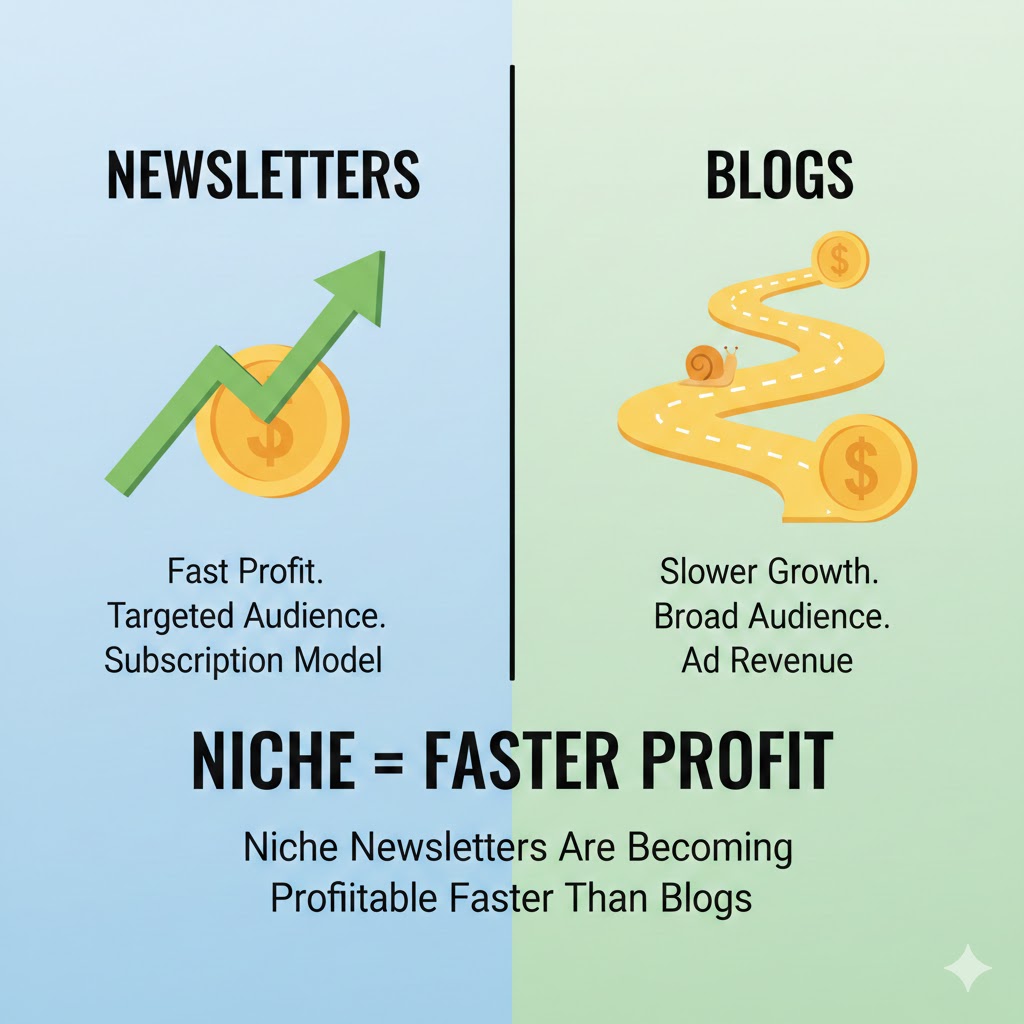
Niche Newsletters Are Becoming Profitable For years, blogging was considered the ultimate online business model. Build content, rank on Google, monetize with ads or affiliates, and scale over time. But the digital landscape is shifting. Today, creators and entrepreneurs are discovering that newsletters—especially niche-focused ones—are reaching profitability much faster than traditional blogs.
The idea that Niche Newsletters Are Becoming Profitable is no longer speculation. It’s a measurable trend driven by changes in audience behavior, platform algorithms, and monetization models.
In this blog, we’ll explore why niche newsletters are outperforming blogs in terms of speed to revenue, how they work, and why more creators are choosing email over search-driven content.
1. The Shift From Search Traffic to Owned Audiences
Blogs rely heavily on search engines and social platforms for traffic. Algorithm updates, ranking competition, and declining organic reach have made traffic unpredictable.
Newsletters operate differently. When someone subscribes, you own that connection. You’re not dependent on Google updates or social media algorithms to reach your audience.
This direct access is one of the biggest reasons Niche Newsletters Are Becoming Profitable faster than blogs.
2. Why Niches Matter More in Newsletters Than Blogs
General blogs struggle to convert readers because the audience intent is often mixed. Newsletters, on the other hand, thrive on specificity.
A niche newsletter attracts readers with a very clear problem, interest, or goal. This makes subscribers more engaged, more loyal, and far more likely to pay.
Whether it’s finance, tech tools, AI prompts, health insights, or local business news, niche newsletters create relevance that broad blogs often lack.

3. Faster Monetization Compared to Blogs
Blogs typically take months—or years—to monetize meaningfully. They need traffic scale for ads and strong rankings for affiliate income.
Niche newsletters can monetize early with:
- Paid subscriptions
- Sponsorships
- Premium issues
- Direct product recommendations
Even with a small but targeted subscriber base, revenue becomes possible quickly. This is a major reason Niche Newsletters Are Becoming Profitable at a faster pace.
4. Higher Trust Leads to Higher Conversion
Newsletter subscribers choose to hear from you. That opt-in creates trust.
Unlike blog readers who may land on one article and leave, newsletter readers build a relationship with the creator over time. This trust dramatically increases conversion rates for paid content and recommendations.
When readers open your emails regularly, monetization becomes natural rather than forced.
5. Lower Competition Than Blogging
Blogging is saturated. Almost every keyword has hundreds of competing articles.
Newsletters still offer open space. Many niches have demand but limited high-quality newsletters. This allows creators to establish authority faster and stand out more easily.
Lower competition means faster growth, stronger positioning, and quicker monetization.
6. Platforms Supporting Newsletter Monetization
Niche Newsletters Are Becoming Profitable Modern newsletter platforms are built for monetization from day one. They offer built-in payment systems, subscriber analytics, and referral tools.
This removes technical barriers that bloggers often face when setting up ads, funnels, or memberships.
Because the infrastructure is simple, creators can focus on content and audience rather than website management.
7. Why Readers Prefer Newsletters Over Blogs
Readers are overwhelmed with content. Newsletters reduce noise by delivering curated, relevant information directly to their inbox.
Instead of searching endlessly, subscribers receive insights they trust on a consistent schedule. This habit-forming nature increases retention and lifetime value.
As attention shifts toward inbox-based consumption, Niche Newsletters Are Becoming Profitable by meeting readers where they already are.
8. Cost and Time Efficiency
Launching a blog requires domain setup, hosting, SEO, content optimization, and long-term maintenance.
Launching a newsletter is faster and cheaper. You can start publishing immediately and improve as you grow.
This low barrier to entry allows creators to test ideas quickly and pivot niches without major losses.
9. Blogs vs Newsletters: Long-Term Strategy
Blogs still have value, especially for evergreen content and SEO-driven discovery. However, newsletters excel in monetization speed and audience loyalty.
Many successful creators now use blogs for visibility and newsletters for income. But for beginners or solo creators, newsletters often provide faster returns.
This hybrid approach highlights why Niche Newsletters Are Becoming Profitable in today’s creator economy.
10. Final Thoughts: Are Niche Newsletters Worth Starting Now?
The answer is yes—especially if your goal is faster monetization and deeper audience relationships.
Niche newsletters align perfectly with current digital behavior: direct communication, curated content, and trust-based monetization. While blogs still matter, newsletters are proving to be the faster path to sustainable income.
As competition increases in blogging, niche newsletters continue to offer opportunity, speed, and scalability.
FAQs
Why are niche newsletters more profitable than blogs?
They build direct relationships, monetize earlier, and rely less on algorithms compared to blogs.
How many subscribers do you need to make money from a newsletter?
Even a few hundred engaged subscribers can generate income through paid subscriptions or sponsorships.
Are newsletters better than blogs for beginners?
Yes, newsletters are easier and faster to launch, with fewer technical and SEO barriers.
Can blogs and newsletters work together?
Yes, many creators use blogs for traffic and newsletters for monetization.
What niches work best for newsletters?
Finance, tech, AI, health, business insights, and highly specific interests perform particularly well.
Also read this:
AI-Generated Content Businesses Explained for Beginners
Website Flipping for Beginners: Buying and Selling Sites for Profit
Print-on-Demand Business Without Paid Ads: Does It Really Work?