
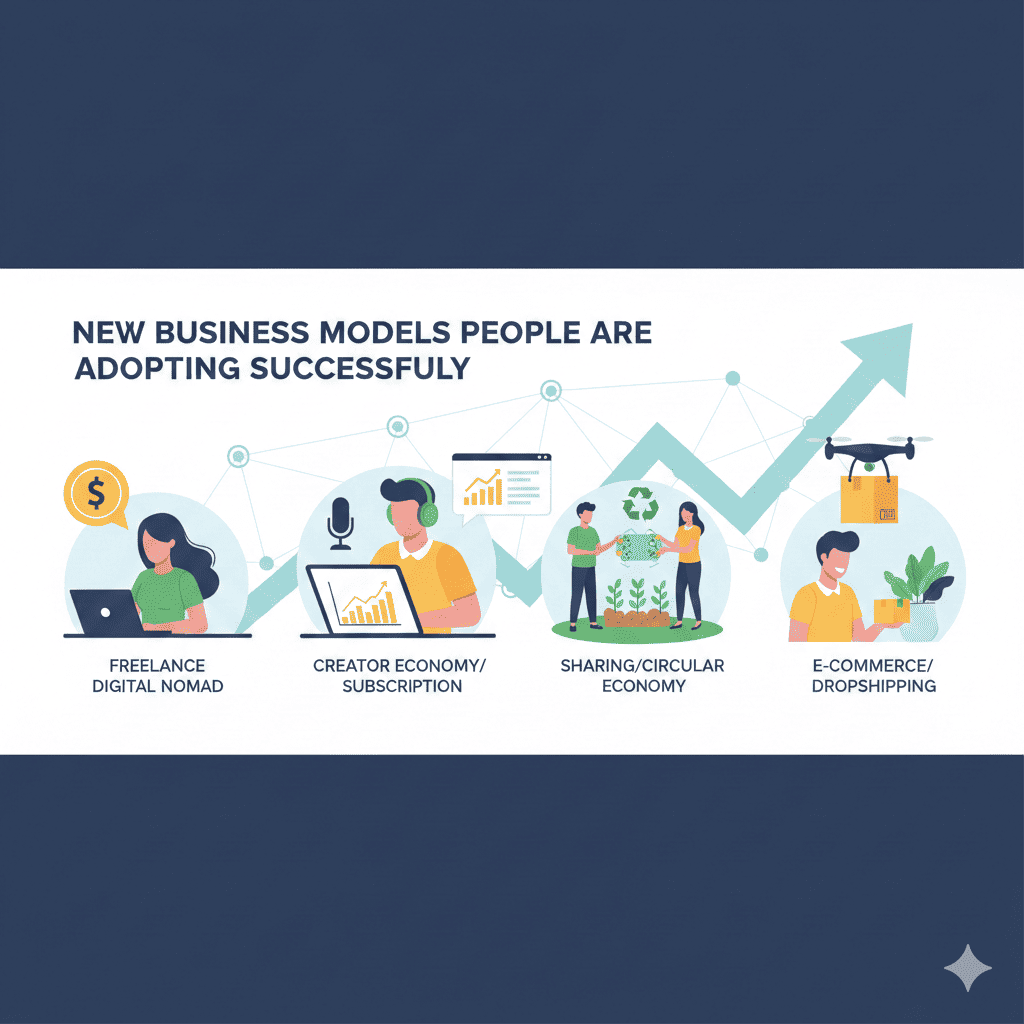
The business landscape has transformed dramatically in recent years, with traditional employment models giving way to innovative approaches that offer greater flexibility, income potential, and personal fulfillment. Entrepreneurs worldwide are discovering that New Business Models built on digital infrastructure, subscription economics, and platform leverage create opportunities previously unimaginable. This comprehensive guide explores the most successful New Business Models that everyday people are adopting to build thriving enterprises, examining both the strategies that work and the practical steps required to implement them effectively.
1. Subscription-Based Business Models
Subscription models have revolutionized how businesses generate revenue, creating predictable income streams while building lasting customer relationships. These New Business Models work across virtually every industry and scale from solo operations to enterprise-level companies.
Digital Content Subscriptions
Content creators are building sustainable businesses by offering exclusive access to premium materials through subscription platforms. Writers publish newsletters, podcasts, and articles behind paywalls, while educators provide ongoing courses and training programs. The subscription approach transforms one-time transactions into recurring revenue that compounds over time.
Successful content subscriptions focus on consistent delivery of exceptional value. Subscribers pay monthly or annually for access to material they cannot find elsewhere or for unique perspectives on topics they care deeply about. The model rewards quality over quantity, allowing creators to build smaller, more engaged audiences rather than chasing viral reach. Many creators report that just 1,000 dedicated subscribers paying modest monthly fees generate comfortable full-time incomes.
Physical Product Subscription Boxes
Curated subscription boxes deliver physical products to customers regularly, creating anticipation and ongoing engagement. These New Business Models work across categories from beauty and grooming to food, books, and hobby supplies. Entrepreneurs source interesting products, create compelling curation themes, and build communities around shared interests.
The recurring revenue model provides cash flow predictability that enables better inventory planning and supplier negotiations. Customer lifetime value calculations justify higher acquisition costs than traditional retail allows. Successful subscription box businesses differentiate through exceptional curation, personalization based on customer preferences, and strong brand identities that resonate with specific demographic segments.
Software as a Service Platforms
SaaS represents one of the most scalable New Business Models, with entrepreneurs building software solutions that address specific problems for defined audiences. Unlike traditional software sold through one-time purchases, SaaS generates recurring revenue while enabling continuous product improvement based on user feedback.
Even solo developers can build profitable SaaS businesses by focusing on underserved niches. Micro-SaaS products that solve specific problems for small audiences often compete effectively against larger competitors by offering focused functionality without unnecessary complexity. Monthly recurring revenue creates business stability and attractive valuations when entrepreneurs eventually seek exits.
2. Creator Economy Business Models
The democratization of content creation tools and distribution platforms has enabled millions to build businesses around their expertise, creativity, and personalities. These New Business Models leverage audience relationships as primary business assets.
Multi-Platform Content Creation
Successful creators diversify across multiple platforms rather than depending on single channels. They build audiences on YouTube, podcasts, social media, and email lists simultaneously, cross-promoting content to maximize reach while reducing platform risk. This approach creates multiple revenue streams from advertising, sponsorships, affiliate marketing, and direct product sales.
The key to sustainable creator businesses involves treating content creation as professional work rather than casual hobby. Successful creators maintain consistent publishing schedules, invest in quality production equipment, and continuously improve their craft. They understand audience analytics deeply, doubling down on content types that resonate while experimenting with new formats to maintain freshness.
Digital Product Development
Creators monetize expertise by developing digital products like courses, ebooks, templates, and tools that serve their audiences. These New Business Models offer exceptional profit margins since digital products require creation only once but can be sold infinitely without inventory costs or fulfillment logistics.
The most successful digital products solve specific problems that audiences repeatedly express. Creators validate ideas through surveys and pre-sales before investing significant development time. They create tiered product offerings at different price points, serving both budget-conscious customers and those seeking premium, comprehensive solutions. Launch strategies using scarcity and urgency drive concentrated sales periods that generate significant revenue bursts.
Community Building and Membership Sites
Building paid communities represents increasingly popular New Business Models where members pay for access to exclusive groups, networking opportunities, and specialized knowledge. Unlike passive content consumption, communities offer interactive experiences where members connect with peers facing similar challenges.
Successful community builders facilitate genuine connections rather than simply creating digital spaces. They host live events, moderate discussions actively, and curate valuable resources. Communities work particularly well for niche professional groups, hobbyists seeking to improve specific skills, and people navigating particular life transitions. The recurring revenue model provides stability while the community itself often generates content through member contributions.
3. Platform-Based Business Models
Leveraging existing platforms allows entrepreneurs to build businesses without creating infrastructure from scratch. These New Business Models utilize established marketplaces, tools, and audiences to accelerate growth.
Marketplace Selling
E-commerce marketplaces like Amazon, Etsy, and eBay provide instant access to massive customer bases without requiring entrepreneurs to build traffic independently. Sellers identify profitable products through market research, source inventory through wholesalers or manufacturers, and optimize listings for marketplace algorithms.
Private label businesses represent particularly attractive opportunities where entrepreneurs source generic products, apply custom branding, and sell under their own labels. This approach offers better profit margins and brand control than reselling existing brands. Successful marketplace sellers focus obsessively on customer reviews, inventory management, and competitive pricing while continuously testing new products to expand their catalogs.
Print-on-Demand Services
Print-on-demand eliminates inventory risk by producing custom-designed products only after customers place orders. These New Business Models work for apparel, home goods, books, and artwork. Entrepreneurs focus on design and marketing while fulfillment partners handle production and shipping.
The minimal upfront investment makes print-on-demand accessible to creators without significant capital. Success depends on identifying underserved niches, creating designs that resonate emotionally with target audiences, and driving targeted traffic through organic social media or paid advertising. Many entrepreneurs operate multiple print-on-demand stores targeting different demographics to diversify revenue streams.
Gig Economy Platforms
Freelance platforms like Upwork, Fiverr, and TaskRabbit connect service providers with customers seeking specific skills. These New Business Models allow professionals to monetize expertise without traditional employment relationships. Flexibility to set schedules and choose projects attracts many to platform-based work.
Building successful platform-based businesses requires developing strong profiles with compelling portfolios, gathering positive reviews through exceptional service, and progressively raising rates as reputation grows. Many freelancers eventually transition successful platform businesses into independent agencies, hiring subcontractors to fulfill work while they focus on client acquisition and relationship management.
4. Service-Based Digital Business Models
Professional services delivered digitally eliminate geographic constraints while reducing overhead compared to traditional service businesses. These New Business Models scale expertise efficiently through technology.
Online Consulting and Coaching
Expertise in any field can be packaged as consulting or coaching services delivered via video calls. Business consultants, career coaches, health advisors, and relationship counselors build thriving practices serving clients globally. The digital delivery model eliminates office overhead while enabling flexible scheduling.
Successful consultants and coaches clearly define ideal client profiles and specialize in solving specific problems. They develop structured methodologies that deliver consistent results, building reputations through client testimonials and case studies. Many transition from hourly billing to value-based pricing or retainer agreements that provide income predictability. Group coaching programs allow scaling beyond one-on-one time constraints.
Done-For-You Service Businesses
Many businesses and individuals seek experts who can completely handle specific tasks rather than just providing advice. These New Business Models involve delivering finished work products like website design, content writing, social media management, or bookkeeping. The “done-for-you” positioning commands premium pricing compared to advisory services.
Successful service businesses develop efficient systems and workflows that enable consistent quality at profitable margins. They create service packages with clear deliverables and timelines, setting appropriate client expectations. As businesses grow, founders hire specialists to fulfill work while focusing on sales and operations management. Recurring service retainers create business stability and predictable revenue.
Virtual Assistant and Administrative Services
The explosion of remote work has created enormous demand for virtual administrative support. These New Business Models involve providing scheduling, email management, customer service, data entry, and various administrative tasks for busy professionals and entrepreneurs.
Virtual assistants often start as generalists before specializing in specific industries or service types. Executive assistants command higher rates by supporting C-level executives with complex scheduling and communication needs. Technical virtual assistants focusing on platforms like WordPress or specific CRM systems solve specialized problems that justify premium pricing. Many successful VAs eventually build agencies managing teams of assistants serving multiple clients.
5. Education and Knowledge Transfer Models
The desire for continuous learning creates opportunities for educators to build businesses sharing expertise. These New Business Models democratize education while allowing experts to monetize knowledge at scale.
Online Course Creation
Comprehensive online courses teaching specific skills represent powerful business models with exceptional scalability. Course creators record content once then sell access indefinitely without additional time investment. Successful courses transform students through structured learning paths that deliver tangible results.
The most profitable courses solve urgent problems or help students achieve valuable outcomes like career advancement, income generation, or personal transformation. Effective course creators incorporate multiple content formats including video lessons, written materials, worksheets, and assessments. They build engagement through community features, live Q&A sessions, and implementation support. Launch strategies using webinars or challenge sequences warm audiences before major sales pushes.
Cohort-Based Learning Programs
Unlike self-paced courses, cohort-based programs bring students through curriculum together on fixed schedules. These New Business Models create accountability, peer learning, and higher completion rates. The interactive format justifies premium pricing compared to recorded course alternatives.
Successful cohort programs limit enrollment to maintain quality interactions and community intimacy. They incorporate live instruction, peer feedback sessions, and collaborative projects. The limited availability creates urgency that drives purchasing decisions. Many educators run multiple cohorts annually, creating predictable revenue cycles while continuously improving curriculum based on student feedback.
Membership Education Sites
Ongoing membership programs provide continuous education rather than finite courses. Members pay monthly or annually for access to growing libraries of content, regular live training, and community resources. These New Business Models combine subscription economics with education delivery.
The recurring revenue model rewards consistency over perfection, with successful membership sites releasing new content regularly rather than waiting for comprehensive course development. Members value the ongoing relationship and continuous learning opportunities. The community aspects often become as valuable as the educational content itself, with peer connections and networking justifying continued membership.
6. Asset-Light Business Models
Modern New Business Models often require minimal physical assets, relying instead on intellectual property, relationships, and digital infrastructure. These approaches offer exceptional capital efficiency.
Affiliate Marketing Businesses
Affiliate marketers promote other companies’ products and earn commissions on resulting sales. These New Business Models require no inventory, customer service, or product development. Successful affiliates build audiences through content creation, then recommend relevant products that serve their followers.
The most profitable affiliate businesses focus on high-ticket products or recurring commission programs where single referrals generate substantial lifetime value. Authenticity matters critically—audiences quickly detect and reject purely mercenary product promotion. Successful affiliates only recommend products they genuinely use and believe in, building trust that translates to higher conversion rates and sustained income.
Licensing and Intellectual Property
Creators of valuable intellectual property—designs, methodologies, software, or content—can license usage rights rather than directly commercializing creations themselves. These New Business Models generate passive income from existing work while allowing licensees to handle marketing, production, and customer service.
Photographers license images to publications and businesses. Authors license foreign translation rights or movie adaptations. Software developers license code to enterprises. Successful licensing businesses create high-quality intellectual property with broad appeal, then negotiate favorable terms with partners who can commercialize effectively. The passive nature of licensing income creates financial freedom while allowing creators to focus on new projects.
Brokerage and Marketplace Businesses
Connecting buyers with sellers without holding inventory represents powerful business models. Real estate agents, business brokers, and marketplace operators earn commissions facilitating transactions between other parties. These New Business Models scale efficiently since each transaction requires similar effort regardless of value.
Digital marketplaces connecting freelancers with clients, listing services connecting customers with service providers, and lead generation businesses connecting potential customers with businesses all follow this model. Success requires building sufficient supply and demand simultaneously—the classic marketplace chicken-and-egg challenge. Network effects create powerful competitive advantages once marketplaces reach critical mass.
7. Hybrid and Multi-Revenue Stream Models
The most resilient businesses often combine multiple revenue streams rather than depending on single income sources. These New Business Models create diversification that protects against market fluctuations.
Content Plus Commerce
Content creators increasingly combine audience building with direct commerce. Podcasters sell merchandise and premium experiences to listeners. YouTubers launch product lines related to their content themes. Writers sell books alongside newsletter subscriptions. This integration creates multiple touchpoints for audience monetization.
The content attracts and engages audiences while commerce provides monetization beyond advertising and sponsorships. Successful implementations ensure products align naturally with content themes and audience interests. The existing audience relationship facilitates commerce by establishing trust and reducing customer acquisition costs compared to traditional e-commerce.
Service Plus Product Businesses
Service providers create complementary products that extend their reach beyond direct service capacity. Consultants write books and create courses teaching their methodologies. Designers develop templates and tools that clients can use independently. These New Business Models leverage expertise more efficiently than pure service delivery.
Products provide entry-level offerings that introduce potential clients to service providers’ expertise at lower price points. Some product customers eventually upgrade to higher-priced services. The product revenue also smooths income fluctuations inherent in service businesses. Creating products from existing service delivery materials maximizes efficiency by repurposing intellectual property across multiple revenue streams.
Platform Plus Services
Platform businesses often add service layers to increase value and revenue. Marketplace operators offer premium placement services. Software companies add consulting and custom development. Content platforms incorporate advertising alongside subscriptions. This diversification creates resilience while serving different customer segments.
The platform provides scale and recurring revenue while services deliver higher margins on lower volumes. Many businesses start with services, then develop platforms to extend their reach. Others launch platforms first, adding services once they understand customer needs deeply. The combination addresses different customer preferences—some want self-service convenience while others prefer done-for-you solutions.
8. Fractional and Portfolio Career Models
Rather than single full-time roles, many professionals now assemble portfolios of part-time positions and projects. These New Business Models provide income diversification and intellectual variety.
Fractional Executive Positions
Experienced executives increasingly offer fractional services where they serve multiple companies part-time rather than one employer full-time. Fractional CFOs, CMOs, and CTOs provide senior expertise to growing companies that need strategic leadership but cannot afford or don’t require full-time executives.
These New Business Models benefit both executives and companies. Executives enjoy variety, flexibility, and often higher effective hourly rates than traditional employment. Companies access senior talent affordably while maintaining flexibility to adjust as needs evolve. The arrangement works particularly well for part-time or project-based requirements that don’t justify permanent hires.
Multi-Client Retainer Models
Professionals across disciplines build stable incomes by securing monthly retainers from multiple clients. Rather than project-based work with income volatility, retainers provide predictable monthly revenue in exchange for ongoing access and defined monthly deliverables.
Successful retainer businesses clearly define what’s included in monthly agreements to prevent scope creep. They often tier offerings at different price points serving various client sizes and needs. The recurring revenue enables better planning and resource allocation. Many professionals prefer managing six to ten retainer clients rather than constantly pursuing new project work.
Advisory Board Positions
Experts leverage experience and networks by joining multiple advisory boards that meet quarterly or monthly to provide strategic guidance. These New Business Models compensate advisors through cash, equity, or both. The time commitment remains manageable while compensation can be substantial, particularly with equity stakes in successful ventures.
Building portfolio careers around advisory work requires establishing strong reputations and networks within specific industries. Advisors bring valuable perspectives, connections, and credibility that help growing companies navigate challenges and seize opportunities. The arrangement provides intellectual stimulation across diverse companies while maintaining schedule flexibility.
9. Community-Driven Business Models
Building businesses around communities rather than just products or services creates powerful competitive advantages. These New Business Models recognize that belonging and connection hold intrinsic value.
Private Communities and Networks
Entrepreneurs create paid communities where members connect around shared interests, professional disciplines, or demographic characteristics. Unlike social media platforms, private communities offer intimacy, relevance, and meaningful interactions. Members pay for access to curated groups where everyone shares common contexts.
Successful communities provide structured programming including expert presentations, peer mastermind sessions, and resource libraries alongside informal networking. The community itself generates much of the value through member interactions, making these New Business Models relatively scalable. Strong moderation maintains quality by ensuring all members contribute positively.
Local Experience Businesses
Creating unique local experiences—tours, classes, events, or activities—builds businesses around bringing people together. These models work in tourist destinations and urban centers where people seek authentic, memorable experiences beyond commercial attractions.
Experience businesses differentiate through unique access, insider knowledge, or specialized expertise that participants cannot easily replicate independently. Food tours led by chefs, historical tours by local historians, or adventure activities requiring specialized skills create value that justifies premium pricing. Many operators develop loyal followings who return repeatedly and refer friends.
Collaborative Consumption Platforms
Platforms enabling sharing, renting, or exchanging goods and services have transformed entire industries. These New Business Models maximize asset utilization by connecting owners with temporary users. The platform facilitates transactions while taking percentage commissions.
Success requires building sufficient network density where supply meets demand reliably. Trust and safety mechanisms including reviews, insurance, and verification processes address inherent risks in peer-to-peer transactions. Once established, network effects create defensible competitive advantages as both supply and demand sides prefer platforms with greatest liquidity.
10. Sustainability-Focused Business Models
Growing consumer consciousness about environmental and social impact creates opportunities for businesses built around sustainability principles. These New Business Models prove that profitability and responsibility can align.
Circular Economy Businesses
Companies designed around reuse, repair, and recycling rather than linear take-make-dispose models represent the future of sustainable commerce. Refurbishment businesses extend product lifecycles. Rental services maximize asset utilization. Recycling operations transform waste into valuable inputs.
These New Business Models often deliver better unit economics than traditional alternatives by reducing material costs and commanding premium pricing from conscious consumers. The sustainable positioning attracts customers, employees, and investors who prioritize environmental responsibility. Many circular businesses also benefit from favorable regulatory treatment and grant programs supporting sustainability initiatives.
Impact-Driven Enterprises
Businesses organized around social missions alongside financial returns attract growing capital and customer support. B Corporations and social enterprises address problems like poverty, inequality, or environmental degradation through commercial activities. These organizations prove that business can be a force for positive change.
Impact businesses often access unique funding sources including impact investors, foundation grants, and government programs supporting social enterprises. Customers pay premium prices supporting missions they believe in. Employees accept lower compensation to work on meaningful problems. The mission clarity also provides strategic focus, helping organizations make consistent decisions aligned with core values.
11. Technology-Enabled Business Models
Emerging technologies create entirely new business possibilities. Early adopters of these New Business Models often establish dominant positions before markets mature.
AI-Powered Service Businesses
Artificial intelligence enables new services and dramatically improves existing ones. Businesses using AI for content creation, data analysis, customer service, or process automation deliver capabilities previously impossible or economically infeasible. The technology handles routine tasks while humans focus on judgment, creativity, and relationship management.
Entrepreneurs building businesses around AI capabilities focus on applying technology to specific industry problems rather than developing AI itself. They combine domain expertise with AI tools to deliver superior outcomes. As AI continues advancing, new business opportunities emerge constantly for entrepreneurs who understand both technology capabilities and market needs.
Blockchain and Decentralized Models
Blockchain technology enables new organizational and business structures. Decentralized autonomous organizations operate through smart contracts rather than traditional hierarchies. Cryptocurrency and NFT businesses create digital scarcity and enable new forms of value exchange and ownership.
These New Business Models remain experimental and evolving. Early participants accept higher risk in exchange for potential outsized returns as markets develop. Understanding the technology deeply and staying current with rapid innovation is essential for success in this emerging space.
12. Implementation Strategies
Successfully adopting New Business Models requires more than understanding concepts. Effective execution determines outcomes.
Starting Small and Testing
Begin with minimum viable versions that test core assumptions before major resource commitments. Validate that target customers actually have problems your business solves and will pay for solutions. Iterate based on real market feedback rather than assumptions.
Many successful businesses started as side projects while founders maintained other income sources. This approach reduces financial pressure and allows patient development of products and markets. Once the business demonstrates viability, transitioning to full-time focus accelerates growth.
Building Systems and Processes
Sustainable businesses require documented systems rather than depending entirely on founder effort. Create repeatable processes for customer acquisition, service delivery, and operations. This systematization enables scaling and potentially selling the business eventually.
Investing in appropriate technology, outsourcing non-core functions, and hiring strategically all contribute to building businesses that operate smoothly. The goal is creating valuable enterprises rather than just purchasing your own job.
Conclusion
The New Business Models explored in this guide represent proven approaches that real entrepreneurs have used to build thriving enterprises. The democratization of business tools, global connectivity, and changing consumer preferences create unprecedented opportunities for those willing to embrace innovation.
Success requires matching business models to your unique skills, interests, and circumstances. The best model for you depends on your expertise, available capital, risk tolerance, and lifestyle preferences. Many entrepreneurs experiment with several approaches before finding optimal fits.
Also read this:
Tech Upgrades That Transform a Basic Setup Into a Pro Setup: The Complete Enhancement Guide
New AI Apps That Are Designed to Save You Time: The Ultimate Guide to Productivity in 2025