
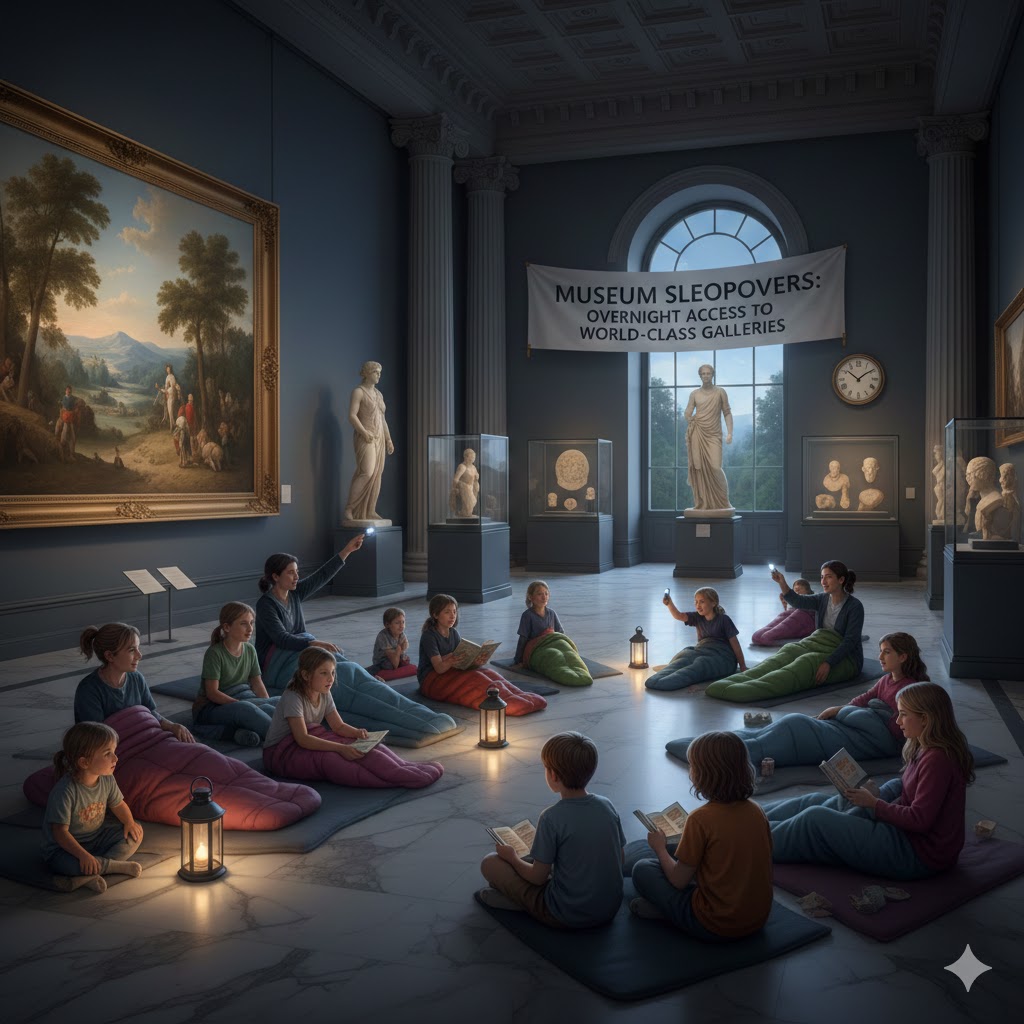
Museum Sleepovers Imagine wandering through a silent museum long after the doors have closed to the public. No crowds. No noise. Just you, dimmed lights, towering sculptures, priceless paintings, and echoing halls that feel almost magical. This is the unique appeal of Museum Sleepovers, an emerging luxury and experiential travel trend that transforms museums from daytime attractions into unforgettable overnight adventures.
Once considered activities mainly for children, Museum Sleepovers have evolved into curated experiences for adults, couples, families, and culture lovers who want deeper, more personal access to world-class galleries. From candlelit dinners beneath historic artifacts to sleeping beside ancient fossils or iconic artworks, these overnight stays redefine how we engage with art, history, and culture.
This guide explores what Museum Sleepovers are, why they’re becoming so popular, what to expect, and who they’re best suited for—along with practical insights and FAQs to help you decide if this experience belongs on your bucket list.
1. What Are Museum Sleepovers?
Museum Sleepovers are exclusive overnight experiences that allow guests to stay inside a museum after public hours. Instead of leaving at closing time, participants enjoy private access to galleries, curated activities, guided tours, meals, and designated sleeping areas within the museum.
Unlike hotels or traditional accommodations, Museum Sleepovers focus on experience over comfort. The luxury lies in access, atmosphere, and intimacy rather than plush beds or room service.
Key elements often include:
- After-hours access to galleries
- Expert-led private tours
- Cultural talks, workshops, or storytelling
- Dinner or refreshments inside exhibition halls
- Sleeping arrangements within the museum space
2. Why Museum Sleepovers Are Becoming So Popular
Modern travelers are shifting away from conventional luxury and toward meaningful, story-driven experiences. Museum Sleepovers perfectly align with this mindset.
They are growing in popularity because they offer:
- Rare access that most visitors never experience
- Emotional connection with art and history
- A sense of exclusivity and privilege
- Slow, immersive cultural engagement
For many guests, sleeping in a museum fulfills a childhood dream—reimagined with sophistication and intention.
3. The Experience of Being Alone With Art
One of the most powerful aspects of Museum Sleepovers is silence. Without crowds, galleries feel entirely different. Artworks seem more alive, spaces feel more intimate, and time appears to slow down.
Walking through an empty gallery at night allows guests to:
- Observe details often missed during busy hours
- Reflect quietly without distractions
- Experience museums as living, breathing spaces
This emotional depth is what sets Museum Sleepovers apart from standard visits.
4. What a Typical Museum Sleepover Includes
Although each museum designs its own program, most Museum Sleepovers follow a similar flow.
Guests can usually expect:
- Evening welcome and orientation
- Private, guided night tours of selected galleries
- Cultural talks, storytelling, or interactive sessions
- Dinner, light meals, or curated refreshments
- Free time to explore designated areas
- Overnight stay in approved museum spaces
- Morning breakfast before departure
The experience is carefully structured to balance exclusivity with preservation and security.
5. Sleeping Inside the Museum: What It’s Really Like
Sleeping inside a museum is more symbolic than luxurious—but that’s part of the charm.
Sleeping arrangements often involve:
- Mats, airbeds, or sleeping bags
- Climate-controlled gallery spaces
- Designated rest zones away from fragile artifacts
Guests don’t come for hotel-style comfort. They come for the surreal experience of waking up surrounded by history, art, or science.
6. Who Are Museum Sleepovers Best For?
Museum Sleepovers appeal to a wide range of travelers, but they are especially ideal for:
- Art and history enthusiasts
- Couples seeking unique romantic experiences
- Families looking for educational adventures
- Solo travelers who enjoy cultural immersion
- Experience-driven luxury travelers
They are less suitable for travelers seeking traditional comfort, privacy, or flexible schedules.
7. Museum Sleepovers as a New Form of Cultural Luxury
Luxury travel is no longer defined only by five-star hotels. Today, access, storytelling, and emotional resonance define premium experiences.
Museum Sleepovers represent cultural luxury by offering:
- Access beyond public hours
- Curated, expert-led engagement
- Intimate encounters with world heritage
- A sense of being part of the institution itself
This makes Museum Sleepovers particularly attractive to travelers who value meaning over material excess.
8. Planning a Museum Sleepover Experience
Because Museum Sleepovers are limited and highly controlled, planning ahead is essential.
Important things to consider:
- Availability is often limited and seasonal
- Tickets sell out quickly due to small group sizes
- Rules regarding movement, photography, and noise are strict
- Age restrictions may apply for certain events
Booking early and reading guidelines carefully ensures a smooth experience.
9. The Emotional Impact of Museum Sleepovers
Many guests describe Museum Sleepovers as deeply emotional and memorable. Being alone with art or artifacts creates a sense of connection that daytime visits rarely provide.
Common emotional responses include:
- Awe and wonder
- Calm and reflection
- Nostalgia and inspiration
- A renewed appreciation for culture
These experiences often stay with guests long after the night ends.
10. The Future of Museum Sleepovers
As museums look for innovative ways to engage audiences and generate sustainable revenue, Museum Sleepovers are expected to expand globally.
Future trends may include:
- Adult-only curated overnight events
- Themed cultural sleepovers
- Integration with fine dining and live performances
- Limited-edition luxury cultural stays
Museum Sleepovers are becoming a bridge between education, entertainment, and experiential travel.
Frequently Asked Questions (FAQ)
What are Museum Sleepovers?
Museum Sleepovers are overnight experiences that allow guests to stay inside museums after public hours, offering private access to galleries and curated activities.
Are Museum Sleepovers only for children?
No. While some programs are family-focused, many Museum Sleepovers are designed specifically for adults, couples, and cultural travelers.
Are Museum Sleepovers comfortable?
They are comfortable but not luxurious in the traditional sense. The focus is on experience, access, and atmosphere rather than hotel-style amenities.
Is it safe to sleep inside a museum?
Yes. Museum Sleepovers are highly supervised, with security, staff presence, and strict guidelines to ensure safety and artifact protection.
How long do Museum Sleepovers last?
Most experiences last one night, starting in the evening and ending the following morning.
Are Museum Sleepovers worth the cost?
For travelers who value rare access, cultural immersion, and unique experiences, Museum Sleepovers are often considered highly worthwhile.
Final Thoughts
Museum Sleepovers transform museums from places you visit into places you inhabit—even if only for a night. They offer something increasingly rare in modern travel: silence, access, and emotional depth. For those who believe luxury is about meaning rather than excess, Museum Sleepovers deliver an unforgettable way to connect with art, history, and imagination after dark.
Also read this:
European Rail Luxury: Comparing the Belmond vs. Rovos Rail Experience
Women-Only Adventure Tours: Conquering Kilimanjaro with Female Guides
Hiking the Camino de Santiago: A Complete Fitness Pilgrim’s Guide