
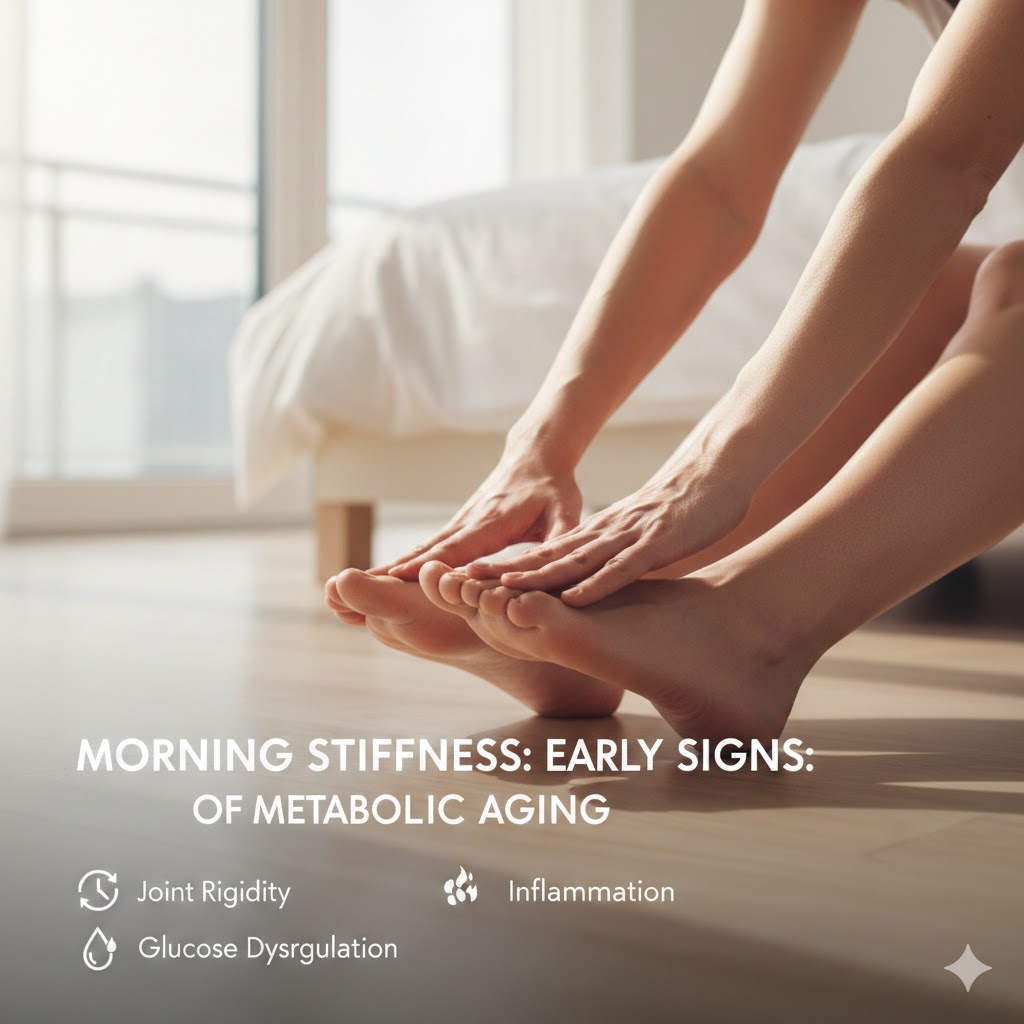
Morning Stiffness Health Waking up used to feel easy. Now it feels… heavy. Joints resist movement. Muscles feel tight. The body needs time to “warm up” before it cooperates. For many people, this change arrives quietly—often years before any diagnosis or obvious health issue.
This pattern is increasingly discussed as Morning Stiffness Health, a subtle but meaningful signal that the body’s recovery and metabolic systems may be slowing down.
It’s not about age alone. And it’s not always about injury. Morning stiffness can be one of the earliest functional signs of metabolic aging, long before standard tests show anything wrong.
This article explains why morning stiffness happens, how it connects to metabolic aging, and why paying attention early matters more than people realize.
1. What Morning Stiffness Health Really Refers To
Morning stiffness isn’t just soreness.
1.1 How It Commonly Feels
- Tight joints on waking
- Reduced range of motion
- Slower movement for the first 30–90 minutes
- Feeling “rusty” instead of refreshed
1.2 Why It’s Often Ignored
- It fades after moving
- It’s blamed on sleep position or age
- It doesn’t always involve pain
Morning Stiffness Health focuses on patterns, not one bad morning.
2. Why Morning Stiffness Is Linked to Metabolic Aging
Metabolism is about more than calories.
2.1 Metabolism Also Controls
- Cellular repair overnight
- Inflammation regulation
- Muscle recovery
- Joint lubrication
- Circulation during rest
When these systems slow, the body wakes up less prepared to move.
2.2 The Overnight Repair Problem
- Reduced cellular cleanup
- Slower tissue recovery
- Mild inflammation lingers
Morning stiffness often reflects what didn’t fully recover overnight.
3. Inflammation That Doesn’t Show on Blood Tests
This is where many people get confused.

3.1 Low-Grade Inflammation
- Not severe enough for diagnosis
- Still enough to affect movement
- Accumulates silently over time
3.2 Why Tests Look “Normal”
- Standard ranges are broad
- Early metabolic changes are functional, not pathological
- The body compensates—until it can’t
This is why Morning Stiffness Health is often discussed before clinical findings.
4. Blood Sugar and Muscle Stiffness Connection
Glucose handling affects flexibility more than people think.
4.1 Poor Glucose Regulation Can
- Increase tissue stiffness
- Affect muscle hydration
- Slow overnight muscle relaxation
4.2 Why It’s Worse in the Morning
- Fasting state stresses glucose control
- Muscles haven’t moved for hours
- Circulation is lower
Stiffness that improves quickly with movement often points toward metabolic flexibility issues.
5. Loss of Muscle Quality, Not Just Muscle Mass
You can look fit and still feel stiff.
5.1 Muscle Quality Declines Before Size
- Reduced mitochondrial efficiency
- Slower repair
- Less elastic muscle fibers
5.2 What That Feels Like
- Tightness without injury
- Heaviness instead of weakness
- Need for longer warm-ups
This change is central to Morning Stiffness Health and metabolic aging discussions.
6. Circulation Slows With Metabolic Aging
Movement starts with blood flow.
6.1 What Happens Overnight
- Circulation naturally drops
- Muscles cool
- Joints receive less fluid movement
6.2 When Metabolism Is Slower
- Rewarming takes longer
- Stiffness lingers
- Energy feels delayed
Morning stiffness can be an early sign of reduced circulatory responsiveness.
7. Sleep Quality Matters More Than Sleep Duration
Eight hours isn’t always restorative.
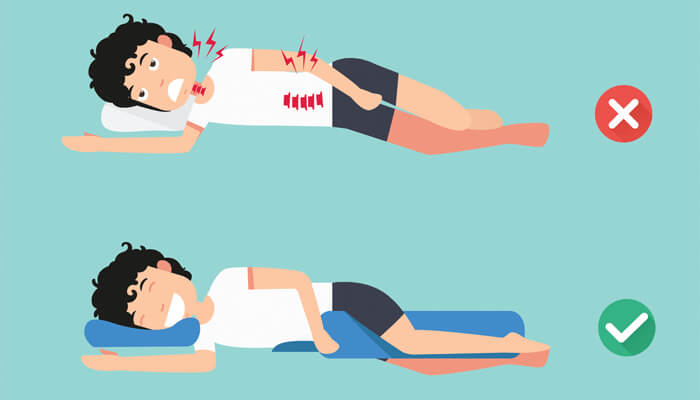

7.1 Poor Sleep Affects
- Growth hormone release
- Tissue repair
- Inflammation balance
7.2 Signs Sleep Isn’t Restorative
- Stiff body despite enough hours
- Mental fog with physical tightness
- Feeling older in the morning than at night
Sleep quality decline often shows up first as morning stiffness, not exhaustion.
8. Why Movement “Fixes” the Stiffness
This clue is important.
8.1 Movement Does
- Increase circulation
- Improve joint lubrication
- Activate metabolism
8.2 What That Tells Us
If movement resolves stiffness, the issue is often systemic, not structural.
That’s why Morning Stiffness Health is viewed as a functional signal rather than a diagnosis.
9. When Morning Stiffness Becomes a Warning Sign
Not all stiffness is equal.
9.1 Patterns to Pay Attention To
- Stiffness increasing month by month
- Longer time to loosen up
- Stiffness paired with fatigue or brain fog
9.2 Why Early Awareness Matters
- Metabolic aging is reversible early
- Systems respond well to lifestyle changes
- Ignoring it allows deeper decline
Catching Morning Stiffness Health early gives you options.
10. Why This Topic Is Gaining Attention Now
People are aging differently.
10.1 Modern Contributors
- Sedentary lifestyles
- Poor sleep cycles
- Constant low-grade stress
- Ultra-processed diets
10.2 The Shift in Health Awareness
- Focus on function, not just disease
- Interest in early warning signs
- Desire to age with mobility, not limitation
Morning stiffness is becoming a signal people finally listen to.
FAQs: Morning Stiffness Health
Is morning stiffness normal with age?
Some stiffness is common, but increasing stiffness isn’t inevitable.
Does morning stiffness mean arthritis?
Not necessarily. Many metabolic and lifestyle factors can cause it.
Why does stiffness improve after moving?
Movement restores circulation and joint lubrication.
Can young people experience this?
Yes. Metabolic aging can begin earlier than chronological aging.
Should morning stiffness be checked medically?
Persistent or worsening stiffness should always be discussed with a professional.
Final Thoughts
Your body speaks in patterns before it speaks in problems. Morning Stiffness Health is one of those early signals—a quiet message that recovery, metabolism, and resilience may need attention.
It doesn’t mean something is broken.
It means something is slowing.
And when you notice it early, you still have time to change the direction.
More Related Topics:
Screen-Induced Insomnia: Sleep Damage Caused by Scrolling
Comfort Deprivation Health: Why Easy Living Is Making Bodies Weak
Silent Fatigue Disorder: When Blood Tests Look Normal but Energy Is Gone