
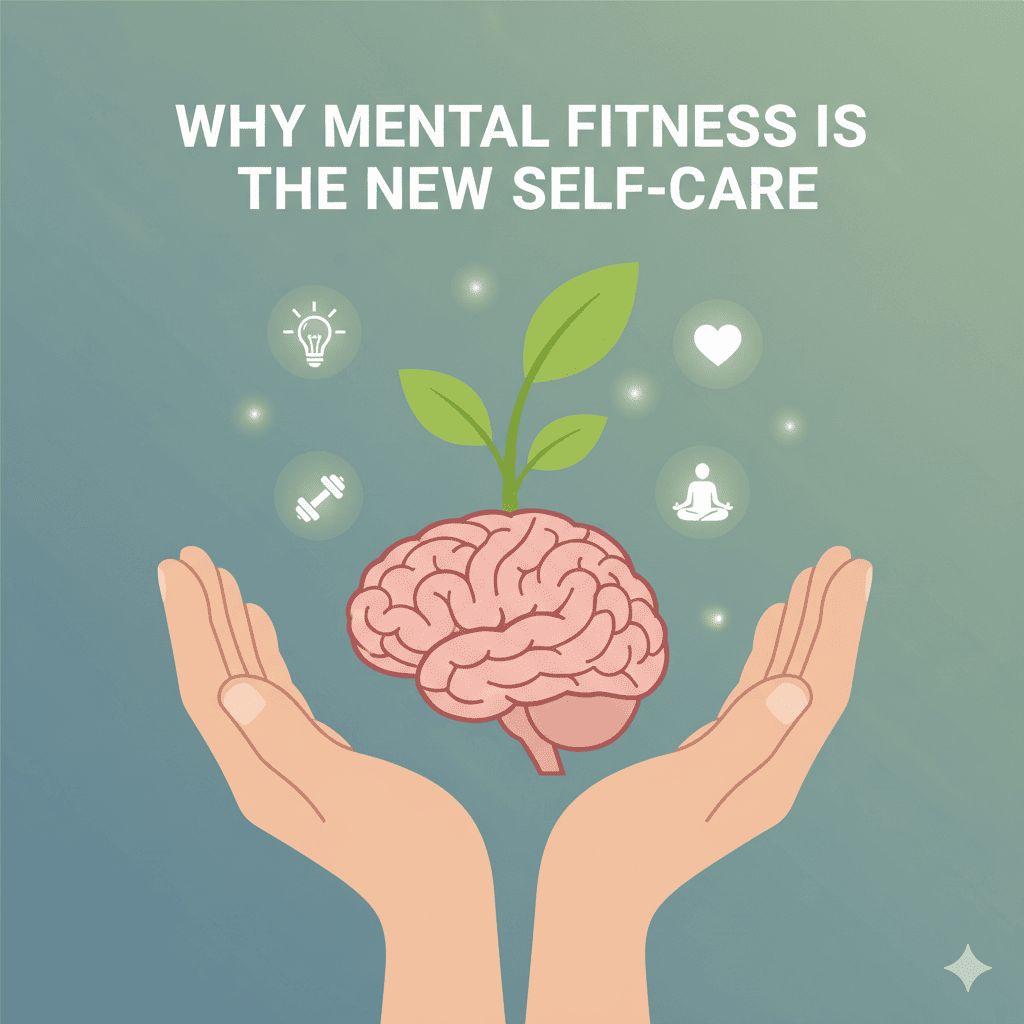
Remember when self-care meant bubble baths and face masks? While there’s nothing wrong with a relaxing Sunday routine, there’s a deeper dimension to wellness that we’re finally starting to talk about: mental fitness.
Just like you wouldn’t expect to run a marathon without training your body, you can’t navigate life’s challenges without strengthening your mind. And that’s exactly what’s shifting in our approach to wellbeing. We’re moving from temporary fixes to lasting transformation.
What Exactly Is Mental Fitness?
Think of mental fitness as your brain’s ability to handle stress, bounce back from setbacks, and maintain a positive outlook even when life gets messy. It’s not about being happy all the time (that’s unrealistic). It’s about building the mental muscle to adapt, grow, and thrive through whatever comes your way.
While traditional self-care focuses on relaxation and restoration, mental fitness is proactive. It’s about training your mind before the crisis hits, not just recovering after it does.
Why the Shift Matters Now
Let’s be honest—our world has become more complex, fast-paced, and unpredictable. Between work demands, social media overload, global uncertainties, and personal responsibilities, our minds are working overtime. The old self-care playbook just isn’t enough anymore.
We need tools that actually work when we’re in the thick of it. When your inbox is exploding, when relationships get rocky, when anxiety creeps in at 2 AM—that’s when mental fitness becomes your lifeline.
The Building Blocks of a Mentally Fit Life
1. Emotional Awareness
You can’t manage what you don’t understand. Mental fitness starts with recognizing your emotions without judgment. What triggers you? What patterns keep repeating? This awareness is your foundation.
2. Cognitive Flexibility
Life rarely goes according to plan. A mentally fit mind can pivot, reframe, and find alternative solutions. It’s about training yourself to see challenges from different angles instead of getting stuck in one perspective.
3. Stress Resilience
Stress isn’t the enemy—chronic, unmanaged stress is. Building mental fitness means developing healthy coping mechanisms that actually work for you, whether that’s movement, meditation, creative expression, or connection.
4. Mindful Practices
This isn’t just about sitting cross-legged on a cushion (though that’s great if it works for you). Mindfulness is about being present—really present—in your daily life. It’s noticing the coffee aroma, feeling your feet on the ground, catching that negative thought before it spirals.
5. Purpose and Meaning
A mentally fit life has direction. What matters to you? What gets you out of bed? Having a sense of purpose acts as an anchor when everything else feels chaotic.
How to Start Your Mental Fitness Journey
The beauty of mental fitness is that it’s accessible to everyone, right now. You don’t need expensive equipment or a complete life overhaul. Start small:
Morning Mind Check-ins: Before reaching for your phone, take 60 seconds to notice how you’re feeling. No fixing, just noticing.
Gratitude Micro-moments: Throughout your day, pause to appreciate three small things. The warm sunlight. That helpful colleague. Your ability to breathe freely.
Stress Pattern Tracking: Keep a simple note of what triggers your stress and how you respond. Awareness creates choice.
Boundary Practice: Say no to one thing this week that drains your energy. Protect your mental space like you’d protect your physical health.
Connection Rituals: Reach out to someone who matters. Real connection is mental fitness fuel.
The Real-World Impact
When you prioritize mental fitness, the changes ripple outward. You show up differently in relationships. You handle work pressure with more grace. You make better decisions. You’re not just surviving—you’re actually living.
And here’s the thing: mental fitness isn’t selfish. When you’re mentally strong, you have more to give. You’re more patient with your kids, more present with your partner, more creative in your work, more compassionate with strangers.
Beyond the Hype
Let’s be clear: mental fitness isn’t about toxic positivity or pretending everything’s fine. It’s not about “good vibes only” or bypassing real pain. It’s about building genuine resilience—the kind that acknowledges the hard stuff while refusing to let it define you.
Some days you’ll crush it. Other days you’ll barely get through. That’s life. Mental fitness gives you the tools to handle both with a little more grace.
Your Mind Deserves Training Too
We’ve normalized gym memberships for our bodies. Isn’t it time we gave our minds the same dedication? Mental fitness isn’t a trend—it’s a fundamental shift in how we approach wellbeing in the 21st century.
The face masks and bubble baths? Keep them. They’re lovely. But add the mental training. Build the resilience. Develop the awareness. That’s where the real transformation happens.
Your mind is your most valuable asset. Train it well.
Also read this:
How to Make Money While Traveling Full-Time: The 2025 Digital Nomad Blueprint
Why You Should Start a Blog in 2025 (Even With AI Everywhere)