
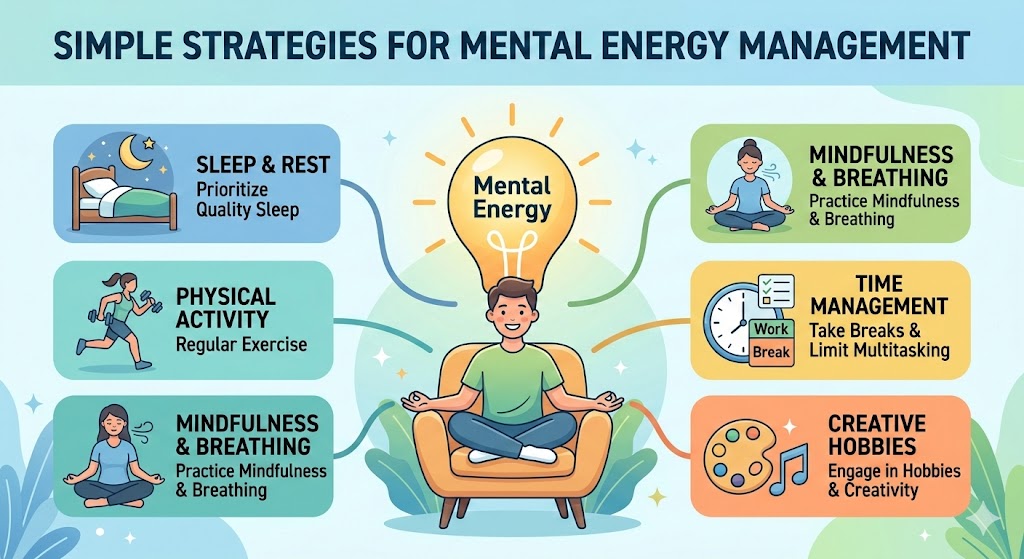
In today’s fast-paced digital environment, productivity is no longer just about managing time—it’s about managing energy. Many high performers are now focusing on Mental Energy Management rather than simply trying to work longer hours.
Mental Energy Management involves understanding how your brain uses energy throughout the day and learning how to optimize focus, creativity, and decision-making. By managing mental energy effectively, you can improve productivity, reduce burnout, and maintain consistent performance.
This guide explores the most effective Mental Energy Management strategies and how to implement them in daily life.
1. What Is Mental Energy Management?
Mental Energy Management refers to the process of regulating cognitive effort, focus, and recovery to maintain peak mental performance.
Instead of forcing productivity through willpower, Mental Energy Management focuses on:
- Working during peak energy periods
- Taking strategic breaks
- Reducing mental overload
- Maintaining cognitive clarity
Your brain has limited energy each day, so how you allocate that energy matters.
2. Why Mental Energy Management Matters
Many people struggle with productivity not because they lack time but because their mental energy is depleted.
Poor Mental Energy Management can lead to:
- Mental fatigue
- Poor decision-making
- Reduced creativity
- Increased stress
- Burnout
Managing mental energy effectively allows you to perform important tasks with greater efficiency.
3. Understand Your Daily Energy Cycles
Human energy levels fluctuate throughout the day.
Most people experience:
- Morning peak focus
- Midday dip
- Afternoon recovery
- Evening slowdown
Recognizing these patterns is a key part of Mental Energy Management.
Schedule demanding tasks during peak focus periods and lighter work during low-energy periods.
4. Prioritize High-Impact Tasks
One important principle of Mental Energy Management is prioritizing tasks that require deep thinking.
Start your day with activities such as:
- Strategic planning
- Writing or creative work
- Complex problem solving
Completing high-impact tasks early ensures they receive your best mental energy.
5. Use Deep Work Sessions
Deep work refers to uninterrupted concentration on cognitively demanding tasks.
To apply this Mental Energy Management strategy:
- Work for 45–90 minutes
- Eliminate distractions
- Take a short break afterward
Focused work sessions help conserve mental energy while improving output quality.
6. Reduce Decision Fatigue
Decision fatigue occurs when too many choices drain mental energy.
Examples include:
- Constant email decisions
- Frequent task switching
- Excessive planning
Mental Energy Management involves simplifying decisions by:
- Creating routines
- Planning the next day in advance
- Automating repetitive choices
Reducing small decisions preserves mental energy for important tasks.
7. Take Strategic Breaks
Breaks are not wasted time—they are essential for Mental Energy Management.
Effective break strategies include:
- Short walks
- Stretching
- Breathing exercises
- Brief meditation
Even a five-minute break can refresh cognitive resources and restore focus.
8. Manage Digital Distractions
Constant notifications and digital interruptions quickly drain mental energy.
To improve Mental Energy Management:
- Turn off nonessential notifications
- Check email at scheduled times
- Limit social media during work hours
Reducing digital interruptions helps maintain longer periods of concentration.
9. Optimize Sleep for Cognitive Recovery
Sleep is one of the most important components of Mental Energy Management.
During sleep, the brain:
- Consolidates memories
- Restores cognitive resources
- Clears metabolic waste
Aim for:
- 7–9 hours of sleep per night
- Consistent sleep schedule
- Reduced screen exposure before bedtime
Quality sleep significantly improves mental performance.
10. Maintain Physical Health
Mental energy is closely linked to physical health.
Healthy habits that support Mental Energy Management include:
- Regular exercise
- Balanced nutrition
- Hydration
- Stress management
Physical well-being provides the foundation for sustained cognitive performance.
11. Practice Mindfulness and Mental Reset
Mindfulness practices help reduce cognitive overload and restore attention.
Activities such as:
- Meditation
- Deep breathing
- Journaling
can reset mental focus and improve Mental Energy Management.
Just a few minutes of mindfulness practice can help calm the mind and improve clarity.
12. Protect Your Cognitive Bandwidth
Not all tasks require equal mental effort.
One important Mental Energy Management technique is protecting your cognitive bandwidth.
This means:
- Delegating low-value tasks
- Automating repetitive work
- Saying no to unnecessary commitments
Protecting mental bandwidth allows you to focus on work that truly matters.
13. Build Sustainable Work Rhythms
Long-term productivity depends on balance between effort and recovery.
Mental Energy Management encourages a sustainable rhythm of:
- Focus
- Breaks
- Recovery
Working continuously without rest leads to diminishing returns.
Frequently Asked Questions (FAQ)
Q1: What is the difference between time management and Mental Energy Management?
Time management focuses on scheduling tasks, while Mental Energy Management focuses on optimizing cognitive performance.
Q2: Can mental energy be improved?
Yes. Sleep, exercise, stress management, and structured work habits can significantly improve mental energy.
Q3: Why do I feel mentally exhausted even when I haven’t worked long hours?
Mental fatigue often results from excessive multitasking, digital distractions, and decision overload.
Q4: How long should deep work sessions last?
Many experts recommend 60–90 minute sessions followed by short breaks.
Q5: Is multitasking harmful to mental energy?
Frequent multitasking can reduce efficiency and increase cognitive fatigue.
Final Thoughts
In a world full of distractions and constant demands, productivity is no longer just about working harder. Effective Mental Energy Management allows individuals to work smarter by aligning tasks with their natural cognitive rhythms.
By managing distractions, prioritizing high-impact work, taking strategic breaks, and maintaining healthy habits, you can significantly improve focus and long-term productivity.
Mental energy is one of your most valuable resources—learning how to manage it effectively can transform both your professional performance and overall well-being.
More Related Topics:
Mushroom Complex Supplements Ranked: The Best Functional Mushroom Blends in 2026
Attention Span Recovery Strategy: How to Rebuild Focus
Protein Water Trend Explained 2026: Why This Fitness Drink Is Taking Over the Market