
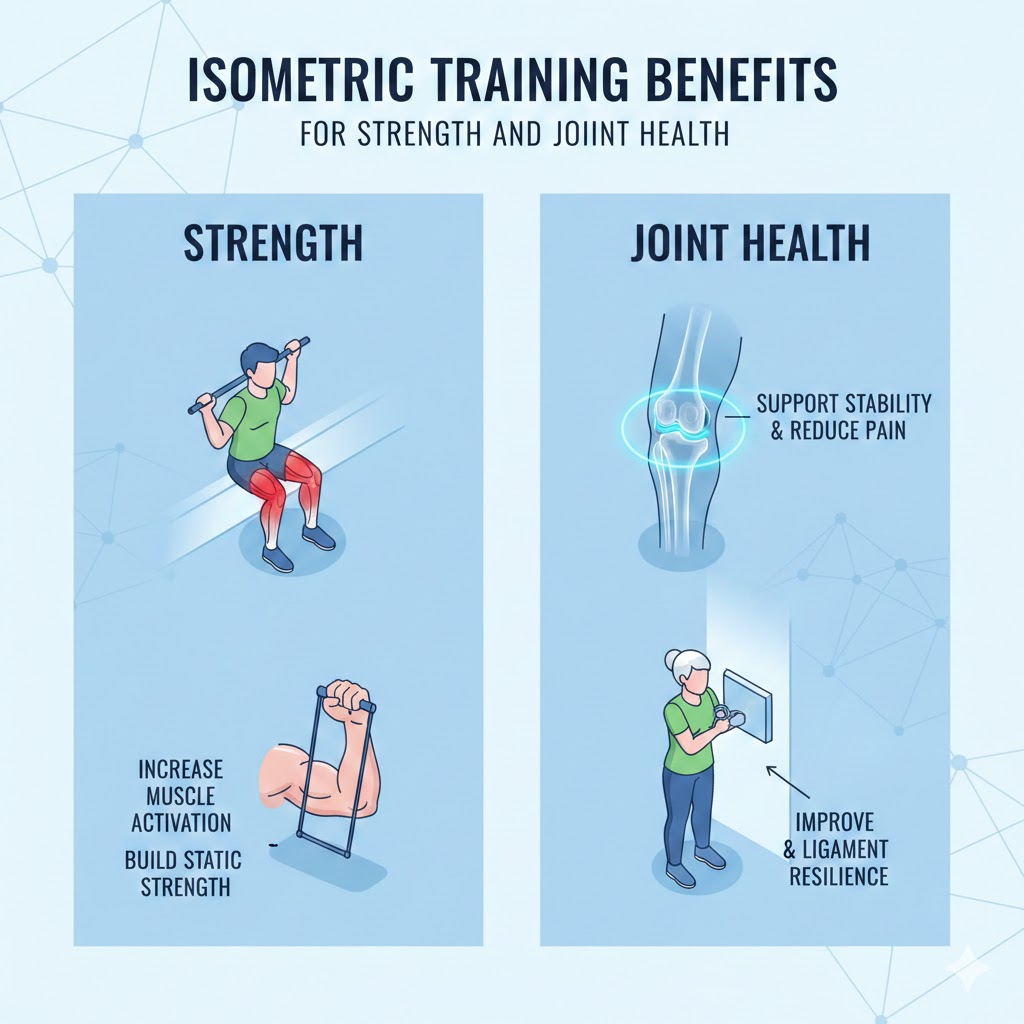
Isometric Training Benefits Strength training is often associated with heavy weights and dynamic movement, but not all strength is built through motion. In recent years, athletes, physiotherapists, and everyday fitness enthusiasts have renewed interest in isometric training—exercises where muscles contract without changing length.
This renewed focus is driven by practicality. Isometric exercises require minimal equipment, place less stress on joints, and still deliver measurable strength gains. As a result, Isometric Training Benefits are now widely discussed in strength training, rehabilitation, and longevity-focused fitness programs.
This article explains how isometric training works, why it’s effective for strength and joint health, and how it fits into modern training routines.
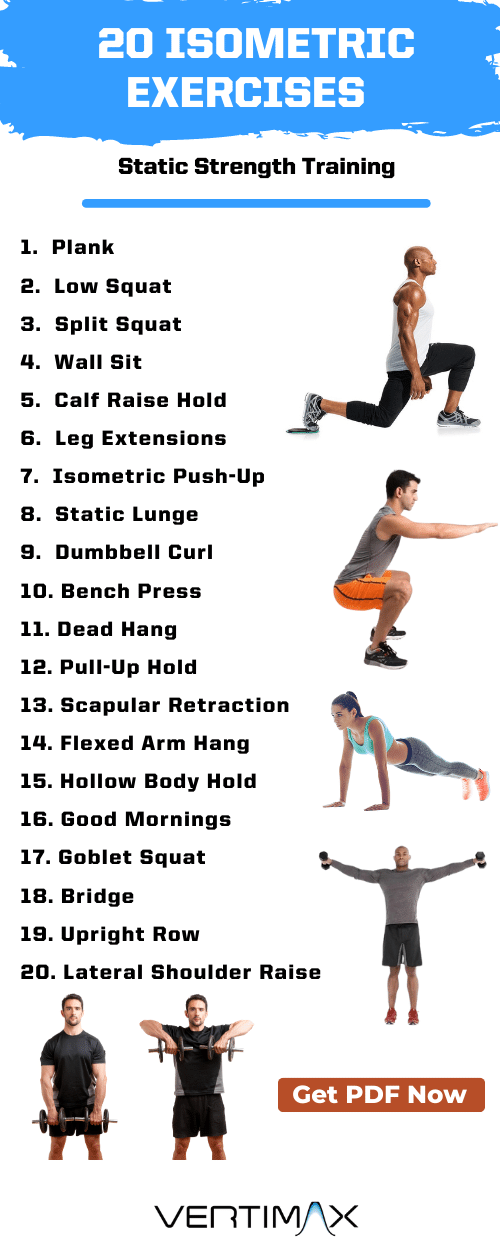
1. Builds Strength Without Joint Movement
One of the most important Isometric Training Benefits is the ability to increase strength while keeping joints still.
Why This Matters
- No joint compression from movement
- Reduced wear on cartilage
- Lower injury risk during training
How Strength Is Built
- Muscles generate force against resistance
- Motor unit recruitment increases
- Strength improves at specific joint angles
This makes isometric training especially valuable for people who want strength gains without repetitive joint motion.
2. Improves Joint Stability and Control
Strong joints are not just about muscles—they’re about stability and control.
Joint Health Benefits
- Strengthens muscles surrounding joints
- Improves joint positioning awareness
- Enhances stability under load
By reinforcing joint-supporting muscles, Isometric Training Benefits extend beyond strength into long-term joint protection.
3. Reduces Stress on Tendons and Ligaments
Dynamic exercises can place repetitive stress on connective tissues.
Why Isometrics Are Joint-Friendly
- No rapid lengthening or shortening of muscles
- Lower strain on tendons
- Controlled force application
This makes isometric training a common choice in rehabilitation and injury-prevention programs.

4. Enhances Mind–Muscle Connection
Isometric holds demand focus and control.
Neuromuscular Benefits
- Increased muscle activation awareness
- Better control of force output
- Improved coordination
Many lifters use isometrics to improve weak points and reinforce proper muscle engagement.
5. Supports Pain Management and Rehabilitation
Isometric exercises are widely used in physical therapy.
Pain-Related Benefits
- Helps maintain strength during injury recovery
- Reduces pain by stabilizing affected joints
- Allows training without aggravating symptoms
For people recovering from injury, Isometric Training Benefits often include maintaining strength while avoiding setbacks.
6. Improves Strength Endurance and Postural Control
Holding positions under tension builds endurance as well as strength.
Endurance Benefits
- Improves time-under-tension capacity
- Enhances postural muscles
- Supports spinal stability
This is especially useful for desk workers, athletes, and older adults focused on posture and balance.
7. Fits Easily Into Any Training Program
One reason isometric training is gaining popularity is its flexibility.
How to Use Isometric Training
- As a standalone workout
- As warm-up or activation
- As accessory work for weak points
Because Isometric Training Benefits don’t rely on equipment or space, they’re easy to integrate into home, gym, or rehab routines.
Frequently Asked Questions
What are the main Isometric Training Benefits?
The main benefits include improved strength, joint stability, reduced joint stress, and better muscle control.
Can isometric training build real strength?
Yes. Isometric exercises increase strength, particularly at specific joint angles and positions.
Is isometric training good for joint pain?
It is often used to support joint health and pain management, especially when movement causes discomfort.
How long should isometric holds be?
Common holds range from 10–45 seconds, depending on goals and experience level.
Can isometric training replace regular strength training?
It works best as a complement, not a full replacement, for dynamic strength training.
Final Thoughts
Strength doesn’t always require movement. Isometric training proves that controlled tension can be just as powerful as dynamic lifting—especially when joint health is a priority.
The growing interest in Isometric Training Benefits reflects a shift toward smarter, more sustainable fitness approaches that emphasize strength, stability, and longevity rather than constant strain.
For anyone looking to build strength while protecting joints, isometric training offers a practical and effective solution.
More Related Topics:
Polyphasic Sleep Benefits and Risks in Modern Lifestyles