
Intermittent Fasting isn’t new. It has been practiced for centuries across cultures for health, discipline, and spiritual reasons. What’s new is the scientific interest behind it — especially the 16:8 method.
Intermittent Fasting has become one of the most researched and widely adopted health strategies in recent years. Among its variations, the 16:8 approach is considered the most practical and sustainable for beginners.
In this guide, we’ll break down how 16:8 works, its proven benefits, common mistakes, and whether it’s right for you.

1. What Is Intermittent Fasting 16:8?
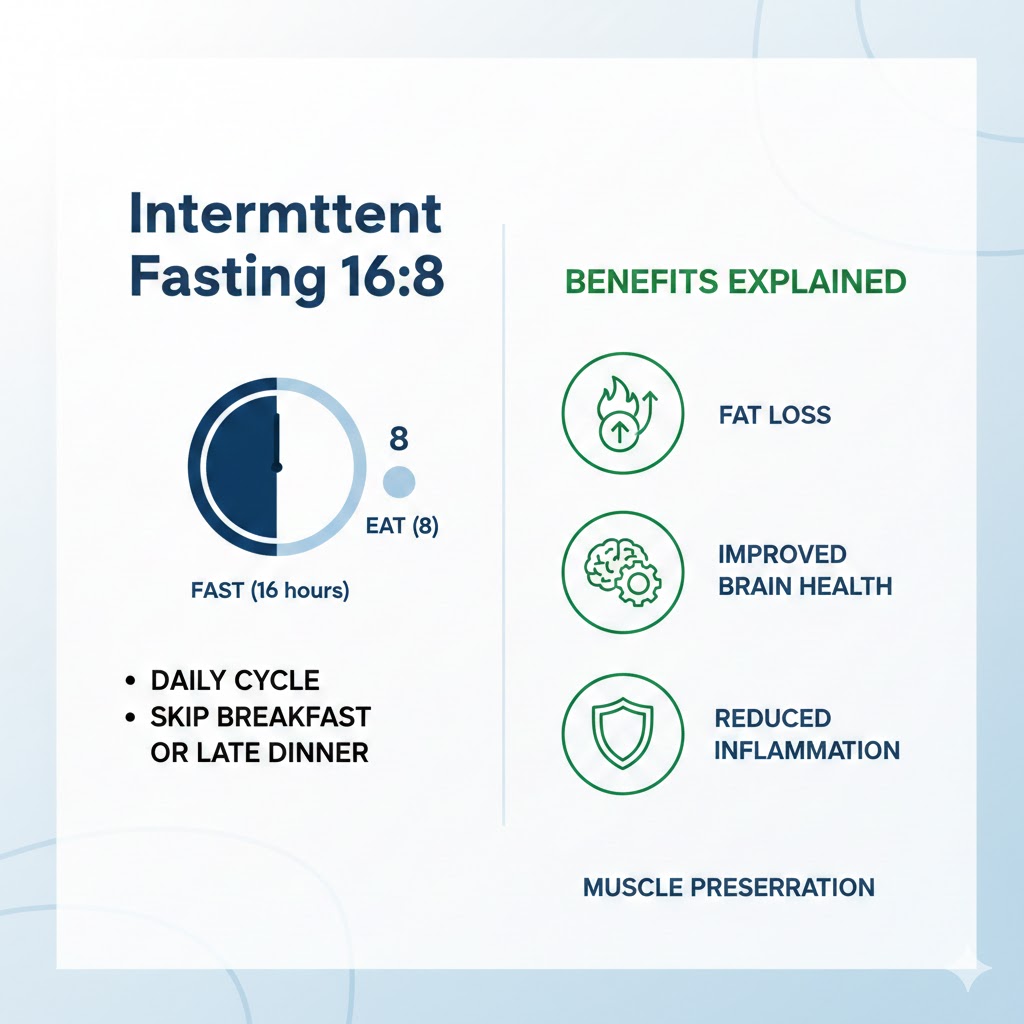
The 16:8 method means:
- 16 hours fasting
- 8 hours eating window
For example:
- Eat between 12 PM – 8 PM
- Fast from 8 PM – 12 PM the next day
During the fasting window, you consume:
- Water
- Black coffee
- Herbal tea (no sugar)
This form of Intermittent Fasting focuses on when you eat, not necessarily what you eat — although food quality still matters.
2. Why 16:8 Is the Most Popular Method
The 16:8 schedule works because:
- It skips breakfast (easier than skipping dinner for most people)
- It aligns with daily routines
- It’s sustainable long term
- It doesn’t require calorie counting
Consistency is what makes this version of Intermittent Fasting practical.
3. Intermittent Fasting and Fat Loss
One of the biggest reasons people try fasting is fat reduction.
How it helps:
- Lower insulin levels
- Increased fat burning
- Reduced overall calorie intake
- Improved metabolic flexibility
When insulin drops during fasting, the body shifts toward using stored fat as fuel.
4. Improved Insulin Sensitivity
Insulin plays a major role in weight gain and metabolic health.
Benefits include:
- Better blood sugar control
- Reduced risk of insulin resistance
- Stable energy levels
Many people report fewer energy crashes when practicing Intermittent Fasting consistently.
5. Mental Clarity and Focus
Many fasters notice improved concentration.
Possible reasons:
- Stable blood sugar
- Increased ketone production
- Reduced digestive load
Instead of post-meal sluggishness, fasting may support sharper morning focus.
6. Cellular Repair and Longevity
Fasting triggers internal repair mechanisms.
Potential processes activated:
- Autophagy (cellular cleanup)
- Reduced oxidative stress
- Improved mitochondrial efficiency
This is why Intermittent Fasting is often discussed in longevity research.
7. Digestive System Reset
Constant eating stresses digestion.
Fasting benefits digestion by:
- Giving the gut time to rest
- Supporting microbiome balance
- Reducing bloating in some individuals
Many people feel lighter and less inflamed.
8. Simplicity Compared to Traditional Diets
Unlike restrictive diets, 16:8 focuses on timing.
Advantages:
- No strict food elimination
- Fewer daily meals to plan
- Easy to combine with healthy eating
Simplicity increases adherence.
9. Common Mistakes in 16:8 Intermittent Fasting
Avoid these errors:
- Overeating during eating window
- Consuming sugary drinks during fast
- Ignoring protein intake
- Expecting instant results
- Skipping hydration
Success requires balanced nutrition inside the eating window.
10. What to Eat During the 8-Hour Window
Food quality determines results.
Ideal meal composition:
- Lean protein
- Healthy fats
- Fiber-rich vegetables
- Whole foods
Fasting doesn’t compensate for poor diet quality.
11. Who Should Avoid Intermittent Fasting?
While many benefit, it’s not for everyone.
Avoid or consult a doctor if:
- Pregnant or breastfeeding
- History of eating disorders
- Diabetes requiring medication
- Underweight
- Certain medical conditions
Safety always comes first.
12. How Long Before Seeing Results?
Results vary.
Typical timeline:
- 1–2 weeks: Hunger adjustment
- 3–4 weeks: Improved energy
- 4–8 weeks: Noticeable fat loss (if consistent)
Consistency matters more than perfection.
13. Is 16:8 Better Than Other Methods?
Other fasting methods include:
- 5:2 diet
- Alternate-day fasting
- 24-hour fasts
For beginners, 16:8 is usually the most sustainable form of Intermittent Fasting.
14. Combining Intermittent Fasting with Exercise
Exercise enhances results.
Best approach:
- Light cardio during fast
- Strength training during eating window
- Adequate protein intake
Muscle preservation requires smart nutrition.
15. Long-Term Sustainability
The real benefit of Intermittent Fasting lies in its sustainability.
People who succeed:
- Build routine
- Focus on balanced meals
- Stay hydrated
- Don’t obsess over perfection
Lifestyle integration matters more than short-term intensity.
16. Final Verdict: Is Intermittent Fasting 16:8 Worth Trying?
For many healthy adults, yes.
Intermittent Fasting 16:8 offers:
- Fat-burning support
- Improved metabolic health
- Mental clarity
- Simplicity
It’s not a miracle. It’s a structured eating rhythm that supports hormonal balance and metabolic efficiency.
If approached gradually and safely, it can become a long-term health tool rather than a temporary diet.
Frequently Asked Questions (FAQ)
Q1. Can I drink coffee during intermittent fasting?
Yes, black coffee without sugar or cream is allowed.
Q2. Will I lose muscle on 16:8?
Not if protein intake and resistance training are maintained.
Q3. Is intermittent fasting safe long term?
For healthy individuals, it can be sustainable when done responsibly.
Q4. Do I need to count calories?
Not necessarily, but overeating can cancel benefits.
Q5. Can beginners start immediately with 16 hours?
Some prefer gradually increasing fasting time.
Conclusion
Health trends come and go, but structured eating patterns backed by science tend to remain relevant. Intermittent Fasting 16:8 stands out because it balances simplicity, flexibility, and metabolic benefits.
If your goal is improved energy, fat reduction, and metabolic stability, 16:8 may be worth trying — with proper guidance and realistic expectations.
More Related Topics:
Adaptogenic Herbs for Stress and Energy Balance (Natural Resilience Support)
Cold Plunge Benefits for Mental and Physical Health (Science, Recovery & Resilience)
Autophagy Fasting Benefits for Anti-Aging (Cellular Renewal Explained)