
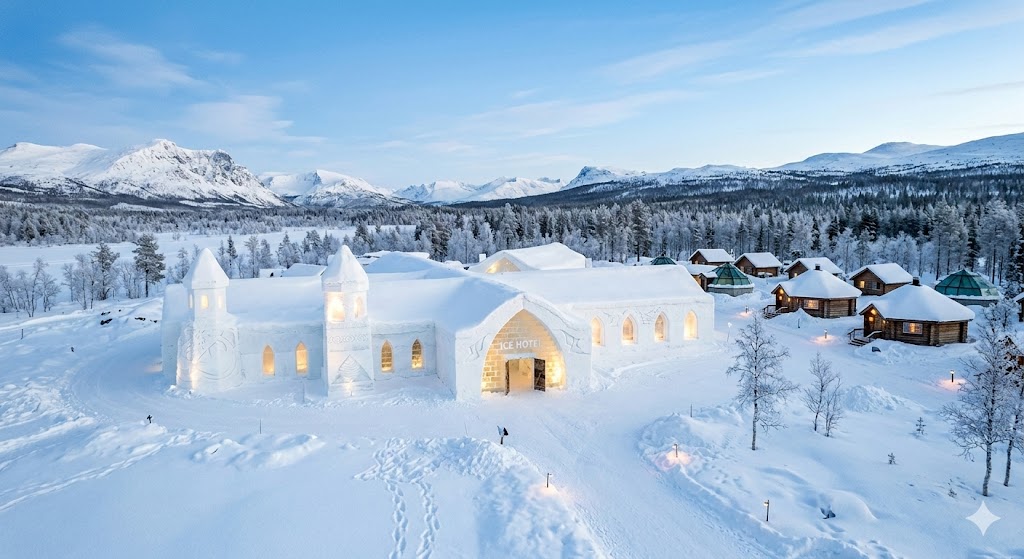
For travelers seeking unique and unforgettable experiences, Ice Hotels and Arctic Stays offer one of the most extraordinary adventures on Earth. Imagine sleeping in a room made entirely of ice, surrounded by snow sculptures, glowing lights, and the quiet beauty of the Arctic landscape.
Over the past few decades, Ice Hotels and Arctic Stays have become one of the most fascinating winter travel trends. From Scandinavia to northern Canada, these frozen accommodations combine art, architecture, and extreme environments into a once-in-a-lifetime travel experience.
This guide explores what Ice Hotels and Arctic Stays are, where to find them, what to expect, and how to plan your Arctic getaway.
1. What Are Ice Hotels and Arctic Stays?
Ice Hotels and Arctic Stays are accommodations built primarily from ice and snow in extremely cold climates. Each winter, these structures are constructed using blocks of ice harvested from nearby rivers or lakes.
Typical features include:
- Ice walls and ceilings
- Ice-carved furniture
- Snow sculptures and artistic designs
- Thermal sleeping gear for guests
Despite the frozen environment, guests sleep comfortably using insulated sleeping bags designed for Arctic temperatures.
2. Why Ice Hotels and Arctic Stays Are So Popular
Many travelers seek experiences that go beyond traditional hotels. Ice Hotels and Arctic Stays provide a unique blend of adventure, luxury, and nature.
Reasons travelers choose these stays include:
- once-in-a-lifetime experience
- incredible winter landscapes
- artistic ice architecture
- opportunities to see the Northern Lights
The combination of natural beauty and creative design makes Ice Hotels and Arctic Stays truly unforgettable.
3. Famous Ice Hotels and Arctic Stays Around the World
Some destinations have become internationally famous for their frozen accommodations.
4. The Icehotel in Jukkasjärvi, Sweden

Icehotel is one of the most famous Ice Hotels and Arctic Stays in the world.
Located about 200 kilometers north of the Arctic Circle, this hotel is rebuilt every winter using ice from the nearby Torne River.
Highlights include:
- hand-carved art suites
- ice chapel for weddings
- ice bar serving drinks in ice glasses
- guided Arctic excursions
This destination is often considered the birthplace of modern Ice Hotels and Arctic Stays.
5. SnowVillage in Finland

Lapland SnowVillage is another incredible example of Ice Hotels and Arctic Stays.
Each year the entire complex is rebuilt with a new artistic theme.
Features often include:
- ice rooms and suites
- frozen restaurants
- snow sculptures
- ice slides and corridors
This Finnish destination attracts visitors looking for authentic Arctic experiences.
6. Hotel de Glace in Canada

Hôtel de Glace is the most famous ice hotel in North America.
It features:
- themed ice suites
- frozen chandeliers
- ice bars and lounges
- outdoor hot tubs and saunas
Hotel de Glace demonstrates how Ice Hotels and Arctic Stays can combine extreme environments with luxury travel experiences.
7. What It’s Like to Sleep in an Ice Hotel
Sleeping in Ice Hotels and Arctic Stays may sound uncomfortable, but the experience is carefully designed for warmth.
Guests typically receive:
- thermal sleeping bags rated for extreme cold
- insulated mattresses
- warm base layers
Inside the ice rooms, temperatures usually stay around -5°C to -8°C (23–17°F).
Despite the cold, many visitors report sleeping surprisingly well.
8. Activities Around Ice Hotels and Arctic Stays
Staying in an ice hotel is only part of the adventure. Many Arctic destinations offer winter activities such as:
- dog sledding
- snowmobiling
- ice fishing
- Northern Lights viewing
- reindeer safaris
These activities make Ice Hotels and Arctic Stays a complete Arctic travel experience.
9. Best Time to Visit Ice Hotels and Arctic Stays
Most ice hotels operate during winter months when temperatures remain below freezing.
Typical season:
- December to April
This period provides the best conditions for maintaining the ice structures and enjoying winter activities.
It also offers the best chance to see the Aurora Borealis.
10. Cost of Ice Hotels and Arctic Stays
Prices vary depending on location and room type.
Typical price ranges:
- standard ice room: $300–$500 per night
- art suite: $500–$1,200 per night
Many hotels offer packages including meals and Arctic excursions.
Although expensive, Ice Hotels and Arctic Stays are often considered a once-in-a-lifetime experience.
11. Tips Before Booking Ice Hotels and Arctic Stays
To make the most of your Arctic adventure, consider these tips:
- pack thermal clothing layers
- bring insulated gloves and boots
- book early for peak winter season
- plan extra nights in nearby warm accommodations
Many travelers spend one night in the ice room and additional nights in traditional heated rooms.
Frequently Asked Questions (FAQ)
Q1: Are Ice Hotels and Arctic Stays safe?
Yes. These hotels are designed with safety measures and built by experienced ice architects.
Q2: Do guests really sleep on ice?
Guests sleep on insulated beds covered with reindeer hides and warm sleeping bags.
Q3: Are bathrooms made of ice too?
Usually not. Bathrooms and showers are located in heated buildings nearby.
Q4: Can you see the Northern Lights from ice hotels?
Many Ice Hotels and Arctic Stays are located in ideal Northern Lights viewing regions.
Q5: Do ice hotels melt every year?
Yes. Many are rebuilt each winter, making every season unique.
Final Thoughts
Few travel experiences compare to the magic of Ice Hotels and Arctic Stays. These frozen accommodations combine art, adventure, and natural beauty in one unforgettable destination.
From sleeping in sculpted ice suites to watching the Northern Lights dance across Arctic skies, Ice Hotels and Arctic Stays offer travelers a rare opportunity to experience winter in its most spectacular form.
For those seeking something truly different from traditional travel, an Arctic ice hotel may be the perfect bucket-list adventure.
Also read this:
Scenic Byway Road Trips: The Ultimate Guide to America’s Most Beautiful Drives (2026)
Glamping Domes in the USA Guide: Where Luxury Meets Nature in 2026