
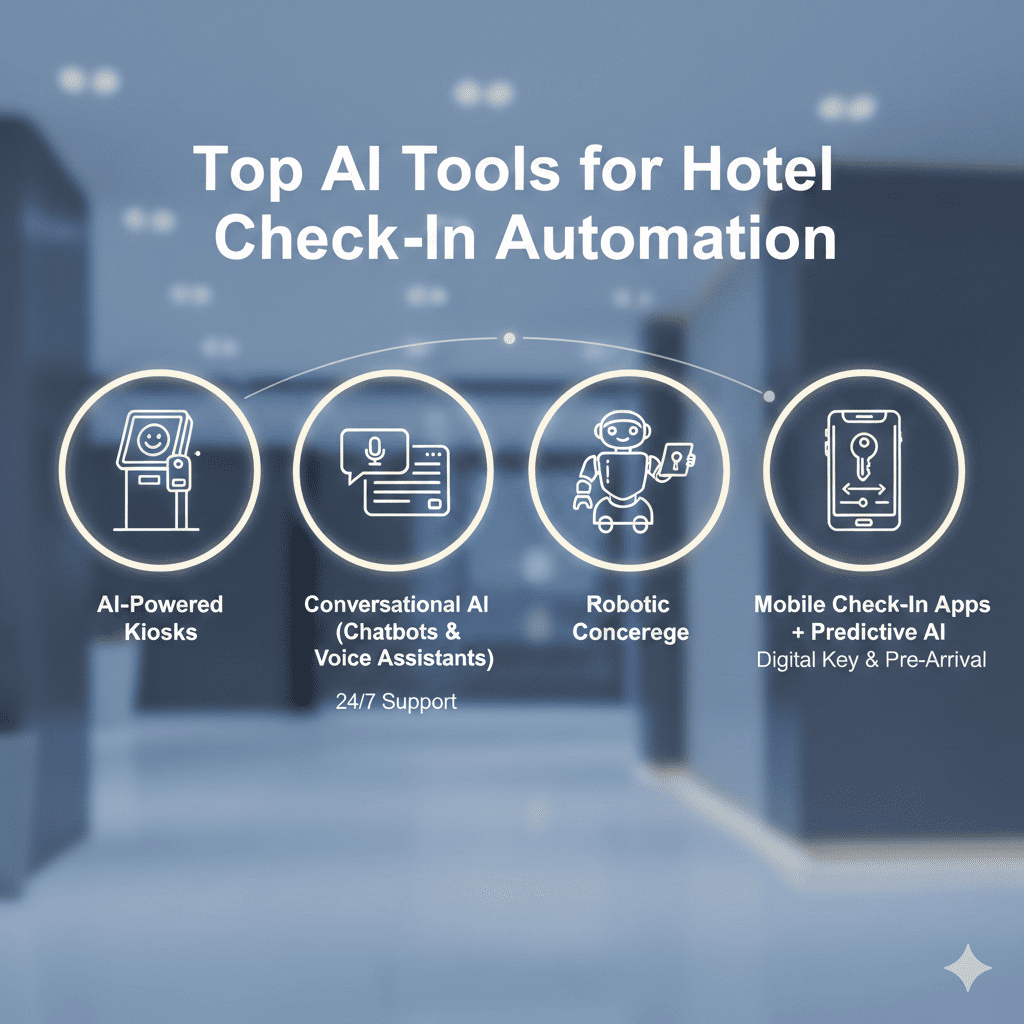
The hospitality industry is experiencing a digital transformation, and Hotel check-in automation is leading the charge. Hotels worldwide are adopting artificial intelligence to streamline operations, reduce wait times, and deliver exceptional guest experiences from the moment visitors arrive. With 73% of travelers expressing preference for contactless services, AI-powered Hotel check-in automation has evolved from a luxury to a necessity.
This comprehensive guide explores the top AI tools revolutionizing hotel check-in processes, helping properties enhance efficiency while maintaining the personal touch guests expect.
Why Check-In Automation Matters for Modern Hotels
Traditional check-in processes create bottlenecks during peak hours, require significant staffing resources, and often frustrate guests eager to access their rooms after long journeys. Check-in automation addresses these challenges by enabling guests to bypass front desk queues entirely, accessing their accommodations through mobile apps, kiosks, or web platforms.
The benefits extend beyond guest satisfaction. Hotels implementing automated check-in systems report 40% reductions in front desk workload, allowing staff to focus on personalized service and complex guest requests. Additionally, automated systems collect valuable data, enabling properties to anticipate guest needs and deliver targeted experiences.
1. ALICE: Comprehensive Guest Experience Platform
ALICE stands out as an all-in-one hospitality operations platform that transforms Hotel check-in automation through intelligent integration. This powerful tool connects every department within your property, creating seamless experiences from pre-arrival to checkout.
Key Features
ALICE’s contactless check-in functionality allows guests to complete registration, select rooms, and receive digital keys before arriving at the property. The platform’s AI engine analyzes guest preferences from previous stays, automatically assigning rooms that match their specifications—whether they prefer higher floors, quiet locations, or specific amenities.
The system integrates with major property management systems (PMS), including Opera, Protel, and Mews, ensuring real-time synchronization of reservations, room availability, and guest information. This integration eliminates double bookings and ensures staff access current data across all touchpoints.
Operational Advantages
Hotels using ALICE report 35% faster check-in times during peak periods. The platform’s mobile app empowers guests to communicate directly with hotel staff, request services, and manage their stay without visiting the front desk. This self-service approach reduces front desk congestion while maintaining high service standards.
The AI-powered task management system automatically assigns housekeeping, maintenance, and concierge requests based on staff availability and location within the property, optimizing operational efficiency. Hotels can track response times, monitor service quality, and identify improvement opportunities through detailed analytics dashboards.
Pricing and Implementation
ALICE operates on a subscription model, with pricing customized based on property size and feature requirements. Implementation typically requires 4-6 weeks, including staff training and system integration. The platform offers dedicated support throughout the onboarding process, ensuring smooth transitions.
2. OpenKey: Mobile Key Technology Pioneer
OpenKey revolutionizes check-in automation by eliminating physical key cards entirely. This innovative platform transforms smartphones into digital room keys, enabling completely contactless access throughout hotel properties.
Technical Capabilities
The system uses Bluetooth Low Energy (BLE) technology to communicate with electronic door locks, providing secure, encrypted access without requiring internet connectivity. Guests receive digital keys through the hotel’s branded mobile app or via Apple Wallet and Google Pay integration, accessing rooms with simple smartphone taps.
OpenKey’s AI algorithms monitor access patterns, identifying unusual activity and potential security concerns. The system automatically logs entry times, creating audit trails for security purposes while respecting guest privacy. If guests lose their phones, hotels can instantly deactivate digital keys remotely, preventing unauthorized access.
Guest Experience Enhancement
The mobile key technology extends beyond guest rooms, providing access to elevators, fitness centers, pools, and other restricted areas. This comprehensive access control eliminates the need to carry multiple cards or return to the front desk for additional permissions.
Guests appreciate the convenience of accessing rooms immediately upon arrival, without queuing at the front desk. Survey data shows 82% of guests prefer mobile keys over traditional cards, citing convenience and reduced physical contact as primary benefits.
Integration and Scalability
OpenKey integrates with over 50 major property management systems and works with leading lock manufacturers including Assa Abloy, dormakaba, and Salto. The platform scales effortlessly from boutique properties to large resort complexes, supporting thousands of simultaneous users without performance degradation.
Implementation costs vary based on existing lock infrastructure. Properties with compatible electronic locks can deploy OpenKey within weeks, while those requiring lock upgrades face longer timelines and higher initial investments.
3. Kipsu: AI-Powered Guest Messaging Platform
Kipsu transforms Hotel check-in automation through intelligent communication, enabling hotels to manage guest interactions across multiple channels from a single platform. This sophisticated messaging system uses AI to streamline communications while maintaining personalized service.
Conversational AI Features
The platform’s AI analyzes incoming guest messages, categorizing requests by department, urgency, and complexity. Simple queries—room availability, check-in times, amenity hours—receive automated responses drawn from the hotel’s knowledge base, providing instant information without staff intervention.
More complex requests automatically route to appropriate team members with full conversation context, ensuring efficient resolution. The AI learns from historical interactions, continuously improving response accuracy and reducing staff workload over time.
Multi-Channel Integration
Kipsu consolidates communications from SMS, website chat, social media platforms, and review sites into a unified inbox. This centralization prevents messages from slipping through cracks while enabling consistent service across all touchpoints.
The platform integrates with property management systems, pulling guest information, reservation details, and preference data into conversations. Staff can view complete guest profiles while communicating, enabling personalized interactions that feel authentic rather than scripted.
Pre-Arrival Engagement
Hotels leverage Kipsu for proactive pre-arrival communication, sending automated messages confirming reservations, offering early check-in options, and collecting special requests. This outreach reduces check-in time by gathering necessary information before guests arrive.
The AI identifies upselling opportunities based on guest profiles and booking patterns, suggesting room upgrades, spa packages, or dining reservations through personalized messages. Hotels report 23% increases in ancillary revenue through Kipsu’s intelligent recommendation engine.
Analytics and Insights
Kipsu’s analytics dashboard tracks response times, message volumes, guest sentiment, and conversion rates across all communication channels. Hotels identify service gaps, training opportunities, and process improvements through detailed reporting.
The platform costs $200-500 monthly per property depending on message volume and feature requirements, making it accessible to properties of various sizes.
4. Canary Technologies: Complete Contactless Solution
Canary Technologies delivers comprehensive check-in automation through an integrated platform covering every guest journey stage. This sophisticated system combines AI, mobile technology, and data analytics to create truly contactless hotel experiences.
Digital Guest Journey
Canary’s platform begins engaging guests before arrival, sending personalized messages with online check-in links. The web-based interface allows guests to complete registration, verify identification, sign documents, and add payment methods from any device without downloading apps.
The AI-powered upsell engine analyzes booking data, suggesting relevant upgrades and add-ons based on guest preferences and spending patterns. Hotels can offer early check-in, late checkout, room upgrades, and package deals through automated, personalized recommendations that convert at 15-20% higher rates than manual upselling.
Identification Verification
Canary’s AI-powered ID verification system authenticates government-issued identification documents, extracting relevant information while checking for forgeries and alterations. This technology reduces fraud risk while accelerating check-in processes—guests simply photograph their IDs using smartphone cameras.
The system complies with local regulations regarding guest registration and identity verification, automatically generating required documentation for authorities. This automation eliminates manual data entry errors while ensuring regulatory compliance across jurisdictions.
Contactless Payments
The platform securely captures payment information during online check-in, storing encrypted data for charges throughout the stay. AI monitors spending patterns, flagging unusual activity that might indicate fraud while enabling seamless billing for room service, minibar, and amenity charges.
Automatic checkout processes charges final bills when guests depart, eliminating checkout lines entirely. Guests receive detailed invoices via email, with options to dispute charges or request adjustments through the mobile interface.
Operational Dashboard
Hotel staff access comprehensive dashboards showing check-in completion rates, arrival times, special requests, and upsell conversion metrics. This visibility enables proactive service delivery—preparing rooms with requested amenities before guests arrive and allocating staff resources based on predicted arrival patterns.
Canary integrates with major property management systems, payment processors, and guest experience platforms, creating seamless data flow throughout hotel operations. Properties report 50% reductions in check-in time and 30% improvements in staff efficiency after implementation.
Pricing Structure
Canary operates on per-room, per-month pricing models starting around $3-5 per room. This scalable approach makes the platform accessible to properties ranging from small boutique hotels to large resort chains.
5. Flexkeeping: AI-Driven Operations Management
While primarily known as a housekeeping platform, Flexkeeping significantly enhances check-in automation by ensuring rooms are ready when guests arrive. This AI-powered system optimizes cleaning operations, reducing wait times and improving guest satisfaction.
Predictive Room Readiness
Flexkeeping’s AI analyzes historical data, predicting cleaning times based on room types, occupancy patterns, and staff performance. The system schedules housekeeping tasks to ensure rooms are ready for early arrivals and expedited check-ins.
Real-time tracking shows exact room status—dirty, being cleaned, inspected, or ready for occupancy. Front desk staff access this information instantly, providing accurate availability updates to arriving guests and enabling faster room assignments.
Integration Benefits
The platform integrates with property management systems and check-in automation tools, automatically updating room status across all systems. When housekeeping completes room preparation, the information immediately flows to check-in platforms, enabling instant guest access.
This integration eliminates communication gaps between departments, reducing instances where guests receive keys to uncleaned rooms—a common pain point in hotel operations.
Performance Analytics
Flexkeeping tracks housekeeping efficiency, room turnover times, and quality scores, identifying training needs and process improvements. Hotels optimize staffing levels based on predicted occupancy and cleaning requirements, reducing labor costs while maintaining service standards.
The platform’s mobile interface enables housekeepers to receive assignments, report issues, and update status in real-time from their smartphones, eliminating paper-based systems and improving communication.
Properties using Flexkeeping report 25% improvements in room turnover times and 40% reductions in guest complaints related to room readiness. Subscription costs start around $2-4 per room monthly.
6. Amadeus Guest Experience Suite: Enterprise-Level Automation
Amadeus provides comprehensive check-in automation solutions designed for large hotel chains and enterprises requiring sophisticated integration and scalability. This powerful platform combines AI, cloud technology, and extensive distribution capabilities.
Advanced Check-In Features
The Guest Experience Suite offers web check-in, mobile check-in, and kiosk check-in options, enabling properties to deploy solutions matching their specific requirements. The AI engine personalizes experiences based on loyalty status, booking source, and historical preferences.
Guests can select specific rooms from interactive floor plans, view real-time availability, and request upgrades during online check-in. The system processes payments, issues digital keys, and sends arrival instructions automatically.
Enterprise Integration
Amadeus integrates deeply with major PMS platforms, CRM systems, and revenue management tools, creating unified data ecosystems across hotel portfolios. This integration enables corporate-level insights while maintaining property-specific customization.
Chain hotels leverage centralized loyalty data, applying consistent benefits and recognition across all locations. Guests receive familiar experiences regardless of which property they visit, strengthening brand loyalty.
Distribution and Booking Engine Integration
The platform connects directly with Amadeus’ global distribution system, ensuring inventory, rates, and availability sync seamlessly across all booking channels. This integration eliminates discrepancies between what guests book and what properties expect.
Hotels can push special offers, upgrades, and packages directly through the Guest Experience Suite, targeting specific guest segments with personalized promotions that drive incremental revenue.
Business Intelligence
Comprehensive analytics track check-in completion rates, mobile app adoption, upsell conversion, and guest satisfaction across entire portfolios. Corporate teams identify best practices, benchmark property performance, and implement improvements systematically.
Amadeus suits large hotel chains with complex requirements and budgets for enterprise software. Pricing varies significantly based on property count, transaction volumes, and customization needs, typically requiring direct consultation.
7. StayNTouch: Cloud PMS with Built-In Automation
StayNTouch reimagines property management systems by embedding check-in automation directly into core hotel operations. This cloud-native platform combines traditional PMS functionality with modern guest experience features.
Native Mobile Guest Experience
Unlike platforms requiring third-party integrations, StayNTouch includes native mobile check-in, digital keys, and guest messaging within its PMS architecture. This unified approach eliminates integration headaches while ensuring consistent data across all systems.
Guests download the hotel’s branded mobile app, completing check-in processes, accessing rooms, and managing stays without switching between multiple applications. The streamlined experience increases adoption rates and reduces guest friction.
Contactless Operations
The platform supports completely contactless stays from booking through checkout. Guests can reserve rooms, check in, unlock doors, request services, and check out without physical front desk interaction.
Staff utilize mobile devices running StayNTouch’s staff app, managing operations from anywhere in the property. This mobility enables service delivery wherever guests need assistance, rather than requiring them to visit fixed front desk locations.
Revenue Optimization
AI-driven upselling features present personalized offers during online check-in, suggesting upgrades, packages, and add-ons likely to appeal to specific guests. The system learns from conversion patterns, continuously refining recommendations to maximize revenue.
Dynamic room assignment algorithms optimize inventory utilization, balancing guest preferences with operational efficiency. The system considers factors like room condition, housekeeping status, maintenance schedules, and predicted length of stay when assigning accommodations.
Cloud Benefits
As a cloud-native platform, StayNTouch eliminates on-premise servers, reducing IT costs and maintenance requirements. Updates deploy automatically, ensuring properties always run current software versions with latest features and security patches.
The system’s reliability exceeds traditional server-based solutions, with 99.9% uptime guarantees and disaster recovery capabilities built into the architecture.
StayNTouch serves hotels ranging from small boutiques to large resorts, with pricing based on room count and feature requirements. Implementation typically requires 6-12 weeks depending on data migration complexity and integration needs.
8. Intelity: Comprehensive Guest Experience Platform
Intelity delivers sophisticated Hotel check-in automation through an enterprise-grade platform combining mobile apps, in-room tablets, kiosks, and staff tools. This flexible solution adapts to diverse property types and guest preferences.
Multi-Device Flexibility
Guests choose how they interact with the hotel—through mobile apps for tech-savvy travelers, lobby kiosks for those preferring self-service, or in-room tablets for enhanced convenience. This flexibility ensures every guest finds a comfortable interaction method.
The platform maintains consistent experiences across all touchpoints, with changes made on one device reflecting immediately across others. Guests might start check-in on their smartphone, then complete final steps at a lobby kiosk without re-entering information.
AI-Powered Recommendations
Intelity’s AI analyzes guest behavior, booking patterns, and property offerings to generate personalized recommendations. The system suggests dining reservations, spa appointments, local attractions, and amenities likely to interest specific guests.
These recommendations appear throughout the guest journey—during check-in, through push notifications, and on in-room tablets—creating natural upselling opportunities without aggressive sales tactics.
Operational Automation
The platform includes intelligent task management that routes guest requests to appropriate staff members based on availability, location, and expertise. AI predicts request volumes, helping properties optimize staffing levels throughout the day.
Real-time analytics show request response times, guest satisfaction scores, and operational bottlenecks. Hotels identify and address service gaps before they impact guest experiences.
Extensive Integration Ecosystem
Intelity integrates with hundreds of hotel technology systems including PMS, door locks, payment processors, CRM platforms, and entertainment systems. This extensive connectivity creates truly connected guest experiences where all systems work together seamlessly.
The platform particularly excels in luxury and resort environments where comprehensive guest services and multiple amenity bookings are common. Pricing reflects this enterprise focus, with costs varying based on property size and feature requirements.
9. Whistle: SMS-Based Check-In Solution
Whistle takes a refreshingly simple approach to check-in automation, leveraging SMS messaging to enable contactless experiences without requiring app downloads. This accessibility-focused platform works with any mobile phone, removing technological barriers.
Universal Accessibility
SMS works on every mobile device globally, from smartphones to basic feature phones. This universality ensures 100% of guests can access check-in automation regardless of device type, operating system, or app preferences.
Guests receive text messages with links to web-based check-in pages. These mobile-optimized sites enable full check-in completion within web browsers, with no apps to download or accounts to create.
Simplified Guest Experience
The SMS interface feels conversational and natural, guiding guests through check-in steps with clear, concise messages. Guests respond to prompts by clicking links or sending simple text replies, completing processes in minutes.
After check-in, guests receive SMS confirmations with room numbers, digital key activation links, and Wi-Fi credentials. All information needed for property access arrives via text message, eliminating confusion.
Staff Efficiency
Whistle’s dashboard shows check-in completion rates in real-time, enabling staff to identify guests needing assistance. The system sends automated reminders to guests who haven’t completed check-in, reducing front desk congestion.
Two-way messaging enables guests to ask questions or make requests via SMS, with staff responding through the Whistle platform. This creates authentic communication channels without requiring guests to call or visit the front desk.
Implementation Simplicity
Whistle integrates quickly with most property management systems through APIs or webhooks. Properties can launch SMS check-in within weeks, with minimal technical requirements or infrastructure changes.
The platform’s per-message pricing model makes costs predictable and scalable. Hotels pay only for messages sent, with no minimum commitments or hidden fees. This pricing structure appeals to smaller properties seeking affordable check-in automation.
10. Virdee: Self-Service Kiosk Specialist
Virdee focuses exclusively on physical self-service kiosks for check-in automation, providing hardware and software solutions that transform lobby experiences. These elegant touchscreen stations handle complete check-in processes without staff involvement.
Hardware Excellence
Virdee’s kiosks feature large, intuitive touchscreens with clear instructions guiding guests through registration. Built-in ID scanners, payment terminals, and key card encoders enable complete self-service from a single device.
The industrial-grade hardware withstands heavy use in high-traffic lobbies, with ruggedized components and responsive touchscreens. Units include security features protecting guest data and preventing tampering.
Software Intelligence
The kiosk software uses AI for ID verification, automatically extracting information from driver’s licenses, passports, and other identification documents. Image processing algorithms detect fraudulent IDs, protecting properties from identity fraud.
Upselling screens appear during check-in, presenting relevant offers based on reservation details and available inventory. Guests select upgrades with simple touches, with changes reflecting immediately in the property management system.
Multilingual Support
Kiosks support dozens of languages, automatically detecting guest preferences based on reservation data or allowing manual selection. This multilingual capability enhances experiences for international travelers who might struggle with English.
Visual guides supplement text instructions, ensuring guests of all literacy levels successfully complete check-in. The intuitive interface design reduces confusion and error rates.
Brand Customization
Virdee kiosks accept complete customization, featuring hotel branding, colors, and logos. Properties create branded experiences that feel integrated with their overall design aesthetic rather than generic technology.
The platform integrates with major property management systems, payment processors, and key card systems. Installation requires electrical power and network connectivity, with setup completed in hours.
Pricing includes hardware purchase or lease options plus monthly software licensing. This model suits properties committed to long-term kiosk deployment as primary check-in methods.
Choosing the Right Check-In Automation Solution
Selecting optimal check-in automation tools requires careful consideration of property type, guest demographics, existing technology infrastructure, and operational goals. No single solution suits every hotel—successful implementation demands matching tools to specific requirements.
Property Size Considerations
Small boutique hotels benefit from affordable, quick-to-implement solutions like Whistle or Kipsu that deliver immediate value without enterprise complexity. Mid-sized properties might prefer comprehensive platforms like Canary Technologies or StayNTouch balancing functionality with reasonable costs. Large chains and resorts require enterprise solutions like Amadeus or Intelity offering centralized management, deep integrations, and scalability across portfolios.
Guest Demographics
Luxury properties serving affluent, tech-savvy guests should prioritize mobile-first platforms with extensive personalization like Intelity or ALICE. Budget and economy properties might emphasize simple, reliable kiosks from Virdee ensuring universal accessibility. Business hotels benefit from integration with corporate travel tools and fast, efficient check-in processes.
Integration Requirements
Properties using modern, cloud-based property management systems enjoy easier integration with most automation platforms. Hotels running legacy systems should verify compatibility carefully, potentially prioritizing solutions with extensive integration libraries or willingness to build custom connections.
Consider integration beyond property management—door lock systems, payment processors, guest experience platforms, and revenue management tools all require connectivity for optimal results.
Implementation Timeline
Some properties need rapid deployment to address immediate operational challenges. SMS-based solutions and simple mobile check-in platforms launch within weeks. Comprehensive enterprise implementations requiring hardware installation, extensive integrations, and multi-property coordination might require several months.
Factor in staff training time, guest communication campaigns, and phased rollouts when planning timelines. Rushing implementation risks adoption failures and guest frustration.
Budget Constraints
Check-in automation tools span wide price ranges from hundreds to tens of thousands of dollars monthly. Understand total costs including software licensing, hardware purchases, implementation fees, ongoing support, and transaction charges.
Calculate return on investment based on labor savings, upsell revenue increases, and guest satisfaction improvements. Most solutions generate positive ROI within 12-18 months through operational efficiencies and revenue growth.
Implementation Best Practices
Successful check-in automation deployment extends beyond technology selection—thoughtful implementation determines whether solutions deliver promised benefits or create guest frustration.
Staff Preparation
Train staff thoroughly before launching automation tools. Team members must understand how systems work, troubleshoot common issues, and assist guests needing support. Staff should feel confident that automation enhances rather than replaces their roles.
Emphasize how freed capacity enables higher-value interactions—personalized recommendations, complex problem-solving, and relationship building—rather than routine transactions.
Guest Communication
Educate guests about new check-in options through pre-arrival emails, website information, and lobby signage. Explain benefits clearly—time savings, convenience, safety—addressing potential concerns about technology complexity.
Offer choices rather than mandates initially. Maintain traditional front desk check-in alongside automated options, allowing guests to select preferred methods. Gradually shift toward automation as adoption increases and confidence builds.
Phased Rollouts
Launch automation tools gradually rather than overnight cutover. Begin with tech-savvy guest segments or loyalty members likely to embrace innovation. Gather feedback, address issues, and refine processes before broader deployment.
Monitor completion rates, error frequencies, and guest satisfaction scores during rollouts. Quickly address problems preventing successful usage.
Continuous Optimization
Regularly review analytics identifying bottlenecks, confusion points, and abandonment causes. Adjust interfaces, clarify instructions, and simplify processes based on real usage data.
Solicit guest feedback through surveys and reviews, asking specifically about check-in experiences. Use insights to drive continuous improvement.
Conclusion: The Future of Hotel Check-In Automation
Check-in automation has evolved from experimental technology to hospitality standard, with adoption accelerating across all property types and segments. The tools discussed in this guide represent the cutting edge of guest experience innovation, combining artificial intelligence, mobile technology, and operational intelligence.
Properties implementing these solutions report dramatic improvements in guest satisfaction, operational efficiency, and revenue generation. Check-in times decrease by 40-60%, front desk labor requirements drop by 30-50%, and upsell conversion rates increase by 15-25%.
The future promises even more sophisticated automation—facial recognition check-in, voice-activated room access, predictive service delivery, and seamless integration across entire hotel stays. Properties investing in check-in automation today position themselves for continued evolution, building technological foundations supporting tomorrow’s innovations.
Whether you operate a small bed and breakfast or a global hotel chain, the right check-in automation tools can transform guest experiences while improving operational performance. Start by assessing your specific needs, exploring solutions matching your requirements, and implementing thoughtfully with guest experience as the guiding principle.
Also read this:
Best AI Tools for Resume Shortlisting in HR: Revolutionize Your Recruitment Process
Top AI Tools for NFT Art Generation: Transform Your Creative Vision into Digital Assets
Top AI Tools for Realistic 3D Home Visualization: Transform Your Design Vision into Stunning Reality