
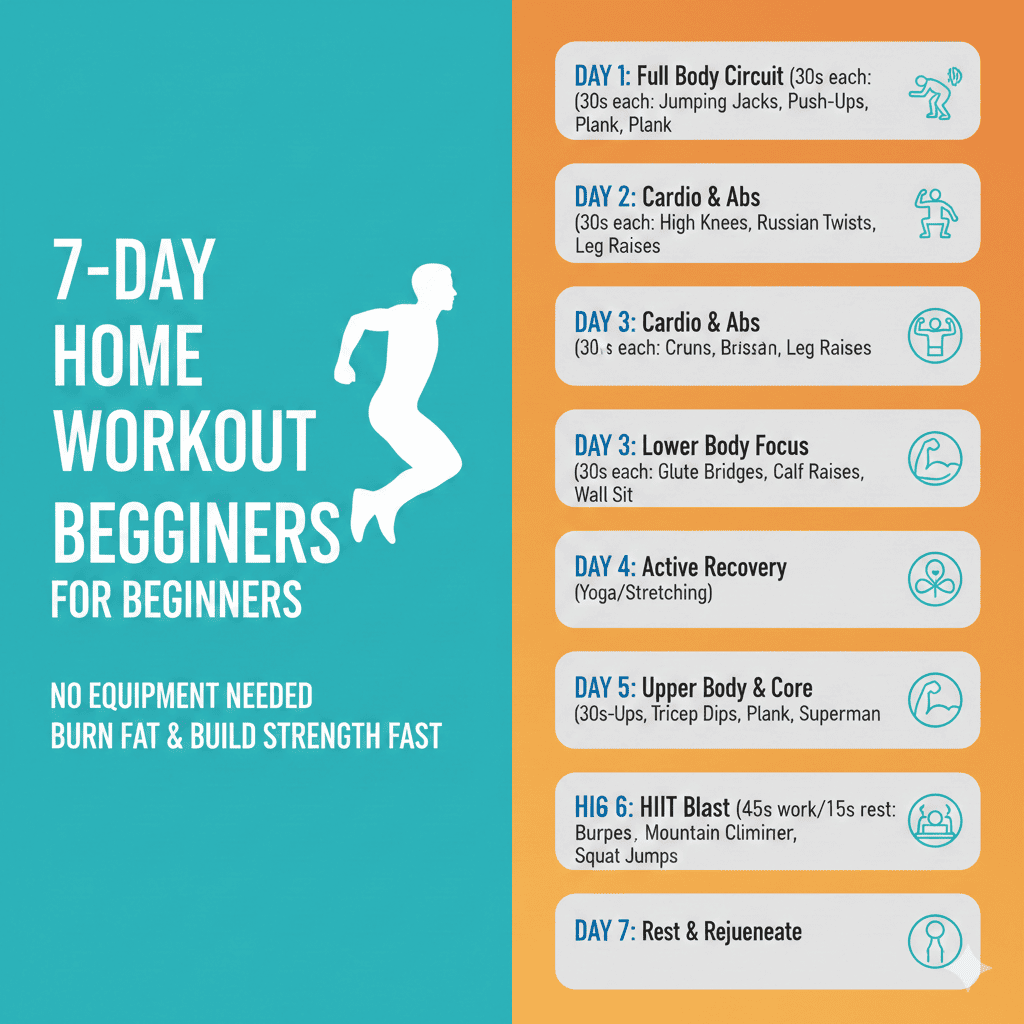
home workout plan Starting your fitness journey doesn’t require an expensive gym membership or fancy equipment. With the right home workout plan, you can transform your body, burn fat, and build strength right in your living room. This comprehensive guide will walk you through everything you need to know about creating an effective workout routine that delivers real results without stepping foot outside your door.
Why Choose a Home Workout Plan?
Before diving into the specifics, let’s explore why a home workout plan is the perfect solution for beginners looking to burn fat and build strength. The convenience factor alone makes home workouts incredibly appealing. You can exercise on your schedule, eliminate travel time to the gym, and save money on membership fees. There’s no waiting for equipment, no feeling self-conscious around experienced gym-goers, and you have complete control over your environment.
Home workouts also offer incredible flexibility. Whether you’re a busy parent, a working professional, or someone who simply prefers privacy while exercising, a well-structured home workout plan adapts to your lifestyle rather than forcing you to adapt to gym hours and crowded spaces. The best part? Bodyweight exercises can be just as effective as equipment-based workouts when performed correctly and consistently.
Understanding the Fundamentals
How Bodyweight Training Burns Fat
Your body is the ultimate piece of exercise equipment. When you perform bodyweight exercises, you’re forcing multiple muscle groups to work together, creating a compound effect that elevates your heart rate and metabolism. This metabolic boost doesn’t just happen during your workout—it continues for hours afterward, a phenomenon known as excess post-exercise oxygen consumption or EPOC. This means you’re burning calories long after you’ve finished your last rep.
Bodyweight exercises also build lean muscle mass, which is metabolically active tissue. The more muscle you have, the more calories your body burns at rest. This creates a sustainable fat-burning effect that compounds over time, making your home workout plan an investment in long-term metabolic health.
The Strength-Building Science
Building strength without weights is entirely possible and follows the same principles as traditional resistance training. By manipulating tempo, volume, and exercise variations, you create progressive overload—the key stimulus for muscle growth. When you perform a push-up, you’re lifting approximately 60-70% of your body weight. A squat moves about 70% of your body weight. These are significant loads that stimulate muscle adaptation.
The beauty of bodyweight training lies in its emphasis on functional movement patterns. You’re not just building isolated muscles; you’re developing coordination, balance, and real-world strength that translates to everyday activities and reduces injury risk.
1. Before You Begin: Essential Preparation
Assessing Your Current Fitness Level
Honesty is crucial when starting any home workout plan. Take a moment to evaluate where you currently stand. Can you perform ten push-ups with proper form? How long can you hold a plank position? Can you complete twenty squats without losing breath? These baseline assessments aren’t about judging yourself—they’re about creating a realistic starting point.
Write down your current capabilities. Time how long you can hold a plank. Count how many modified push-ups you can complete. Test your squat depth and form. This information will help you track progress and celebrate improvements throughout your journey.
Creating Your Workout Space
You don’t need much room for an effective home workout plan, but you do need enough space to move comfortably. Clear an area that’s at least six feet by six feet—enough space to perform lunges, jumping jacks, and other dynamic movements without obstacles. Ensure the floor surface provides adequate grip to prevent slipping during exercises like mountain climbers or burpees.
Good lighting and ventilation are often overlooked but make a significant difference in workout quality. Open a window, turn on a fan, or adjust the temperature to keep your space comfortable. Consider placing a yoga mat or towel down for cushioning during floor exercises and to absorb sweat.
Gathering Optional Items
While this home workout plan requires no equipment, a few household items can enhance your experience. A water bottle is essential for hydration. A towel serves multiple purposes—wiping sweat, providing cushioning, and even adding resistance to certain exercises. A chair or sturdy piece of furniture can modify exercises for different difficulty levels. Your smartphone or a timer helps track intervals and rest periods.
2. The Complete 7-Day Home Workout Plan
Day 1: Full Body Foundation
Warm-Up (5 minutes)
- Arm circles: 30 seconds forward, 30 seconds backward
- Leg swings: 20 swings per leg, front to back and side to side
- Bodyweight squats: 15 reps, focusing on form
- High knees: 30 seconds
- Torso twists: 20 rotations
Main Workout Circuit (Repeat 3 times)
- Push-ups or modified push-ups: 10-12 reps. Keep your core tight and lower your chest to within a few inches of the floor. If standard push-ups are too challenging, perform them on your knees or against a wall.
- Bodyweight squats: 15-20 reps. Stand with feet shoulder-width apart, lower your hips back and down as if sitting in a chair, keeping your chest up and knees tracking over your toes.
- Plank hold: 20-30 seconds. Maintain a straight line from head to heels, engaging your core throughout.
- Alternating lunges: 10 reps per leg. Step forward with control, lowering your back knee toward the floor while keeping your front knee aligned over your ankle.
- Mountain climbers: 20 total reps. From a plank position, drive your knees toward your chest alternately with control.
Rest: 60-90 seconds between circuits
Cool-Down (5 minutes)
- Gentle walking in place: 2 minutes
- Standing quad stretch: 30 seconds per leg
- Standing hamstring stretch: 30 seconds per leg
- Chest and shoulder stretches: 1 minute
- Deep breathing exercises: 1 minute
Day 2: Cardio and Core Focus
Warm-Up (5 minutes)
- Jumping jacks: 40 reps
- Butt kicks: 30 seconds
- Arm swings: 30 seconds
- Hip circles: 10 circles each direction per leg
- Light jogging in place: 1 minute
Main Workout (20 minutes HIIT format)
- High knees: 40 seconds on, 20 seconds rest
- Bicycle crunches: 40 seconds on, 20 seconds rest. Lie on your back, bring opposite elbow to opposite knee in a controlled pedaling motion.
- Burpees or modified burpees: 40 seconds on, 20 seconds rest. From standing, place hands on floor, jump or step feet back to plank, perform push-up (optional), return to standing, and jump.
- Plank with hip dips: 40 seconds on, 20 seconds rest. From a forearm plank, rotate hips side to side, tapping them lightly on the floor.
- Jumping jacks: 40 seconds on, 20 seconds rest
- Russian twists: 40 seconds on, 20 seconds rest. Sit with knees bent, lean back slightly, and rotate your torso side to side.
Repeat entire circuit 2-3 times
Cool-Down (5 minutes)
- Slow walking: 2 minutes
- Cat-cow stretches: 10 repetitions
- Child’s pose: 1 minute
- Seated spinal twist: 30 seconds per side
- Deep breathing: 1 minute
Day 3: Lower Body Strength
Warm-Up (5 minutes)
- Leg swings: 15 per leg, each direction
- Ankle circles: 10 circles each direction per ankle
- Bodyweight squats: 15 reps
- Walking knee hugs: 10 per leg
- Hip openers: 10 per leg
Main Workout Circuit (Repeat 4 times)
- Squats: 20 reps. Focus on depth and control, ensuring your weight stays balanced through your midfoot.
- Reverse lunges: 12 reps per leg. Step backward instead of forward, which is often easier on the knees.
- Glute bridges: 15 reps. Lie on your back with knees bent, lift your hips toward the ceiling, squeeze your glutes at the top.
- Wall sit: 30-45 seconds. Lean against a wall with knees bent at 90 degrees, as if sitting in an invisible chair.
- Calf raises: 20 reps. Stand on the balls of your feet, rise up as high as possible, then lower with control.
Rest: 60 seconds between circuits
Cool-Down (5 minutes)
- Gentle walking: 2 minutes
- Standing quad stretch: 45 seconds per leg
- Figure-four stretch: 45 seconds per leg
- Seated forward fold: 1 minute
- Deep breathing: 1 minute
Day 4: Active Recovery and Flexibility
Full Routine (30 minutes)
Active recovery doesn’t mean complete rest—it means moving your body gently to promote blood flow and recovery. This day in your home workout plan focuses on mobility and flexibility.
- Gentle yoga flow: 10 minutes. Move through cat-cow, downward dog, child’s pose, and warrior poses at a comfortable pace.
- Dynamic stretching: 10 minutes. Perform leg swings, arm circles, hip circles, and torso rotations to maintain mobility.
- Light walking or dancing: 5 minutes. Move in ways that feel good and keep your body active without strain.
- Deep stretching: 5 minutes. Hold static stretches for major muscle groups, focusing on areas that feel tight from previous workouts.
This recovery day is crucial for your home workout plan success. It allows your muscles to repair and adapt while preventing burnout and overtraining.
Day 5: Upper Body and Core Strength
Warm-Up (5 minutes)
- Arm circles: 30 seconds each direction
- Shoulder rolls: 20 rolls forward, 20 backward
- Cat-cow stretches: 10 repetitions
- Light push-ups: 5 reps
- Torso twists: 20 total
Main Workout Circuit (Repeat 4 times)
- Standard push-ups: 8-15 reps. Modify as needed, focusing on maintaining proper form over quantity.
- Tricep dips: 10-12 reps. Use a chair or step, lowering your body by bending your elbows to 90 degrees.
- Pike push-ups: 8-10 reps. Start in downward dog position, bend elbows to lower your head toward the floor, emphasizing shoulder work.
- Plank to downward dog: 10 reps. From plank position, push hips up and back into downward dog, then return to plank.
- Superman holds: 20 seconds. Lie face down, lift arms and legs simultaneously, hold position engaging your back muscles.
Rest: 60 seconds between circuits
Cool-Down (5 minutes)
- Shoulder stretches: 1 minute
- Tricep stretches: 30 seconds per arm
- Chest opener stretch: 1 minute
- Cat-cow stretches: 1 minute
- Deep breathing: 1 minute
Day 6: Full Body HIIT Challenge
Warm-Up (5 minutes)
- Light jogging in place: 1 minute
- Jumping jacks: 40 reps
- Inchworms: 5 reps
- High knees: 30 seconds
- Butt kicks: 30 seconds
Main Workout (25 minutes)
This is the most challenging day of your home workout plan, designed to maximize fat burning and metabolic conditioning.
- Burpees: 45 seconds on, 15 seconds rest
- Squat jumps: 45 seconds on, 15 seconds rest. Perform a squat, then explode upward into a jump, landing softly back into squat position.
- Push-up to T-hold: 45 seconds on, 15 seconds rest. After each push-up, rotate into a side plank, alternating sides.
- High knees: 45 seconds on, 15 seconds rest
- Plank jacks: 45 seconds on, 15 seconds rest. From plank position, jump feet apart and together like a horizontal jumping jack.
- Alternating jump lunges: 45 seconds on, 15 seconds rest. Switch legs mid-air between lunge positions.
Repeat circuit 3 times with 2 minutes rest between complete circuits
Cool-Down (5 minutes)
- Slow walking: 2 minutes
- Full body stretch sequence: 3 minutes covering all major muscle groups
Day 7: Core Conditioning and Mobility
Warm-Up (5 minutes)
- Light cardio: 2 minutes of gentle movement
- Dynamic stretches: 3 minutes focusing on core rotation and hip mobility
Main Workout Circuit (Repeat 3 times)
- Plank hold: 45 seconds. Focus on maintaining perfect form with engaged core.
- Side plank: 30 seconds per side. Stack feet or stagger them for easier modification.
- Dead bug: 12 reps per side. Lie on back, extend opposite arm and leg while keeping lower back pressed to floor.
- Bird dog: 12 reps per side. From hands and knees, extend opposite arm and leg, focusing on stability.
- Hollow body hold: 20-30 seconds. Lie on back, lift shoulders and legs slightly, creating a “hollow” position.
- Mountain climbers: 30 seconds at moderate pace.
Rest: 45 seconds between circuits
Cool-Down and Recovery (10 minutes)
- Comprehensive stretching routine targeting all muscle groups worked throughout the week
- Focus on breathing and mindful relaxation
- Reflect on the week’s accomplishments
3. Proper Form and Exercise Technique
The Importance of Form Over Speed
When following any home workout plan, quality always trumps quantity. Performing fifteen perfect squats will deliver better results and lower injury risk than thirty sloppy ones. Proper form ensures you’re targeting the intended muscles, protecting your joints, and building functional movement patterns that translate to daily life.
Take time to learn each movement. Watch your form in a mirror if possible. Move slowly initially, feeling which muscles are working. As movements become natural, you can increase speed, but never at the expense of control and alignment.
Common Form Mistakes to Avoid
Push-ups: Sagging hips indicate weak core engagement. Your body should form a straight line from head to heels. Flaring elbows too wide puts unnecessary stress on shoulders. Keep elbows at roughly 45 degrees from your body.
Squats: Knees caving inward is a common error that stresses the knee joint. Push your knees outward slightly as you descend. Lifting heels off the floor suggests limited ankle mobility or improper weight distribution. Work on keeping weight balanced through your entire foot.
Planks: Dropping your hips or lifting your butt too high defeats the purpose. Maintain that straight line. Holding your breath reduces performance. Breathe steadily throughout the hold.
Lunges: Allowing your front knee to track past your toes increases knee stress. Keep your shin relatively vertical. Leaning too far forward shifts work away from legs and onto your back.
4. Nutrition Guidelines for Optimal Results
Fueling Your Home Workout Plan
Exercise is only part of the equation when it comes to burning fat and building strength. Nutrition provides the raw materials your body needs to repair muscle, fuel workouts, and shed excess body fat. You don’t need a complicated diet plan, but you do need to understand basic nutritional principles.
Focus on whole foods—lean proteins, colorful vegetables, fruits, whole grains, and healthy fats. These provide the nutrients your body needs without excess calories from processing and added sugars. Protein is particularly important when following a home workout plan focused on building strength. Aim for a palm-sized portion of protein with each meal to support muscle recovery and growth.
Hydration and Timing
Water is your most important nutritional tool. Dehydration impairs performance, slows recovery, and can be mistaken for hunger. Drink water consistently throughout the day, not just during workouts. A good baseline is half your body weight in ounces daily, more on workout days.
Timing matters less than overall daily intake, but eating something with protein and carbohydrates within a few hours after your workout supports recovery. This doesn’t need to be a complicated post-workout shake—a balanced meal works perfectly.
What to Avoid
Highly processed foods, excessive sugar, and empty calories from sodas and alcohol will undermine your home workout plan results. You don’t need to be perfect, but making these items occasional treats rather than daily staples will accelerate your progress significantly.
5. Tracking Progress and Staying Motivated
Measuring Success Beyond the Scale
Weight is only one metric and often not the most meaningful one. When you’re building muscle and losing fat simultaneously, the scale might not move much even though your body composition is improving dramatically. Take progress photos every two weeks in the same clothing and lighting. Measure your waist, hips, chest, arms, and thighs monthly. Track performance improvements—can you do more push-ups than when you started? Hold a plank longer? These victories matter.
Pay attention to how you feel. More energy throughout the day, better sleep quality, improved mood, and increased confidence are valuable results that deserve recognition.
Creating Accountability Systems
Tell someone about your home workout plan commitment. Share your goals with a friend or family member who will check in on your progress. Consider joining online fitness communities where you can connect with others on similar journeys. Some people find success by scheduling workouts like important appointments, treating them with the same respect they’d give a work meeting or doctor’s visit.
Keep a workout journal noting what you did each day, how you felt, and any observations about form or difficulty. This record becomes a powerful motivational tool when you can look back and see how far you’ve progressed.
Overcoming Plateaus and Setbacks
home workout plan Progress isn’t linear. Some weeks you’ll feel strong and motivated. Other weeks life will interfere, or you’ll feel stuck. This is normal and expected. When progress stalls, consider whether you need to increase difficulty by adding more reps, reducing rest time, or incorporating more challenging exercise variations.
If you miss a workout or even a whole week, resist the urge to quit entirely. One setback doesn’t erase all your previous work. Simply return to your home workout plan at the next opportunity. Consistency over time matters far more than perfection in any single week.
6. Modifying and Progressing Your Plan
Making Exercises Easier
If you’re struggling with the prescribed exercises, modifications aren’t signs of weakness—they’re smart training. Push-ups can be performed on your knees, against a wall, or on an elevated surface. The higher your hands, the easier the movement. Squats can be performed to a chair, actually sitting down briefly before standing. This builds confidence and ensures proper depth. Reduce plank hold times or drop to your knees when form starts breaking down.
The goal is challenging yourself while maintaining good form. There’s no shame in modifications, and they’ll help you build toward the full movements more effectively than struggling through poor form.
Progressive Overload Strategies
After several weeks on this home workout plan, you’ll need to increase difficulty to continue progressing. Here are several strategies:
home workout plan Increase repetitions. If you started with ten push-ups per set, work toward twelve, then fifteen. Add another circuit to your workout. If you’re doing three rounds, progress to four. Reduce rest periods between exercises or circuits, increasing workout intensity without changing the movements. Slow down exercise tempo, particularly the lowering phase, which increases time under tension and difficulty. Incorporate more challenging variations. Standard push-ups become decline push-ups. Regular planks become plank variations with limb lifts.
When to Advance to Equipment
This home workout plan can serve you well for months, but eventually, you might want to add resistance for continued progress. Resistance bands are inexpensive and versatile. Dumbbells allow for progressive overload in smaller increments than bodyweight allows. A pull-up bar opens new exercise possibilities for back development.
However, don’t rush to add equipment. Many people underestimate how challenging advanced bodyweight variations can be. Master the basics thoroughly first.
7. Recovery and Injury Prevention
The Role of Rest Days
Rest days aren’t laziness—they’re when your body actually builds strength. During workouts, you create micro-tears in muscle fibers. During rest, your body repairs these tears, making the muscle stronger and more resilient. This home workout plan includes active recovery days specifically to support this process.
Sleep is when most recovery happens. Aim for seven to nine hours nightly. Poor sleep undermines workout performance, slows fat loss, and impairs muscle building. If you’re not recovering well between workouts, look first at your sleep quality and quantity.
Recognizing and Addressing Pain
Muscle soreness, especially when starting a new home workout plan, is normal and expected. This delayed onset muscle soreness typically appears 24-48 hours after exercise and should feel like a dull ache in the worked muscles. This is different from pain, which tends to be sharp, localized to joints or specific points, and gets worse rather than better with movement.
If you experience actual pain, stop the exercise causing it. Pain is your body’s warning system. Pushing through can turn minor issues into serious injuries. If pain persists beyond a few days or is severe, consult a healthcare provider.
Warm-Up and Cool-Down Importance
Never skip these components. Warming up gradually increases heart rate, blood flow to muscles, and joint mobility. This prepares your body for work and significantly reduces injury risk. Cooling down helps gradually lower heart rate, prevents blood pooling, and begins the recovery process. The stretching component of cool-downs maintains flexibility and can reduce next-day soreness.
Starting Your Transformation Today
You now have everything needed to begin your fitness journey with this comprehensive home workout plan. No excuses about equipment, gym access, or time constraints hold water anymore. This plan works if you work it. The most important step is the first one—deciding to start.
Remember that transformation doesn’t happen overnight. You’re building habits that will serve you for life, not just following a temporary fix. Some days will feel easier than others. Some workouts will leave you energized; others will feel like a grind. Show up anyway. Your future self will thank you for the consistency you demonstrate today.
This home workout plan is your roadmap, but you’re the one taking the journey. Commit to these seven days, then repeat them. Track your progress, celebrate your victories, learn from setbacks, and keep moving forward. Strength isn’t just physical—it’s mental and emotional too. Every time you complete a workout when you didn’t feel like starting, you’re building all three.
home workout plan The person you’ll be twelve weeks from now, three months from now, six months from now—that person is being created by the choices you make today. Make this the day you decided to prioritize your health, your strength, and your well-being. You’ve got this, and your home workout plan is ready whenever you are. The only question left is: when will you begin?
Also read this:
7 AI Graphic Design Tools That Create Logos, Posters, and Brand Kits in Minutes
7 AI SEO Tools That Improve Ranking, Analyze Keywords, and Optimize Content Automatically
10 AI Tools Every Freelancer Should Use to Automate Work, Impress Clients, and Earn More