
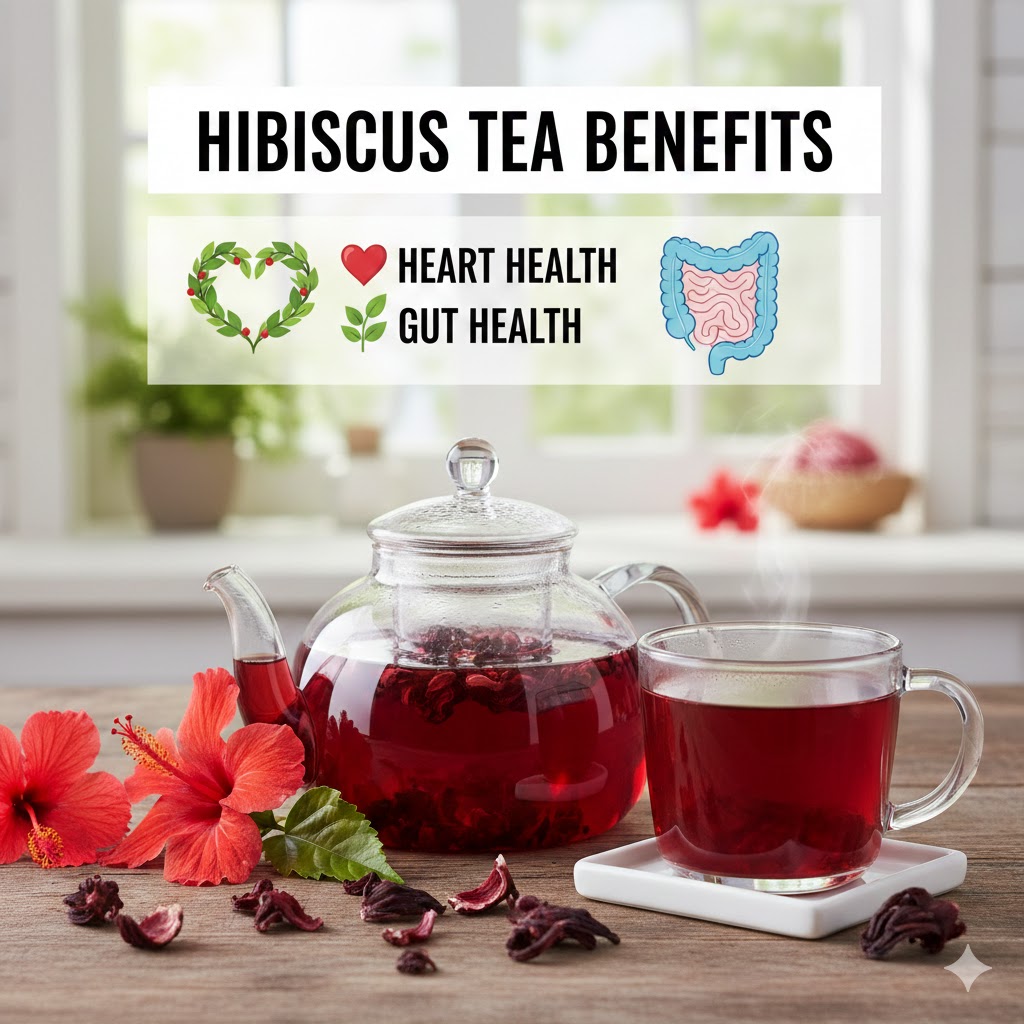
Hibiscus Tea Benefits are no longer just comforting drinks—they’ve become an important part of daily wellness routines. Among the many herbal teas gaining attention worldwide, hibiscus tea stands out for both its vibrant color and powerful health properties. Once enjoyed mainly in traditional cultures, hibiscus tea is now recognized globally for its science-backed benefits.
As people focus more on heart health, digestion, and natural ways to support the body, Hibiscus Tea Benefits have become a major topic in the wellness space. This floral tea is refreshing, naturally caffeine-free, and packed with compounds that support long-term health.
This in-depth guide explains what hibiscus tea is, why it’s trending, and how it supports heart and gut health in a gentle, natural way.
What Is Hibiscus Tea?
Hibiscus tea is a herbal infusion made from the dried petals (calyces) of the hibiscus flower. When steeped in hot water, these deep red petals release a tart, cranberry-like flavor and a rich ruby color.
Unlike black or green tea, hibiscus tea contains no caffeine. It is enjoyed both hot and cold across many cultures and is valued not just for taste but for its health-supporting properties.
The simplicity of preparation combined with powerful wellness effects is a key reason behind the growing interest in Hibiscus Tea Benefits.
Why Hibiscus Tea Is Gaining Global Popularity
Several modern health trends are driving hibiscus tea’s rise.
Key reasons include:
- Increased focus on heart health
- Growing awareness of gut health
- Demand for caffeine-free wellness drinks
- Preference for plant-based antioxidants
- Rising interest in traditional herbal remedies
As people look for natural, everyday ways to support health, hibiscus tea fits perfectly into modern routines.
Nutritional Profile of Hibiscus Tea
Hibiscus tea may be light in calories, but it is rich in beneficial compounds.
Hibiscus contains:
- Antioxidants (especially anthocyanins)
- Organic acids
- Polyphenols
- Vitamin C (in small amounts)
These compounds form the foundation of many Hibiscus Tea Benefits, especially for heart and digestive health.
Hibiscus Tea Benefits for Heart Health

Heart health is one of the most researched areas of hibiscus tea.
How hibiscus tea supports the heart
- Helps maintain healthy blood pressure
- Supports healthy cholesterol balance
- Improves blood vessel function
- Reduces oxidative stress on the heart
Regular consumption of hibiscus tea may help support cardiovascular wellness as part of a healthy lifestyle.
Hibiscus Tea Benefits for Blood Pressure Support
One of the most well-known Hibiscus Tea Benefits is its role in blood pressure management.
Hibiscus tea helps by:
- Supporting relaxation of blood vessels
- Improving circulation
- Reducing stress on arterial walls
This makes it especially popular among adults focusing on long-term heart care.
Hibiscus Tea and Cholesterol Balance
Healthy cholesterol levels are essential for heart health.
Hibiscus tea may help by:
- Supporting healthy LDL levels
- Promoting better lipid metabolism
- Reducing oxidative damage to cholesterol
While not a replacement for medical treatment, hibiscus tea can support heart-friendly habits.
Hibiscus Tea Benefits for Gut Health
Gut health affects digestion, immunity, and overall energy.
How hibiscus tea supports gut health
- Encourages healthy digestion
- Supports gut motility
- Helps reduce bloating
- Promotes balanced gut environment
These digestive effects make Hibiscus Tea Benefits valuable beyond just heart health.
Hibiscus Tea Benefits for Digestion
Hibiscus tea contains organic acids that stimulate digestive processes.
Digestive benefits include:
- Improved digestion after meals
- Reduced heaviness and bloating
- Support for stomach acid balance
Drinking hibiscus tea after meals may help the digestive system function more smoothly.
Hibiscus Tea and Gut Microbiome Balance
A balanced gut microbiome supports immunity and metabolism.
Hibiscus tea may:
- Support beneficial gut bacteria
- Reduce growth of harmful microbes
- Improve overall gut environment
These effects contribute to long-term digestive wellness.
Hibiscus Tea Benefits for Detox Support
Detoxification happens naturally through the liver and digestive system.
Hibiscus tea supports this process by:
- Encouraging waste elimination
- Supporting liver function indirectly
- Reducing toxin buildup through antioxidant action
This gentle detox support is another reason Hibiscus Tea Benefits are appreciated in wellness routines.
Hibiscus Tea Benefits for Antioxidant Protection
Oxidative stress plays a role in aging and chronic health issues.
Hibiscus tea is rich in antioxidants that:
- Neutralize free radicals
- Protect cells from damage
- Support long-term wellness
Its deep red color is a visual sign of its antioxidant strength.
Hibiscus Tea Benefits for Weight Management
Hibiscus tea does not cause weight loss directly, but it supports healthy habits.
Benefits include:
- Supporting metabolism
- Reducing water retention
- Replacing sugary drinks
- Improving digestion
These indirect effects make hibiscus tea a smart choice for weight-conscious individuals.
Hibiscus Tea Benefits for Skin Health
Healthy skin starts from within.
Hibiscus tea supports skin by:
- Providing antioxidants for skin repair
- Supporting hydration
- Reducing inflammation-related skin issues
Consistent consumption may contribute to clearer, healthier-looking skin over time.
Hibiscus Tea vs Traditional Teas
| Feature | Hibiscus Tea | Black/Green Tea |
|---|---|---|
| Caffeine | None | Present |
| Antioxidants | High | High |
| Heart support | Strong | Moderate |
| Gut support | Gentle | Variable |
| Daily use | Safe | Depends on tolerance |
This comparison highlights why Hibiscus Tea Benefits appeal to people avoiding caffeine.
Best Time to Drink Hibiscus Tea
Hibiscus tea is flexible and easy to include.
Recommended times:
- Morning for refreshing hydration
- After meals for digestion
- Afternoon as a caffeine-free energy boost
It can be enjoyed hot or cold depending on preference.
How to Prepare Hibiscus Tea Correctly
Preparation plays a key role in flavor and benefits.
Simple hibiscus tea recipe
- Boil 1 cup of water
- Add 1–2 teaspoons dried hibiscus petals
- Steep for 5–10 minutes
- Strain and drink
Optional additions:
- Lemon slices
- Honey in small amounts
- Mint leaves
Avoid excessive sweeteners to preserve Hibiscus Tea Benefits.
How Often Should You Drink Hibiscus Tea?
For most people:
- 1–2 cups daily is sufficient
- Can be consumed regularly
- Best when part of a balanced diet
Moderation ensures safe and effective use.
Who Should Drink Hibiscus Tea Regularly
Hibiscus tea is especially beneficial for:
- People focusing on heart health
- Individuals improving digestion
- Those avoiding caffeine
- Wellness-focused lifestyles
It fits well into daily routines for many adults.
Possible Side Effects and Precautions
Although natural, hibiscus tea should be consumed mindfully.
Precautions include:
- Avoid excessive intake
- People with low blood pressure should monitor response
- Pregnant individuals should consult a doctor
- Choose clean, high-quality hibiscus
Responsible consumption ensures safe enjoyment of Hibiscus Tea Benefits.
How Long Does It Take to Notice Benefits?
Results vary by individual.
General timeline:
- Few days: improved hydration and digestion
- 2–3 weeks: noticeable heart and energy support
- Long-term: improved overall wellness
Herbal benefits are gradual but sustainable.
Why Hibiscus Tea Fits Modern Wellness Lifestyles
Hibiscus tea aligns with:
- Plant-based nutrition
- Clean hydration
- Preventive health focus
- Low-sugar living
This alignment explains the growing global interest in Hibiscus Tea Benefits.
Final Thoughts
Hibiscus tea is more than a beautiful drink—it’s a powerful wellness ally. Hibiscus Tea Benefits include heart health support, improved digestion, antioxidant protection, gentle detox assistance, and refreshing hydration.
As people move toward natural, sustainable health practices, hibiscus tea stands out as an easy, enjoyable, and effective daily habit. When consumed regularly and mindfully, it becomes a simple way to support both heart and gut health—one cup at a time.
Frequently Asked Questions
What are the main Hibiscus Tea Benefits?
Hibiscus tea supports heart health, digestion, antioxidant protection, hydration, and overall wellness.
Is hibiscus tea safe to drink daily?
Yes, for most people it is safe when consumed in moderation.
Does hibiscus tea contain caffeine?
No, hibiscus tea is naturally caffeine-free.
Can hibiscus tea help with digestion?
Yes, it supports digestion and helps reduce bloating.
Is hibiscus tea good for heart health?
Yes, it is widely known for supporting healthy blood pressure and circulation.
When is the best time to drink hibiscus tea?
Morning, after meals, or as a refreshing afternoon drink are all suitable times.
More Related Topics:
Iced Herbal Tea Benefits: The Refreshing Wellness Drink