
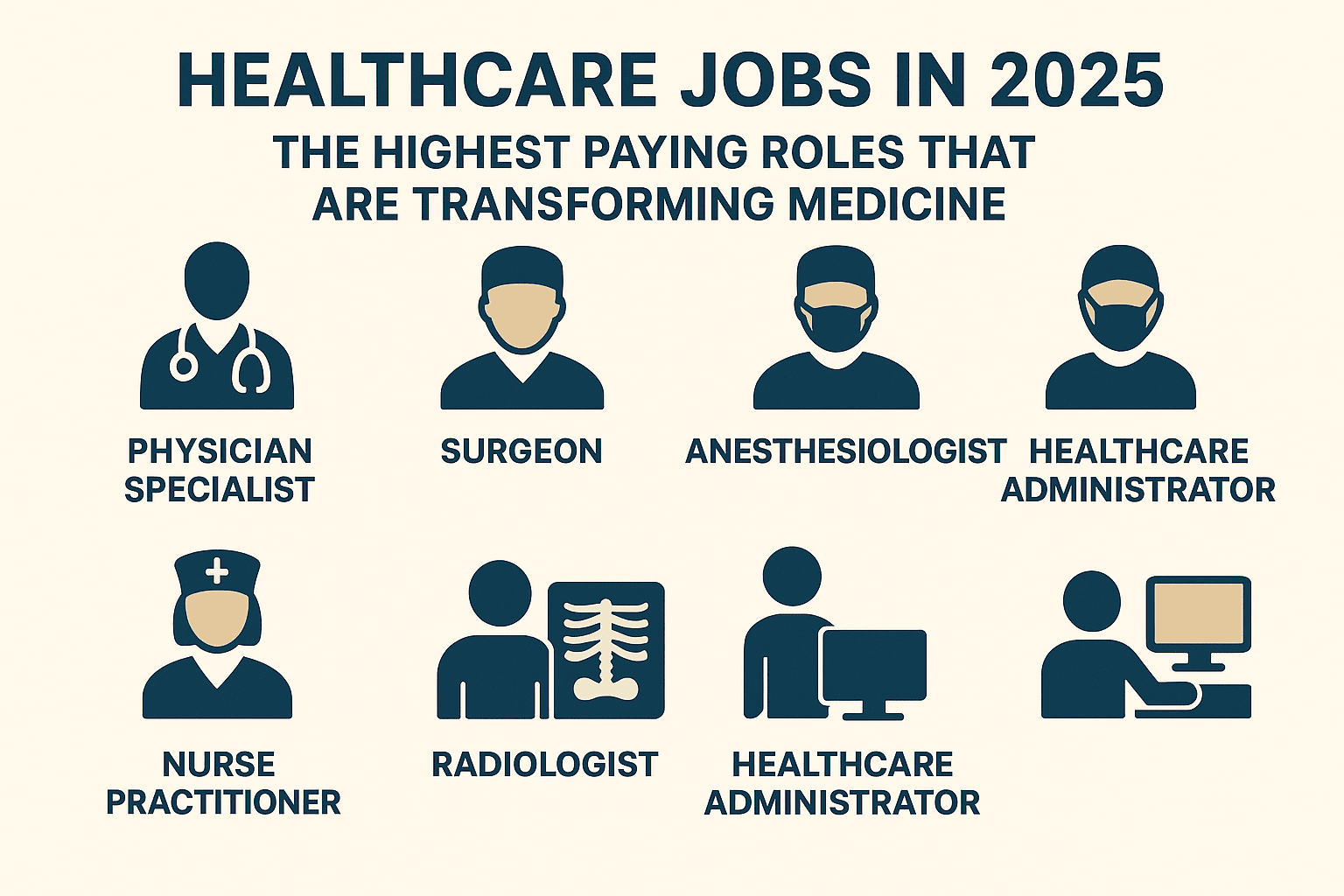
The healthcare industry continues to evolve rapidly in 2025, driven by technological advances, an aging population, and innovative treatment methods. Healthcare employment is expected to grow much faster than average, with 1.9 million new job openings annually between 2023 and 2033, making it one of the most promising career sectors today.
Whether you’re a medical student, healthcare professional looking to advance, or someone considering a career change, this comprehensive guide reveals the highest-paying healthcare roles that are shaping the future of medicine.
Why Healthcare Careers Are Booming in 2025
Market Growth and Demand
The healthcare sector is experiencing unprecedented growth due to several factors:
- Aging baby boomer population requiring specialized care
- Increased focus on preventive medicine and wellness
- Integration of artificial intelligence and digital health solutions
- Post-pandemic healthcare infrastructure expansion
- Growing emphasis on mental health services
Technology Integration
Healthcare technology roles are emerging as some of the most lucrative positions, combining medical expertise with cutting-edge innovation. AI healthcare positions now offer salaries ranging from $70,000 to $235,000, with specialized roles like Healthcare AI Ethics Specialists earning around $92,546 annually.
Top 15 Highest Paying Healthcare Jobs in 2025
1. Anesthesiologist
Average Salary: $339,470 annually
Anesthesiologists earn $339,470 annually or $163.21 per hour, making them among the highest-paid medical professionals. These specialists manage pain and consciousness during surgical procedures.
Key Responsibilities:
- Administering anesthesia during surgeries
- Monitoring patient vital signs during operations
- Managing post-operative pain relief
- Critical care medicine
Education Requirements:
- 4-year undergraduate degree
- 4-year medical school (MD/DO)
- 4-year anesthesiology residency
- Optional fellowship training
2. Surgeon (Various Specialties)
Average Salary: $300,000 – $500,000+ annually
Surgical specialties like neurosurgery, orthopedic surgery, and cardiovascular surgery are particularly high-paying, reflecting the critical nature of these procedures.
Top Surgical Specialties by Salary:
- Neurosurgeon: $500,000 – $800,000
- Orthopedic Surgeon: $400,000 – $600,000
- Cardiovascular Surgeon: $450,000 – $700,000
- Plastic Surgeon: $350,000 – $500,000
3. Emergency Medicine Physician
Average Salary: $320,000 – $400,000 annually
Emergency medicine physicians are critical frontline healthcare workers who handle urgent medical situations and trauma cases.
Career Highlights:
- High-stress, high-reward environment
- Flexible scheduling options
- Immediate impact on patient outcomes
- Strong job security
4. Radiologist
Average Salary: $300,000 – $450,000 annually
Radiologists interpret medical imaging and are increasingly working with AI-powered diagnostic tools, making them essential in modern healthcare.
Emerging Opportunities:
- AI-assisted radiology
- Interventional radiology
- Telemedicine consulting
- Nuclear medicine specialization
5. Dermatologist
Average Salary: $280,000 – $400,000 annually
Dermatology combines medical expertise with aesthetic procedures, offering excellent work-life balance and high earning potential.
Growth Areas:
- Cosmetic dermatology
- Dermatopathology
- Pediatric dermatology
- Telemedicine consultations
6. Orthodontist
Average Salary: $250,000 – $350,000 annually
Orthodontists are among the highest-paying healthcare jobs, specializing in correcting teeth and jaw alignment issues.
Business Advantages:
- Private practice opportunities
- Predictable patient care cycles
- High patient satisfaction rates
- Growing adult orthodontic market
7. Pharmacist (Clinical Specialties)
Average Salary: $130,000 – $180,000 annually
Clinical pharmacists are expanding their roles beyond traditional dispensing to direct patient care and consultation.
High-Paying Specialties:
- Oncology pharmacist
- Critical care pharmacist
- Infectious disease pharmacist
- Nuclear pharmacist
8. Nurse Practitioner
Average Salary: $115,000 – $150,000 annually
Nurse practitioners are experiencing the highest growth rate in 2025, with median salaries of $129,210, making them one of the most accessible high-paying healthcare careers.
Popular Specializations:
- Emergency Medicine NP: $130,000 – $160,000
- Acute Care NP: $125,000 – $155,000
- Family Medicine NP: $110,000 – $140,000
- Psychiatric NP: $120,000 – $170,000
9. Physician Assistant
Average Salary: $110,000 – $140,000 annually
Physician assistants are among the best healthcare jobs, offering excellent career prospects with shorter educational requirements than physicians.
Advantages:
- 2-3 year master’s degree programs
- Excellent job growth projections
- Flexibility to switch specialties
- Strong work-life balance
10. Healthcare Data Scientist
Average Salary: $105,000 – $160,000 annually
The intersection of healthcare and big data creates lucrative opportunities for professionals who can analyze complex medical datasets.
Key Skills:
- Statistical analysis and machine learning
- Healthcare informatics
- Electronic health record systems
- Clinical research methodology
Emerging High-Paying Healthcare Roles in 2025
1. Telemedicine Physician
Average Salary: $200,000 – $300,000 annually
Remote healthcare delivery has revolutionized medical practice, creating new opportunities for physicians to work flexibly while maintaining high earning potential.
Growth Drivers:
- Increased patient acceptance of virtual care
- Cost-effective healthcare delivery
- Access to underserved populations
- Technology platform improvements
2. Healthcare AI Specialist
Average Salary: $120,000 – $200,000 annually
Healthcare AI specialists are increasingly in demand, with roles like Healthcare AI Ethics Specialists earning around $92,546 annually.
Specialization Areas:
- Medical imaging AI
- Drug discovery algorithms
- Clinical decision support systems
- Predictive analytics for patient outcomes
3. Genetic Counselor
Average Salary: $85,000 – $120,000 annually
As personalized medicine advances, genetic counselors help patients understand genetic testing results and inheritance patterns.
Career Growth Factors:
- Expanding genetic testing applications
- Cancer genetics specialization
- Reproductive health counseling
- Rare disease expertise
4. Clinical Research Coordinator
Average Salary: $60,000 – $90,000 annually
Clinical research coordinators manage clinical trials and research studies, playing crucial roles in medical advancement.
Career Progression:
- Clinical Research Associate
- Clinical Research Manager
- Director of Clinical Operations
- VP of Clinical Affairs
Healthcare Administration: Behind-the-Scenes High Earners
1. Healthcare Executive/Administrator
Average Salary: $150,000 – $300,000+ annually
Healthcare administrators manage medical facilities, departments, and health systems.
Executive Positions:
- Chief Medical Officer: $300,000 – $500,000
- Hospital CEO: $250,000 – $400,000
- Vice President of Operations: $180,000 – $280,000
- Director of Nursing: $120,000 – $180,000
2. Healthcare IT Director
Average Salary: $130,000 – $200,000 annually
Managing healthcare technology systems, electronic health records, and cybersecurity initiatives.
Regional Salary Variations and Market Trends
High-Paying Healthcare Markets
Top Metropolitan Areas:
- San Francisco Bay Area: 20-30% above national average
- New York City: 15-25% above national average
- Boston: 10-20% above national average
- Los Angeles: 15-20% above national average
- Chicago: 5-15% above national average
Rural vs. Urban Opportunities
Rural healthcare positions often offer:
- Loan forgiveness programs
- Signing bonuses
- Housing assistance
- Competitive salaries to attract talent
Education and Certification Requirements
Medical Degree Pathways
Traditional Route:
- 4-year undergraduate degree
- 4-year medical school (MD/DO)
- 3-7 year residency training
- Optional fellowship training
Alternative Healthcare Degrees:
- Nursing: BSN (4 years) → MSN (2 years) for NP roles
- Physician Assistant: Master’s degree (2-3 years)
- Pharmacy: PharmD (4 years post-bachelor’s)
- Physical Therapy: DPT (3 years post-bachelor’s)
Certification and Licensing
All healthcare professionals must maintain:
- State licensing
- Board certifications
- Continuing education requirements
- Professional liability insurance
Technology’s Impact on Healthcare Salaries
AI and Machine Learning Integration
Healthcare professionals with technology skills command premium salaries:
- AI-Enhanced Radiologists: 15-20% salary increase
- Data-Driven Pathologists: 10-15% premium
- Telemedicine Specialists: New revenue streams
- Digital Health Consultants: Emerging high-pay category
Digital Health Platforms
The rise of digital health creates opportunities in:
- Virtual reality therapy
- Wearable device integration
- Mobile health applications
- Remote patient monitoring
Healthcare Job Market Outlook for 2025-2030
Fastest Growing Positions
- Nurse Practitioners: 40% growth projected
- Physician Assistants: 37% growth expected
- Physical Therapists: 32% increase anticipated
- Mental Health Counselors: 25% growth projected
- Medical and Health Services Managers: 28% expansion
Emerging Specialties
- Geriatric Medicine: Aging population demands
- Addiction Medicine: Mental health focus
- Sports Medicine: Wellness trend growth
- Precision Medicine: Personalized treatment approaches
How to Maximize Your Healthcare Career Earnings
1. Pursue Specialized Training
Specialization significantly increases earning potential across all healthcare roles.
2. Consider Geographic Flexibility
Willingness to relocate can increase salary by 20-40% in high-demand markets.
3. Develop Technology Skills
Healthcare professionals with tech competencies earn premium salaries.
4. Network and Build Professional Relationships
Strong professional networks lead to better opportunities and higher compensation.
5. Pursue Leadership Roles
Management and administrative positions offer substantial salary increases.
Benefits Beyond Base Salary
Comprehensive Benefits Packages
Healthcare professionals typically receive:
- Health Insurance: Often 100% coverage for employees and families
- Retirement Plans: 401(k) with employer matching
- Paid Time Off: Generous vacation and sick leave
- Professional Development: Conference attendance and continuing education funding
- Malpractice Insurance: Employer-provided coverage
Non-Monetary Benefits
- Job Security: Healthcare consistently ranks among the most stable industries
- Work-Life Balance: Many roles offer flexible scheduling
- Professional Satisfaction: Direct impact on patient outcomes
- Career Growth: Clear advancement pathways
Starting Your High-Paying Healthcare Career
Entry-Level Strategies
- Choose Growth Specialties: Focus on expanding fields like geriatrics or mental health
- Gain Technology Experience: Learn healthcare IT systems and telemedicine platforms
- Pursue Certifications: Obtain additional credentials in your specialty area
- Consider Advanced Degrees: Master’s and doctoral programs significantly increase earning potential
Career Transition Tips
For professionals switching to healthcare:
- Leverage Transferable Skills: Business, technology, and science backgrounds are valuable
- Consider Accelerated Programs: Many schools offer fast-track options for career changers
- Explore Non-Clinical Roles: Healthcare administration and technology don’t require clinical training
- Network with Professionals: Informational interviews provide valuable insights
Conclusion: Your Path to a High-Paying Healthcare Career
The healthcare industry in 2025 offers unprecedented opportunities for high-earning, meaningful careers. Medical professionals like physicians, surgeons, and anesthesiologists can earn median salaries over $300,000 annually, while emerging technology-driven roles provide new pathways to success.
Success in healthcare requires dedication, continuous learning, and often significant educational investment. However, the combination of financial rewards, job security, and the opportunity to improve lives makes healthcare one of the most attractive career sectors available.
Whether you’re drawn to direct patient care, cutting-edge research, healthcare technology, or administrative leadership, there’s a high-paying healthcare role that aligns with your interests and skills. The key is to start with a clear career plan, pursue the necessary education and training, and stay current with industry trends and technological advances.
Ready to start your healthcare career journey? Research specific programs in your area, connect with healthcare professionals in your desired field, and take the first step toward a rewarding and lucrative career in healthcare.
Frequently Asked Questions
Q: What’s the fastest way to enter a high-paying healthcare career? A: Physician Assistant and Nurse Practitioner programs offer the quickest path to six-figure healthcare salaries, typically requiring 2-3 years of graduate education.
Q: Do healthcare jobs require working in hospitals? A: No, many high-paying positions exist in outpatient clinics, private practices, telemedicine, research facilities, and healthcare technology companies.
Q: Are healthcare jobs recession-proof? A: Healthcare consistently shows resilience during economic downturns due to essential service nature and demographic trends.
Q: How important is location for healthcare salary? A: Location significantly impacts earnings, with metropolitan areas typically offering 15-30% higher salaries than rural areas, though rural positions often include additional benefits.
Also read this:
How to Earn as a ChatGPT Prompt Engineer in 2025
AI-Powered Jobs You Can Start Right Now: Your Gateway to the Future of Work