
If you’ve ever had a blood test for diabetes or blood sugar, you’ve probably come across the term HbA1c Levels.
But what do they really mean?
And why do doctors consider them one of the most important indicators of your long-term health?
In simple terms, HbA1c Levels show your average blood sugar over the past 2–3 months — making them far more reliable than a single glucose reading.
In this complete guide, you’ll learn what HbA1c Levels are, what’s considered normal, and how to lower them naturally and effectively.
1. What Are HbA1c Levels?
HbA1c (also called glycated hemoglobin) measures how much sugar is attached to your red blood cells.
How It Works:
- Glucose in your blood sticks to hemoglobin
- The higher your blood sugar, the higher your HbA1c Levels
- Red blood cells live for about 3 months
That’s why HbA1c Levels reflect long-term sugar control — not just daily fluctuations.
2. Why HbA1c Levels Matter
Understanding your HbA1c Levels can help you prevent serious health issues.
Key Importance:
- Detects prediabetes and diabetes
- Tracks long-term blood sugar control
- Predicts risk of complications
Health Risks of High HbA1c:
- Heart disease
- Nerve damage
- Kidney problems
- Vision issues
Keeping your HbA1c Levels in a healthy range is essential for long-term wellness.
3. Normal HbA1c Levels (Chart Explained)
Let’s break down what’s considered normal.
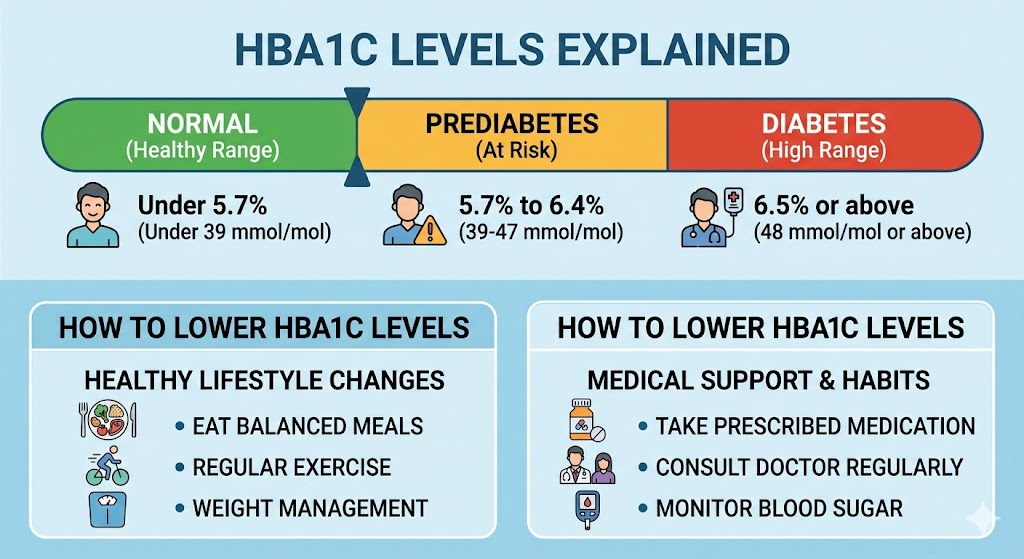
HbA1c Ranges:
- Below 5.7% → Normal
- 5.7% – 6.4% → Prediabetes
- 6.5% or higher → Diabetes
Even slightly elevated HbA1c Levels can increase health risks over time.
4. Symptoms of High HbA1c Levels
High HbA1c Levels often develop silently — but some warning signs may appear.
Common Symptoms:
- Frequent fatigue
- Increased thirst
- Frequent urination
- Blurred vision
- Slow wound healing
Many people ignore these signs, making regular testing of HbA1c Levels crucial.
5. Causes of High HbA1c Levels
Understanding the cause helps in lowering HbA1c Levels effectively.
5.1 Poor Diet
- High sugar intake
- Refined carbs
5.2 Lack of Exercise
- Sedentary lifestyle
- Low energy expenditure
5.3 Stress
- Raises cortisol
- Increases blood sugar
5.4 Poor Sleep
- Disrupts insulin function
5.5 Insulin Resistance
- Body cannot use insulin effectively
6. How to Lower HbA1c Levels Naturally
Here’s the most important part — how to reduce HbA1c Levels.
6.1 Improve Your Diet
- Eat whole foods
- Increase protein intake
- Reduce sugar and refined carbs
6.2 Walk After Meals
- Helps control sugar spikes
- Improves insulin response
6.3 Exercise Regularly
- Strength training
- Cardio workouts
6.4 Manage Stress
- Meditation
- Deep breathing
6.5 Sleep Better
- 7–8 hours daily
- Maintain sleep routine
These steps can significantly lower HbA1c Levels over time.
7. Best Foods to Lower HbA1c Levels
Diet plays a major role.
7.1 High-Fiber Foods
- Oats
- Vegetables
- Whole grains
7.2 Protein-Rich Foods
- Eggs
- Chicken
- Lentils
7.3 Healthy Fats
- Nuts
- Seeds
- Olive oil
7.4 Low Glycemic Foods
- Foods that don’t spike sugar
Choosing the right foods helps stabilize HbA1c Levels.
8. Foods to Avoid
To control HbA1c Levels, avoid:
8.1 Sugary Foods
- Sweets
- Soft drinks
8.2 Refined Carbs
- White bread
- Pastries
8.3 Processed Foods
- Packaged snacks
- Fast food
Reducing these can quickly improve HbA1c Levels.
9. How Long Does It Take to Lower HbA1c Levels
Since HbA1c Levels reflect 2–3 months of data, results take time.
Timeline:
- 2–4 weeks → Initial improvement
- 6–8 weeks → Noticeable change
- 3 months → Significant reduction
Consistency is key.
10. Lifestyle Habits That Make a Big Difference
10.1 Stay Active Daily
- Walking
- Light activity
10.2 Hydration
- Drink enough water
10.3 Weight Management
- Losing even 5–10% body weight helps
10.4 Monitor Regularly
Track your HbA1c Levels every few months.
11. Medical Treatment Options
Sometimes lifestyle changes aren’t enough.
Common Treatments:
- Oral medications
- Insulin therapy
Always consult a doctor before making decisions about managing HbA1c Levels.
12. Why HbA1c Levels Are Trending in 2026
More people are focusing on long-term health.
Reasons:
- Increased diabetes awareness
- Preventive healthcare trends
- Rise in metabolic disorders
Understanding HbA1c Levels is now essential for everyone — not just diabetics.
FAQs on HbA1c Levels
Q1. What is a good HbA1c level?
Below 5.7% is considered normal.
Q2. Can HbA1c be reduced naturally?
Yes, through diet, exercise, and lifestyle changes.
Q3. How often should HbA1c be tested?
Every 3 months for accurate tracking of HbA1c Levels.
Q4. Is HbA1c more important than blood sugar?
It provides a long-term picture, making it very important.
Q5. Can stress increase HbA1c?
Yes, stress can raise blood sugar and affect HbA1c Levels.
Final Thoughts
Your HbA1c Levels are more than just a number — they’re a reflection of your lifestyle and long-term health.
The good news?
You have full control.
With the right habits, diet, and consistency, you can lower your HbA1c Levels, improve your energy, and protect yourself from serious diseases.
Start today — small changes lead to powerful results.
More Related Topics:
Post-Meal Walk Benefits for Blood Sugar & Weight Loss