
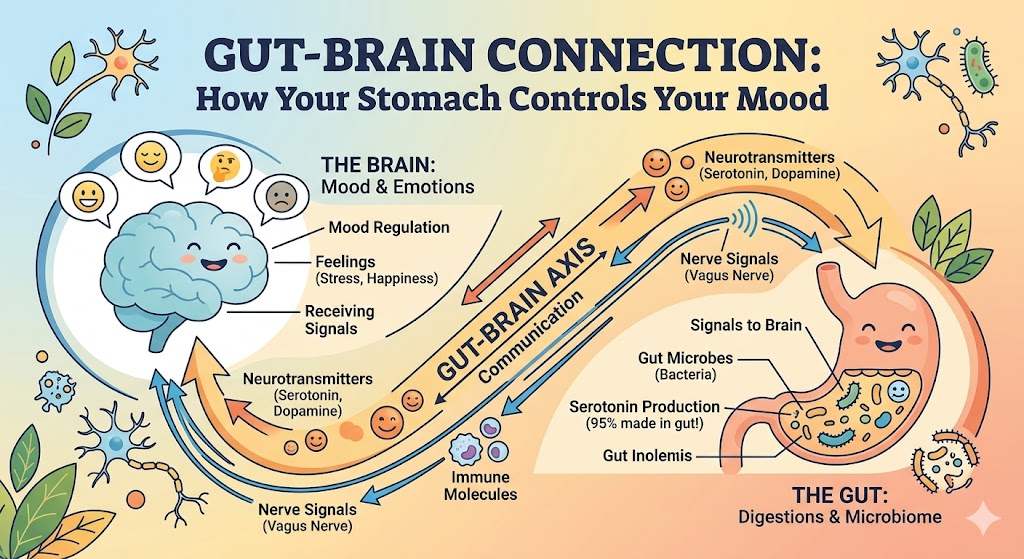
Have you ever felt “butterflies” in your stomach before a big moment? Or noticed how stress affects your digestion? This isn’t random—it’s science. The Gut-Brain Connection explains how your digestive system and brain constantly communicate, influencing everything from mood to mental health.
In this in-depth guide, you’ll learn how the Gut-Brain Connection works, why it matters, and how you can improve it to feel happier, calmer, and more focused.
1. What Is the Gut-Brain Connection
The Gut-Brain Connection is a two-way communication system between your gut (digestive system) and your brain.
This communication happens through:
- The nervous system
- Hormones
- The immune system
Your gut is often called the “second brain” because it directly affects how you feel.
Sub Points:
- Signals travel between gut and brain constantly
- Your gut produces important neurotransmitters
- Your mental state can affect digestion
2. How the Gut-Brain Connection Works
The Gut-Brain Connection is powered by a network called the gut-brain axis.
Key Components:
Sub Points:
- Vagus nerve: Main communication highway
- Gut microbiome: Trillions of bacteria in your gut
- Neurotransmitters: Chemicals like serotonin
Around 90% of serotonin (the “feel-good” hormone) is produced in your gut.
This is why your stomach plays a huge role in your mood.
3. How Your Gut Controls Your Mood
The Gut-Brain Connection directly influences emotions and mental health.
Ways It Affects Mood:
Sub Points:
- Healthy gut = stable mood
- Poor gut health = anxiety and stress
- Inflammation can impact brain function
- Gut bacteria influence emotional balance
If your gut is unhealthy, your mood often suffers.
4. Signs of an Unhealthy Gut-Brain Connection
You might not realize your gut is affecting your mind.
Common Signs:
Sub Points:
- Frequent mood swings
- Anxiety or depression
- Digestive issues (bloating, constipation)
- Fatigue and brain fog
- Poor sleep
These are strong indicators that your Gut-Brain Connection needs improvement.
5. Foods That Improve the Gut-Brain Connection
Your diet plays the biggest role.
Best Foods:
Sub Points:
- Probiotics: Yogurt, kefir, fermented foods
- Prebiotics: Bananas, onions, garlic
- Fiber-rich foods: Whole grains, vegetables
- Omega-3 fatty acids: Fish, flaxseeds
These foods strengthen your Gut-Brain Connection naturally.
6. Foods That Damage the Gut-Brain Connection
Avoid these for better mental health.
Sub Points:
- Processed foods
- Excess sugar
- Artificial sweeteners
- Junk food
These can disrupt gut bacteria and negatively affect mood.
7. Lifestyle Habits to Strengthen the Gut-Brain Connection
Food alone isn’t enough.
Key Habits:
Sub Points:
- Regular exercise
- Quality sleep
- Stress management
- Staying hydrated
A balanced lifestyle enhances your Gut-Brain Connection.
8. The Role of Stress in Gut Health
Stress is one of the biggest disruptors.
Effects:
Sub Points:
- Slows digestion
- Alters gut bacteria
- Causes inflammation
Managing stress is essential for a healthy Gut-Brain Connection.
9. How Long It Takes to Improve Gut-Brain Health
Results don’t happen overnight, but they do happen.
Timeline:
Sub Points:
- 1 week: Improved digestion
- 2–4 weeks: Better mood stability
- 1–2 months: Noticeable mental clarity
Consistency is key.
10. Long-Term Strategy for a Healthy Gut-Brain Connection
To maintain results, focus on long-term habits.
Sub Points:
- Eat whole, natural foods
- Avoid excessive processed food
- Maintain a consistent routine
- Listen to your body
A strong Gut-Brain Connection leads to better overall health.
Conclusion
The Gut-Brain Connection is one of the most powerful yet overlooked aspects of health. Your stomach doesn’t just digest food—it directly influences your emotions, stress levels, and mental clarity.
By improving your diet, managing stress, and building healthy habits, you can strengthen your Gut-Brain Connection and experience better mood, energy, and focus.
Start small, stay consistent, and your body—and mind—will thank you.
FAQs
1. What is the Gut-Brain Connection?
It’s the communication system between your gut and brain that affects mood and health.
2. Can gut health affect anxiety?
Yes, poor gut health is linked to increased anxiety and stress.
3. How do I improve my Gut-Brain Connection?
Through diet, exercise, sleep, and stress management.
4. Are probiotics helpful?
Yes, they support healthy gut bacteria.
5. How quickly can I see results?
Some improvements can be noticed within weeks.
6. Does stress damage gut health?
Yes, chronic stress negatively affects digestion and gut bacteria.
7. Is the Gut-Brain Connection scientifically proven?
Yes, it is widely supported by scientific research.
More Related Topics:
Screen Addiction Recovery Plan That Actually Works (2026 Complete Guide)