
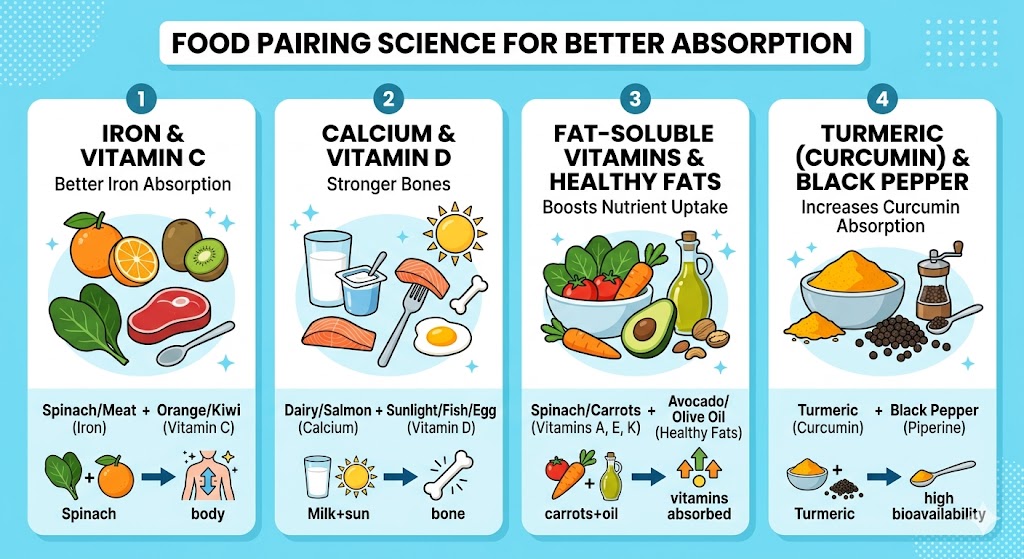
What you eat matters—but how you combine your food matters just as much. The concept of Food Pairing Science explains how certain nutrients work better together, improving absorption, digestion, and overall health.
If you’re eating healthy but not seeing results, understanding Food Pairing Science could be the missing link.
In this guide, you’ll learn how Food Pairing Science works, the best combinations to follow, and how to apply it in your daily diet.
1. What Is Food Pairing Science
Food Pairing Science is the study of how different foods interact with each other in your body to enhance or reduce nutrient absorption.
Some foods increase nutrient availability, while others can block it.
Sub Points:
- Improves nutrient absorption
- Enhances digestion
- Boosts health benefits
- Prevents nutrient loss
It’s about eating smarter—not just healthier.
2. Why Food Pairing Science Matters
You might be missing out on nutrients.
Key Benefits:
Sub Points:
- Better vitamin and mineral absorption
- Improved energy levels
- Enhanced digestion
- Stronger immunity
Applying Food Pairing Science helps your body use nutrients more effectively.
3. How Nutrient Absorption Works
Understanding basics helps.
Key Factors:
Sub Points:
- Some vitamins are fat-soluble
- Others require specific compounds
- Certain foods enhance or inhibit absorption
This is where Food Pairing Science becomes important.
4. Best Food Pairings for Better Absorption
Let’s explore the most effective combinations.
4.1 Iron + Vitamin C
Boost iron absorption.
Sub Points:
- Spinach + lemon
- Lentils + tomatoes
- Beans + citrus fruits
Vitamin C enhances iron uptake.
4.2 Healthy Fats + Fat-Soluble Vitamins
Improve vitamin absorption.
Sub Points:
- Carrots + olive oil
- Avocado + salad
- Nuts + vegetables
Fat helps absorb vitamins A, D, E, and K.
4.3 Turmeric + Black Pepper
Increase effectiveness.
Sub Points:
- Enhances curcumin absorption
- Boosts anti-inflammatory benefits
A classic example of Food Pairing Science.
4.4 Protein + Carbohydrates
Support energy and recovery.
Sub Points:
- Rice + beans
- Chicken + sweet potatoes
- Yogurt + fruits
Balanced meals improve nutrient use.
4.5 Probiotics + Prebiotics
Support gut health.
Sub Points:
- Yogurt + bananas
- Kefir + oats
- Fermented foods + fiber
This pairing improves digestion.
5. Food Pairings to Avoid
Not all combinations are beneficial.
Sub Points:
- Tea/coffee with iron-rich foods (reduces absorption)
- Calcium with iron (competes for absorption)
- Excess sugar with nutrients
Avoiding these improves Food Pairing Science results.
6. How to Apply Food Pairing Science Daily
Make it practical.
Sub Points:
- Add lemon to meals
- Include healthy fats
- Combine proteins with carbs
- Focus on balanced meals
Small changes create big results.
7. Common Mistakes to Avoid
Avoid these errors.
Sub Points:
- Ignoring nutrient combinations
- Overcomplicating meals
- Skipping variety
- Not balancing macros
Keep it simple and consistent.
8. How Long It Takes to See Results
Results take time.
Timeline:
Sub Points:
- Few days: Improved digestion
- 1–2 weeks: Better energy
- 1 month: Noticeable health benefits
Consistency is key in Food Pairing Science.
9. Benefits of Following Food Pairing Science
Why it’s worth it:
Sub Points:
- Better nutrient absorption
- Improved gut health
- Increased energy
- Enhanced overall wellness
10. Long-Term Strategy
Make it a habit.
Sub Points:
- Learn basic pairings
- Keep meals balanced
- Stay consistent
- Adjust based on needs
Mastering Food Pairing Science improves your health long-term.
Conclusion
Food Pairing Science is a simple yet powerful way to maximize the benefits of your diet. By combining the right foods, you can improve nutrient absorption, boost energy, and support overall health.
Start with small changes—add vitamin C to iron-rich foods, include healthy fats, and avoid harmful combinations. Over time, these habits will transform how your body uses nutrients.
FAQs
1. What is Food Pairing Science?
It’s the study of how food combinations affect nutrient absorption.
2. Does it really work?
Yes, it’s backed by nutritional science.
3. Is it complicated?
No, simple combinations are enough.
4. Can beginners follow it?
Yes, it’s easy to start.
5. How quickly will I see results?
Within weeks with consistency.
6. Do I need a special diet?
No, just smarter combinations.
7. Is it suitable for everyone?
Yes, with minor adjustments based on needs.
More Related Topics:
Light Exposure Timing: The Missing Health Trick (2026 Complete Guide)