
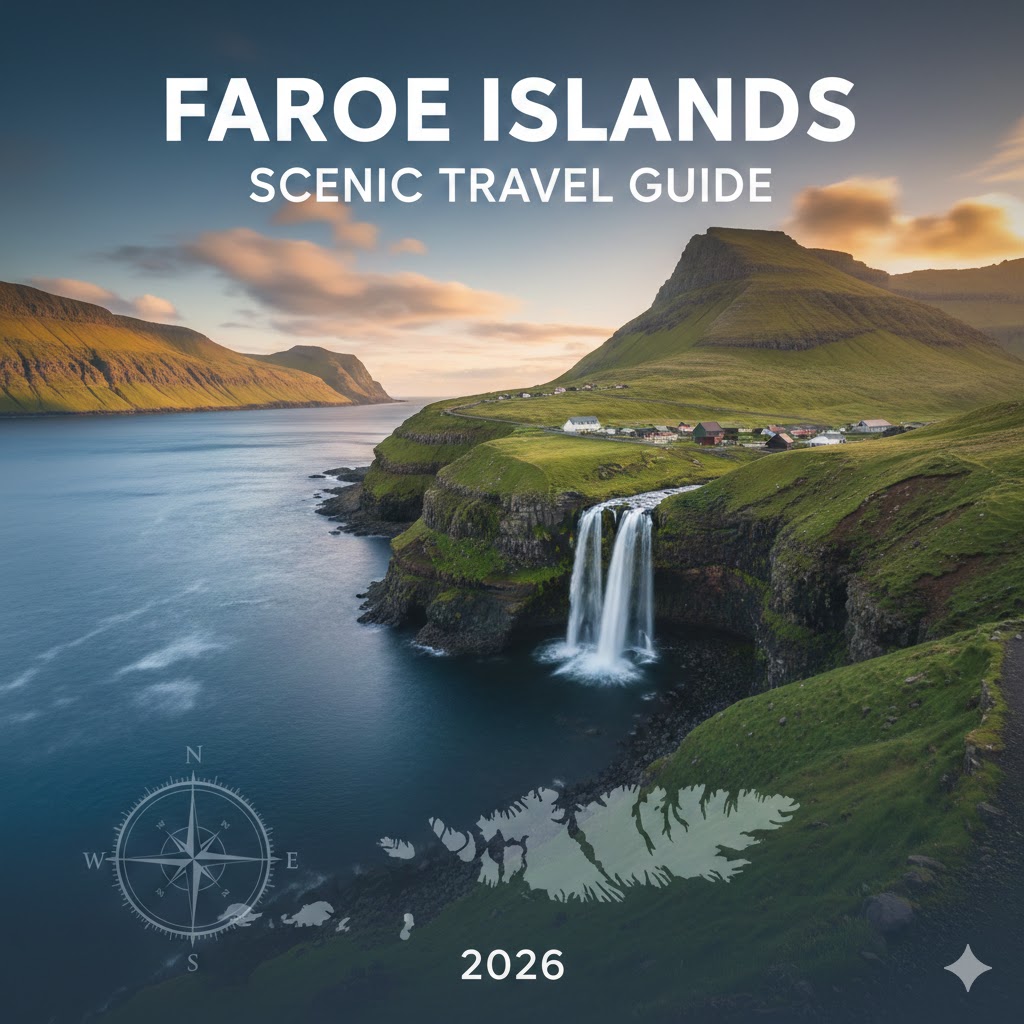
Faroe Islands Scenic Travel Remote, dramatic, and almost untouched — the Faroe Islands feel like a place at the edge of the world. Massive sea cliffs drop into the North Atlantic, waterfalls spill directly into the ocean, and grass-roofed houses sit beneath constantly shifting skies.
If you’re planning Faroe Islands Scenic Travel in 2026, this complete guide covers everything: when to go, how to get there, best viewpoints, driving tips, costs, and how to experience the landscapes responsibly.

1. Where Are the Faroe Islands?
The Faroe Islands are a self-governing archipelago located between Iceland and Norway, under the Kingdom of Denmark.
Key facts:
- 18 volcanic islands
- Population around 50,000
- Dramatic North Atlantic weather
- Sheep outnumber people
Their isolation is part of what makes Faroe Islands Scenic Travel so unique.
2. Why Visit the Faroe Islands in 2026?
Interest in the Faroe Islands has grown steadily, but they remain far less crowded than Iceland.
Why 2026 is a smart time to visit:
- Improved tunnel infrastructure between islands
- Sustainable tourism initiatives expanding
- Rising global interest but still low mass tourism
You can experience raw Nordic landscapes without overtourism.
3. Best Time for Faroe Islands Scenic Travel
Weather shapes everything here.
Ideal months:
- May to September
Expect:
- Longer daylight hours
- Milder temperatures
- Better hiking conditions
Even in summer, conditions change quickly — fog, wind, and sunshine can cycle within minutes.
4. Must-See Scenic Highlights
1) Møllafossur Waterfall
Located near the village of Gásadalur, this waterfall plunges directly into the ocean — one of the most iconic views in the North Atlantic.
2) Sørvágsvatn (The Optical Illusion Lake)
This lake appears to float above the ocean due to perspective.
It’s one of the most photographed stops in any Faroe Islands Scenic Travel itinerary.
3) Kalsoy Island
Home to the famous lighthouse at Kallur, offering dramatic cliff views and panoramic Atlantic scenery.
4) Saksun Village
A quiet settlement surrounded by mountains and a tidal lagoon — perfect for peaceful photography.
5. Is Faroe Islands Scenic Travel Good for Beginners?
Yes — especially if you enjoy:
- Scenic road trips
- Easy coastal hikes
- Photography
- Quiet villages
The islands are compact and connected by tunnels and ferries, making navigation manageable.
6. How to Get to the Faroe Islands
Most travelers fly into Vágar Airport.
Flight connections:
- Copenhagen
- Reykjavik
- Some seasonal European routes
Direct flights make access easier than many expect.
7. Getting Around: Rent a Car
Public transport exists but is limited.
Why renting a car is best:
- Freedom to explore remote areas
- Flexibility with weather
- Access to hidden viewpoints
Driving is straightforward, though narrow roads and sheep crossings are common.
8. Budget for Faroe Islands Scenic Travel
The Faroe Islands are not cheap.
Estimated daily budget:
- Budget: $120–150
- Mid-range: $200–300
- Car rental: Significant cost factor
Food and accommodation are the main expenses.
9. Accommodation Options
Options include:
- Guesthouses
- Nordic-style cabins
- Boutique hotels
- Farm stays
Booking early is essential during summer.
10. Hiking in the Faroe Islands
Hiking is one of the highlights.
Popular beginner-friendly hikes:
- Lake Sørvágsvatn trail
- Tjørnuvík to Saksun (moderate)
- Klakkur viewpoint hike
Weather can change quickly, so proper clothing is essential.
11. Photography Tips
Lighting shifts dramatically throughout the day.
Best photography tips:
- Wake early for soft light
- Expect moody skies
- Use wide-angle lenses
- Protect gear from rain and wind
Mist and fog often enhance the cinematic feel of Faroe Islands Scenic Travel.
12. Sustainable Travel in the Faroe Islands
The islands promote responsible tourism.
Follow these guidelines:
- Stay on marked trails
- Respect private farmland
- Close sheep gates
- Leave no trace
Sustainability ensures long-term preservation.
13. Weather Expectations
Weather is unpredictable year-round.
What to prepare for:
- Strong winds
- Sudden rain
- Fog
- Rapid temperature changes
Layered clothing is non-negotiable.
14. How Many Days Do You Need?
Recommended stay:
- Minimum 4–5 days
- Ideal: 7 days
This allows flexibility for weather and ferry schedules.
15. Who Should Visit the Faroe Islands?
Ideal for:
- Landscape photographers
- Slow travelers
- Couples seeking quiet nature
- Adventure travelers
Not ideal for nightlife seekers or luxury-focused beach vacations.
16. Final Verdict: Is Faroe Islands Scenic Travel Worth It?
Absolutely — if you appreciate raw, untamed landscapes.
Faroe Islands Scenic Travel offers something rare in modern tourism: silence, scale, and authenticity. You won’t find crowds or theme parks here — only cliffs, waterfalls, and wind-carved coastlines.
For travelers seeking cinematic nature without overtourism, the Faroe Islands are one of Europe’s most unforgettable destinations.
Frequently Asked Questions (FAQ)
Q1. Is the Faroe Islands expensive?
Yes, but the experience is unique and worth budgeting for.
Q2. Do I need a car?
Yes, renting a car is highly recommended.
Q3. Is it safe?
Very safe, but nature and weather must be respected.
Q4. When is the best time to visit?
May to September for the best balance of weather and daylight.
Q5. Is it crowded like Iceland?
No — tourism remains relatively low compared to Iceland.
Conclusion
The Faroe Islands feel like a forgotten corner of Europe — dramatic, windswept, and quietly powerful. If you’re planning a 2026 Nordic adventure, this destination offers a rare mix of accessibility and untouched beauty.
Plan carefully, pack wisely, respect nature, and let the landscapes speak for themselves.
Also read this:
Patagonia Hiking Travel Guide for Beginners (Trails, Costs & Planning Tips)
Cappadocia Hot Air Balloon Travel Guide (Best Time, Costs & Insider Tips)
Top 5 Hidden European Destinations Cheaper Than Paris (Travel More, Spend Less)