
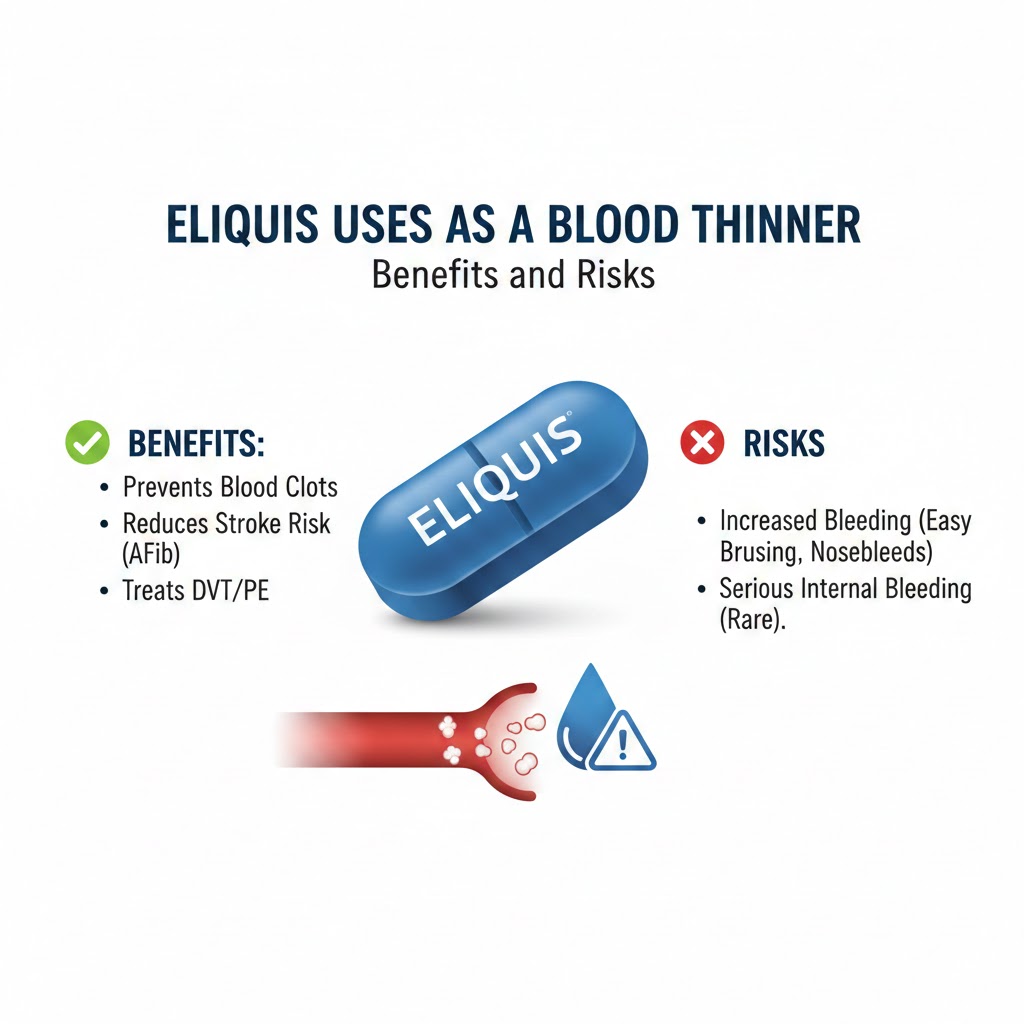
Eliquis Uses as a Blood Thinner Eliquis (apixaban) is a prescription anticoagulant, commonly referred to as a blood thinner, used to reduce the risk of harmful blood clots. It is widely prescribed for preventing stroke, treating and preventing deep vein thrombosis (DVT), and managing pulmonary embolism (PE). By interfering with the blood-clotting process, Eliquis helps prevent life-threatening complications, though it also increases the risk of bleeding and must be used carefully under medical supervision.
How Eliquis Works
Eliquis belongs to a class of medications known as direct oral anticoagulants (DOACs). Specifically, it is a Factor Xa inhibitor.
Mechanism of action
- Factor Xa plays a central role in the blood-clotting cascade
- Eliquis blocks Factor Xa activity
- This reduces the formation of fibrin, a key component of blood clots
By selectively inhibiting Factor Xa, Eliquis prevents clots from forming or growing without completely stopping the body’s ability to clot, which helps balance effectiveness with safety.
Uses of Eliquis
Eliquis Uses as a Blood Thinner Eliquis is approved for several conditions related to abnormal blood clot formation. Its use depends on the patient’s medical history, risk factors, and clinical indication.
Primary approved uses
- Prevention of stroke and systemic embolism in patients with non-valvular atrial fibrillation
- Treatment of deep vein thrombosis (DVT)
- Treatment of pulmonary embolism (PE)
- Prevention of recurrent DVT and PE
- Prevention of blood clots after hip or knee replacement surgery
Eliquis is often chosen because it does not require routine blood monitoring like older anticoagulants such as warfarin.
Benefits of Eliquis
Eliquis Uses as a Blood Thinner Eliquis offers several advantages compared to traditional blood thinners.
Key benefits
- Reduces the risk of stroke in atrial fibrillation
- Effectively treats and prevents serious blood clots
- Lower risk of major bleeding compared to some older anticoagulants
- No routine INR or frequent blood testing required
- Fewer dietary restrictions than warfarin
Because of its predictable action, Eliquis provides consistent anticoagulation with fixed dosing in most patients.
How Eliquis Is Taken
Eliquis is taken orally, usually twice daily, with or without food. Dosage depends on the condition being treated, kidney function, age, body weight, and use of other medications.
Important use considerations
- Doses should be taken at the same times each day
- Missing doses can increase the risk of clot formation
- Stopping Eliquis suddenly may raise the risk of stroke or clotting
Patients should not stop or change their dose without consulting a healthcare provider.
Risks and Side Effects of Eliquis
The primary risk associated with Eliquis is bleeding, as the drug interferes with normal clot formation.
Common Side Effects
These effects are usually mild but should still be monitored.
- Easy bruising
- Nosebleeds
- Bleeding gums
- Prolonged bleeding from cuts
Serious Side Effects
More serious bleeding complications require immediate medical attention.
Major bleeding symptoms
- Unusual or severe bleeding
- Blood in urine or stools
- Black or tarry stools
- Coughing up or vomiting blood
- Severe headaches or dizziness
Other serious concerns
- Spinal or epidural blood clots in patients receiving spinal procedures
- Increased stroke risk if Eliquis is stopped abruptly
- Allergic reactions, including swelling or difficulty breathing
Because bleeding may occur internally without obvious symptoms, regular clinical follow-up is important.
Who Should Use Eliquis with Caution
Eliquis may not be suitable for everyone.
Higher-risk groups
- Patients with active bleeding
- Severe liver disease
- Advanced kidney impairment
- Those taking other anticoagulants or antiplatelet drugs
- Patients undergoing major surgery or invasive procedures
Pregnant or breastfeeding individuals should use Eliquis only if the benefits clearly outweigh potential risks.
Drug and Lifestyle Interactions
Certain medications and substances can increase bleeding risk or affect how Eliquis works.
Notable interactions
- Other blood thinners (e.g., heparin, warfarin)
- Antiplatelet drugs such as aspirin or clopidogrel
- Some antifungal or antiviral medications
- Herbal supplements like St. John’s wort
Alcohol consumption should be discussed with a healthcare provider, as it may increase bleeding risk.
Eliquis Compared to Other Blood Thinners
Compared to warfarin, Eliquis offers more predictable dosing and fewer interactions with food. Compared to other DOACs, it has shown a favorable balance between clot prevention and bleeding risk in several clinical studies. These factors have made Eliquis one of the most commonly prescribed oral anticoagulants worldwide.
Conclusion
Eliquis Uses as a Blood Thinner Eliquis is an effective and widely used blood thinner that plays a critical role in preventing strokes and dangerous blood clots. Its targeted mechanism, ease of use, and reduced need for monitoring make it a preferred option for many patients. However, because of the risk of bleeding, careful dosing, adherence, and ongoing medical supervision are essential. When used appropriately, Eliquis provides significant protection against serious cardiovascular and thromboembolic events.
More Related Topics:
Ozempic vs Wegovy: Which Semaglutide Is Better for Weight Loss?
Mounjaro vs Zepbound: Key Differences for Diabetes and Weight Loss