
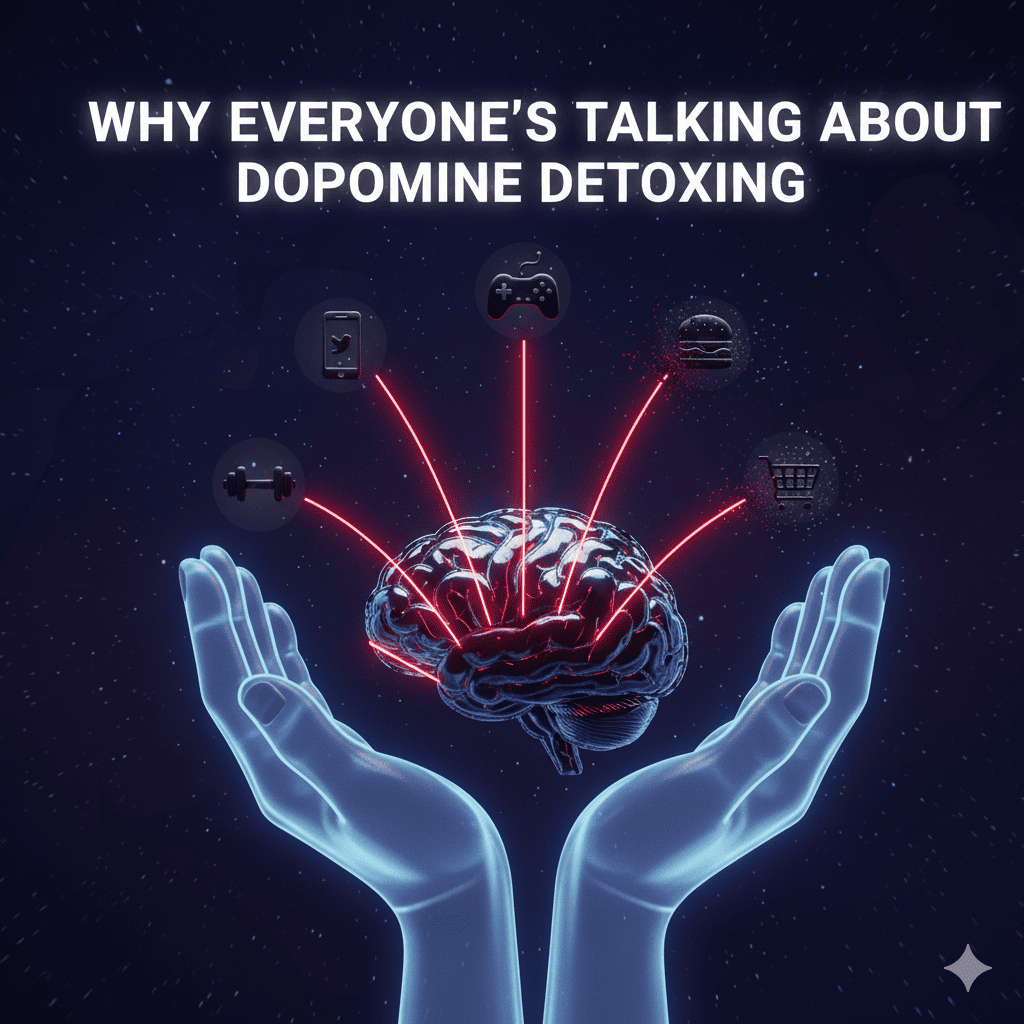
You’ve probably noticed it. That restless feeling when you haven’t checked your phone in 20 minutes. The urge to scroll when you’re supposed to be working. The way you reach for distractions the moment boredom creeps in.
Welcome to the dopamine crisis—and why dopamine detoxing has become one of the hottest wellness trends of our time.
But here’s the thing: it’s not just a trend. It’s a necessary response to how modern life has hijacked our brain’s reward system. And understanding this could change everything about how you feel, focus, and function.
What Is Dopamine Detoxing Really About?
Let’s clear up the confusion first. Dopamine detoxing isn’t about eliminating dopamine from your brain (that would be impossible and dangerous). Dopamine is a crucial neurotransmitter that helps you feel motivated, focused, and alive.
Instead, dopamine detoxing is about hitting the reset button on your brain’s reward system. Think of it as recalibrating your pleasure baseline so that normal, healthy activities feel rewarding again—not just the hyper-stimulating stuff that’s hijacked your attention.
When you’re constantly flooding your brain with quick dopamine hits from social media, junk food, video games, or endless entertainment, your brain adapts. It starts needing more and more stimulation to feel good. Real life starts feeling dull in comparison.
Sound familiar?
Why Your Brain Is Crying for a Reset
Here’s what’s actually happening in your overstimulated brain:
Every time you get a like, unlock an achievement, or bite into something sugary, your brain releases dopamine. It’s the “do that again” signal. The problem? Modern technology and consumer culture have engineered these dopamine triggers to be immediate, intense, and endless.
Your ancestors got dopamine from hunting successfully or finding ripe fruit—activities that required effort and happened sporadically. Your brain evolved for that rhythm. It wasn’t designed for infinite scroll, notification pings every 30 seconds, and on-demand everything.
The result? You’re constantly chasing that dopamine high while your baseline satisfaction plummets. Work feels harder. Conversations seem boring. Even things you used to love don’t hit the same way anymore.
This is why dopamine detoxing matters. You’re not broken—your brain just needs a break from the overstimulation.
The Real-World Signs You Need a Dopamine Reset
Not sure if you need a dopamine detox? Check if these sound like you:
Constant Distraction: You can’t sit through a TV show without checking your phone. You start three tasks and finish none. Focus feels impossible.
Boredom Intolerance: Even five minutes of nothing feels unbearable. You’re always reaching for stimulation—social media, snacks, videos, anything to fill the void.
Motivation Drain: Things that used to excite you feel like a chore. Getting started on important work feels like pushing a boulder uphill.
Instant Gratification Dependency: You want results now. Waiting feels agonizing. Patience? What’s that?
Numbing Behaviors: You scroll mindlessly for hours, eat when you’re not hungry, or binge content to avoid feeling your feelings.
If you’re nodding along, your dopamine system is probably exhausted. Time for a reset.
How to Actually Do a Dopamine Detox (That Works)
Forget the extreme “sit in a dark room for 24 hours” nonsense circulating online. Real dopamine detoxing is more nuanced and sustainable. Here’s how to do it right:
Start with a 24-Hour Mini Reset
Pick one day—ideally a weekend—and eliminate high-dopamine activities:
- No social media or internet browsing
- No video games or streaming
- No junk food or excessive sugar
- No shopping or impulse buying
Instead, allow:
- Walking in nature
- Reading physical books
- Journaling or creative expression
- Face-to-face conversations
- Light exercise or stretching
- Meditation or quiet reflection
The goal isn’t to suffer—it’s to let your brain experience lower-stimulation activities and rediscover their value.
Build Friction Into Your Triggers
Make high-dopamine activities slightly harder to access. Delete social apps from your phone (you can still access via browser). Put your phone in another room while working. Wrap up tempting snacks so they’re not immediately visible.
These tiny barriers give your prefrontal cortex a chance to engage before the dopamine-seeking impulse takes over.
Schedule “Dopamine Windows”
Rather than trying to be a monk, designate specific times for high-dopamine activities. Maybe 30 minutes of social media after dinner, or one episode of your favorite show. When it’s scheduled, it becomes a conscious choice rather than an automatic escape.
Embrace Productive Discomfort
Here’s where the magic happens: Start choosing activities that require effort but deliver deeper satisfaction. Learn an instrument. Write. Cook from scratch. Have real conversations. Build something with your hands.
These activities release dopamine too—but in a healthier, more sustainable way. They teach your brain that effort equals reward, reversing the instant gratification conditioning.
Create a Morning Anchor
The first hour of your day sets your dopamine tone. If you wake up and immediately scroll, you’re teaching your brain to crave constant stimulation. Instead, try: wake up, hydrate, move your body, and do one meaningful task before touching your phone.
This builds dopamine resilience from the moment your eyes open.
What Dopamine Detoxing Actually Feels Like
Let’s be honest about the experience. The first day or two? They’re rough. You’ll feel restless, bored, maybe even anxious. That’s withdrawal. Your brain is literally recalibrating its reward expectations.
By day three or four, something shifts. Colors seem brighter. Conversations feel more engaging. That book you’ve been trying to finish suddenly holds your attention. Simple pleasures—coffee, a walk, music—start feeling genuinely good again.
By week two, you’ll notice your focus sharpening. Tasks that felt impossible to start become manageable. Your motivation returns—not because you forced it, but because your brain’s reward system is functioning properly again.
This is the promise of dopamine detoxing: not deprivation, but restoration.
Beyond the Detox: Building Sustainable Habits
Here’s the truth: dopamine detoxing isn’t a one-time fix. It’s about developing a healthier relationship with stimulation over time.
Practice Strategic Boredom: Allow yourself to be bored regularly. Stand in line without your phone. Sit with your thoughts during a commute. Boredom is where creativity and self-awareness live.
Delay Gratification Intentionally: When you want something, wait 10 minutes before having it. Train your brain that waiting isn’t torture—it’s part of the reward.
Protect Your Attention: Your attention is currency. Guard it fiercely. Use app blockers, turn off notifications, create phone-free zones in your home.
Choose Analog Over Digital: Whenever possible, opt for the less stimulating version. Paper books over e-readers. In-person conversations over texting. Real hobbies over digital entertainment.
The Life-Changing Benefits
People who commit to dopamine detoxing report remarkable changes:
Laser Focus: The ability to do deep work returns. You can actually concentrate for hours on meaningful projects.
Emotional Stability: Your mood stops swinging with every notification or lack thereof. You feel more grounded in yourself.
Genuine Enjoyment: Life’s simple pleasures actually feel pleasurable again. A sunset. A good conversation. A home-cooked meal.
Better Relationships: You’re present with people instead of half-listening while mentally scrolling.
Increased Productivity: When your brain isn’t constantly seeking the next hit, you can actually finish what you start.
Is Dopamine Detoxing Right for You?
If you’re feeling stuck in the stimulation trap—constantly consuming, never satisfied, always distracted—then yes. If you’ve noticed your joy fading despite having access to more entertainment than any generation in history, then definitely yes.
You don’t need to become a digital hermit or give up everything you enjoy. You just need to reset your baseline so that normal life feels good again.
Start Your Reset Today
The beautiful thing about dopamine detoxing? You can start right now. Put your phone on silent. Close unnecessary tabs. Sit with yourself for five minutes without reaching for distraction.
Notice how it feels. Notice the urge to escape. Notice what happens when you don’t.
That’s your brain beginning to heal. That’s your reward system starting to recalibrate. That’s you taking back control in an overstimulated world.
Your attention is yours. Your focus is yours. Your joy is yours.
Ready to reclaim them? Your dopamine reset starts the moment you decide enough is enough.
Also read this:
How to Make Money While Traveling Full-Time: The 2025 Digital Nomad Blueprint
Viral Health Trend: Ice Baths, Red Light & Cold Plunges Explained
Why Mental Fitness Is the New Self-Care: Building Resilience for Modern Life