
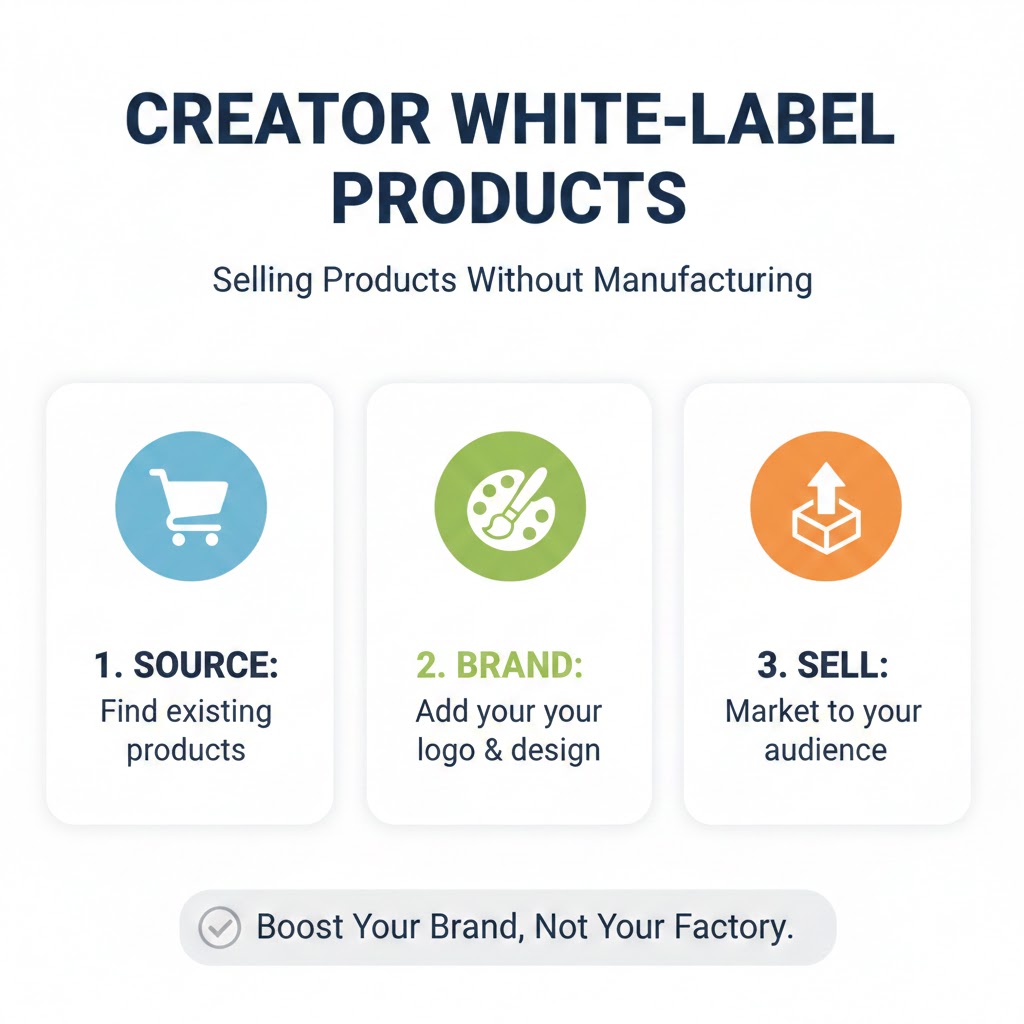
Creator White-Label Products For years, selling physical or digital products meant factories, inventory, logistics, and massive upfront risk. Today, creators are skipping all of that—and still building profitable product brands.
The strategy behind this shift is Creator White-Label Products.
Instead of manufacturing anything themselves, creators attach their brand, audience trust, and distribution to pre-made products that already exist. The creator handles attention and marketing. The supplier handles production and fulfillment.
This article explains how creator white-label products work, why they’re exploding in popularity, and how creators are turning audience trust into scalable product revenue—without factories or warehouses.
1. What Are Creator White-Label Products?
White-label products are ready-made products produced by manufacturers and sold under someone else’s brand.
1.1 How Creators Use Them
- Choose an existing product
- Add branding (logo, packaging, positioning)
- Sell it as their own product
- Manufacturer handles production and shipping
The creator never touches manufacturing.
That’s the foundation of Creator White-Label Products.
2. Why Creators Are Moving Beyond Ads & Affiliates
Ad revenue and affiliate links have limits.
2.1 Problems With Traditional Monetization
- Platform-controlled payouts
- Inconsistent income
- Low margins
- Little brand ownership
2.2 Why Products Change Everything
- Higher profit margins
- Full pricing control
- Stronger brand loyalty
- Sellable business assets
Creator White-Label Products turn creators from promoters into owners.
3. What Makes White-Label Perfect for Creators
Creators already have the hardest part: attention.

3.1 Built-In Distribution
- Audience trust already exists
- No need for cold ads initially
- Instant feedback loop
3.2 Low Barrier to Entry
- No R&D
- No manufacturing contracts
- Minimal upfront cost compared to private labeling
This makes white-labeling ideal for first-time product sellers.
4. Popular Creator White-Label Product Categories
Some product types dominate this model.
4.1 Top-Performing Categories
- Skincare & personal care
- Supplements & wellness (where compliant)
- Coffee, tea, and consumables
- Digital products & software tools
- Fitness accessories
- Beauty tools
These categories work well because branding matters more than invention.
5. How the White-Label Process Works Step by Step
This is how creators launch products quickly.
5.1 Typical Workflow
- Identify audience pain point
- Find a white-label supplier
- Customize branding and packaging
- Set pricing and positioning
- Launch to audience
- Scale with ads or partnerships
Most creators can launch in weeks, not years.
6. Why Trust Is the Real Product Being Sold
People aren’t buying the item alone.

6.1 Trust-Based Buying
- “If they recommend it, it must be good”
- Familiar voice reduces buyer hesitation
- Story beats specs
6.2 Why This Converts Better
White-label products succeed when creators solve a problem their audience already believes they understand.
This is why Creator White-Label Products often outperform generic eCommerce brands.
7. Profit Margins: Why This Model Is Attractive
Margins are the quiet advantage.
7.1 Typical Margin Ranges
- Physical products: 30–60%
- Digital white-label products: 70–90%
- Bundled products: even higher
7.2 Compared to Affiliates
- Affiliate commissions: 5–30%
- White-label ownership: unlimited upside
Creators who switch rarely go back.
8. Common Mistakes Creators Make
White-label isn’t automatic success.
8.1 Mistakes to Avoid
- Choosing products with no audience demand
- Competing only on price
- Weak branding and positioning
- Overordering inventory too early
8.2 What Actually Works
- Small test launches
- Strong messaging
- Audience-driven product decisions
In Creator White-Label Products, clarity beats creativity.
9. Scaling Beyond the Initial Launch
This model grows with your brand.
9.1 Expansion Paths
- Product bundles
- Subscription models
- Limited drops
- Upsells and cross-sells
9.2 Long-Term Value
- Brand equity grows
- Customer lists compound
- Business becomes sellable
This turns a creator into a brand owner, not just a content producer.
10. Why Creator White-Label Products Will Dominate 2026
The market conditions are aligned.
10.1 Why This Model Is Accelerating
- Rising ad costs
- Declining affiliate payouts
- Audience-first commerce growth
- Improved supplier platforms
10.2 The New Creator Economy
Creators don’t want sponsorships forever.
They want ownership.
And Creator White-Label Products offer that without manufacturing risk.
FAQs: Creator White-Label Products
Do I need a big audience to start?
No. Small, niche audiences often convert better.
Is this the same as dropshipping?
No. White-label focuses on branding and consistency, not random products.
How much money do I need to start?
Some models start with very low upfront costs, especially digital white-label products.
Are digital products considered white-label?
Yes—software tools, templates, and courses often use white-label licensing.
Is this model sustainable long-term?
Yes, especially when combined with strong branding and community trust.
Final Thoughts
Manufacturing is no longer the barrier to selling products—distribution and trust are. Creators already own those assets. Creator White-Label Products simply unlock their value.
You don’t need a factory.
You don’t need a warehouse.
You don’t need to invent anything new.
You need an audience, a problem, and the confidence to put your name on a solution.
That’s not just monetization—that’s ownership.
Also read this:
Comment-to-Sale Funnels: Monetizing Engagement Instead of Views
Audience Renting Model: How Small Pages Sell Traffic to Brands
Reddit SEO Arbitrage: Ranking Threads That Drive Affiliate Sales