
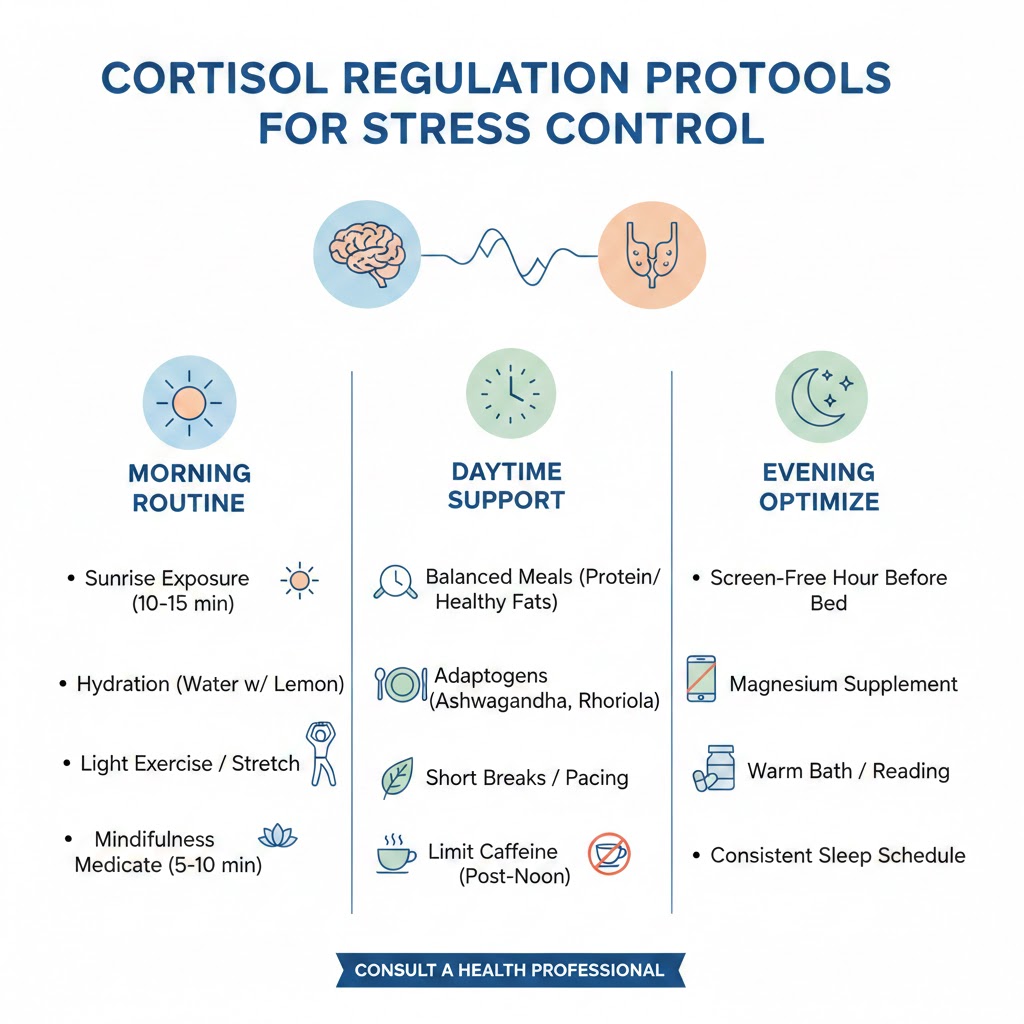
Cortisol Regulation Protocols Stress is no longer an occasional challenge—it has become a constant background condition for modern life. Long work hours, digital overload, irregular sleep, and constant mental stimulation keep the body locked in a state of alert. At the center of this response is cortisol, the body’s primary stress hormone.
When cortisol follows a healthy rhythm, it supports energy, focus, and resilience. But when stress becomes chronic, cortisol can remain elevated or dysregulated—leading to fatigue, anxiety, sleep issues, weight gain, and burnout. This is why Cortisol Regulation Protocols have become a major focus in modern stress management and preventive health.
This article explains how cortisol works, what disrupts it, and which practical protocols help restore balance and stress control.


1. Understanding Cortisol and Its Natural Rhythm
Before applying any Cortisol Regulation Protocols, it’s important to understand how cortisol is meant to function.
What Cortisol Does
- Mobilizes energy in response to stress
- Helps regulate blood sugar
- Supports alertness and focus
- Plays a role in immune response
Healthy Cortisol Pattern
- High in the morning (to wake you up)
- Gradually declines throughout the day
- Lowest at night (to allow sleep)
Problems arise when this rhythm is flattened, inverted, or constantly elevated.
2. Signs of Cortisol Dysregulation
Cortisol imbalance doesn’t always feel like stress.
Common Physical Signs
- Constant fatigue despite rest
- Weight gain around the abdomen
- Sleep disturbances
- Frequent illness
Mental and Emotional Signs
- Anxiety or irritability
- Brain fog
- Low motivation
- Feeling “wired but tired”
Recognizing these signs helps determine when cortisol regulation is needed.
3. Sleep-Based Cortisol Regulation Protocols
Sleep is the most powerful cortisol regulator.
Key Sleep Protocols
- Consistent sleep and wake times
- Morning light exposure
- Dark, screen-free evenings
- Avoiding late-night stimulation
Why This Works
Poor sleep elevates cortisol, and high cortisol disrupts sleep—creating a cycle. Breaking this loop is foundational in all Cortisol Regulation Protocols.
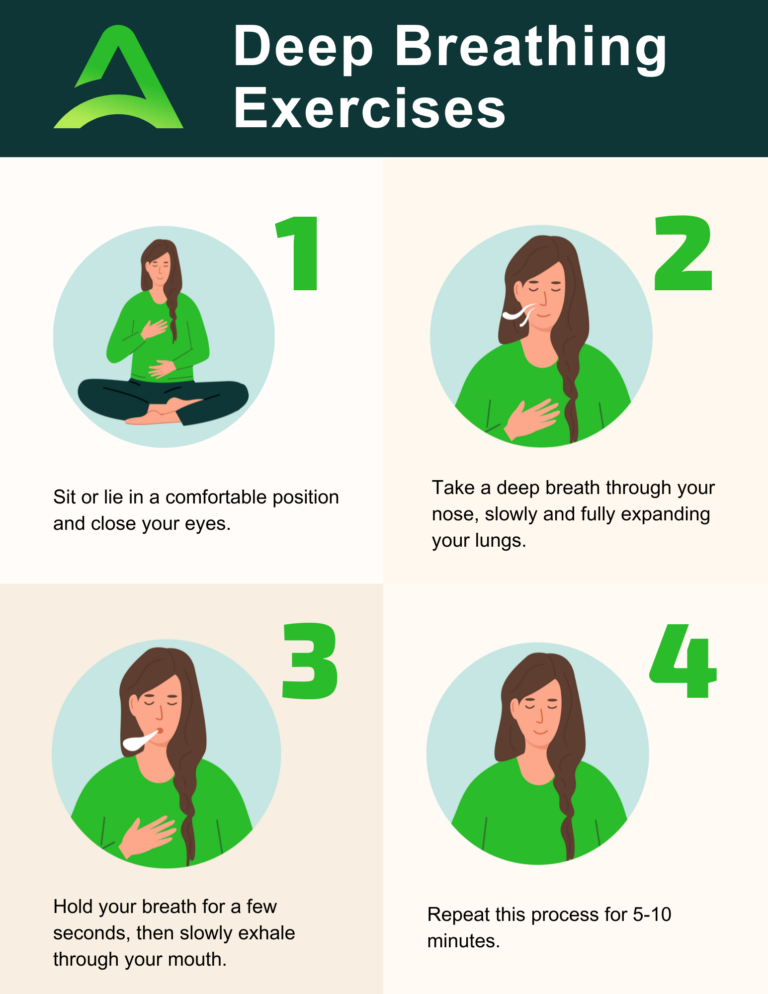

4. Breathing and Nervous System Regulation Protocols
Cortisol is tightly linked to the nervous system.
Effective Techniques
- Slow nasal breathing
- Extended exhalation breathing
- Short daily mindfulness sessions
Physiological Impact
- Activates the parasympathetic nervous system
- Lowers stress signaling
- Reduces cortisol output
Even a few minutes per day can create meaningful shifts over time.
5. Nutrition Protocols That Support Cortisol Balance
Food directly influences cortisol levels.
Nutrition Principles
- Regular meal timing
- Balanced macronutrients
- Avoiding excessive caffeine
- Adequate protein intake
Helpful Nutritional Patterns
- Stable blood sugar reduces cortisol spikes
- Undereating or skipping meals increases stress hormone output
Nutrition-based Cortisol Regulation Protocols focus on stability, not restriction.
6. Movement and Exercise Protocols for Cortisol Control
Exercise can both raise and lower cortisol.
Cortisol-Supportive Movement
- Walking
- Strength training with adequate recovery
- Mobility and stretching
What to Limit During High Stress
- Excessive high-intensity training
- Overtraining without rest
The goal is to use movement as a stress outlet, not another stressor.
7. Psychological and Cognitive Stress Protocols
Mental stress can elevate cortisol even without physical strain.
Effective Cognitive Strategies
- Task prioritization
- Reducing decision overload
- Time-bound work blocks
- Scheduled mental breaks
Why This Matters
The brain cannot distinguish between real danger and perceived pressure. Mental stress alone can keep cortisol elevated.
8. Lifestyle Habits That Undermine Cortisol Regulation
Some habits quietly sabotage cortisol balance.
Common Disruptors
- Constant notifications
- Late-night screen use
- Excessive caffeine reliance
- Chronic multitasking
Removing these stress amplifiers is just as important as adding new protocols.
9. How Long Cortisol Regulation Takes
Cortisol balance does not reset overnight.
Realistic Timeline
- Short-term calming effects: days
- Rhythm improvement: weeks
- Long-term resilience: months
Consistency matters more than intensity with Cortisol Regulation Protocols.
Frequently Asked Questions
What are Cortisol Regulation Protocols?
They are structured lifestyle and behavioral strategies designed to restore healthy cortisol rhythms and reduce chronic stress.
Can cortisol be lowered naturally?
Yes. Sleep, breathing, nutrition, and stress management are powerful natural regulators.
Is cortisol always bad?
No. Cortisol is essential for survival. Problems occur when it is chronically elevated or dysregulated.
How do I know if my cortisol is high?
Symptoms include fatigue, anxiety, poor sleep, and stress intolerance. Testing may be used in some cases.
Do supplements replace cortisol regulation protocols?
No. Supplements may support, but lifestyle protocols form the foundation.
Final Thoughts
Stress isn’t just a mental experience—it’s a hormonal and nervous system state. Cortisol reflects how the body perceives and responds to daily life. When stress becomes constant, cortisol loses its rhythm, and health begins to suffer.
Effective Cortisol Regulation Protocols don’t aim to eliminate stress. They aim to restore balance, resilience, and recovery in a demanding world.
The goal isn’t to live stress-free.
It’s to train your body to handle stress without being consumed by it.
More Related Topics:
Gut Microbiome Testing: What Your Results Really Mean
DNA-Based Diet Planning: Is It the Future of Nutrition?
Attention Fragmentation Explained: How Short Videos Are Affecting Brain Health