
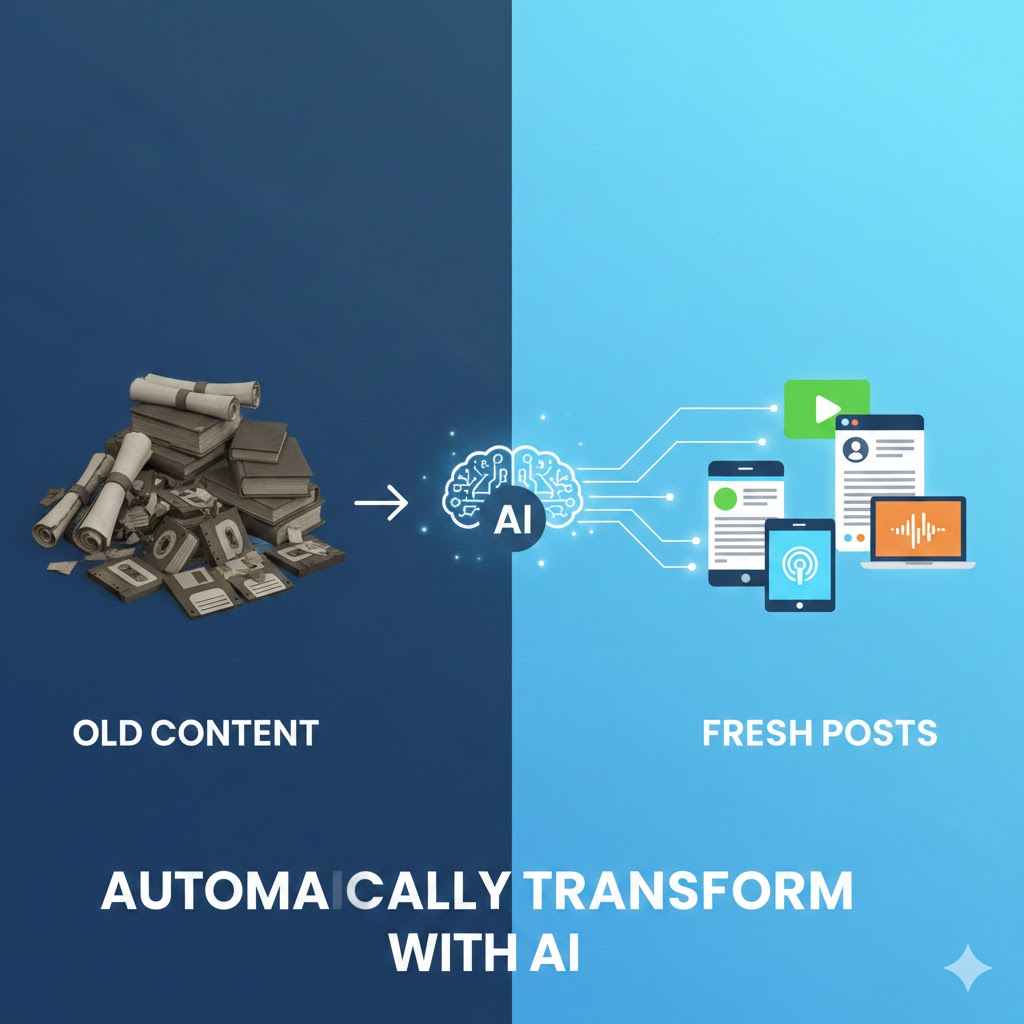
Every content creator and marketer sits on a goldmine they barely tap into: their archive of old content. Blog posts from years ago, social media updates that performed well, videos that captured attention, podcasts with valuable insights—all gathering digital dust while you struggle to create new material from scratch.
The solution isn’t working harder to produce more content. It’s working smarter by learning how to convert old content into fresh posts automatically using artificial intelligence. Modern AI tools can analyze your existing content library, identify valuable material, and transform it into new formats that resonate with today’s audiences. This comprehensive guide will show you exactly how to breathe new life into your content archive while saving countless hours of manual work.
1. Why Content Repurposing Matters More Than Ever
The Content Treadmill Problem
Content creators face an exhausting reality: platforms demand constant fresh content to maintain visibility. The moment you stop posting, your reach plummets. Yet creating original content daily is unsustainable for most individuals and teams.
The Exhaustion Cycle:
- Pressure to post multiple times daily across platforms
- Burnout from constant ideation and creation
- Quality decline as quantity demands increase
- Diminishing returns from rushed content
- Resource constraints limiting content production capacity
The Hidden Value in Your Archive
Your old content contains proven ideas, researched information, and messages that already resonated with audiences. When you convert old content into fresh posts automatically, you’re not being lazy—you’re being strategic.
Archive Advantages:
- Content has demonstrated engagement and interest
- Research and fact-checking are already complete
- Core messages have proven relevance
- SEO groundwork has been established
- Original creation effort is already invested
The AI Revolution in Content Transformation
Artificial intelligence has fundamentally changed what’s possible in content repurposing. Tasks that once took hours now happen in minutes. Complex transformations that required multiple specialists can now be automated through intelligent systems.
2. Understanding AI-Powered Content Transformation
How AI Analyzes and Understands Content
Modern language models don’t just copy and paste your content. They genuinely understand context, meaning, and structure.
AI Capabilities:
- Semantic understanding of your content’s core message
- Identification of key themes and supporting arguments
- Recognition of tone, style, and brand voice patterns
- Extraction of quotable moments and compelling statistics
- Analysis of which elements drove engagement
The Transformation Process
When you convert old content into fresh posts automatically, AI follows a sophisticated multi-step process that mimics human editorial judgment.
Transformation Stages:
- Content ingestion and initial analysis
- Key concept extraction and prioritization
- Audience and platform consideration
- Format adaptation and optimization
- Tone adjustment for current trends
- Call-to-action modernization
- Visual element recommendations
Different Types of Content Transformations
AI enables numerous transformation possibilities, multiplying your content’s reach and lifespan.
Primary Transformation Types:
- Long-form blog posts into social media carousels
- Podcast episodes into quote graphics and audiograms
- Video content into written summaries and highlights
- Email newsletters into Twitter threads
- Webinars into bite-sized tutorial posts
- Case studies into before-and-after visuals
- Research reports into infographic content
3. Essential AI Tools for Automatic Content Conversion
ChatGPT and Claude for Text Transformation
Large language models excel at understanding existing content and rewriting it for different purposes and audiences.
Use Cases:
- Transforming blog posts into engaging social media captions
- Converting formal content into conversational threads
- Adapting long-form content into email sequences
- Creating multiple variations for A/B testing
- Generating platform-specific versions from one source
Best Practices:
- Provide clear context about your target audience
- Specify the desired tone and style
- Include formatting requirements upfront
- Request multiple options for comparison
- Refine outputs with follow-up prompts
Jasper and Copy.ai for Marketing Content
Specialized marketing AI tools understand persuasion, conversion optimization, and brand voice consistency when you convert old content into fresh posts automatically.
Marketing-Specific Features:
- Brand voice training for consistency
- Conversion-focused rewriting
- SEO optimization in transformations
- A/B test variant generation
- Multi-channel campaign creation from single assets
Integration Capabilities:
- Direct posting to social media platforms
- Content calendar integration
- Team collaboration features
- Performance tracking and analytics
- Template libraries for consistent formatting
Descript and Opus Clip for Video Content
Video repurposing requires specialized tools that understand visual and audio elements alongside text.
Video Transformation Capabilities:
- Automatic transcript generation
- Highlight clip identification
- Multi-platform reformatting
- Caption and subtitle creation
- Audio enhancement and cleanup
Canva AI and Adobe Firefly for Visual Content
Transform written content into visual formats that capture attention on image-focused platforms.
Visual Transformation Features:
- Text-to-image generation from descriptions
- Infographic creation from data points
- Quote card generation from key statements
- Color scheme suggestions matching brand
- Layout optimization for different platforms
4. Step-by-Step Process to Convert Old Content Into Fresh Posts Automatically
Phase One: Content Audit and Inventory
Before transformation begins, understand what assets you have and their potential.
Inventory Process:
- Catalog all existing content by type and topic
- Analyze historical performance metrics
- Identify evergreen content with lasting relevance
- Note seasonal content for timely re-releases
- Categorize by target audience segments
Priority Assessment:
- Rank content by historical engagement rates
- Identify gaps in current content calendar
- Determine which formats perform best currently
- Consider trending topics related to old content
- Evaluate transformation effort vs. potential impact
Phase Two: Setting Up AI Transformation Systems
Efficiency comes from systematic approaches rather than one-off transformations.
System Components:
- Create templates for common transformation types
- Develop prompt libraries for consistent AI outputs
- Establish quality control checkpoints
- Build approval workflows for team environments
- Set up distribution automation
Tool Configuration:
- Train AI tools on your brand voice and style
- Configure output parameters for each platform
- Set up integrations between tools
- Create custom workflows for different content types
- Establish naming conventions and organization systems
Phase Three: Automated Content Analysis
Let AI identify the most valuable elements in your existing content.
Analysis Prompts:
- Request identification of core themes and messages
- Ask AI to extract quotable statements
- Have it identify supporting data and statistics
- Request suggestions for which platforms suit the content
- Ask for audience segment recommendations
Pattern Recognition:
- Identify which content types drive most engagement
- Recognize recurring themes that resonate
- Spot gaps where additional transformation adds value
- Find unexpected connections between disparate content
- Discover trending topics you’ve already covered
Phase Four: Multi-Format Transformation
Create diverse content types from single source materials when you convert old content into fresh posts automatically.
Blog to Social Media:
- Extract key points for Twitter threads
- Create carousel posts for Instagram and LinkedIn
- Generate video script outlines for TikTok
- Develop quote graphics for Pinterest
- Write engaging captions for Facebook posts
Video to Multiple Formats:
- Generate written transcripts and blog posts
- Create short-form clips for social media
- Extract audio for podcast distribution
- Design infographics from visual demonstrations
- Develop email content from key segments
Long-Form to Micro-Content:
- Break comprehensive guides into daily tips
- Transform chapters into standalone articles
- Create countdown series from list posts
- Develop quiz questions from educational content
- Generate discussion prompts from opinion pieces
Phase Five: Optimization and Personalization
Generic repurposing isn’t enough. Tailor transformed content to current context and specific platforms.
Platform Optimization:
- Adjust formatting for each platform’s specifications
- Incorporate current platform-specific features
- Use trending hashtags and topics where relevant
- Optimize post timing based on current analytics
- Adapt calls-to-action for platform norms
Audience Personalization:
- Segment content for different audience groups
- Adjust complexity levels for various segments
- Incorporate current events and contexts
- Update examples and references for relevance
- Modify tone for different demographic preferences
Phase Six: Quality Control and Human Review
AI-generated content needs human oversight to maintain quality and brand alignment.
Review Checklist:
- Verify factual accuracy and current relevance
- Ensure brand voice consistency
- Check for appropriate tone and sensitivity
- Confirm calls-to-action are current
- Validate links and references work
- Test formatting on actual platforms
Improvement Iteration:
- Document what works well for future prompts
- Refine AI instructions based on outputs
- Create style guide updates from learnings
- Build example libraries of best transformations
- Continuously improve your prompt engineering
5. Advanced Strategies for Maximum Impact
Creating Content Series from Single Pieces
Transform individual content pieces into multi-part series that build anticipation and engagement.
Series Approaches:
- Break comprehensive guides into weekly installments
- Create “Part 1 of 5” threads that drive return visits
- Develop themed weeks around single topics
- Build countdown series leading to resource releases
- Generate before-during-after sequences
Seasonal and Timely Re-releases
Old content becomes new again when presented in timely contexts when you convert old content into fresh posts automatically.
Timing Strategies:
- Holiday-themed re-angles of existing content
- Anniversary posts celebrating old milestones
- “One year ago today” throwback posts
- Seasonal relevance connections to evergreen topics
- Event-triggered content resurfaces
Audience Segment Variations
One piece of content can serve multiple audience segments with appropriate customization.
Segmentation Strategies:
- Beginner vs. advanced versions of the same topic
- Industry-specific angles on universal concepts
- Geographic customization for different markets
- Age or demographic-appropriate messaging
- B2B vs. B2C versions of content
Interactive Content Transformation
Convert static content into engaging interactive formats that boost participation.
Interactive Formats:
- Transform articles into polls and surveys
- Create quizzes from educational content
- Develop calculators from data-heavy posts
- Build interactive infographics from statistics
- Generate discussion threads from opinion pieces
6. Measuring Success and ROI
Key Performance Metrics
Track specific metrics to understand which transformations deliver the best results.
Engagement Metrics:
- Comparison of original vs. transformed content performance
- Engagement rates across different transformation types
- Audience growth attributed to repurposed content
- Time spent on transformed content
- Conversion rates from calls-to-action
Efficiency Metrics:
- Time saved through automation vs. manual creation
- Cost per piece of content produced
- Content volume increase from repurposing
- Team productivity improvements
- Resource allocation optimization
A/B Testing Transformed Content
Systematic testing reveals which transformation approaches work best for your audience.
Testing Framework:
- Test different AI tools for same transformation
- Compare various prompt approaches
- Evaluate different formatting styles
- Assess timing variations for releases
- Measure platform-specific performance differences
Iteration Based on Data:
- Document what transformation types perform best
- Identify which old content has highest repurpose value
- Recognize platform-specific success patterns
- Understand audience preferences for formats
- Refine AI prompts based on performance data
7. Common Challenges and Solutions
Maintaining Content Freshness
The biggest risk in repurposing is content feeling stale or obviously recycled.
Freshness Strategies:
- Update statistics and examples to current data
- Add commentary on how topics have evolved
- Incorporate recent events and contexts
- Refresh visual elements with current design trends
- Update calls-to-action to current offers
Avoiding Self-Cannibalization
Publishing too-similar content can confuse audiences and compete with your own posts.
Differentiation Tactics:
- Ensure significant transformation between versions
- Space out releases of related content
- Target different platforms for similar messages
- Angle content differently for various audiences
- Add substantial new insights to refreshed content
Managing Brand Voice Consistency
When you convert old content into fresh posts automatically, maintaining consistent voice across transformations is crucial.
Consistency Approaches:
- Create detailed brand voice documentation
- Develop example libraries for AI training
- Establish review processes with brand guardians
- Use consistent AI tools trained on your content
- Build comprehensive style guides for reference
Handling Outdated Information
Old content sometimes contains information that’s no longer accurate or relevant.
Update Protocols:
- Flag content requiring fact-checking before transformation
- Research current statistics and examples
- Identify changed policies or circumstances
- Update legal or compliance-related information
- Revise recommendations based on current best practices
8. Future Trends in AI Content Transformation
Predictive Content Optimization
Future AI systems will predict which old content will perform best if transformed and released now.
Emerging Capabilities:
- Trend forecasting integrated with content archives
- Automatic identification of timely repurposing opportunities
- Performance prediction before transformation
- Optimal timing recommendations for releases
- Audience sentiment analysis for strategic timing
Multi-Modal Transformation
AI will seamlessly transform content across text, image, video, and audio formats.
Advanced Transformations:
- Text directly to video with AI avatars
- Static images into animated graphics
- Written content into podcast episodes
- Video content into interactive experiences
- All formats into VR/AR experiences
Personalized Content Variants at Scale
AI will create thousands of personalized versions from single content pieces.
Hyper-Personalization:
- Individual-level content customization
- Real-time adaptation based on user behavior
- Dynamic content that evolves with trends
- Automatic localization across languages and cultures
- Context-aware content serving
Autonomous Content Systems
Future systems will independently manage entire repurposing workflows with minimal human intervention.
Autonomous Features:
- Automatic content audit and prioritization
- Self-triggered transformation based on opportunities
- Automated quality control and brand compliance
- Independent distribution and scheduling
- Performance monitoring and strategy adjustment
Conclusion
The ability to convert old content into fresh posts automatically using AI represents one of the most significant opportunities in modern content marketing. Your content archive isn’t a graveyard of forgotten work—it’s a treasure trove of proven ideas waiting to be rediscovered by new audiences.
By implementing the strategies, tools, and processes outlined in this guide, you can multiply your content output without proportionally increasing your workload. Each piece of original content becomes a perpetual asset, continuously generating new variations that reach different audiences across multiple platforms.
The content creators and brands that will thrive in the coming years aren’t necessarily those producing the most original material. Instead, success belongs to those who master the art and science of transforming existing assets into fresh, engaging content that meets audiences wherever they are.
Start today by auditing your content archive, selecting high-potential pieces, and experimenting with AI transformation tools. Your past content investments deserve to work harder for you. With the right approach to automatically converting old content into fresh posts, you’ll never face a blank page or empty content calendar again.
The question isn’t whether you should convert old content into fresh posts automatically—it’s how quickly you can implement these systems to gain a competitive advantage over creators still exhausting themselves creating everything from scratch. Your content goldmine is waiting. It’s time to start mining it systematically with the power of artificial intelligence.
Also read this:
How to Detect Platform Algorithm Changes Before Official Announcements
How to Turn Live Streams Into Short-Form Clips Without Manual Editing
Turn Long Videos Into Viral Shorts Automatically Using Gemini & Perplexity