
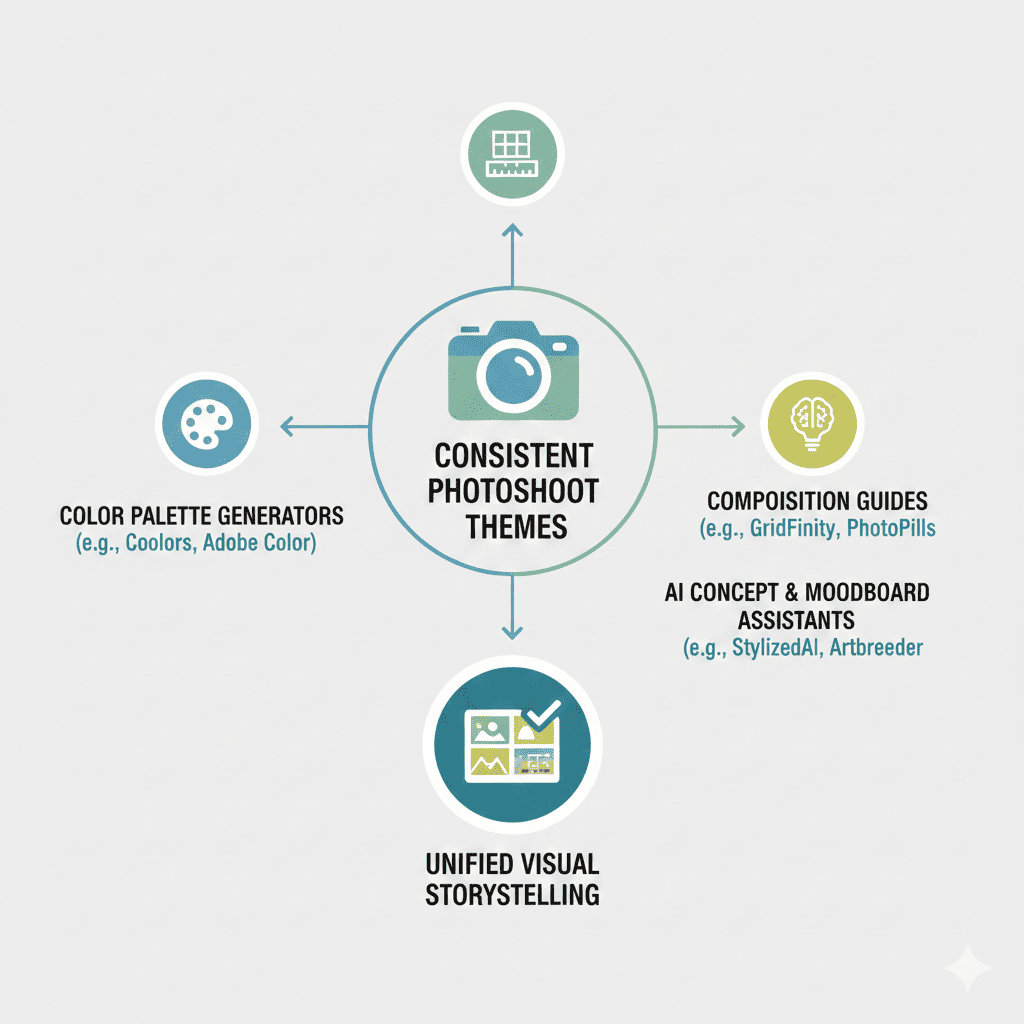
Creating a cohesive visual narrative across an entire photoshoot has traditionally required extensive planning, mood boards, reference collections, and an experienced creative eye. The challenge of maintaining consistent photoshoot themes throughout dozens or even hundreds of images demands attention to color palettes, lighting styles, compositional approaches, and aesthetic continuity that can be difficult to sustain manually. Artificial intelligence has emerged as a powerful ally in this creative process, offering tools that help photographers, content creators, and visual artists develop and maintain thematic consistency with unprecedented efficiency and precision.
1. Understanding Thematic Consistency in Photography
Before exploring the AI tools that help you create consistent photoshoot themes, it’s essential to understand what thematic consistency means and why it matters in contemporary visual storytelling.
Defining Visual Coherence
Thematic consistency refers to the unified visual language that connects individual images within a series or collection. This coherence manifests through repeated elements including color harmony, lighting patterns, compositional structures, subject styling, mood and atmosphere, and post-processing treatments. When executed successfully, viewers immediately recognize images as belonging to the same creative vision.
Professional photographers understand that single striking images attract attention, but cohesive series create lasting impact and define recognizable styles. Whether shooting for editorial publications, commercial campaigns, social media presence, or personal portfolios, thematic consistency elevates work from random collection to intentional narrative.
Elements That Define Photo Themes
Multiple interconnected elements contribute to establishing and maintaining photographic themes. Color palettes set emotional tone and create immediate visual recognition. Specific color combinations become signature elements that viewers associate with particular photographers or brands.
Lighting quality and direction establish mood and atmosphere. Consistent use of natural window light, dramatic studio lighting, or golden hour outdoor photography creates recognizable patterns throughout a series. Compositional approaches including framing choices, perspective angles, and spatial relationships contribute to thematic coherence.
Subject treatment and styling including wardrobe selections, prop choices, location aesthetics, and model direction all reinforce thematic unity. Post-processing style through color grading, contrast curves, grain structure, and tonal treatments provides the final layer of visual consistency.
Why Consistency Matters
Thematic consistency serves multiple practical and artistic purposes. For professional photographers, recognizable style becomes brand identity that attracts ideal clients and differentiates their work in crowded markets. Social media algorithms favor accounts with cohesive aesthetics, rewarding visual consistency with increased reach and engagement.
Editorial and commercial clients specifically seek photographers who can deliver consistent series that maintain brand guidelines and visual standards across campaigns. Portfolio coherence demonstrates professional competence and artistic vision more effectively than collections of disparate images regardless of individual quality.
2. AI-Powered Mood Board and Planning Tools
The foundation of consistent photoshoot themes begins with thorough planning and clear visual direction. AI tools have revolutionized the pre-production phase, making it easier than ever to develop comprehensive creative visions.
Milanote for Visual Organization
Milanote combines traditional mood boarding with AI-assisted organization and suggestion features. The platform allows you to collect reference images, create visual hierarchies, and organize inspiration into coherent themes. Its AI analyzes your collected images and suggests related content that aligns with your emerging aesthetic direction.
The tool’s strength lies in helping you visualize connections between disparate elements. As you build your mood board, patterns emerge naturally, and the AI highlights thematic threads you might have missed. This assisted curation process helps crystallize your vision before the actual shoot begins.
Pinterest’s Visual Search and Recommendations
Pinterest has evolved beyond simple pinning to include sophisticated AI that understands visual relationships. The platform’s visual search allows you to upload reference images and discover similar content. Its recommendation algorithm learns your aesthetic preferences and surfaces content that aligns with themes you’re developing.
For photographers planning shoots, Pinterest’s AI effectively functions as a creative research assistant. By analyzing which pins you save and how you organize boards, the system identifies patterns and suggests complementary images that expand your thematic vocabulary while maintaining consistency.
Playform’s AI Art Generation for Concept Development
Playform uses generative AI to create original images based on your inputs and references. Unlike simple mood boards, Playform allows you to generate custom visual concepts that don’t exist yet. You can input multiple reference images representing your desired theme, and the AI synthesizes new compositions that blend those aesthetic elements.
This proves invaluable when planning unique shoots where existing references don’t quite capture your vision. The AI helps you visualize potential outcomes and refine your thematic direction before investing in production.
Niice for Collaborative Theme Development
Niice offers AI-enhanced collaborative mood boarding specifically designed for creative teams. The platform’s smart search understands design terminology and visual concepts, making it easy to build comprehensive theme collections. Its AI suggests complementary images and identifies visual patterns across your collected references.
For photographers working with creative directors, stylists, and clients, Niice facilitates shared vision development. Everyone can contribute to theme building while the AI ensures additions align with established aesthetic direction.
3. Color Palette Generation and Management
Color consistency forms the backbone of thematic cohesion. AI tools that analyze and generate harmonious color palettes have become indispensable for maintaining consistent photoshoot themes throughout production and post-processing.
Adobe Color with AI Enhancement
Adobe Color uses AI to extract color schemes from reference images and generate harmonious palette variations. Upload a photo that captures your desired aesthetic, and the tool identifies dominant colors, creates complementary palettes, and suggests variations that maintain visual harmony.
The platform’s color wheel interface allows refinement while the AI ensures relationships between colors follow established color theory principles. You can save palettes directly to Adobe Creative Cloud, making them instantly available in Lightroom and Photoshop for consistent post-processing.
Coolors AI Palette Generator
Coolors combines manual control with AI suggestions to create custom color palettes. Its machine learning algorithm analyzes which color combinations you favor and suggests palettes aligned with your preferences. The generator understands color temperature, saturation relationships, and complementary harmonies.
For photoshoot planning, Coolors helps you establish color direction for wardrobe, props, locations, and post-processing. Export palettes in various formats for sharing with team members, ensuring everyone works from the same color foundation.
Khroma Personalized Color Learning
Khroma takes a unique approach by learning your specific color preferences through an initial training process. You select favorite colors from presented options, and its neural network builds a personalized color algorithm. The system then generates unlimited palettes specifically tailored to your aesthetic sensibility.
This personalization proves valuable for photographers developing signature styles. Khroma’s AI ensures generated palettes align with your established themes while introducing subtle variations that prevent monotony.
Color Palette Cinema for Film References
Color Palette Cinema analyzes color grading in professional films and creates extractable palettes. For photographers seeking cinematic themes, this tool provides concrete color references from established cinematography. The AI identifies primary, secondary, and accent colors used throughout scenes.
Applying film-inspired color palettes to photoshoots creates sophisticated, cohesive aesthetics grounded in proven cinematic storytelling. The tool bridges the gap between motion picture color grading and still photography.
4. AI-Assisted Shot List and Composition Planning
Maintaining thematic consistency requires careful shot planning that ensures all necessary images align with your established visual direction. AI tools now assist with comprehensive shot list development and compositional guidance.
Shot Designer’s AI Suggestions
Shot Designer, traditionally used by filmmakers, increasingly serves photographers planning complex shoots. Its AI analyzes your scene descriptions and suggests camera angles, framing options, and compositional approaches that create visual variety while maintaining stylistic consistency.
The platform helps you visualize exactly what you’ll shoot before arriving on location. By planning specific compositions in advance, you ensure comprehensive coverage that serves your thematic vision rather than hoping to capture the right moments spontaneously.
Artemis Director’s Viewfinder with AI Enhancement
Artemis combines traditional director’s viewfinder functionality with AI that suggests lens choices and framing options based on your described vision. Input your thematic keywords, and the AI recommends technical approaches that align with that aesthetic.
For photographers shooting in unfamiliar locations, Artemis helps pre-visualize shots using GPS integration and sun position tracking. You can plan exact timing for optimal lighting while the AI ensures technical choices support your thematic consistency goals.
Lenslist’s Location and Timing Recommendations
Lenslist uses AI to analyze location scouting photos and suggest optimal shooting times, angles, and approaches. Upload location snapshots, describe your desired theme, and the AI provides specific recommendations for capturing images that align with your established aesthetic.
The platform’s machine learning understands how different lighting conditions, weather, and times of day affect various locations. It suggests when to shoot specific scenes to achieve thematic consistency across images captured in different places.
5. Real-Time Style Guidance During Shoots
Maintaining consistent photoshoot themes during actual photography sessions requires tools that provide real-time feedback and guidance as you shoot. AI-powered solutions now offer immediate style checking and adjustment recommendations.
Narrative Select’s On-Set Curation
Narrative Select uses AI to analyze images as you shoot, identifying which captures best align with your established theme. The system learns your aesthetic preferences and flags images that deviate from your stylistic patterns. This real-time feedback helps you recognize and correct inconsistencies during the shoot rather than discovering problems later.
The AI considers technical factors including exposure, composition, and color alongside stylistic elements. It effectively functions as a digital assistant director, helping you maintain focus on thematic goals throughout extended shooting sessions.
Cascable Pro Webcam with Style Monitoring
Cascable Pro connects your camera to iPad or iPhone, enabling tethered shooting with AI style analysis. As images transfer to your device, the AI compares them against reference images from your mood board, highlighting alignment or deviations from your thematic targets.
This immediate feedback loop proves invaluable for maintaining consistency across hundreds of shots. You can make lighting, styling, or compositional adjustments in real-time based on AI analysis rather than hoping you captured sufficient thematically consistent material.
Smart Shoot’s AI Shot Checklist
Smart Shoot combines traditional shot list management with AI that tracks which planned images you’ve captured and suggests what’s missing. The system ensures you obtain comprehensive coverage aligned with your theme rather than realizing gaps exist only after the shoot concludes.
The AI analyzes captured images and identifies which planned thematic elements you’ve successfully executed and which require attention. This prevents incomplete coverage that compromises the consistency and completeness of your final series.
6. Batch Processing and Consistent Editing
Post-production represents where thematic consistency is either reinforced or undermined. AI-powered batch editing tools ensure uniform treatment across entire photoshoots, maintaining the consistent photoshoot themes you’ve carefully built.
Adobe Lightroom’s AI-Enhanced Batch Editing
Lightroom’s AI capabilities have evolved to understand image content and apply intelligent adjustments that maintain consistency across varying shooting conditions. Its Auto settings now analyze semantic content, recognizing subjects and contexts to apply appropriate corrections.
More importantly, Lightroom’s AI helps maintain stylistic consistency when applying presets to diverse images. The system adjusts preset intensity based on each image’s characteristics, preventing the over-processing or under-processing that occurs with one-size-fits-all approaches.
Luminar Neo’s AI Templates
Luminar Neo offers AI-powered templates specifically designed for maintaining thematic consistency. These templates go beyond simple preset applications, using artificial intelligence to analyze each image and adapt adjustments appropriately while preserving the intended aesthetic.
The platform’s AI recognizes skies, subjects, backgrounds, and lighting conditions, applying targeted adjustments that maintain your theme regardless of varying shooting circumstances. This intelligence proves crucial when photoshoots span multiple locations or lighting scenarios.
Capture One’s AI Color Grading
Capture One has integrated AI into its legendary color grading tools, making it easier to maintain color consistency across large photoshoots. The AI analyzes color relationships within images and across series, suggesting adjustments that harmonize palettes while preserving creative intent.
For photographers shooting products, portraits, or editorial work where color accuracy and consistency are paramount, Capture One’s AI ensures thematic color palettes remain consistent from first image to last.
Imagen AI’s Learning Your Style
Imagen AI represents a breakthrough in personalized editing consistency. The platform learns your specific editing style by analyzing previously edited images. After training on your work, it applies your personal aesthetic to new photos automatically.
For photographers with established editing styles, Imagen eliminates repetitive processing while maintaining the precise thematic consistency that defines their work. The AI replicates not just technical adjustments but the subtle artistic choices that create your signature look.
7. Style Transfer and Thematic Reinforcement
Advanced AI tools now offer style transfer capabilities that apply cohesive aesthetic treatments across photoshoot series, ensuring every image aligns with your established thematic vision.
Prisma’s Artistic Style Application
While originally designed for artistic effects, Prisma’s AI engine can apply subtle stylistic treatments that enhance thematic consistency. The platform’s neural networks understand artistic styles and can apply them with adjustable intensity.
For photographers seeking slightly stylized aesthetics, Prisma helps create unique thematic treatments that set their work apart. The key lies in subtle application that enhances rather than overwhelms photographic content.
DeepArt’s Custom Style Training
DeepArt allows you to train custom style models based on reference images. Upload examples of your desired theme aesthetic, and the AI learns to apply those visual characteristics to new images. This creates remarkably consistent thematic treatments across entire photoshoots.
The technology proves especially valuable for commercial photographers working within strict brand guidelines. Train the AI on approved brand imagery, then apply that exact aesthetic to new photoshoots automatically.
Runway ML’s Advanced Style Tools
Runway ML offers professional-grade AI tools including sophisticated style transfer capabilities. The platform’s machine learning models can extract and apply complex stylistic elements including color grading, tonal curves, texture patterns, and atmospheric qualities.
For photographers and creative directors managing large-scale campaigns, Runway ML provides the power needed to maintain consistent photoshoot themes across hundreds or thousands of images efficiently.
8. AI-Powered Quality Control and Consistency Checking
Even with careful planning and execution, subtle inconsistencies can creep into large photoshoots. AI tools now offer comprehensive quality control that identifies thematic deviations before images reach clients or publication.
PhotoShelter’s AI Organization
PhotoShelter uses AI to analyze uploaded images and identify potential consistency issues. The platform recognizes when images deviate from the stylistic patterns evident in the majority of your shoot, flagging outliers for review.
This automated quality control catches problems human eyes might miss during manual review of hundreds of images. The AI considers color palettes, exposure consistency, compositional patterns, and stylistic treatments.
Pixyle.ai’s Visual Similarity Analysis
Pixyle.ai applies computer vision to analyze visual similarity across image sets. For photoshoots requiring strict thematic consistency, the platform identifies which images align closely with your reference images and which diverge from established patterns.
The system generates visual clustering that groups similar images, making it easy to identify and address outliers that compromise thematic cohesion. This proves invaluable for editorial and commercial work where brand consistency is non-negotiable.
Cloudinary’s AI Asset Management
Cloudinary incorporates AI that automatically tags, categorizes, and analyzes images based on content and style. When managing large photoshoot libraries, this intelligence helps you identify thematic patterns and ensure consistency across deliverables.
The platform’s AI can automatically create themed collections by identifying images that share visual characteristics, streamlining the curation process while maintaining consistency standards.
9. Social Media Consistency Tools
For content creators and brands, maintaining consistent photoshoot themes across social media platforms builds recognition and engagement. AI tools specifically designed for social media consistency have become essential for digital presence management.
Later’s Visual Content Calendar
Later combines scheduling functionality with AI that analyzes your feed aesthetics and suggests posting sequences that maintain visual consistency. The platform’s algorithm understands color flow, content variety, and aesthetic patterns.
You can test different arrangement options before posting, with the AI predicting how each choice affects overall feed cohesion. This planning prevents the disjointed appearance that occurs when posting themed content randomly.
Planoly’s Grid Preview with AI Recommendations
Planoly offers intelligent grid preview that uses AI to suggest optimal posting arrangements. The system analyzes color relationships, content types, and visual weight distribution to recommend layouts that create cohesive, scroll-stopping feeds.
For photographers building social media presence, Planoly’s AI ensures individual photoshoot themes integrate harmoniously with existing content rather than creating jarring visual disruptions.
UNUM’s AI Aesthetic Scoring
UNUM takes consistency management further by scoring your feed’s aesthetic cohesion. The AI analyzes color harmony, stylistic consistency, and thematic patterns, providing quantitative feedback on visual coherence.
This objective assessment helps you understand whether your efforts to maintain photoshoot themes are succeeding and identifies specific areas where consistency could improve.
10. Portfolio Curation and Theme Presentation
Creating themed photoshoots represents only part of the challenge. Presenting that work effectively requires careful curation that emphasizes thematic consistency and visual storytelling.
Format’s AI Portfolio Suggestions
Format, a portfolio platform for creatives, now incorporates AI that analyzes your images and suggests optimal presentation arrangements. The system identifies thematic connections and recommends groupings that emphasize consistency and narrative flow.
The AI considers color relationships, subject matter, style consistency, and pacing, creating portfolio sequences that showcase your ability to develop and maintain coherent photographic themes.
Adobe Portfolio’s Intelligent Layouts
Adobe Portfolio uses AI to suggest layout templates that complement your work’s specific themes. The system analyzes your images’ characteristics and recommends presentation approaches that enhance rather than distract from thematic consistency.
For photographers showcasing multiple themed projects, Adobe’s AI helps create clear visual separation between projects while maintaining overall portfolio coherence.
Pixpa’s Smart Gallery Organization
Pixpa employs AI to automatically organize images into thematically consistent galleries. Upload photoshoot images, and the system identifies stylistic patterns, grouping related work automatically.
This intelligent organization proves especially valuable for photographers managing extensive portfolios spanning multiple themed projects. The AI handles the tedious curation work while maintaining focus on thematic storytelling.
11. Client Collaboration and Theme Approval
Professional photography often involves client collaboration throughout the creative process. AI tools facilitate communication and ensure client visions align with executed themes.
Pic-Time’s AI Selection Tools
Pic-Time offers client gallery features enhanced by AI that helps clients identify images that best represent desired themes. The system can pre-select images demonstrating strongest thematic consistency, streamlining the approval process.
For photographers, this ensures clients focus on work that represents your thematic vision most effectively rather than choosing random favorites that might compromise consistency.
Pixieset’s Smart Gallery Features
Pixieset uses AI to create curated favorites collections that showcase thematic consistency. When clients review galleries, the platform highlights images that demonstrate strongest alignment with discussed creative direction.
This guided selection process helps clients make choices that support overall thematic goals rather than inadvertently selecting outliers that weaken visual cohesion.
PhotoShelter for Brands’ Theme Management
PhotoShelter for Brands specifically addresses enterprise needs for maintaining brand-consistent themes across multiple photographers and campaigns. The AI learns brand visual guidelines and flags images that deviate from established standards.
This ensures that whether internal teams or external photographers execute photoshoots, all work maintains the thematic consistency essential to brand recognition.
12. Continuous Learning and Style Evolution
The most sophisticated AI tools for maintaining consistent photoshoot themes don’t just apply static rules but evolve with your developing style, ensuring consistency while allowing artistic growth.
Machine Learning Personal Style Models
Several platforms now offer personalized AI models that continually learn from your work. As you edit images, make creative decisions, and develop new thematic directions, the AI observes and adapts.
This dynamic learning ensures recommendations and automated adjustments reflect your current aesthetic rather than locking you into outdated patterns. The AI maintains consistency with your evolving vision rather than rigid adherence to past approaches.
Feedback Loop Integration
Advanced AI systems incorporate feedback loops where you rate suggestions and corrections. This reinforcement learning refines the AI’s understanding of your specific thematic preferences, making assistance increasingly accurate over time.
The technology essentially becomes a creative partner that understands your unique vision and helps you maintain thematic consistency aligned with your personal or brand aesthetic.
Trend Analysis and Adaptation
Some AI platforms analyze broader photography trends and suggest how you might evolve your themes while maintaining core consistency. This helps photographers stay current without abandoning the thematic elements that define their recognizable style.
The balance between consistency and evolution is delicate, and AI assistance can help navigate it by identifying which thematic elements are signature features worth preserving and which can adapt to contemporary aesthetics.
Conclusion
The challenge of building and maintaining consistent photoshoot themes has become simultaneously more important and more achievable through artificial intelligence. In an oversaturated visual landscape, thematic consistency distinguishes professional photographers, builds recognizable brands, and creates compelling visual narratives that resonate with audiences.
The AI tools explored in this guide address every phase of thematic development, from initial conceptualization through mood boarding and planning, real-time shooting guidance, comprehensive post-production consistency, quality control verification, and effective presentation. These technologies don’t replace creative vision but amplify it, handling technical consistency maintenance while photographers focus on artistic expression.
What once required extensive experience, meticulous attention to detail, and hours of manual curation can now be achieved more efficiently without compromising quality. AI assists with the mechanical aspects of consistency maintenance, freeing creative energy for the conceptual and emotional elements that truly define compelling photographic themes.
As these technologies continue evolving, the gap between envisioned themes and executed results will narrow further. However, the fundamental truth remains unchanged: technology serves vision, not the reverse. The most successful photographers will be those who combine AI’s consistency-maintaining power with authentic creative voices, using these tools to amplify rather than replace their artistic sensibilities.
Whether you’re a commercial photographer maintaining brand consistency across campaigns, an editorial photographer developing signature aesthetics, a content creator building cohesive social media presence, or an artist exploring thematic series, AI tools provide unprecedented support for creating and maintaining the visual consistency that defines professional excellence in contemporary photography.
Also read this: