
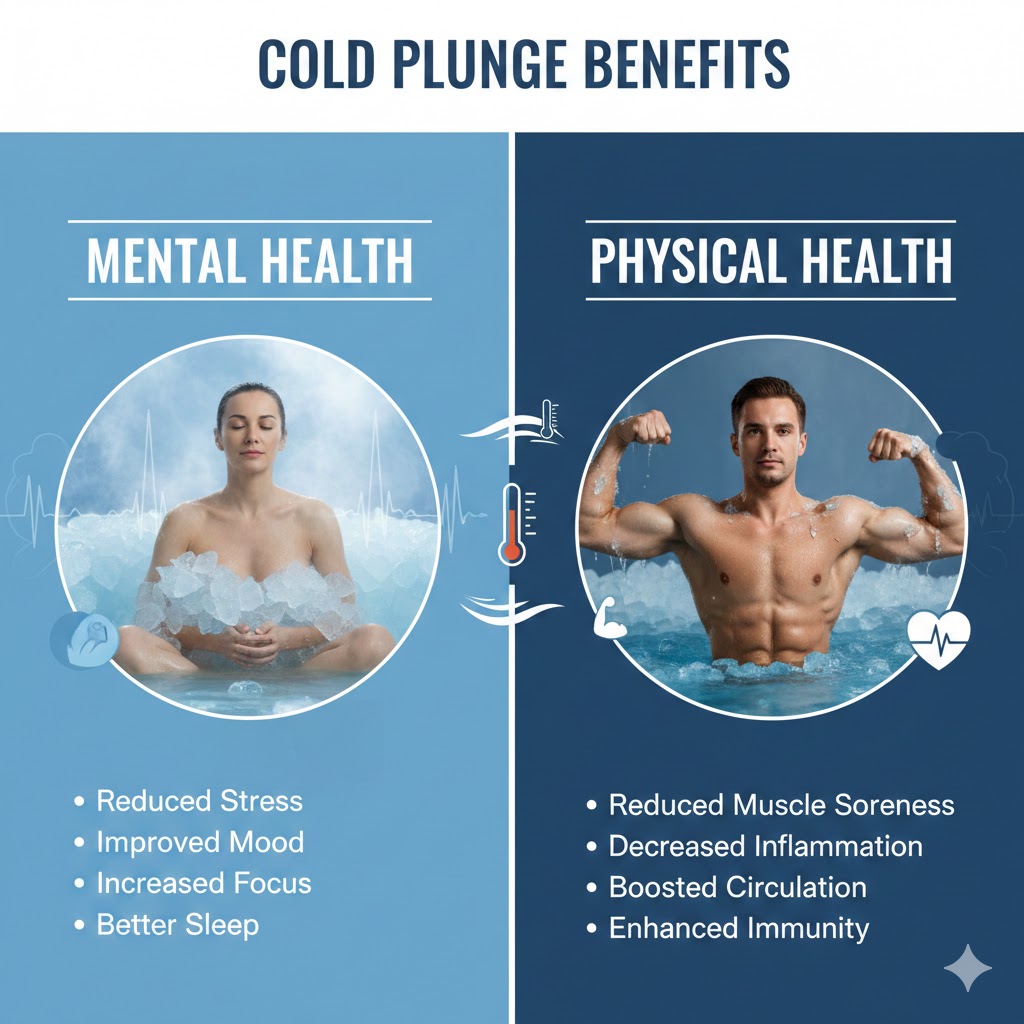
Cold Plunge Benefits —also known as cold water immersion—have moved from ancient wellness rituals to mainstream performance culture. From elite athletes to busy professionals, more people are stepping into ice baths in search of better focus, faster recovery, and stronger resilience.
But beyond social media trends, what does science actually say?
In this guide, we’ll break down Cold Plunge Benefits, how cold exposure impacts the brain and body, potential risks, and how to use cold immersion safely for long-term health.
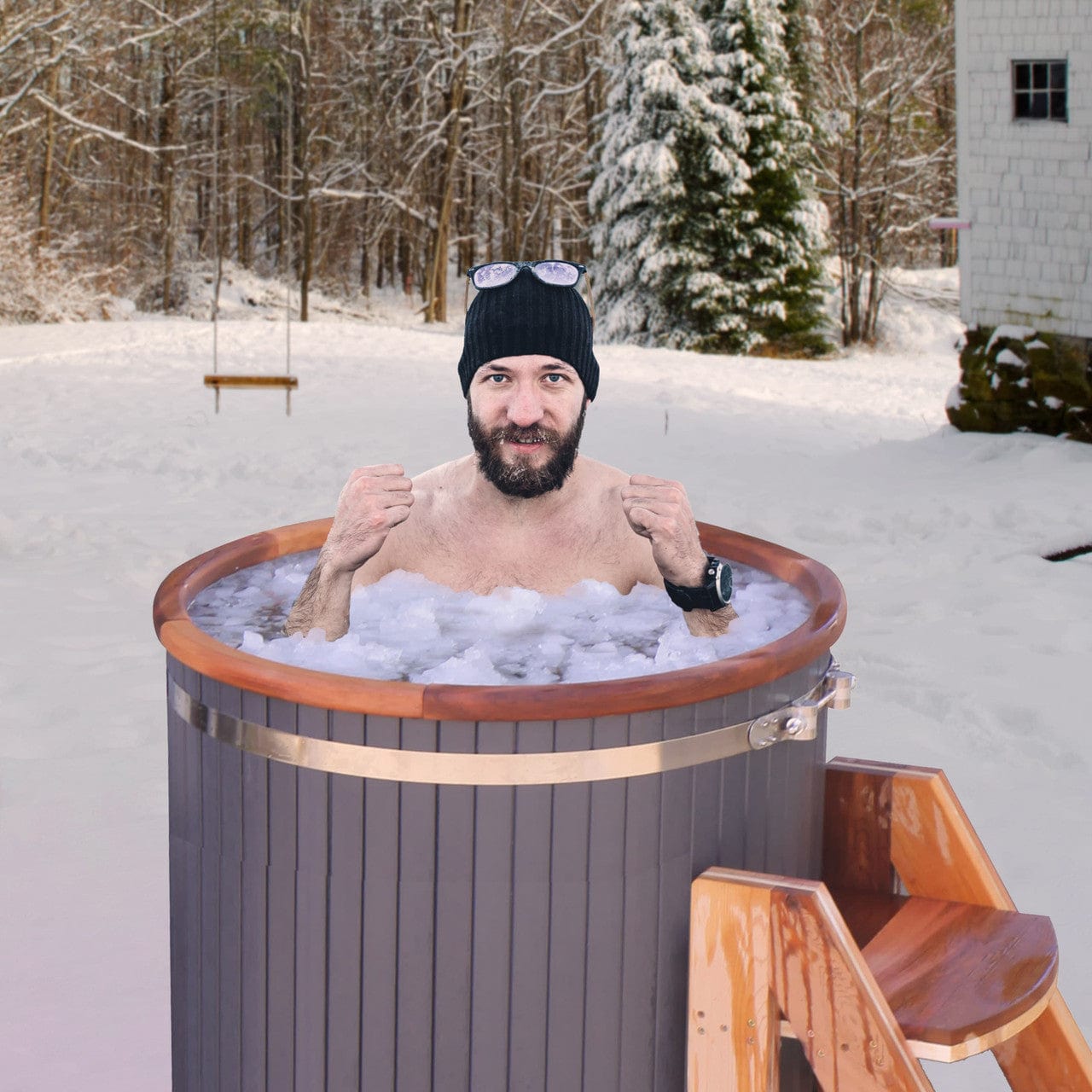
1. What Is a Cold Plunge?
A cold plunge involves immersing the body in cold water, typically between 50–59°F (10–15°C), for a short duration.
Common formats
- Ice baths
- Cold tubs
- Natural cold water (lakes, rivers)
- Cold showers
The goal is brief exposure—not prolonged endurance.
2. How Cold Exposure Affects the Body
Cold immersion activates a stress response that triggers physiological adaptation.
Immediate responses
- Increased heart rate
- Rapid breathing
- Vasoconstriction (narrowing of blood vessels)
- Release of stress hormones
With consistent practice, the body adapts and becomes more resilient.
3. Cold Plunge Benefits for Mental Clarity
One of the most noticeable effects is improved alertness.
Mental benefits
- Increased dopamine release
- Enhanced focus
- Reduced mental fatigue
- Improved mood regulation
These Cold Plunge Benefits make cold exposure appealing for professionals and entrepreneurs.
4. Cold Plunge Benefits for Stress Resilience
Cold water acts as controlled stress training.
How resilience improves
- Trains nervous system regulation
- Improves stress tolerance
- Encourages calm breathing under pressure
Repeated exposure builds psychological toughness and emotional stability.
5. Cold Plunge Benefits for Muscle Recovery
Athletes have used cold immersion for decades.
Recovery-related advantages
- Reduced inflammation
- Decreased muscle soreness
- Faster recovery between sessions
Cold plunges are especially useful after intense workouts or competitions.
6. Cold Plunge Benefits for Circulation
Cold exposure affects blood flow dynamics.
Circulatory effects
- Blood vessel constriction followed by dilation
- Improved vascular responsiveness
- Enhanced circulation efficiency
This vascular training supports cardiovascular health.
7. Cold Plunge Benefits for Metabolic Health
Cold exposure influences metabolism.
Metabolic advantages
- Activation of brown fat
- Increased calorie expenditure
- Improved insulin sensitivity
While not a weight-loss solution alone, cold exposure may support metabolic balance.
8. Cold Plunge Benefits for Inflammation Control
Chronic inflammation contributes to many health issues.
Anti-inflammatory effects
- Reduced swelling
- Decreased inflammatory markers
- Faster tissue recovery
Controlled cold exposure can support recovery and overall health.
9. Cold Plunge and Sleep Quality
Some individuals report improved sleep.
Possible reasons
- Nervous system reset
- Hormonal regulation
- Improved body temperature cycling
Timing matters—morning plunges may be more energizing than evening sessions.
10. How Long Should a Cold Plunge Last?
Duration is critical for safety.
General guidelines
- Beginners: 30–60 seconds
- Intermediate: 1–3 minutes
- Advanced: 3–5 minutes
Longer exposure does not always mean better results.
11. How Often Should You Cold Plunge?
Frequency depends on goals.
Typical recommendations
- 2–4 times per week
- Post-workout sessions
- Morning mental clarity routine
Consistency matters more than extreme exposure.
12. Safety Considerations for Cold Plunge
Cold exposure is powerful and must be respected.
Important precautions
- Avoid if you have heart conditions without medical clearance
- Never plunge alone
- Exit immediately if dizziness occurs
- Warm up gradually afterward
Safety ensures long-term sustainability.
13. Who Benefits Most from Cold Plunge Therapy?
Cold plunges may be ideal for:
- Athletes
- High-stress professionals
- Individuals seeking mental clarity
- Those focused on recovery
However, not everyone tolerates cold exposure equally.
14. Common Myths About Cold Plunge Benefits
Clarifying misconceptions is important.
Myths explained
- “Longer is always better” – false
- “It burns massive fat instantly” – exaggerated
- “It replaces exercise” – incorrect
Cold plunges are a tool—not a miracle.
15. Cold Plunge vs Cold Showers
Both offer benefits, but intensity differs.
Key differences
- Plunges provide full immersion
- Showers offer lighter exposure
- Plunges produce stronger hormonal response
Both can contribute to Cold Plunge Benefits, though immersion is more powerful.
16. Final Verdict: Are Cold Plunge Benefits Worth It?
Cold Plunge Benefits include improved mental clarity, enhanced stress resilience, faster recovery, and potential metabolic support. When practiced safely and consistently, cold exposure becomes a powerful way to train both body and mind.
It’s not about chasing discomfort—it’s about building resilience through controlled, short-term stress.
Used wisely, cold plunges can be a practical addition to a balanced health routine.
Frequently Asked Questions (FAQ)
Q1. What are the main cold plunge benefits?
They include improved mental clarity, stress resilience, muscle recovery, and circulation support.
Q2. How long should a cold plunge last?
Typically 1–3 minutes for most individuals.
Q3. Are cold plunges safe daily?
They can be, but frequency should match recovery needs and personal tolerance.
Q4. Do cold plunges help with anxiety?
Some people report improved stress tolerance and mood stabilization.
Q5. Can beginners try cold plunges?
Yes, but start with short exposure and gradual adaptation.
Conclusion
Cold exposure challenges the body in a way that builds resilience rather than drains it. Cold Plunge Benefits extend from mental clarity to physical recovery, offering a science-backed method for strengthening both mind and body.
Approach it gradually, respect your limits, and treat it as a long-term practice—not a trend—and it can become a powerful tool for health and performance.
More Related Topics:
Autophagy Fasting Benefits for Anti-Aging (Cellular Renewal Explained)
Lymphatic Drainage Benefits for Women (Detox, Hormone Balance & Recovery)
Mindful Eating Habits for Weight Control (Eat Less Without Dieting)