
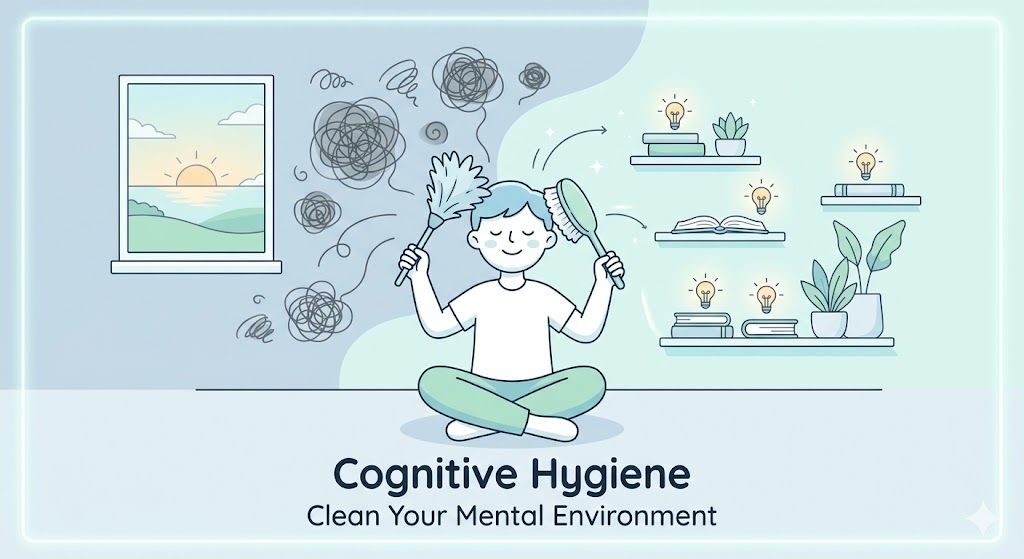
Your mind is constantly processing information—notifications, conversations, social media, stress, and decisions. Just like your body needs hygiene, your mind needs it too. This is where Cognitive Hygiene comes in.
If you often feel mentally cluttered, overwhelmed, or distracted, improving your Cognitive Hygiene can completely transform your focus, clarity, and emotional balance.
In this guide, you’ll learn what Cognitive Hygiene is, why it matters, and how to build daily habits to clean your mental environment.
1. What Is Cognitive Hygiene
Cognitive Hygiene refers to the practices and habits that help maintain a clean, healthy, and organized mental state.
It focuses on:
- Reducing mental clutter
- Improving focus
- Managing thoughts effectively
Sub Points:
- Similar to physical hygiene but for the mind
- Prevents mental overload
- Enhances clarity and decision-making
It’s about protecting your mental space.
2. Why Cognitive Hygiene Is Important
Modern life is filled with constant stimulation.
Key Problems:
Sub Points:
- Information overload
- Constant notifications
- Multitasking
- Stress and anxiety
Without proper Cognitive Hygiene, your brain becomes overwhelmed.
3. Signs You Need Cognitive Hygiene
You may already be experiencing these symptoms.
Common Signs:
Sub Points:
- Difficulty focusing
- Overthinking
- Mental fatigue
- Poor decision-making
- Feeling constantly distracted
These are clear indicators that your Cognitive Hygiene needs attention.
4. Core Principles of Cognitive Hygiene
To improve your mental environment, follow these principles.
Sub Points:
- Reduce unnecessary input
- Organize thoughts
- Prioritize mental rest
- Focus on quality over quantity
These principles form the foundation of Cognitive Hygiene.
5. Daily Habits to Improve Cognitive Hygiene
Let’s explore practical strategies.
5.1 Limit Information Intake
Control what you consume.
Sub Points:
- Reduce social media usage
- Avoid unnecessary news
- Focus on valuable content
5.2 Practice Mental Decluttering
Clear your mind regularly.
Sub Points:
- Write down thoughts
- Organize tasks
- Let go of unnecessary worries
5.3 Single-Tasking
Focus on one thing at a time.
Sub Points:
- Avoid multitasking
- Improve productivity
- Reduce mental fatigue
5.4 Take Regular Breaks
Rest your brain.
Sub Points:
- Short breaks during work
- Digital detox periods
- Relaxation time
5.5 Mindfulness and Awareness
Stay present.
Sub Points:
- Observe thoughts without judgment
- Focus on the present moment
- Reduce stress
These habits strengthen your Cognitive Hygiene.
6. Digital Cognitive Hygiene
Technology plays a major role.
Sub Points:
- Turn off unnecessary notifications
- Organize apps and devices
- Set screen time limits
- Avoid digital clutter
Digital discipline is essential.
7. Environment and Cognitive Hygiene
Your surroundings affect your mind.
Sub Points:
- Keep your workspace clean
- Reduce noise and distractions
- Create a calm environment
A clean environment supports Cognitive Hygiene.
8. Common Mistakes to Avoid
Avoid these habits.
Sub Points:
- Consuming too much information
- Ignoring mental rest
- Multitasking excessively
- Not setting boundaries
Awareness helps you avoid these mistakes.
9. How Long It Takes to See Results
Consistency brings change.
Timeline:
Sub Points:
- Few days: Reduced mental clutter
- 1–2 weeks: Improved focus
- 1 month: Better mental clarity
Stick to your Cognitive Hygiene routine.
10. Long-Term Benefits of Cognitive Hygiene
Over time, the impact is powerful.
Sub Points:
- Increased focus and productivity
- Better emotional balance
- Reduced stress and anxiety
- Improved decision-making
A strong Cognitive Hygiene practice transforms your life.
Conclusion
Cognitive Hygiene is essential in today’s fast-paced, information-heavy world. By managing what you consume, organizing your thoughts, and giving your mind proper rest, you can create a clean and focused mental environment.
Start small, stay consistent, and prioritize your mental well-being. Over time, your clarity, productivity, and peace of mind will significantly improve.
FAQs
1. What is Cognitive Hygiene?
It’s the practice of maintaining a clean and healthy mental environment.
2. Why is it important?
It helps reduce stress, improve focus, and enhance decision-making.
3. How do I start?
Limit information intake and practice mental decluttering.
4. Does it require a lot of time?
No, small daily habits are enough.
5. Can it reduce overthinking?
Yes, it helps manage thoughts effectively.
6. Is it related to mental health?
Yes, it supports overall mental well-being.
7. How long before I see results?
Within days to weeks with consistency.
More Related Topics:
2-Minute Health Habits That Improve Your Day 2026