
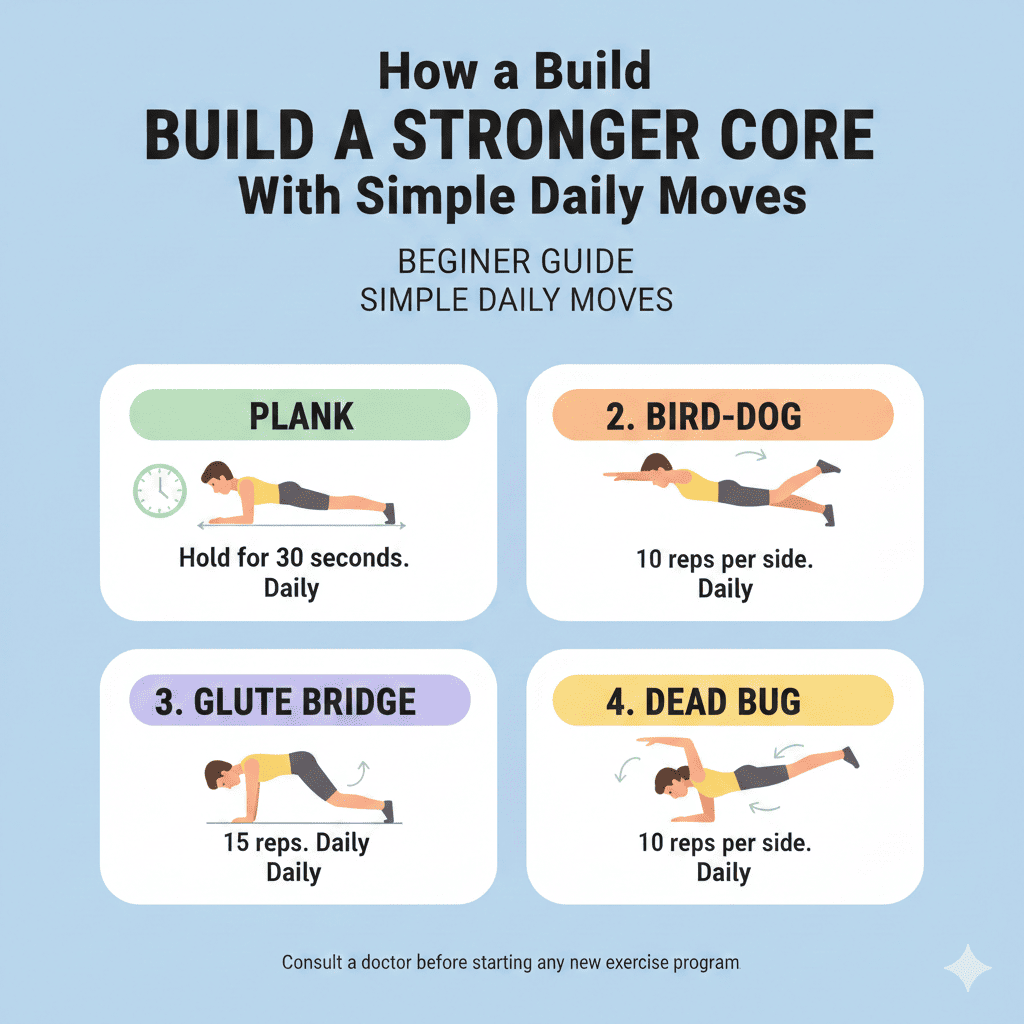
A strong core is the foundation of every movement you make, from bending down to tie your shoes to carrying groceries or playing with your children. Yet many people struggle with core training, thinking it requires expensive gym memberships, complex equipment, or hours of crunches. The truth is far simpler and more encouraging: you can build core strength with simple daily moves that take just minutes and require nothing but your own body weight.
This comprehensive guide demystifies core training for absolute beginners, breaking down exactly what your core is, why it matters, and how to strengthen it effectively using movements you can perform anywhere, anytime. Whether you’re recovering from injury, starting your fitness journey, or simply want a stronger, more stable midsection, these straightforward exercises will transform your core strength and overall physical capability.
Understanding Your Core: More Than Just Abs
Before diving into how to build core strength with simple daily moves, it’s essential to understand what your core actually encompasses. Most people think “core” means “six-pack abs,” but your core is far more complex and functional than that single muscle group.
The Complete Core Anatomy
Your core includes all the muscles that stabilize your spine and pelvis. The rectus abdominis is the “six-pack” muscle running down the front of your abdomen. The obliques on the sides of your torso handle rotation and lateral flexion. The transverse abdominis acts like a natural weight belt, wrapping around your midsection. Your lower back muscles, including the erector spinae, extend and stabilize your spine. The multifidus muscles provide segmental stability to your vertebrae. Your pelvic floor muscles support your internal organs. Even your diaphragm, the primary breathing muscle, contributes to core stability.
Why Core Strength Matters
A strong core protects your spine during daily activities and exercise, reducing back pain risk significantly. It improves your posture, which affects everything from how you look to how efficiently your organs function. Core strength enhances balance and stability, reducing fall risk as you age. It transfers force efficiently between your upper and lower body, improving athletic performance. Strong core muscles make everyday tasks easier and less fatiguing. Perhaps most importantly, core stability protects you from injury during both exercise and daily life.
Common Core Misconceptions
Many people believe endless crunches create core strength, but crunches only work one muscle and can strain your neck. Others think a flat stomach equals a strong core, yet you can have visible abs with poor functional strength. Some assume core training requires special equipment, when bodyweight exercises are often most effective. The reality is that functional core strength comes from varied movements that challenge stability, not just flexion exercises.
1. The Foundation: Proper Breathing and Bracing
The first and most fundamental way to build core strength with simple daily moves starts with something you do thousands of times daily: breathing. Proper breathing engages your core continuously and forms the foundation for all other core exercises.
Diaphragmatic Breathing Technique
Lie on your back with knees bent and feet flat on the floor. Place one hand on your chest and one on your abdomen. Inhale slowly through your nose, allowing your belly to rise while your chest remains relatively still. Exhale slowly through your mouth, feeling your belly fall. The hand on your abdomen should move more than the hand on your chest. Practice this for five minutes daily to retrain your breathing pattern.
Core Bracing Fundamentals
Core bracing creates stability without restricting breathing. To practice, sit or stand with neutral spine alignment. Take a normal breath, then gently engage your core muscles as if preparing for someone to poke your stomach. You should feel tension around your entire midsection, not just the front. Maintain this tension while breathing normally—don’t hold your breath. Practice holding this brace for 10-30 seconds, then release and repeat.
Integrating Breath and Brace
The combination of proper breathing and bracing protects your spine during all movements. Before lifting anything heavy, take a breath and brace your core. During exercises, exhale during the exertion phase while maintaining core tension. This coordination becomes automatic with practice, providing constant spine protection.
Daily Breathing Practice
Set reminders throughout your day to check your breathing pattern. Are you chest breathing or belly breathing? Practice diaphragmatic breathing during commutes, while watching television, or before bed. Even five minutes of focused breathing practice daily improves core engagement and reduces stress simultaneously.
2. Dead Bug: The Perfect Beginner Core Exercise
The dead bug exercise might have an amusing name, but it’s one of the most effective ways to build core strength with simple daily moves for beginners. This exercise teaches core stability while moving your limbs independently, which mirrors how your core functions during daily activities.
Why Dead Bugs Work
Dead bugs challenge anti-extension, meaning they train your core to prevent your lower back from arching excessively. They require coordination between opposite limbs, improving neural pathways. The exercise is infinitely scalable from absolute beginner to advanced. Most importantly, dead bugs are performed on your back, removing gravity’s compressive effect on your spine.
Basic Dead Bug Technique
Lie on your back with arms extended straight up toward the ceiling, positioned over your shoulders. Bend your hips and knees to 90 degrees, creating tabletop position with your legs. Press your lower back gently into the floor by engaging your core—there should be no gap between your back and the floor. This is your starting position and should be maintained throughout.
Dead Bug Movement Pattern
Slowly lower your right arm overhead toward the floor while simultaneously extending your left leg straight, hovering a few inches off the ground. Move only as far as you can while keeping your lower back pressed to the floor. Return to starting position with control. Repeat on the opposite side: left arm overhead, right leg extending. This constitutes one complete repetition.
Dead Bug Progressions
Begin with just arm movements if the full pattern is too challenging, keeping both feet on the floor. Progress to leg movements only, keeping hands on your ribcage to monitor core engagement. Once you can perform 10 controlled repetitions per side without your back lifting, add light ankle weights or slow down the tempo for increased difficulty. Advanced practitioners can hold positions for several seconds at the extended point.
3. Plank: The Ultimate Stability Challenge
Planks are perhaps the most recognized core exercise, and for good reason—they effectively build core strength with simple daily moves by forcing your entire core to work against gravity. Unlike crunches, planks train your core’s primary function: stability.
Proper Plank Setup
Begin on your hands and knees. Place your forearms on the ground with elbows directly under your shoulders. Your forearms should be parallel to each other. Step your feet back one at a time until your body forms a straight line from head to heels. Your feet should be hip-width apart for better stability as a beginner.
Maintaining Perfect Plank Position
Engage your core as if bracing for impact. Squeeze your glutes to prevent your hips from sagging. Keep your neck neutral by looking at the floor about a foot in front of your hands. Don’t let your shoulder blades pinch together—actively push the floor away. Your body should form one straight line, not an inverted V or sagging U shape.
Common Plank Mistakes
Allowing hips to sag places stress on your lower back rather than challenging your core. Piking your hips too high removes the challenge from your abs. Holding your breath increases blood pressure and reduces core engagement effectiveness. Shrugging your shoulders toward your ears creates unnecessary neck and shoulder tension.
Building Plank Endurance
Start with short holds you can perform with perfect form—even 10 seconds counts. Perform multiple sets rather than one long hold when beginning. Add five seconds to your hold time each week rather than trying to double your time overnight. Once you can hold a proper plank for 60 seconds, progress to variations rather than simply holding longer.
4. Bird Dog: Coordination and Balance
The bird dog exercise combines balance, coordination, and core stability, making it an excellent way to build core strength with simple daily moves while improving functional movement patterns that translate directly to daily activities.
Starting Position
Begin on your hands and knees with hands directly under shoulders and knees under hips. Your spine should be neutral—not arched or rounded. Engage your core and look slightly ahead of your hands to maintain neutral neck position. This four-point position provides maximum stability as you learn the movement.
Bird Dog Execution
Slowly extend your right arm forward at shoulder height while simultaneously extending your left leg straight back at hip height. Your extended arm, torso, and extended leg should form one straight line. Hold this position for two to five seconds while maintaining stable hips and shoulders—they shouldn’t rotate or tilt. Return to starting position with control and repeat on the opposite side.
Maintaining Stability
The challenge of bird dog comes from preventing rotation and maintaining level hips and shoulders. Imagine balancing a cup of water on your lower back throughout the movement. Move slowly and deliberately rather than quickly swinging limbs. If you feel wobbly, reduce your range of motion until you build more control.
Bird Dog Variations
Practice arm-only or leg-only movements first if the full pattern is too challenging. Once proficient at the basic version, add a knee-to-elbow crunch before extending, increasing core engagement. For advanced challenge, add ankle weights or move your supporting hand and knee closer together to decrease your base of support. Slowing down the movement also increases difficulty significantly.
5. Side Plank: Targeting the Obliques
While regular planks work your entire core, side planks specifically challenge your obliques and lateral stability, essential components when you build core strength with simple daily moves for complete core development.
Side Plank Setup
Lie on your right side with your legs straight and stacked on top of each other. Prop yourself up on your right forearm, with your elbow directly under your shoulder. Your forearm should be perpendicular to your body. Place your left hand on your hip or extend it toward the ceiling.
Executing the Side Plank
Engage your core and lift your hips off the ground until your body forms a straight line from head to feet. Your weight should be supported on your forearm and the side of your bottom foot. Keep your neck neutral—don’t let your head drop. Hold this position while breathing normally. Your top hip should not rotate forward or backward.
Side Plank Modifications for Beginners
If a full side plank is too challenging, bend your bottom knee and support yourself on your knee instead of your foot. This dramatically reduces the lever length and makes the exercise more accessible. Another option is to perform the side plank from your hand instead of forearm, which some people find easier on the shoulder.
Side Plank Progressions
Start with 10-15 second holds on each side. As you build strength, progress to 30-second holds, then 60 seconds. Add movement by lowering and lifting your hips slowly, performing side plank dips. For advanced challenge, lift your top leg or add a hip abduction movement. You can also reduce your base of support by stacking your feet completely rather than staggering them.
6. Hollow Body Hold: Advanced Stability
The hollow body hold is a deceptively simple-looking exercise that powerfully helps you build core strength with simple daily moves while teaching total body tension and control that transfers to countless other movements.
Understanding the Hollow Position
The hollow body creates a “dish” shape with your body, with only your lower back touching the floor. This position is the foundation of gymnastics and represents maximum core engagement against extension. Your entire core must work to maintain this shape, making it incredibly effective for building functional strength.
Basic Hollow Hold Technique
Lie on your back with legs straight and arms extended overhead. Press your lower back flat against the floor by engaging your core. Lift your shoulders and legs a few inches off the ground while maintaining that lower back contact. Your body should form a gentle curve, like the inside of a bowl. Hold this position while breathing normally.
Finding Your Entry Point
If the full hollow hold is too difficult, bend your knees and keep your arms at your sides instead of overhead. This reduces the lever length significantly. As you build strength, gradually straighten your legs and move your arms overhead. The key is maintaining lower back contact with the floor—if your back arches, you’ve extended too far.
Hollow Hold Progressions
Begin with 10-20 second holds with good form. Rest completely between sets—this exercise is intense. Once you can hold the position for 60 seconds, add small rocking movements forward and back. Advanced practitioners can add hollow body rocks, creating momentum while maintaining the hollow shape. This teaches dynamic core control rather than just static stability.
7. Glute Bridge: Posterior Chain Activation
While often considered a glute exercise, bridges are essential when you build core strength with simple daily moves because they strengthen your posterior chain, which works with your abs to stabilize your spine and pelvis.
Why Bridges Matter for Core Strength
Modern lifestyle creates excessive hip flexor tightness and weak glutes from sitting. This imbalance tilts your pelvis forward, forcing your lower back to compensate. Bridges counteract this pattern, restoring balance to your core musculature. Strong glutes also take pressure off your lower back during daily activities.
Proper Bridge Setup
Lie on your back with knees bent and feet flat on the floor, positioned hip-width apart. Your feet should be close enough to your hips that you can barely touch your heels with your fingertips. Place your arms at your sides, palms down. This position allows optimal glute engagement.
Bridge Execution
Press through your heels to lift your hips toward the ceiling. Rise until your body forms a straight line from shoulders to knees—don’t hyperextend your back. Squeeze your glutes hard at the top position. Your core should be engaged to prevent back arching. Hold for two seconds, then lower with control. Don’t let your knees fall inward during the movement.
Bridge Variations and Progressions
Increase time under tension by holding the top position for 10-30 seconds. Perform single-leg bridges by extending one leg while lifting, dramatically increasing difficulty. Place your feet on an elevated surface to increase range of motion. Add a resistance band around your knees and actively push outward to increase glute activation. Slow down the lowering phase to five seconds for additional challenge.
8. Standing Core Exercises for Daily Life
The beauty of learning to build core strength with simple daily moves includes standing exercises that you can perform anywhere without getting on the floor, making them perfect for quick practice sessions throughout your day.
Standing Pallof Press
Stand sideways to a resistance band anchored at chest height, or simply hold your hands together at your chest. Hold the band handles or your clasped hands at your sternum. Press your hands straight forward while resisting the rotation force trying to pull you toward the anchor point. Hold for five seconds, return to chest, and repeat. This anti-rotation exercise powerfully engages your obliques.
Standing March with Core Focus
Stand tall with feet hip-width apart and hands behind your head. Engage your core by bracing your midsection. Slowly lift your right knee toward your chest while maintaining upright posture—don’t lean back or round forward. Lower with control and repeat on the left side. The slow, controlled movement requires constant core stabilization.
Single Leg Balance Holds
Simply standing on one foot requires significant core engagement for balance. Stand near a wall for safety initially. Lift one foot slightly off the ground and hold for 30-60 seconds. Keep your supporting knee slightly bent and hip level—don’t hike one hip up. Progress by closing your eyes, which dramatically increases the balance challenge and core engagement.
Office-Friendly Core Exercises
Practice seated marches while working, alternately lifting knees while keeping your core braced. Perform standing hip circles, slowly rotating your hips in large circles while keeping your upper body still. Do wall sits during breaks, holding the seated position against a wall while maintaining core engagement. These movements integrate core strengthening into your daily routine without requiring dedicated exercise time.
9. Rotational Core Training
Rotational strength is often neglected but essential for functional fitness. These movements help you build core strength with simple daily moves that mirror real-life activities like reaching, twisting, and turning.
Understanding Rotation Mechanics
Most core training focuses on flexion and extension, but your obliques primarily control rotation and resist unwanted twisting. Strengthening rotational patterns prevents injury during activities that involve twisting under load, like carrying groceries or playing recreational sports.
Seated Russian Twist Fundamentals
Sit on the floor with knees bent and feet flat. Lean back slightly while maintaining a straight spine—don’t round your back. Clasp your hands together at your chest. Rotate your torso to the right, bringing your hands toward the floor beside your hip. Return to center, then rotate to the left. Move slowly and with control, leading the movement from your core rather than swinging your arms.
Standing Wood Chop Pattern
Stand with feet shoulder-width apart, holding your hands together as if gripping an axe. Start with hands beside your right hip. In one smooth motion, rotate your torso and raise your hands diagonally across your body, finishing with hands above your left shoulder. Your feet can pivot naturally but the power comes from your core rotation. Reverse the movement slowly and repeat for several repetitions before switching sides.
Rotation Safety and Progression
Always warm up before rotational exercises—cold muscles are more prone to strain during twisting. Start with slower movements to master control before adding speed. Never force rotation beyond your comfortable range. As you progress, you can hold light weights, but proper form matters far more than added resistance. Perform equal repetitions on both sides to maintain balanced development.
10. Creating Your Daily Core Routine
Now that you understand how to build core strength with simple daily moves, it’s time to assemble these exercises into a practical, sustainable daily routine that fits your life and produces results.
The Minimum Effective Dose
You don’t need hour-long core workouts to see significant improvements. Research shows that 10-15 minutes of focused core training daily produces better results than occasional longer sessions. Consistency trumps duration every time. Your goal is establishing a habit you can maintain indefinitely rather than following an unsustainable extreme program.
Sample Beginner Daily Core Routine
Begin with two minutes of diaphragmatic breathing and core bracing practice. Perform 10 dead bugs per side, moving slowly and maintaining form. Hold a forearm plank for 20-30 seconds, rest, and repeat twice. Complete 10 bird dogs per side with controlled movement. Perform 10 glute bridges with two-second holds at the top. Finish with 15-20 second hollow holds, repeated three times. This entire sequence takes approximately 12 minutes.
Weekly Progression Strategy
Repeat the same routine daily for one week to master the movements. Week two, increase repetitions by 2-3 or hold times by five seconds. Week three, add one set to each exercise. Week four, incorporate one new variation or progression. This gradual approach prevents overtraining while ensuring consistent progress. Track your workouts in a notebook or app to monitor improvements.
Adapting to Your Schedule
Morning routines energize you for the day and ensure workouts don’t get skipped. Before-bed sessions promote better sleep for many people. Lunch break workouts break up sedentary workdays. The best time is whatever time you’ll actually do consistently. Split your routine if needed—five minutes in the morning and five minutes in the evening still produces results.
Building Progressive Overload Into Core Training
To continue seeing improvements, you must progressively challenge your core. Understanding how to build core strength with simple daily moves includes knowing when and how to advance your training.
Recognizing When to Progress
You’re ready to progress when you can complete all sets with perfect form while maintaining controlled breathing. The exercises should feel challenging but doable by the final repetition. If you’re breezing through workouts without effort, it’s time to increase difficulty. Conversely, if you’re struggling with form or breathing, maintain your current level longer.
Methods of Increasing Difficulty
Add more repetitions or longer hold times gradually. Introduce more challenging exercise variations once you’ve mastered basic versions. Reduce rest periods between exercises to increase overall intensity. Incorporate unstable surfaces like exercise balls for increased balance challenge. Add light resistance through bands or weights. Combine exercises into flowing sequences without rest.
Avoiding Common Progression Mistakes
Don’t increase multiple variables simultaneously—change one thing at a time. Never sacrifice form for higher numbers. Don’t skip rest days entirely—recovery allows adaptation and growth. Avoid comparing your progress to others—everyone advances at individual rates. Remember that some weeks you’ll feel stronger than others, and that’s completely normal.
Plateau-Breaking Strategies
If progress stalls, take a full week off or reduce volume by half to allow complete recovery. Try completely different exercises that challenge your core in new ways. Focus on perfecting form with lighter intensity rather than always pushing for more. Consider whether factors outside training—sleep, stress, nutrition—might be affecting your recovery and progress.
Integrating Core Strength Into Daily Movement
The ultimate goal when you build core strength with simple daily moves is transferring that strength into improved daily function. Conscious integration accelerates this process.
Practicing Core Engagement During Daily Activities
Before lifting anything, practice your bracing technique. Maintain core engagement while carrying groceries, children, or other loads. Engage your core when standing from seated positions rather than using momentum. Keep your core slightly activated during household tasks like vacuuming or dish washing. This constant practice builds unconscious competence over time.
Improving Posture Through Core Awareness
Set hourly reminders to check your posture. Are you slumping or maintaining neutral spine? Practice sitting and standing tall with core engaged. When using computers or phones, bring them to eye level rather than dropping your head forward. Take brief standing or walking breaks every 30 minutes during sedentary activities. Good posture becomes effortless as core strength improves.
Movement Quality Over Movement Quantity
Focus on moving well rather than moving often. One properly executed repetition provides more benefit than ten sloppy ones. Quality movement patterns become ingrained, protecting you during countless daily activities. This mindful approach to movement extends beyond core training to all physical activities.
Teaching Others
Once you’ve developed solid core strength and understanding, teaching others reinforces your own knowledge and technique. Help family members learn proper bracing or plank form. Explain why core strength matters and how simple it is to develop. Creating a household culture of movement and strength benefits everyone.
Addressing Common Challenges and Obstacles
Even with the best intentions, obstacles arise. Knowing how to navigate challenges helps you consistently build core strength with simple daily moves despite life’s interruptions.
Dealing With Soreness and Discomfort
Muscle soreness after starting core training is normal and typically peaks 24-48 hours post-exercise. Light activity and stretching help reduce soreness more than complete rest. However, sharp pain, especially in your back or joints, signals a problem—stop exercising and consult a healthcare provider. Learn to distinguish between productive discomfort and harmful pain.
Working Around Injuries or Limitations
Many core exercises can be modified for various limitations. If you have wrist issues, perform planks on forearms. For neck problems, support your head during exercises like dead bugs. Those with diastasis recti should avoid crunching movements and focus on exercises like dead bugs and bird dogs. Always consult healthcare providers about appropriate exercises for your specific situation.
Maintaining Motivation Long-Term
Track non-scale victories like improved posture, reduced back pain, or easier daily activities. Take progress photos monthly to visualize changes. Join online communities for accountability and support. Vary your routine slightly to prevent boredom while maintaining core effective exercises. Remember that motivation fluctuates—discipline and habit carry you through low-motivation periods.
Troubleshooting Form Issues
Record yourself performing exercises to identify form breakdowns you might not feel. Work with a qualified trainer for a few sessions to perfect technique. Start with easier variations if you can’t maintain proper form. Remember that ego has no place in training—the best exercise is the one you can perform correctly, regardless of how basic it seems.
The Broader Benefits of Core Strength
While the physical improvements are obvious when you build core strength with simple daily moves, the benefits extend into multiple life areas in surprising ways.
Enhanced Athletic Performance
A strong core improves power transfer between your upper and lower body, increasing performance in virtually every sport. Better balance and stability reduce injury risk during athletic activities. Improved body control enhances technical skill execution. Many athletes discover that core strength was the missing link limiting their progress in their primary sport.
Reduced Chronic Pain
Strong core muscles properly support your spine, often eliminating chronic lower back pain. Better posture reduces neck and shoulder tension. Improved movement patterns prevent repetitive strain injuries. Many people find that consistent core training succeeds where passive treatments like medication or manual therapy fell short.
Improved Confidence and Body Image
Seeing tangible progress in your core strength builds confidence that extends beyond physical appearance. Feeling strong and capable improves body image regardless of aesthetic changes. The discipline of consistent training creates self-efficacy that carries into other life challenges. Standing taller with better posture projects confidence that others notice and respond to.
Better Quality of Life as You Age
Core strength directly predicts functional independence in later years. Strong cores prevent falls, the leading cause of injury-related death in older adults. Maintaining mobility and strength allows you to enjoy activities with grandchildren and maintain hobbies. Investing in core strength now pays dividends for decades.
Nutrition Considerations for Core Development
While exercise builds core strength, nutrition supports that process and can reveal the muscles you’re developing when you build core strength with simple daily moves.
Protein for Muscle Recovery and Growth
Adequate protein intake supports muscle repair after training. Aim for protein at each meal rather than loading it all in one sitting. Quality matters—choose lean meats, fish, eggs, dairy, legumes, and plant-based proteins. Most adults benefit from roughly 0.7-1 gram of protein per pound of body weight daily, though individual needs vary.
Overall Calorie Balance
Building muscle requires adequate energy—severe calorie restriction impairs muscle development. However, significant excess calories lead to fat gain that masks core definition. Focus on eating primarily whole, minimally processed foods to naturally regulate appetite. Extreme restriction or overindulgence both impair your goals.
Hydration and Performance
Proper hydration optimizes muscle function and recovery. Dehydration significantly impairs exercise performance and recovery. Drink water consistently throughout the day rather than chugging large amounts infrequently. If your urine is darker than pale yellow, increase water intake.
Anti-Inflammatory Foods
Core training creates microscopic muscle damage that triggers growth through the recovery process. Anti-inflammatory foods like fatty fish, colorful fruits and vegetables, and whole grains support this recovery. Excessive inflammatory foods like processed sugars and trans fats can impair recovery. Focus on addition rather than restriction—crowd out less nutritious foods by filling up on nutrient-dense options.
Conclusion: Your Path to a Stronger Core Starts Today
Learning how to build core strength with simple daily moves transforms your fitness journey from complicated and intimidating to accessible and sustainable. The exercises in this guide require no equipment, no gym membership, and minimal time investment. What they do require is consistency, patience, and attention to proper form.
Your core is the foundation for virtually every movement you make. Strengthening it improves everything from how you stand and sit to how you lift objects and play with your children. The benefits extend beyond physical improvements into enhanced confidence, reduced pain, and better quality of life as you age.
Start today with just one exercise. Master the dead bug or practice your plank for 20 seconds. Tomorrow, add another movement. Within two weeks, you’ll have established a complete routine that you can maintain indefinitely. Within a month, you’ll notice tangible improvements in strength and stability. Within three months, you’ll wonder how you ever functioned with a weak core.
Remember that everyone starts somewhere. The fittest people you know began as beginners, possibly weaker than you are right now. The difference between them and others isn’t genetics or luck—it’s simply that they started and they persisted. Your core strength journey begins with a single decision to take action on the knowledge you’ve gained here.
Also read this:
10 Best Low-Impact Workouts for Joint Pain Relief — Safe Exercises for All Ages
How to Stay Fit With a Busy Schedule: Daily 10-Minute Routine That Actually Works
Healthy Eating Plan for Weight Loss Without Dieting — Easy, Sustainable & Beginner-Friendly