
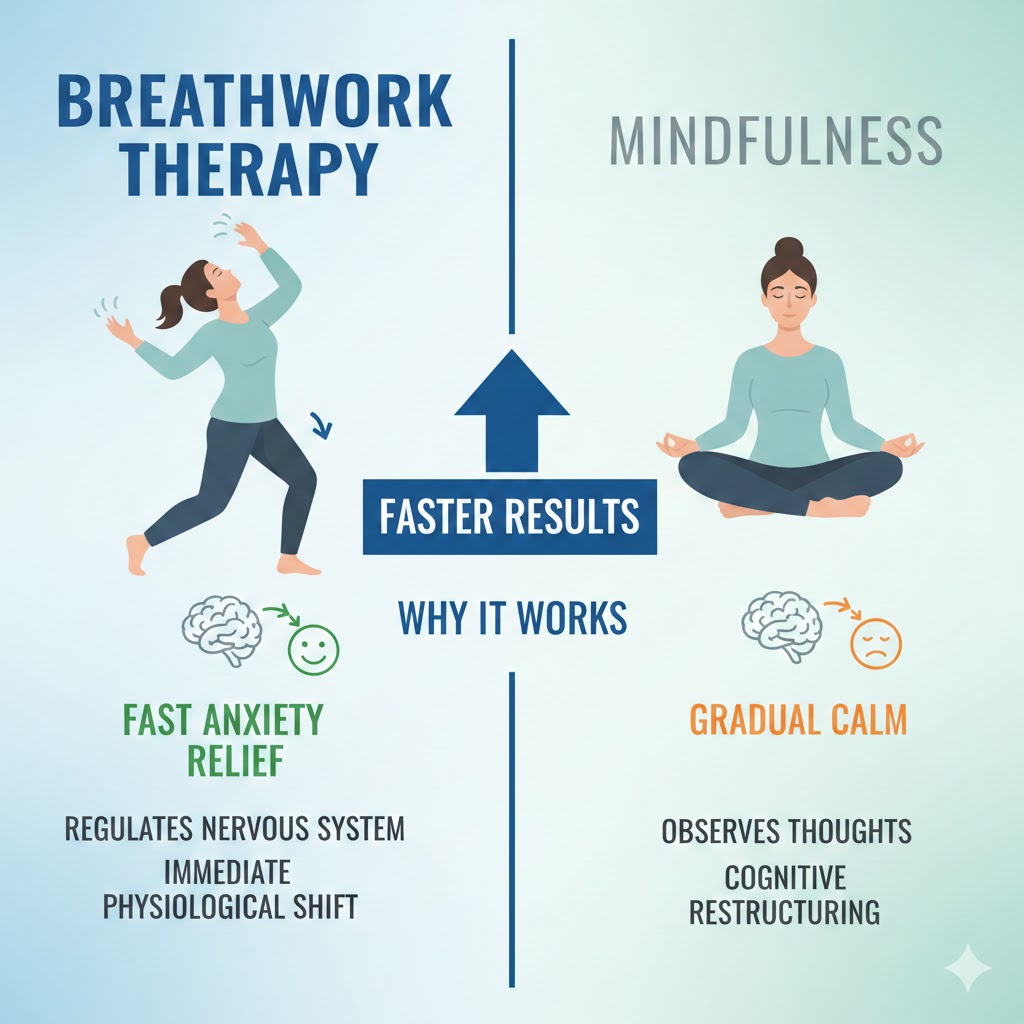
Breathwork Therapy for Anxiety Anxiety doesn’t wait for logic. It hijacks the nervous system before the mind can reason. That’s why so many people struggling with racing thoughts, tight chests, and sudden panic feel frustrated when traditional mindfulness doesn’t bring immediate relief.
This is where Breathwork Therapy for Anxiety stands apart.
Instead of trying to “observe” anxious thoughts, breathwork works directly on the body—slowing the stress response at its source. That’s why therapists, coaches, and even trauma specialists increasingly recommend breathwork as a faster, more accessible tool for calming anxiety in real time.
This guide explains why breathwork therapy for anxiety works faster than mindfulness, how it affects the nervous system, and why so many people feel relief within minutes rather than weeks.
1. Anxiety Is a Nervous System Problem, Not Just a Mental One
To understand why breathwork works, you have to understand anxiety.
1.1 What Happens During Anxiety
- The body enters fight-or-flight mode
- Heart rate increases
- Breathing becomes shallow
- Muscles tense automatically
This response happens before conscious thought.
1.2 Why Thinking Alone Isn’t Enough
- You can’t “logic” your way out of a stress response
- The body must feel safe before the mind can calm
- Anxiety lives in physiology, not just thoughts
That’s the foundation of why Breathwork Therapy for Anxiety is often faster than mindfulness.
2. How Breathwork Directly Calms the Nervous System
Breathing is the only automatic body function you can consciously control.
2.1 Breath Is a Nervous System Switch
- Slow breathing activates the parasympathetic system
- Heart rate drops within minutes
- Stress hormones begin to decrease
2.2 The Body Responds Immediately
- No belief system required
- No mental training needed
- Works even when thoughts are chaotic
This is why people often feel relief from breathwork within one session.
3. Why Mindfulness Feels Hard During Anxiety
Mindfulness is powerful—but not always accessible.
3.1 What Mindfulness Requires
- Observing thoughts without reacting
- Sitting with discomfort
- Mental focus and patience
3.2 Why Anxiety Makes This Difficult
- Thoughts feel overwhelming
- The body feels unsafe
- Sitting still can increase panic
For someone in active anxiety, mindfulness can feel like trying to calm a storm by staring at it.
4. Breathwork Works Bottom-Up, Not Top-Down
This is the key difference.
4.1 Top-Down Approach (Mindfulness)
- Mind tries to calm the body
- Requires practice and consistency
- Slower results for acute anxiety
4.2 Bottom-Up Approach (Breathwork)
- Body calms first
- Mind follows naturally
- Faster relief
Breathwork Therapy for Anxiety works because it starts where anxiety begins: the body.
5. Breathwork Creates Safety Signals in the Body
The nervous system constantly asks one question: Am I safe?
5.1 How Breathwork Signals Safety
- Slower exhalations reduce threat perception
- Rhythmic breathing stabilizes heart rate
- Oxygen balance improves brain regulation
5.2 What People Feel After
- Looser chest
- Slower thoughts
- Grounded awareness
This sense of safety is what many people struggle to reach with mindfulness alone.
6. Breathwork Is Easier to Use in Real-World Anxiety
Practicality matters.
6.1 Breathwork in Daily Life
- Can be done anywhere
- No silence or meditation posture needed
- Effective in 2–5 minutes
6.2 Situations Where Breathwork Excels
- Panic attacks
- Social anxiety
- Work stress
- Nighttime anxiety
That’s why therapists often teach Breathwork Therapy for Anxiety as a first-line coping tool.
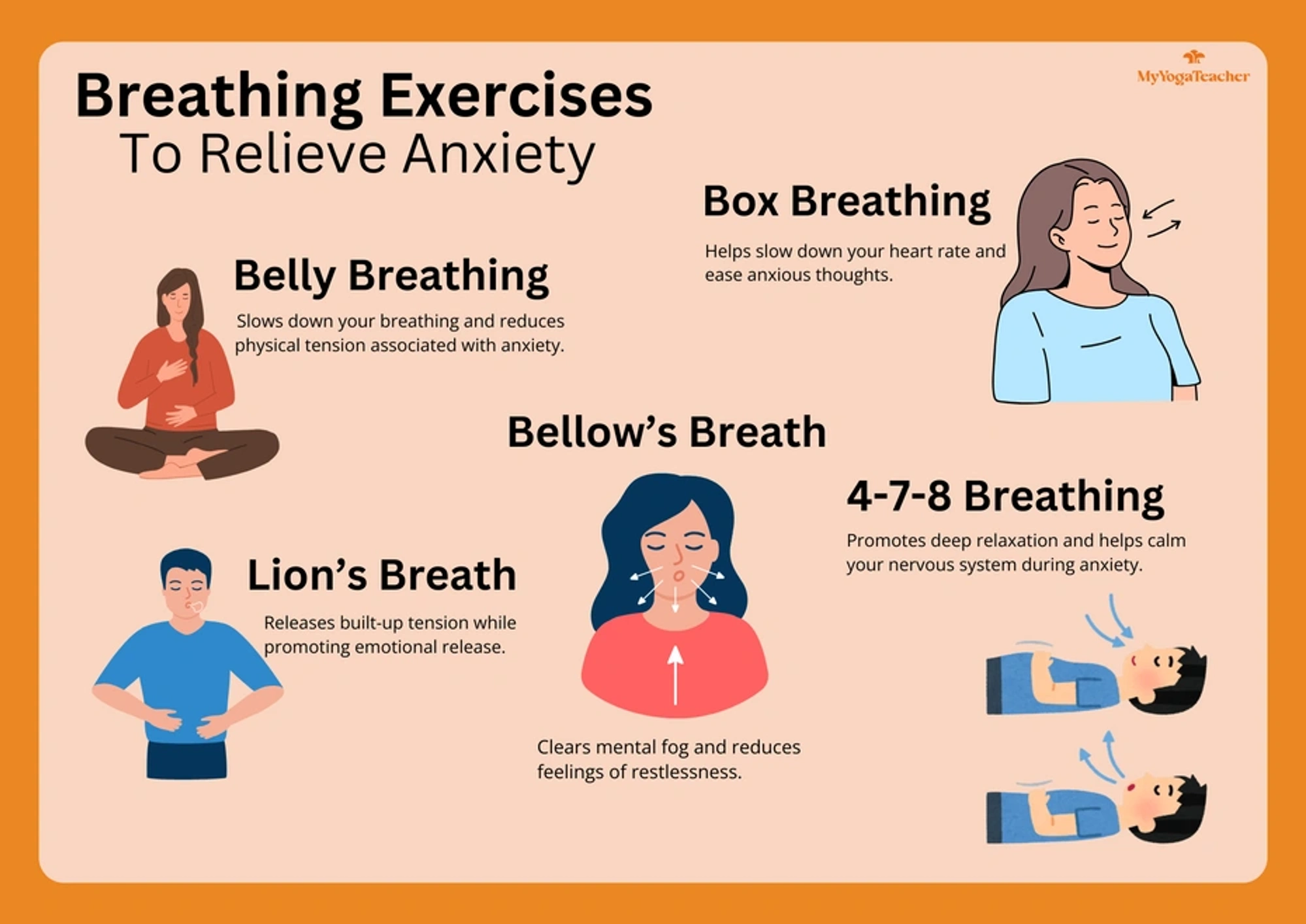
7. Different Breathwork Styles Used for Anxiety
Not all breathwork is intense or dramatic.
7.1 Gentle Anxiety-Focused Techniques
- Slow nasal breathing
- Extended exhales
- Box breathing
- Coherent breathing
7.2 What These Methods Do
- Stabilize heart rate variability
- Reduce cortisol
- Calm overstimulated nerves
These methods are designed for regulation, not stimulation.
8. Why Breathwork Feels Faster Emotionally
Relief reinforces trust.
8.1 Immediate Feedback Loop
- You breathe → body responds → anxiety drops
- Builds confidence quickly
- Reduces fear of anxiety itself
8.2 Anxiety Shrinks When Control Returns
- You’re not fighting thoughts
- You’re guiding your body
- Control replaces helplessness
This emotional shift is a major reason people stick with breathwork.
9. Breathwork and Mindfulness Work Best Together
This isn’t about choosing sides.
9.1 Breathwork First, Mindfulness Later
- Calm the body with breath
- Observe thoughts once safe
- Deeper mindfulness becomes possible
9.2 How Many Therapists Use Both
- Breathwork for regulation
- Mindfulness for awareness
- Combined for long-term resilience
But when anxiety is intense, Breathwork Therapy for Anxiety often opens the door first.
10. Why Breathwork Is Gaining Massive Popularity
The wellness world is shifting toward results.

10.1 Why People Are Choosing Breathwork
- Faster relief
- Less mental effort
- Strong body awareness
10.2 A Tool for Modern Anxiety
- Fits busy lives
- Works under pressure
- Empowers self-regulation
This is why Breathwork Therapy for Anxiety is becoming a cornerstone of modern mental health practices.
FAQs: Breathwork Therapy for Anxiety
How fast does breathwork reduce anxiety?
Many people feel noticeable relief within minutes, especially during acute anxiety.
Is breathwork safe for daily use?
Yes. Gentle breathwork techniques are safe and often recommended daily.
Can breathwork replace medication or therapy?
Breathwork supports regulation but doesn’t replace professional care when needed.
Why does breathwork feel easier than meditation?
Because it works with the body first, not the mind.
Can beginners practice breathwork alone?
Yes. Many simple techniques are beginner-friendly and self-guided.
Final Thoughts
Anxiety doesn’t need to be analyzed before it’s calmed—it needs to be regulated. That’s why Breathwork Therapy for Anxiety often works faster than mindfulness, especially when stress is high and the nervous system is overwhelmed.
When the body feels safe, the mind follows. Breathwork gives you that safety—one breath at a time.
More Related Topics:
Sleep Optimization Supplements That Beat Melatonin