
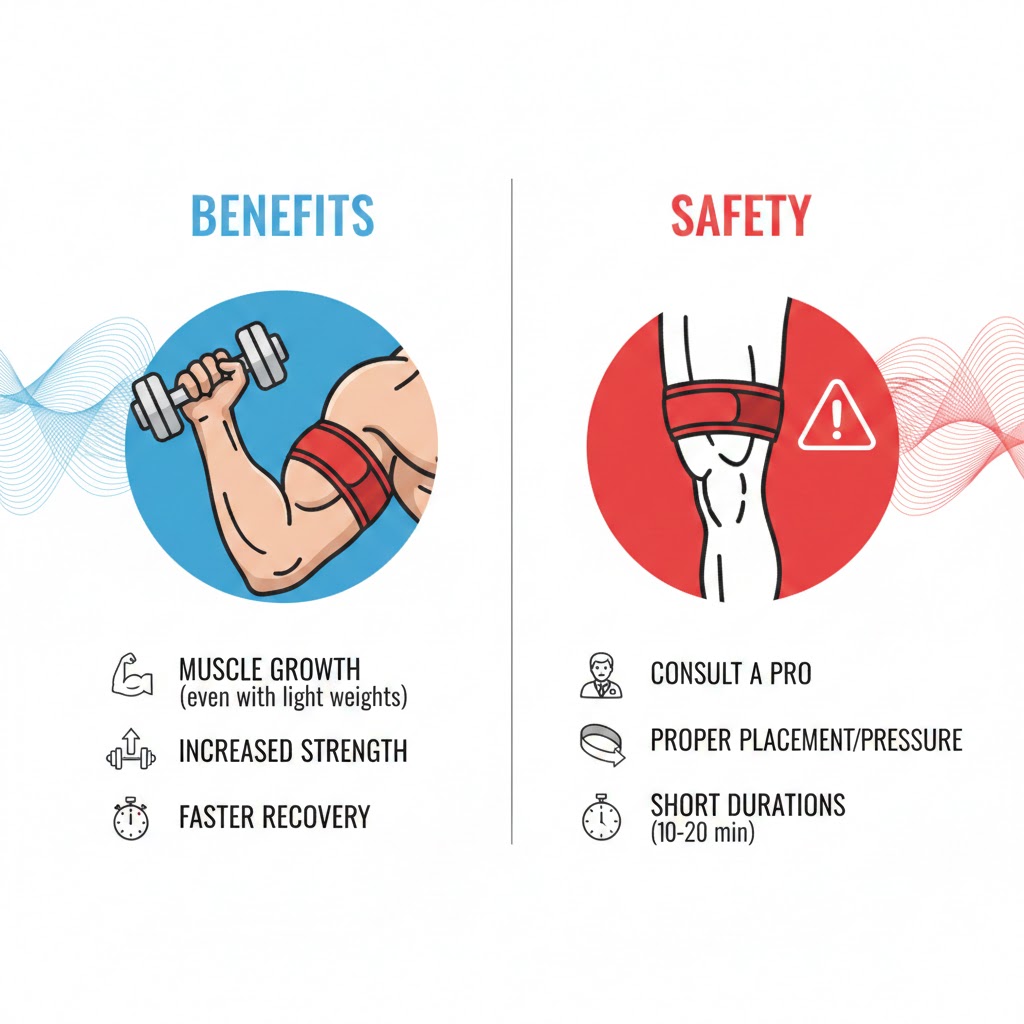
Blood Flow Restriction Bands Benefits Strength training is evolving fast. Alongside traditional weightlifting and high-intensity workouts, a new method has gained attention among athletes, fitness professionals, and rehabilitation specialists alike: blood flow restriction training. At the center of this method are blood flow restriction bands.
Blood flow restriction (BFR) training allows individuals to achieve muscle growth and strength gains using lighter loads by partially restricting blood flow to working muscles. When used correctly, this method offers impressive results—but safety and proper usage are critical. This guide explains Blood Flow Restriction Bands Benefits, how they work, potential risks, and how to use them responsibly.
1. What Are Blood Flow Restriction Bands?
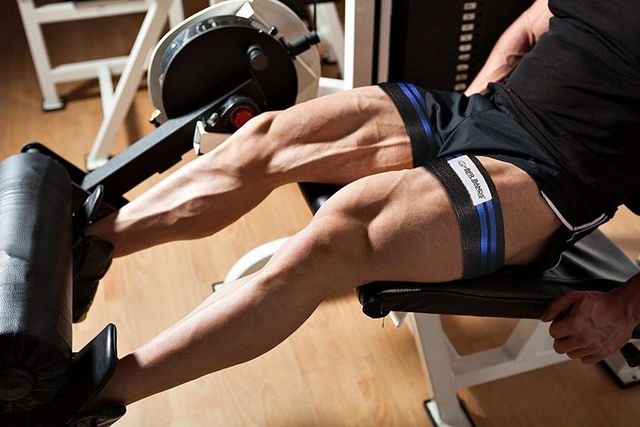
Blood flow restriction bands are specialized straps or cuffs worn around the upper arms or upper legs during exercise. Their purpose is to partially restrict venous blood flow while allowing arterial blood to enter the muscle.
Key characteristics
- Adjustable compression bands
- Worn on limbs during exercise
- Used with low-load resistance training
- Designed for short-duration workouts
They are commonly used in strength training, rehabilitation, and athletic conditioning.
2. How Blood Flow Restriction Training Works
Understanding the physiology explains the growing interest in Blood Flow Restriction Bands Benefits.
What happens in the muscles
- Reduced oxygen availability
- Faster muscle fatigue
- Increased metabolic stress
- Activation of fast-twitch muscle fibers
These conditions mimic the effects of heavy lifting, even when using light weights.
3. Blood Flow Restriction Bands Benefits for Muscle Growth
One of the biggest reasons people use BFR bands is muscle hypertrophy.
Muscle-building benefits
- Promotes muscle growth with lighter loads
- Reduces joint and tendon stress
- Enhances muscle activation
- Useful during injury recovery
This makes BFR training appealing to both beginners and experienced lifters.
4. Strength Gains with Low-Intensity Training
Traditional strength training requires heavy resistance, which isn’t always practical.
Strength-related benefits
- Improves strength using 20–30% of max load
- Supports continued progress during deload phases
- Helps maintain strength when heavy lifting isn’t possible
BFR allows strength adaptations with significantly less mechanical strain.
5. Blood Flow Restriction Bands Benefits for Rehabilitation
BFR training is increasingly used in physical therapy settings.
Rehab-focused advantages
- Maintains muscle mass during recovery
- Supports post-surgery strength retention
- Reduces muscle atrophy during immobilization
- Enables early-stage training
This is especially valuable for individuals recovering from injuries or surgeries.
6. Metabolic and Endurance Adaptations
Beyond strength, BFR training may support metabolic improvements.
Additional performance benefits
- Increased muscular endurance
- Enhanced lactic acid tolerance
- Improved training efficiency
Shorter workouts can deliver meaningful training stimuli.
7. Blood Flow Restriction Bands Benefits Compared to Traditional Training
BFR training complements—not replaces—traditional methods.
Key differences
- Uses lighter weights
- Emphasizes metabolic stress
- Lower joint load
- Shorter recovery time
This makes BFR a useful tool during specific training phases.
8. Safety Considerations for Blood Flow Restriction Bands
Safety is the most important aspect of BFR training.
Core safety principles
- Never fully restrict blood flow
- Use moderate, controlled pressure
- Limit session duration
- Follow proper placement guidelines
Incorrect use increases the risk of discomfort or injury.
9. Who Should Be Cautious with BFR Training
Not everyone is an ideal candidate.
Groups requiring caution
- Individuals with circulatory issues
- People with blood clot history
- Those with uncontrolled hypertension
- Pregnant individuals
Medical consultation is advised before starting BFR training in these cases.
10. Proper Placement of Blood Flow Restriction Bands
Correct placement ensures effectiveness and safety.
Placement guidelines
- Upper arms: high on the arm, near the shoulder
- Legs: high on the thigh, near the hip
- Never place bands on joints or lower limbs
Improper placement reduces benefits and increases risk.
11. How Tight Should Blood Flow Restriction Bands Be?
Tightness is critical.
General guidelines
- Firm but not painful
- Should allow arterial blood flow
- Numbness or tingling indicates excessive pressure
Comfort and circulation should always be monitored.
12. Duration and Frequency of BFR Training
BFR sessions are typically shorter.
Recommended usage
- Sets of 15–30 repetitions
- Short rest periods
- Limited session duration
- Used 2–3 times per week
More is not better when it comes to BFR training.
13. Common Mistakes to Avoid
Mistakes can reduce effectiveness or increase risk.
Avoid these errors
- Over-tightening bands
- Using BFR for every workout
- Ignoring pain or numbness
- Training for excessively long sessions
Smart use leads to better outcomes.
14. Blood Flow Restriction Bands Benefits for Different Fitness Levels
BFR is adaptable to many users.
Suitable for
- Beginners building strength safely
- Athletes during recovery phases
- Older adults with joint limitations
- Lifters seeking training variety
Its flexibility makes it a valuable training tool.
15. Scientific Support and Growing Popularity
Interest in BFR training continues to rise.
Why it’s gaining traction
- Increasing research support
- Adoption in sports medicine
- Use in rehabilitation programs
- Efficiency-driven fitness trends
As understanding improves, safe application becomes more widespread.
16. Final Verdict: Are Blood Flow Restriction Bands Worth Using?
When used correctly, Blood Flow Restriction Bands Benefits include muscle growth, strength gains, and rehabilitation support—all with reduced joint stress. However, safety and proper technique are non-negotiable.
For individuals seeking a smarter, lower-load approach to training, blood flow restriction bands can be an effective addition to a well-structured fitness routine.
Frequently Asked Questions (FAQ)
Q1. Are blood flow restriction bands safe?
Yes, when used correctly and within recommended guidelines.
Q2. Can beginners use blood flow restriction bands?
Yes, beginners can benefit from BFR training with proper instruction.
Q3. Do BFR bands replace heavy lifting?
No. They complement traditional training but do not fully replace it.
Q4. How long should BFR bands be worn during a workout?
Typically only during active sets, not for extended continuous periods.
Q5. Can blood flow restriction training cause injury?
Risk increases with improper use, excessive pressure, or ignoring safety guidelines.
Conclusion
Fitness innovation isn’t about doing more—it’s about training smarter. Blood Flow Restriction Bands Benefits show that lighter loads can still deliver meaningful strength and muscle gains when applied correctly.
Used responsibly, BFR training offers an effective, joint-friendly option for strength development, rehabilitation, and performance optimization—making it a valuable tool in modern fitness programs.
More Related Topics:
Postbiotic Supplements Benefits for Gut and Immunity: A Modern Digestive Health Guide
Apigenin Supplements Benefits for Sleep and Anxiety: A Science-Backed Guide