
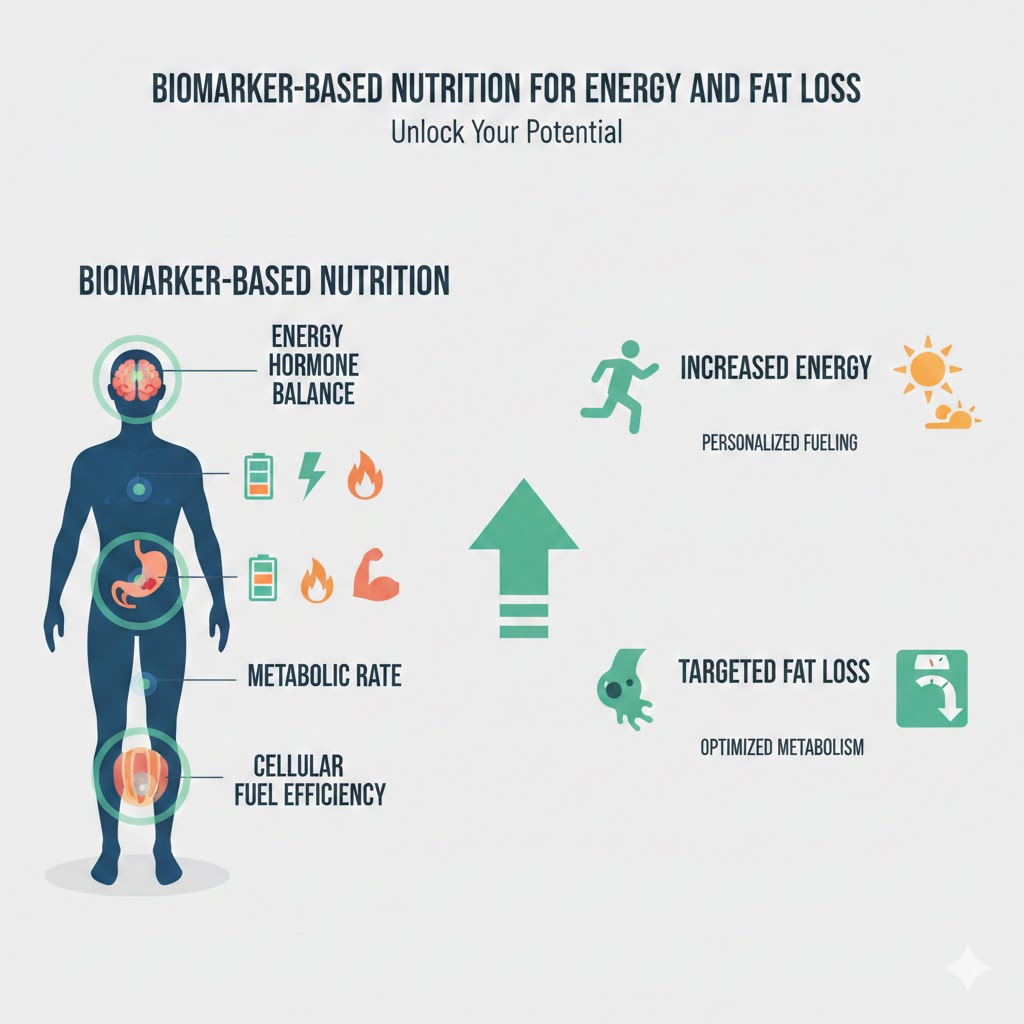
Biomarker-Based Nutrition for Energy Traditional diet plans assume that everyone responds the same way to food. In reality, energy levels, fat loss results, and metabolic health vary dramatically from person to person—even on identical diets. This disconnect is why many people struggle with fatigue, stalled weight loss, or inconsistent results.
In 2026, nutrition is shifting toward data-driven personalization, and one of the most effective approaches is Biomarker-Based Nutrition. Instead of guessing what your body needs, this method uses measurable biological signals to guide food choices, meal timing, and lifestyle decisions.
This article explains what biomarker-based nutrition is, how it supports energy and fat loss, and why it’s becoming a cornerstone of modern nutrition planning.

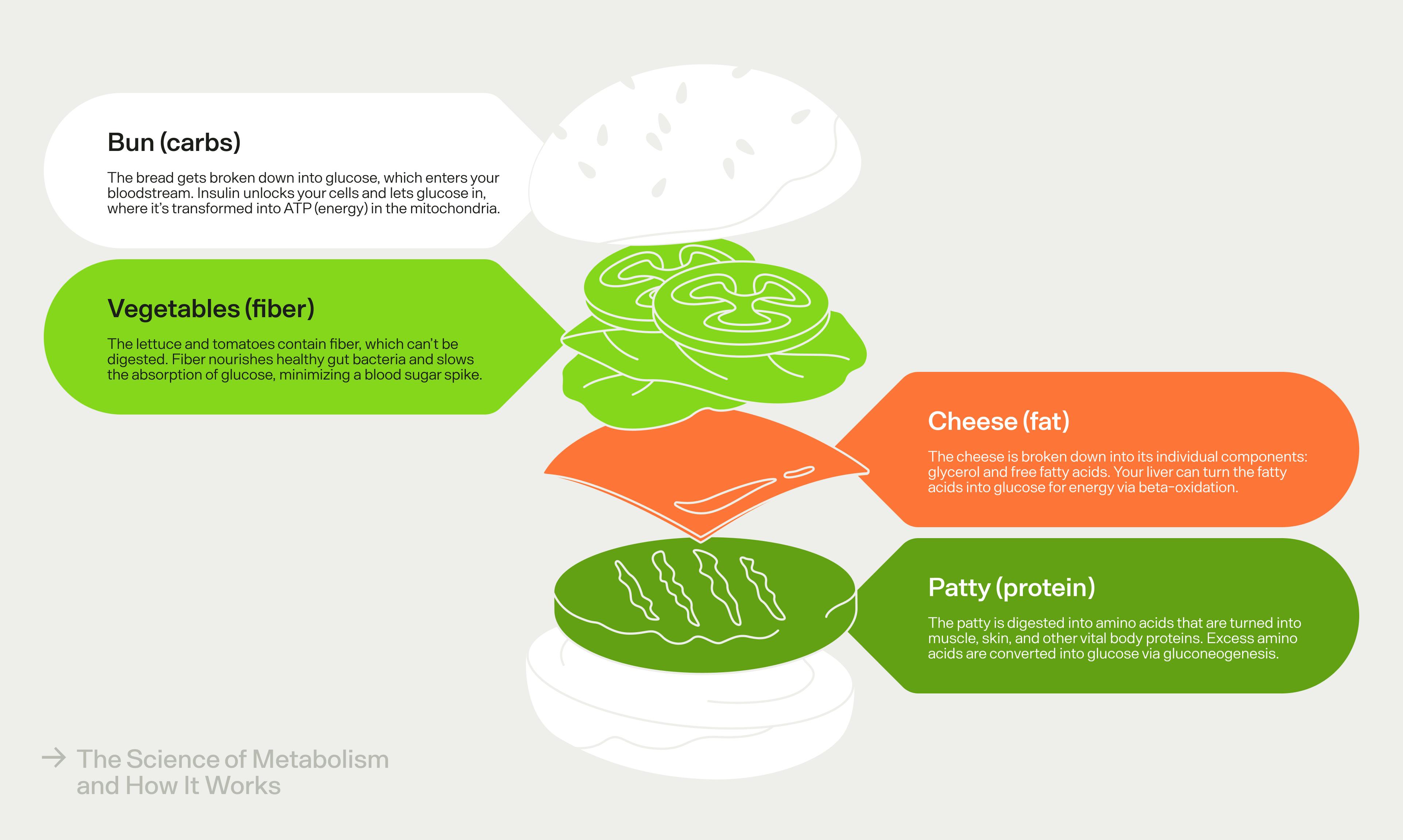
1. What Biomarker-Based Nutrition Actually Means
Before applying this approach, clarity matters.
Simple Definition
Biomarker-Based Nutrition uses measurable indicators from the body to:
- Understand metabolic health
- Guide food and nutrient choices
- Adjust nutrition strategies based on real data
Common Biomarkers Used
- Blood glucose levels
- Insulin response patterns
- Lipid markers
- Inflammatory indicators
- Nutrient status
Rather than following rules, this approach responds to how your body actually functions.
2. Why Generic Diets Often Fail for Energy and Fat Loss
Energy crashes and fat-loss plateaus are rarely caused by lack of willpower.
Common Reasons Diets Fail
- Blood sugar instability
- Inadequate nutrient intake
- Poor meal timing
- Hormonal stress responses
Biomarkers help identify these hidden issues, making Biomarker-Based Nutrition far more precise than calorie-focused diets.
3. Biomarkers That Influence Daily Energy Levels
Energy is a metabolic outcome, not just calorie intake.
Key Energy-Related Biomarkers
- Fasting glucose and glucose variability
- Iron and B-vitamin status
- Thyroid-related indicators
- Cortisol rhythm patterns
Why This Matters
When these markers are off-balance, fatigue persists—even with “healthy” eating.
Targeting these markers is one of the most practical advantages of Biomarker-Based Nutrition.

4. How Biomarker-Based Nutrition Supports Fat Loss
Fat loss is primarily a hormonal and metabolic process.
Biomarkers Linked to Fat Storage
- Insulin sensitivity
- Triglyceride levels
- Inflammatory markers
- Leptin and hunger signaling patterns
Fat Loss Benefits
- Reduced fat storage triggers
- Improved metabolic flexibility
- Better appetite regulation
By addressing these markers, Biomarker-Based Nutrition focuses on why fat is stored—not just how to burn it.
5. Personalized Carbohydrate and Fat Intake
One of the biggest advantages of this approach is macronutrient precision.
What Biomarkers Reveal
- Carb tolerance varies widely
- Some bodies thrive on higher fat intake
- Others need balanced macronutrient distribution
Instead of diet labels, biomarker feedback determines what works best for energy and fat loss.
6. Meal Timing and Biomarkers
When you eat can matter as much as what you eat.
Biomarker-Guided Timing Insights
- Glucose response to late-night meals
- Cortisol-related morning appetite patterns
- Energy fluctuations across the day
Using biomarkers helps optimize meal timing to support sustained energy and metabolic efficiency.
7. Biomarker-Based Nutrition vs Trend Diets
Trend diets often ignore individual biology.
Key Differences
- Trend diets: rule-based and rigid
- Biomarker-based nutrition: adaptive and responsive
Why Biomarker-Based Nutrition Wins
- Reduces trial and error
- Improves long-term adherence
- Adjusts as the body changes
This adaptability is why Biomarker-Based Nutrition is becoming more popular than fixed diet plans.
8. Who Benefits Most From Biomarker-Based Nutrition
This approach isn’t necessary for everyone—but it’s powerful for many.
Best Fit For
- People with low energy despite “clean eating”
- Those stuck in fat-loss plateaus
- Data-driven individuals
- Long-term health and longevity planners
For others, basic nutrition principles may still be sufficient.
9. How Long It Takes to See Results
Results depend on consistency and marker severity.
Typical Timeline
- Energy improvements: 1–3 weeks
- Fat loss improvements: several weeks
- Metabolic stabilization: months
Because Biomarker-Based Nutrition works at the root level, results are often more sustainable.
Frequently Asked Questions
What is Biomarker-Based Nutrition?
It’s a personalized nutrition approach that uses measurable biological markers to guide diet and lifestyle choices.
Is biomarker-based nutrition only for athletes?
No. It’s used by everyday individuals focused on energy, fat loss, and long-term health.
Does this replace calorie counting?
Often yes. It focuses on metabolic response rather than simple calorie math.
Do biomarkers change over time?
Yes. That’s why ongoing adjustments are part of the process.
Is biomarker-based nutrition better than standard diets?
For many people, it offers better personalization and long-term results.
Final Thoughts
Energy and fat loss aren’t about discipline alone—they’re about alignment between nutrition and biology. When food choices support your body’s actual needs, results feel easier and more sustainable.
The rise of Biomarker-Based Nutrition reflects a broader shift toward personalized, data-informed wellness—where understanding your internal signals replaces guesswork and diet hopping.
The future of nutrition isn’t stricter rules.
It’s smarter feedback.
More Related Topics:
Cortisol Regulation Protocols for Stress Control