
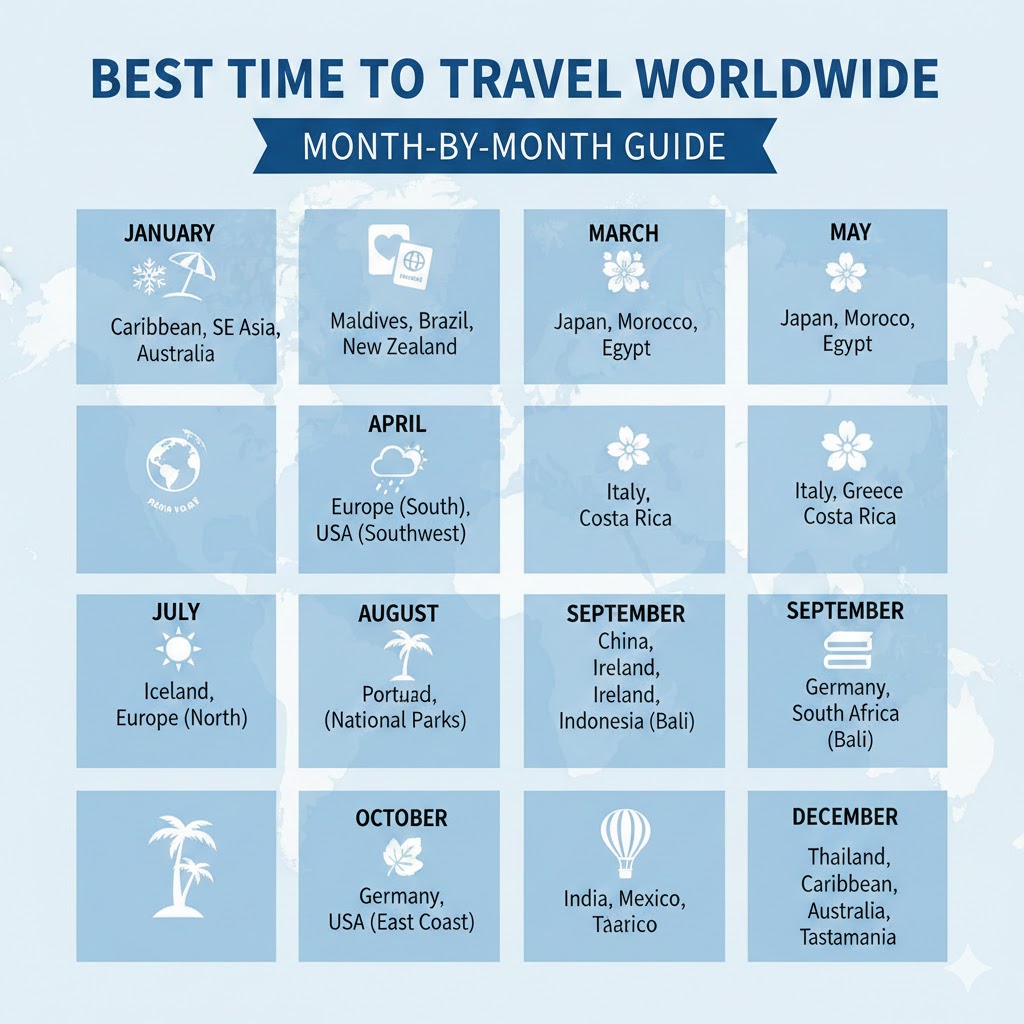
Choosing the right time to travel can significantly impact cost, weather, crowd levels, and overall experience. The Best Time to Travel Worldwide depends on regional climates, seasonal demand, and local events. A month-by-month approach helps travelers plan trips that balance comfort, affordability, and unique experiences.
This guide breaks down global travel conditions across the year, making it easier to decide when and where to go.
January
January is ideal for travelers seeking warm escapes or winter experiences.
Best destinations
- Southeast Asia (Thailand, Vietnam, Indonesia)
- Caribbean islands
- Southern United States
- Alps and Rockies for skiing
This month offers lower prices after the holiday season and additionally qualifies as part of the Best Time to Travel Worldwide for budget travelers.
February
February remains favorable for warm-weather destinations and winter sports.
Highlights
- Maldives and Sri Lanka
- Mexico and Central America
- Japan for winter scenery and festivals
Crowds are generally manageable, except during Valentine’s Day and major winter events.
March
March marks the transition from winter to spring in many regions.
Why travel in March
- Europe begins warming up
- Cherry blossom season in Japan starts late in the month
- Wildlife safaris peak in parts of Africa
March is often considered part of the Best Time to Travel Worldwide due to fewer tourists and moderate weather.
April
April brings blooming landscapes and comfortable temperatures.
Top choices
- Western and Southern Europe
- Washington, D.C. (cherry blossoms)
- Turkey and Greece
- South Korea
Travel costs remain reasonable before the summer rush.
May
May is one of the most balanced travel months globally.
Why May stands out
- Pleasant weather in Europe
- Shoulder season pricing
- Ideal conditions in Japan, Canada, and New Zealand
For many destinations, May represents the Best Time to Travel Worldwide for combining good weather with lower crowds.
June
June introduces summer travel but without peak congestion in many regions.
Best destinations
- Northern Europe (long daylight hours)
- Alaska
- Canadian Rockies
- Mediterranean coast (early summer)
Families often travel in June before peak July demand.
July
July is a peak travel month worldwide, especially for summer holidays.
Travel considerations
- High crowds in Europe and North America
- Ideal weather for Nordic countries
- Beach destinations thrive
While prices are higher, July remains part of the Best Time to Travel Worldwide for travelers prioritizing weather over cost.
August
August continues peak-season travel in many regions.
Best options
- Coastal Europe
- Mountain destinations
- South America (dry season in Peru and Chile)
Urban destinations may feel crowded, but outdoor locations shine.
September
September is a favorite among experienced travelers.
Why September works
- Warm weather with fewer tourists
- Lower airfare and hotel prices
- Excellent conditions in Europe and East Asia
This month consistently ranks as the Best Time to Travel Worldwide for comfort and value.
October
October offers diverse travel opportunities across continents.
Top destinations
- Europe during fall foliage
- Japan for autumn colors
- Australia and New Zealand spring season
- Africa for wildlife viewing
Weather is stable, and crowds decline further.
November
November is ideal for cultural travel and budget-focused trips.
Why consider November
- Fewer tourists globally
- Great value in Southeast Asia and Europe
- Mild conditions in the Middle East
Except for late-month holidays, November remains one of the quieter travel periods.
December
December combines festive travel with seasonal experiences.
Best December destinations
- Europe for Christmas markets
- Tropical destinations for winter escapes
- Australia and New Zealand for summer travel
While holiday weeks are expensive, early December can still be part of the Best Time to Travel Worldwide for select destinations.
How to Choose the Best Time for You
The Best Time to Travel Worldwide ultimately depends on personal priorities.
Key factors to consider
- Weather preferences
- Budget and flexibility
- Crowd tolerance
- Seasonal activities or festivals
Matching destinations with the right month ensures a more enjoyable and cost-effective trip.
Conclusion
Travel timing can transform a trip from stressful to unforgettable. A month-by-month approach allows travelers to align destinations with ideal conditions, prices, and experiences. By understanding global seasonality, travelers can identify the Best Time to Travel Worldwide and plan journeys that offer the best balance of comfort, value, and adventure.
Also read this:
Walt Disney World Complete Guide 2026: Tickets, Rides, Hotels & Tips
Avoid Tourist Scams While Traveling Abroad: Essential Safety Rules Every Traveler Must Know