
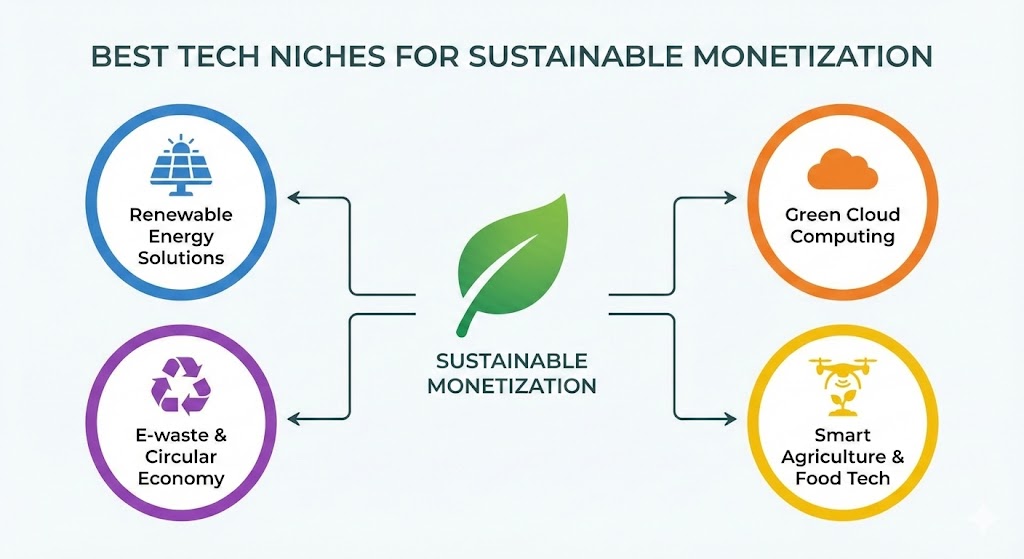
The technology sector presents countless opportunities for entrepreneurs, content creators, and businesses seeking reliable revenue streams. However, not all tech niches are created equal when it comes to long-term profitability and sustainability. Understanding which areas offer the most promising monetization potential can make the difference between building a thriving business and struggling to generate consistent income.
Best Tech Niches for Sustainable Monetization aren’t just about following temporary trends or jumping on the latest hype cycle. They represent areas where genuine value creation meets sustained market demand, creating ecosystems where multiple revenue models can flourish simultaneously. These niches offer depth, longevity, and multiple pathways to profitability.
The most successful tech entrepreneurs and content creators have learned to identify niches that possess specific characteristics: evergreen relevance, continuous innovation, dedicated audiences willing to invest in solutions, and multiple monetization layers. These foundational elements create stability even as specific technologies and platforms evolve.
This comprehensive guide explores the tech niches offering the strongest monetization potential for the coming years, examining why each area presents sustainable opportunities and how to approach them strategically. Whether you’re launching a new venture, pivoting an existing business, or seeking to diversify revenue streams, understanding these high-potential niches will inform smarter strategic decisions.
1. Cybersecurity and Data Privacy Solutions
The cybersecurity sector has transformed from a specialized IT concern into a universal business imperative. As digital threats grow more sophisticated and regulations around data protection tighten globally, the demand for cybersecurity expertise, tools, and services continues expanding exponentially.
Why This Niche Offers Sustainable Monetization
The fundamental value proposition of cybersecurity—protecting valuable assets from harm—creates inherent, non-discretionary demand. Businesses cannot simply opt out of cybersecurity regardless of economic conditions. When budgets tighten, cybersecurity spending often increases as organizations recognize that breaches cost far more than prevention.
Regulatory requirements have cemented cybersecurity spending as mandatory rather than optional. GDPR in Europe, CCPA in California, and similar regulations worldwide require organizations to implement specific security measures and demonstrate compliance. This regulatory environment creates guaranteed demand for compliance tools, consulting services, and educational content.
The threat landscape evolves constantly, ensuring that cybersecurity never becomes a solved problem. Each new technology adoption cycle—cloud computing, Internet of Things, artificial intelligence—introduces fresh security challenges that require new solutions. This continuous evolution sustains demand for innovation and expertise.
Monetization Strategies in Cybersecurity
Software-as-a-Service models dominate cybersecurity monetization, with businesses subscribing to security tools for endpoint protection, network monitoring, threat intelligence, and vulnerability management. These recurring revenue models provide predictability that investors and business owners value highly.
Consulting and professional services represent another lucrative monetization avenue. Organizations need help assessing vulnerabilities, implementing security frameworks, responding to incidents, and achieving compliance. Experienced cybersecurity professionals command premium rates that reflect the critical nature of their work.
Educational content and training programs generate substantial revenue as individuals seek cybersecurity certifications to advance their careers and organizations invest in security awareness training for employees. Online courses, certification preparation materials, and corporate training programs all represent viable monetization paths.
Entry Points and Growth Opportunities
Aspiring entrepreneurs can enter the cybersecurity niche through specialized focus areas rather than attempting to compete with established enterprise security vendors. Identity and access management for small businesses, security auditing for specific industries, or privacy compliance consulting for particular regulatory frameworks offer accessible entry points.
Content creators can build audiences through educational material that helps non-technical business owners understand cybersecurity risks and solutions. Breaking down complex security concepts into actionable guidance creates value that attracts readership, viewership, and eventually paid product offerings.
The continuous emergence of new technologies ensures ongoing opportunities for those who position themselves as early experts. Security implications of quantum computing, blockchain applications, or edge computing devices will need analysis, tooling, and guidance that creates monetization opportunities for those who develop expertise quickly.
2. Cloud Computing and DevOps Infrastructure
Cloud computing has fundamentally restructured how organizations build, deploy, and manage technology infrastructure. The shift from on-premise servers to cloud-based resources continues accelerating, creating sustained demand for expertise, tools, and services that help organizations maximize cloud benefits while controlling costs.
The Foundation of Modern Tech Business
Best Tech Niches for Sustainable Monetization frequently involve technologies that serve as foundations for other innovations, and cloud computing epitomizes this characteristic. Virtually every modern application, service, and digital business relies on cloud infrastructure, ensuring that cloud expertise remains valuable across economic cycles and technology trends.
The major cloud platforms—Amazon Web Services, Microsoft Azure, Google Cloud Platform—have created massive ecosystems where thousands of businesses provide specialized services, tools, and expertise. This ecosystem effect multiplies monetization opportunities beyond what any single company could create alone.
Organizations continually optimize their cloud usage, seeking to reduce costs, improve performance, enhance security, and leverage new capabilities. This ongoing optimization creates perpetual demand for consulting services, optimization tools, and educational resources that help businesses use cloud resources more effectively.
Monetization Models in Cloud and DevOps
Managed services represent a high-value monetization model where specialized providers handle cloud infrastructure management for organizations lacking internal expertise. These arrangements typically involve monthly retainers that scale with infrastructure complexity, creating predictable recurring revenue.
DevOps tools and automation platforms serve the massive market of developers and operations teams seeking to accelerate software delivery while maintaining reliability. Software products that solve pipeline automation, configuration management, monitoring, or deployment challenges can scale globally with relatively modest overhead.
Training and certification preparation addresses the enormous demand for cloud-skilled professionals. Organizations struggle to hire qualified cloud architects, engineers, and administrators, creating markets for educational programs that help individuals gain these valuable skills and certifications.
Specialized Areas Within Cloud Computing
Multi-cloud management has emerged as a critical challenge as organizations adopt services from multiple cloud providers. Tools and expertise that help businesses manage resources across AWS, Azure, and Google Cloud simultaneously address real pain points that organizations will pay to solve.
Cloud cost optimization represents another lucrative specialization. As cloud spending grows, organizations increasingly focus on eliminating waste and optimizing resource allocation. Services and tools that provide visibility into spending patterns and recommend optimizations deliver clear ROI that justifies their cost.
Serverless architecture consulting helps organizations transition from traditional server-based deployments to event-driven, fully managed computing models. The complexity of architecting serverless applications creates opportunities for consultants, educational content, and supporting tools.
3. Artificial Intelligence and Machine Learning Applications
Artificial intelligence has progressed from research curiosity to practical business tool that organizations across industries are implementing to improve operations, enhance customer experiences, and create new capabilities. This transition from experimental to essential creates robust monetization opportunities.
Why AI Represents Long-Term Opportunity
The versatility of AI and machine learning means these technologies apply across virtually every industry and business function. From healthcare diagnostics to financial fraud detection to supply chain optimization, AI creates value in countless contexts. This broad applicability ensures sustained demand across market segments.
AI capabilities continue advancing rapidly, with each breakthrough opening new application possibilities. Generative AI, computer vision improvements, natural language processing advances, and reinforcement learning developments all create opportunities for those who can translate technical capabilities into business solutions.
The complexity of implementing AI successfully creates sustained demand for expertise and supporting services. Most organizations lack the internal capabilities to develop, deploy, and maintain AI systems, creating markets for consulting, implementation services, and managed AI solutions.
Monetization Approaches in the AI Space
AI-powered software products solve specific business problems using machine learning without requiring customers to possess AI expertise themselves. Predictive maintenance systems, customer churn prediction tools, content recommendation engines, and automated quality inspection solutions all exemplify this productized AI approach.
Consulting and implementation services help organizations identify AI opportunities, develop proof-of-concept projects, and deploy production AI systems. The high-touch nature of these engagements and the specialized expertise required support premium pricing that creates attractive economics for service providers.
Educational content and training programs address the massive skills gap in AI and machine learning. Professionals across industries recognize that AI literacy will be essential for career advancement, creating demand for courses, tutorials, and certification programs that make these complex topics accessible.
Accessible Entry Points for AI Entrepreneurs
Rather than competing with tech giants on foundational AI research, entrepreneurs can focus on applying AI to solve problems in specific industries or use cases. An AI solution tailored for restaurant inventory management or construction project scheduling faces less competition than general-purpose AI platforms.
Creating tools and frameworks that simplify AI development for other developers represents another viable approach. The complexity of production AI deployment creates opportunities for platforms that handle infrastructure, monitoring, model versioning, and other technical challenges that every AI project encounters.
Best Tech Niches for Sustainable Monetization often involve making complex technologies accessible to non-technical users, and AI represents a prime example. Building no-code or low-code interfaces that let business users leverage AI capabilities without programming creates value that organizations will pay for.
4. E-Commerce Technology and Digital Payments
The digital commerce sector continues expanding as more transactions migrate online and consumer expectations for seamless digital experiences intensify. The infrastructure enabling online commerce—payment processing, inventory management, customer engagement tools—creates numerous monetization opportunities for technology providers.
The Persistent Growth of Digital Commerce
E-commerce growth has proven durable across economic conditions and geographic markets. Even as physical retail adapts, the convenience and selection advantages of online shopping sustain long-term growth trends. This persistent expansion ensures ongoing demand for tools and services that help businesses succeed in digital commerce.
The complexity of modern e-commerce operations creates needs that technology can address. Businesses must manage inventory across channels, process payments securely, prevent fraud, personalize customer experiences, handle logistics, and analyze performance. Each of these requirements represents potential monetization opportunities for technology providers.
Emerging commerce models—social commerce, live stream shopping, subscription boxes, direct-to-consumer brands—continuously create new tool and service requirements. Entrepreneurs who identify and address the specific needs of these evolving models can establish strong positions before markets become saturated.
Monetization Models in E-Commerce Technology
Payment processing represents one of the most proven monetization models, with providers earning small percentages of transaction volumes that aggregate into substantial revenue. While this space includes large incumbents, opportunities exist in serving underserved merchant categories or geographic markets.
Software-as-a-Service tools that help merchants manage operations generate recurring revenue from monthly subscriptions. Inventory management systems, customer relationship platforms, email marketing tools, and analytics dashboards all serve the ongoing operational needs that justify subscription spending.
Commission-based marketplace models connect buyers and sellers while taking percentages of resulting transactions. Niche marketplaces serving specific product categories, customer segments, or geographic regions can achieve strong economics even without matching the scale of Amazon or eBay.
Specialized Opportunities in Digital Commerce
Cross-border e-commerce presents complex challenges around payments, shipping, regulations, and localization that specialized technology can address. Helping merchants expand internationally creates value that supports premium pricing for both software tools and service offerings.
Augmented reality shopping experiences represent an emerging area where technology can dramatically improve the online shopping experience for products that benefit from visualization in physical spaces. Furniture, home decor, and fashion are obvious applications, but creative entrepreneurs will identify additional opportunities.
Sustainability tracking and carbon footprint calculation tools address growing consumer and regulatory interest in the environmental impact of commerce. Merchants need systems that calculate and communicate the sustainability attributes of their products and operations, creating opportunities for specialized platforms.
5. Health Technology and Medical Informatics
Healthcare technology represents one of the largest and most recession-resistant sectors in the global economy. The combination of aging populations, chronic disease prevalence, technological innovation, and regulatory requirements creates sustained demand for health technology solutions.
Why Healthcare Technology Offers Stability
Healthcare spending continues growing as a percentage of GDP in developed economies, driven by demographic trends and medical advances. This expanding pool of resources ensures funding availability for technologies that improve care delivery, reduce costs, or enhance patient outcomes.
Regulatory requirements in healthcare create mandatory technology adoption in many areas. Electronic health records, patient privacy protections, billing and coding compliance, and quality reporting all require technology systems that healthcare organizations must implement regardless of budget pressures.
The high stakes of healthcare decisions create willingness to pay for solutions that improve outcomes or reduce risks. Technologies that help physicians make better diagnoses, reduce medical errors, or improve treatment effectiveness justify premium pricing because the value delivered is measured in improved health and saved lives.
Monetization Strategies in Health Tech
Enterprise software sales to healthcare organizations represent a traditional but still viable monetization approach. Hospitals, clinics, and medical practices need electronic health record systems, practice management software, imaging systems, and numerous other technology platforms that command substantial license fees and recurring support revenue.
Telemedicine platforms have proven their value and market acceptance, creating opportunities for companies that facilitate virtual care delivery. While large telehealth providers dominate general virtual visits, specialized platforms serving specific medical conditions or provider types continue finding market opportunities.
Consumer health applications that help individuals manage chronic conditions, maintain wellness, or navigate the healthcare system can monetize through subscriptions, advertising, or partnerships with healthcare providers and insurers. The key to success involves demonstrating genuine health improvements that justify ongoing engagement.
Emerging Opportunities in Healthcare Technology
Remote patient monitoring technologies enable healthcare providers to track patient health between office visits, improving care for chronic conditions while potentially reducing hospitalizations. The devices, connectivity platforms, and analytics tools supporting remote monitoring all represent monetization opportunities.
Best Tech Niches for Sustainable Monetization frequently emerge at the intersection of multiple trends, and AI-powered medical diagnostics exemplifies this convergence. Machine learning systems that assist radiologists in interpreting medical images or help pathologists analyze tissue samples deliver clear value while operating in a sector with resources to pay for effectiveness.
Mental health technology has gained acceptance and investment as awareness of mental health importance has increased. Digital therapeutics, teletherapy platforms, and mental wellness applications serve growing markets where traditional care delivery models struggle to meet demand.
6. Education Technology and Professional Development
The education technology sector encompasses both academic learning and professional skill development, creating diverse monetization opportunities. The imperative for continuous learning in rapidly changing economies ensures sustained demand for educational technology solutions.
The Fundamentals Supporting EdTech Growth
Skill requirements across professions evolve continuously, creating perpetual demand for learning resources that help professionals maintain relevance. Technology skills, in particular, require ongoing updating as platforms, frameworks, and best practices change. This creates recurring opportunities to monetize updated educational content.
Traditional education institutions increasingly rely on technology to deliver instruction, manage operations, and assess learning. The infrastructure supporting online learning, student information systems, learning management platforms, and assessment tools generates substantial revenue for education technology providers.
The credentialing economy has grown as employers seek verifiable proof of skills and knowledge. Certification programs, skill assessment platforms, and digital credential systems all represent monetization opportunities at the intersection of education and career development.
Monetization Models in Education Technology
Online course sales represent the most direct monetization approach, with creators selling access to educational content through one-time purchases or subscriptions. Platforms like Udemy and Coursera have proven market demand, while independent course creators can achieve strong economics with focused, high-quality offerings.
Institutional software licenses to schools, universities, and corporate training departments generate predictable recurring revenue. Learning management systems, virtual classroom platforms, and administrative tools serve ongoing institutional needs that justify annual license fees or per-user subscriptions.
Assessment and certification services monetize through exam fees and credential issuance. Organizations and individuals pay for third-party verification of skills and knowledge, particularly when certifications carry recognition that aids career advancement or regulatory compliance.
High-Potential Areas Within EdTech
Corporate training technology serves the massive market of organizations investing in employee development. Learning experience platforms, content authoring tools, and skills tracking systems all help companies manage training programs more effectively than traditional approaches allow.
Language learning technology continues attracting users and investment as globalization and immigration create practical needs for language acquisition. Adaptive learning algorithms, speech recognition for pronunciation practice, and cultural context instruction all represent areas where technology enhances traditional language education.
STEM education tools that make science, technology, engineering, and mathematics more engaging and accessible serve both academic institutions and individual learners. Interactive simulations, virtual laboratories, and gamified learning experiences can command premium pricing when they demonstrably improve learning outcomes.
7. Automation and Workflow Optimization Tools
The automation sector addresses a universal business need: accomplishing more work with less time and fewer resources. Technologies that automate repetitive tasks, streamline workflows, and eliminate manual processes create obvious value that organizations will pay for regardless of economic conditions.
Why Automation Represents Enduring Value
Labor costs represent one of the largest expenses for most organizations, creating constant incentive to find efficiencies. Automation tools that reduce the time required for specific tasks or eliminate positions entirely offer clear return on investment that justifies adoption even during budget constraints.
The complexity of modern business operations creates countless opportunities for automation. Marketing workflows, sales processes, customer service operations, accounting tasks, human resources functions, and IT operations all contain repetitive elements that technology can handle more efficiently than human workers.
Integration challenges create ongoing demand for automation solutions. As organizations adopt multiple software systems that don’t communicate naturally, middleware and automation tools that connect disparate platforms become essential infrastructure that businesses depend on daily.
Monetization Approaches for Automation Tools
Software-as-a-Service subscriptions represent the dominant monetization model for automation tools. Monthly or annual recurring revenue based on usage metrics like the number of automation workflows, tasks processed, or users accessing the system creates predictable income streams that scale with customer growth.
Implementation and consulting services supplement software revenue, particularly for complex automation projects that require business process analysis, custom integration development, and change management. These high-touch engagements command premium rates that reflect the specialized expertise required.
Marketplace models where developers create and sell pre-built automation templates or integrations generate revenue through commissions on sales. Platforms like Zapier and Make have demonstrated that thriving ecosystems can develop around core automation platforms, creating opportunities for both platform providers and third-party developers.
Specialized Automation Opportunities
Robotic process automation for enterprise back-office functions represents a mature but growing market. Large organizations continue finding new processes to automate, particularly as RPA technology becomes more sophisticated and capable of handling exceptions and edge cases that previously required human judgment.
Best Tech Niches for Sustainable Monetization often involve serving specific industries with tailored solutions, and vertical-specific automation tools exemplify this approach. Automation platforms designed specifically for law firms, medical practices, restaurants, or construction companies can command higher prices than generic tools because they address industry-specific workflows out of the box.
No-code automation platforms democratize access to automation capabilities by enabling non-technical users to build workflows without programming. This accessibility expands the addressable market beyond IT departments to include operations managers, marketers, and other business users who can implement solutions to their own workflow challenges.
8. Internet of Things and Smart Device Management
The proliferation of connected devices has created an ecosystem requiring management platforms, security solutions, data analytics capabilities, and integration frameworks. As more physical objects gain internet connectivity, the opportunities to monetize IoT-related technologies continue expanding.
The Growing IoT Ecosystem
Billions of devices now connect to the internet, from industrial sensors monitoring manufacturing equipment to consumer smartwatches tracking health metrics. This massive installed base requires software platforms, connectivity services, and management tools that represent sustainable monetization opportunities.
The data generated by IoT devices holds tremendous value when properly analyzed and applied. Organizations need analytics platforms that can process high-volume sensor data, identify meaningful patterns, and trigger appropriate responses. These capabilities justify significant investment in IoT data platforms.
Security concerns around connected devices create ongoing demand for specialized security solutions. IoT devices often lack robust built-in security, requiring additional platforms that monitor device behavior, detect anomalies, and protect against threats targeting connected devices.
Monetization Models for IoT Solutions
Device management platforms charge subscription fees based on the number of connected devices monitored. These platforms provide essential capabilities like remote configuration, firmware updates, health monitoring, and troubleshooting that organizations with large device deployments cannot manage manually.
Connectivity services and data plans for IoT devices generate recurring revenue from monthly fees that aggregate across large device populations. While traditional telecom providers dominate consumer connectivity, specialized IoT connectivity providers serve industrial and commercial applications with unique requirements.
Consulting and implementation services help organizations design, deploy, and optimize IoT solutions. The multidisciplinary nature of IoT projects—involving hardware, connectivity, software, and business process changes—creates complexity that justifies expensive consulting engagements.
Emerging Opportunities in IoT
Edge computing platforms that process data near connected devices rather than in centralized clouds address latency and bandwidth challenges in IoT deployments. The infrastructure supporting edge computing represents a growing monetization opportunity as more applications require real-time processing.
Predictive maintenance applications use IoT sensor data to forecast equipment failures before they occur, reducing downtime and maintenance costs. These applications serve valuable use cases in manufacturing, transportation, energy, and other industries with expensive equipment where failures carry high costs.
Smart building systems integrate various IoT devices to optimize energy usage, improve security, and enhance occupant comfort. The platforms orchestrating these systems and the analytics deriving insights from building data both represent monetization opportunities in the commercial real estate sector.
Conclusion
Identifying the Best Tech Niches for Sustainable Monetization requires looking beyond temporary hype cycles to find areas where fundamental value creation aligns with lasting market needs. The eight niches explored in this guide share common characteristics that make them particularly promising for long-term business building.
Each of these areas addresses essential needs rather than discretionary wants. Organizations and individuals invest in cybersecurity, cloud infrastructure, healthcare technology, and automation because these technologies solve critical problems or enable important capabilities. This fundamental demand creates stability that sustains businesses through economic cycles.
The continuous evolution of technology ensures that these niches remain dynamic rather than stagnant. New innovations within established categories create ongoing opportunities for entrepreneurs who can identify emerging needs early and develop solutions before markets become saturated. This combination of stability and innovation represents the ideal environment for sustainable monetization.
Multiple revenue models work within each niche, allowing businesses to diversify income streams and find the approaches that best match their capabilities and market positioning. Whether through software subscriptions, consulting services, educational products, or marketplace commissions, successful businesses can build upon multiple revenue foundations.
The depth and breadth of these niches provide room for both large enterprises and small specialists to thrive. Aspiring entrepreneurs need not compete head-to-head with established giants; instead, they can find underserved segments, specialize in particular use cases, or focus on specific customer types that larger competitors overlook.
Success in any of these niches requires more than simply entering a promising market. Businesses must deliver genuine value, understand customer needs deeply, maintain high quality standards, and adapt as technologies and market conditions evolve. However, those who approach these opportunities thoughtfully and execute effectively position themselves for sustainable monetization that can support long-term business growth.
The technology landscape will continue changing, with new innovations and shifts in market dynamics creating fresh opportunities while rendering some existing approaches obsolete. Regular reassessment of positioning, capabilities, and market needs will help businesses stay relevant within their chosen niches. Those who commit to continuous learning and adaptation will find that these tech niches offer paths to sustainable monetization for years to come.
Also read this:
AI Content Is Attracting Premium Sponsors in 2026
Most Underrated Tech Trend Right Now That Will Shape the Next Wave of Innovation
AI-Focused Content Attracts High-Value Sponsors and Premium Brand Deals in 2026