
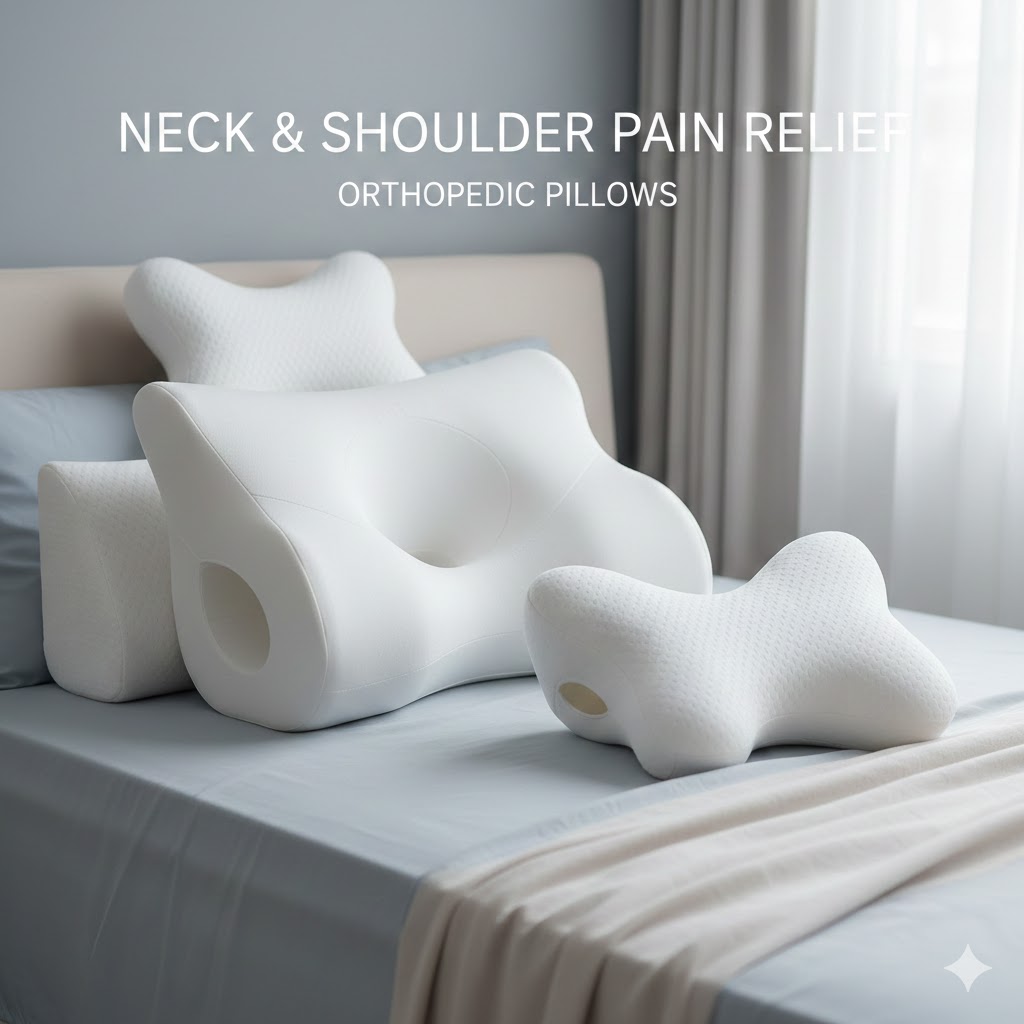
Waking up with neck stiffness or shoulder pain is often a pillow problem, not a sleep problem. The right support can dramatically improve alignment, reduce pressure, and help muscles recover overnight. In 2026, the Best Orthopedic Pillows focus on ergonomics, pressure relief, and sleep-position-specific design—without gimmicks.
This guide explains what actually works, which pillow types suit different sleepers, and how to choose the Best Orthopedic Pillows for lasting relief.

Why Orthopedic Pillows Matter for Neck & Shoulder Pain
Neck and shoulder pain often comes from poor spinal alignment during sleep. The Best Orthopedic Pillows are designed to:
- Keep the neck in a neutral position
- Reduce pressure on shoulders
- Support natural cervical curvature
- Minimize muscle strain overnight
If alignment is right, pain reduces—sometimes within weeks.
What Makes the Best Orthopedic Pillows Effective?
Look for these essentials:
- Cervical contouring to cradle the neck
- Responsive materials (memory foam or latex)
- Proper loft for your sleep position
- Breathability to avoid heat buildup
- Durability to maintain shape over time
Avoid pillows that are too soft or too high—they worsen strain.
Best Orthopedic Pillows by Type (What to Choose)
1. Cervical Contour Pillows
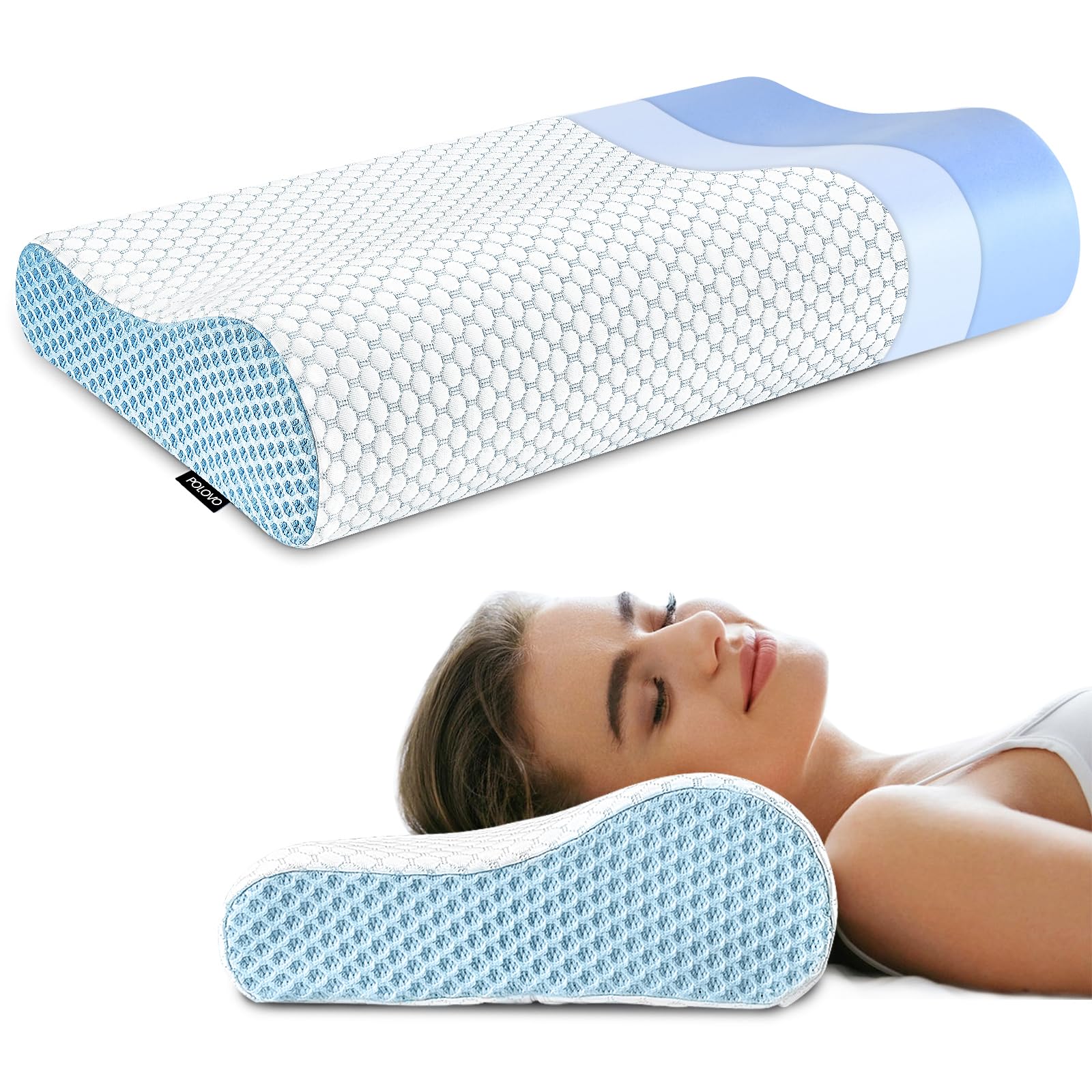
Designed with a curved shape to support the neck’s natural arch.
Best for: Chronic neck pain, desk workers
Why they help: Maintain neutral alignment all night
2. Memory Foam Orthopedic Pillows
Pressure-relieving and shape-adaptive.
Best for: Combination sleepers
Why they help: Even weight distribution reduces shoulder pressure
3. Latex Orthopedic Pillows
Naturally resilient and breathable.
Best for: Hot sleepers, allergy-prone users
Why they help: Firm support without sinking
4. Adjustable Loft Orthopedic Pillows
Height can be customized by removing/adding fill.
Best for: Unsure about ideal pillow height
Why they help: Personalized support = better results
5. Side-Sleeper Orthopedic Pillows
Higher loft with shoulder cut-outs or firm edges.
Best for: Side sleepers with shoulder pain
Why they help: Fill the gap between shoulder and neck
These categories consistently include the Best Orthopedic Pillows for pain relief.
How to Choose the Right Orthopedic Pillow (Quick Guide)
- Back sleepers: Medium loft, cervical contour
- Side sleepers: Higher loft, firm support
- Stomach sleepers: Low loft or soft support (or avoid stomach sleeping)
- Broad shoulders: Taller pillow
- Neck pain focus: Contour or adjustable designs
Matching pillow type to sleep position is crucial.
How Long Before You Feel Relief?
Be realistic:
- 3–7 nights: Initial adjustment period
- 2–3 weeks: Noticeable pain reduction
- 4–6 weeks: Consistent comfort if fit is right
Stick with it—switching too fast prevents adaptation.
Common Mistakes to Avoid
- Choosing softness over support
- Ignoring sleep position
- Buying very cheap foam that collapses
- Not replacing old pillows (every 18–24 months)
- Sleeping with multiple pillows stacking the neck
Even the Best Orthopedic Pillows won’t help if used incorrectly.
Care Tips to Make Your Pillow Last Longer
- Use a breathable pillowcase
- Air it weekly
- Follow wash instructions (often cover-only)
- Keep away from direct sunlight for foam
Proper care preserves shape and support.
Final Thoughts
Neck and shoulder pain don’t need stronger painkillers—they need better alignment. The Best Orthopedic Pillows support your spine naturally, reduce pressure points, and help muscles recover while you sleep.
Choose the right type for your sleep position, give it time, and let your pillow do the healing work.
FAQ – Frequently Asked Questions
What are the Best Orthopedic Pillows for neck and shoulder pain?
Cervical contour pillows, memory foam orthopedic pillows, and adjustable loft pillows are among the Best Orthopedic Pillows for relieving neck and shoulder pain.
How high should an orthopedic pillow be?
It depends on sleep position—medium loft for back sleepers and higher loft for side sleepers works best.
Are orthopedic pillows good for daily use?
Yes. The Best Orthopedic Pillows are designed for everyday sleeping, not short-term use.
Can orthopedic pillows fix posture-related pain?
They help reduce strain during sleep, but combining them with good daytime posture gives the best results.
How often should orthopedic pillows be replaced?
Most should be replaced every 18–24 months, depending on material and usage.
More Related Topics:
Best Herbal Supplements for Better Sleep Naturally (2026 Guide)
Boost Strength 4x Faster: The “Time Under Tension” Workout for Seniors
Bigelow Lavender Chamomile + Probiotics Herbal Tea: Calm, Gut Health & Daily Wellness