
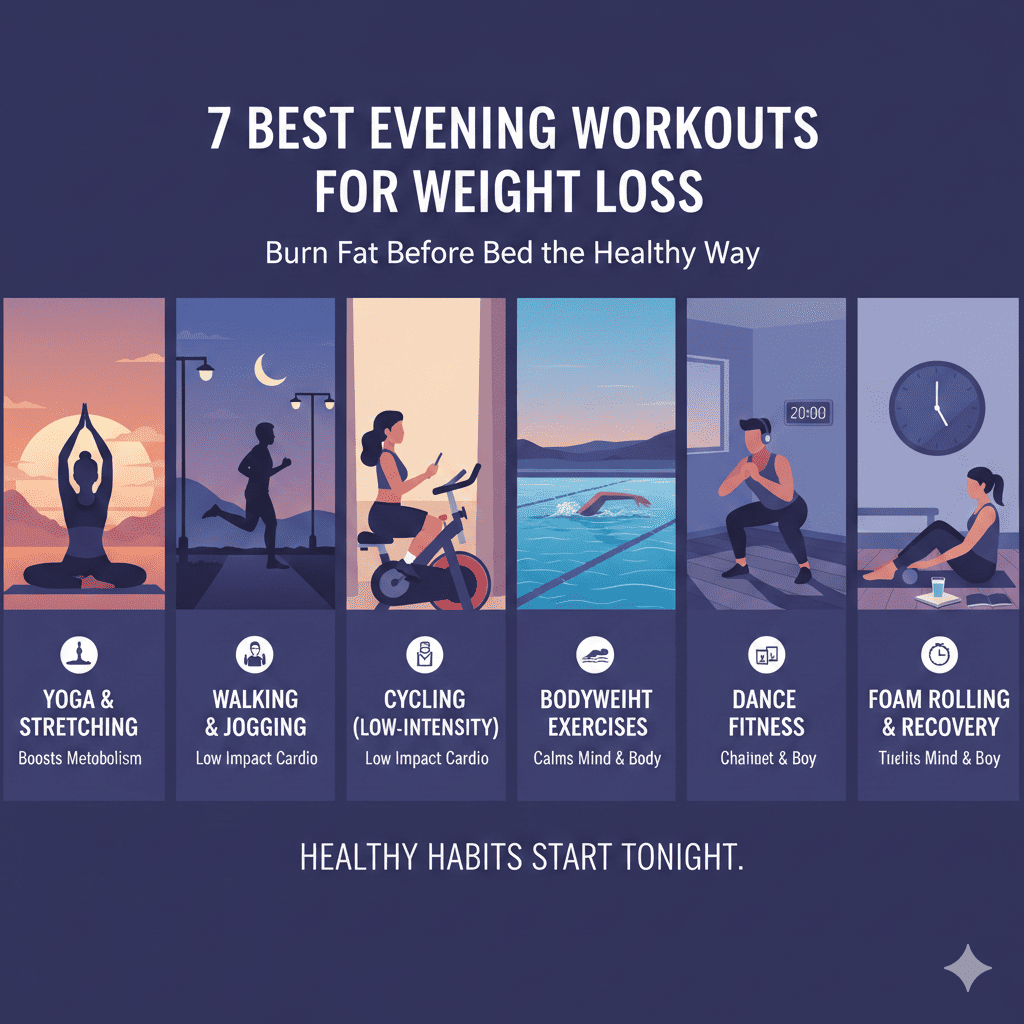
The evening hours present a unique opportunity for weight loss that many people overlook. While morning workouts get most of the attention, evening exercise can be equally effective for burning fat and building the body you want. If you’re someone who struggles with morning routines or simply has more energy later in the day, discovering the Best Evening workouts for weight loss can transform your fitness journey and help you achieve your goals without disrupting your natural rhythm.
Contrary to popular belief, exercising in the evening doesn’t necessarily interfere with sleep quality. In fact, when done correctly with appropriate timing and intensity, evening workouts can enhance sleep quality, reduce stress from the day, boost metabolism overnight, and provide a healthy outlet for accumulated tension. The key is choosing the right types of exercise and understanding how to structure your evening routine for maximum fat-burning benefits without sabotaging your rest.
This comprehensive guide reveals the seven Best Evening workouts for weight loss that are specifically designed to maximize calorie burn, enhance metabolic rate, and promote restful sleep. These workouts accommodate various fitness levels, require minimal equipment, and can be completed in your home or local gym. Whether you have 20 minutes or an hour, you’ll find an evening workout strategy that fits your schedule and delivers real results.
Understanding the science behind evening exercise helps explain why these workouts are so effective. Your body temperature peaks in the late afternoon and early evening, which means your muscles are warmer and more flexible, reducing injury risk. Hormone levels, including testosterone and cortisol, are optimized for performance during these hours. Additionally, many people report feeling stronger and having better endurance in evening workouts compared to morning sessions.
The timing of your evening workout matters significantly. Exercising too close to bedtime can elevate body temperature and heart rate, making it difficult to fall asleep. The ideal window is typically 2 to 4 hours before your intended bedtime. This allows your body to experience the metabolic benefits of exercise while having sufficient time to cool down and transition into a restful state.
1. High-Intensity Interval Training (HIIT)
When it comes to the best evening workouts for weight loss, HIIT consistently ranks at the top for its exceptional calorie-burning capacity and time efficiency. This training method alternates short bursts of intense exercise with brief recovery periods, creating an afterburn effect that continues burning calories for hours after you finish.
Understanding the HIIT Advantage
HIIT workouts elevate your metabolism significantly more than steady-state cardio. The intense bursts push your body into an oxygen debt that must be repaid post-exercise, a phenomenon called excess post-exercise oxygen consumption or EPOC. This metabolic boost can last 24 to 48 hours, meaning you’re burning extra calories even while sleeping.
Research consistently shows that HIIT burns more fat in less time compared to traditional cardio. A 20-minute HIIT session can burn as many calories as 40 minutes of steady jogging, while also preserving muscle mass better than longer duration cardio.
Sample Evening HIIT Routine
Begin with a 5-minute warm-up of light jogging in place, jumping jacks, and dynamic stretches. Then perform 30 seconds of maximum effort followed by 30 seconds of active recovery, repeating this pattern for 15 to 20 minutes.
Effective exercises include burpees, high knees, mountain climbers, jump squats, and sprint intervals. Choose 4 to 5 exercises and cycle through them, performing each at maximum intensity during the work intervals. Your heart rate should reach 80 to 90 percent of maximum during work intervals and drop to 60 to 70 percent during recovery.
Modifications for Different Fitness Levels
Beginners should start with a 1:2 work-to-rest ratio, exercising for 20 seconds and resting for 40 seconds. As fitness improves, progress to 1:1 ratios and eventually to 2:1 ratios for advanced conditioning.
Lower-impact modifications include replacing jumping movements with stepping variations, reducing the range of motion, or slowing the pace slightly while maintaining effort level. The key is working at your personal maximum intensity, not comparing yourself to others.
Cool-Down and Recovery
Finish with a 5-minute cool-down of walking and gentle stretching. This gradual transition helps your heart rate return to normal and begins the recovery process. Proper cool-down is especially important in evening workouts to facilitate the shift toward sleep readiness.
2. Strength Training Circuits
Strength training ranks among the best evening workouts for weight loss because it builds muscle tissue, which increases your resting metabolic rate. More muscle means you burn more calories 24/7, even when you’re not exercising. Circuit-style strength training keeps your heart rate elevated while building strength, combining the benefits of cardio and resistance training.
Why Evening Strength Training Works
Studies show that strength peaks in the late afternoon and evening when body temperature is highest and muscle function is optimized. This means you can lift heavier weights and perform more repetitions compared to morning sessions, leading to greater muscle development and calorie burn.
Additionally, strength training creates significant metabolic stress that requires substantial energy for repair and recovery overnight. Your body burns calories rebuilding muscle tissue while you sleep, making evening strength sessions particularly effective for weight loss.
Full-Body Circuit Structure
Design circuits that target all major muscle groups with minimal rest between exercises. Perform 3 to 4 circuits of 6 to 8 exercises, completing 10 to 15 repetitions of each movement before moving to the next with little to no rest.
Include compound movements like squats, lunges, push-ups, rows, deadlifts, overhead presses, and planks. These exercises engage multiple muscle groups simultaneously, maximizing calorie burn and functional strength development.
Equipment Options and Alternatives
You can perform effective strength circuits with just bodyweight, dumbbells, resistance bands, or kettlebells. If equipment is unavailable, bodyweight variations like pistol squats, one-arm push-ups, and single-leg deadlifts increase difficulty without added weight.
The key is progressive overload: gradually increasing resistance, repetitions, or difficulty over time. Track your workouts and aim to improve slightly each week, whether by adding weight, performing more reps, or reducing rest periods.
Timing Between Sets and Exercises
Keep rest periods between exercises minimal, typically 10 to 15 seconds, just enough to transition to the next movement. Rest 60 to 90 seconds between complete circuits. This approach maintains an elevated heart rate throughout the workout, maximizing calorie burn.
3. Moderate-Intensity Steady-State Cardio
While high-intensity workouts get more attention, moderate-intensity steady-state cardio remains one of the best evening workouts for weight loss for many people. This approach involves maintaining a consistent, sustainable pace for 30 to 60 minutes and offers unique benefits that complement higher-intensity training.
The Case for Steady-State Evening Cardio
Moderate cardio performed in the evening can be particularly relaxing and meditative, helping transition from the stress of the day to evening relaxation. It’s less likely to interfere with sleep compared to high-intensity work because it doesn’t spike cortisol and adrenaline as dramatically.
This type of cardio specifically targets fat as fuel when performed in the aerobic heart rate zone, typically 60 to 70 percent of your maximum heart rate. Extended duration at this intensity depletes glycogen stores and encourages fat oxidation.
Best Steady-State Cardio Options
Walking at a brisk pace for 45 to 60 minutes is accessible to almost everyone and can burn 200 to 350 calories depending on speed and body weight. Evening walks also provide fresh air and a mental reset after indoor work.
Cycling, whether outdoors or on a stationary bike, offers low-impact cardio that’s easy on joints while burning substantial calories. Swimming provides full-body conditioning with zero impact, making it ideal for those with joint concerns.
Rowing engages both upper and lower body muscles, burning more calories per minute than many other cardio options while building strength simultaneously. Elliptical machines offer another low-impact alternative that still provides effective calorie burning.
Creating the Optimal Intensity
Monitor your intensity by maintaining a pace where you can hold a conversation but feel somewhat breathless. This sweet spot maximizes fat burning while remaining sustainable for extended periods.
Heart rate monitors or fitness trackers help ensure you’re in the target zone. Calculate your target by subtracting your age from 220, then multiply by 0.60 to 0.70 to find your aerobic zone range.
Progressive Duration Increases
Start with durations you can complete comfortably, even if that’s just 20 to 25 minutes initially. Add 5 minutes every week or two until you reach 45 to 60 minutes. This gradual progression prevents burnout and overuse injuries while steadily increasing calorie expenditure.
4. Yoga and Bodyweight Flow Sequences
Yoga-based workouts might seem unlikely candidates for the best evening workouts for weight loss, but dynamic, flowing styles can burn significant calories while providing unique benefits that support overall weight loss success.
How Yoga Supports Weight Loss
While yoga doesn’t burn as many calories per minute as running or HIIT, it offers comprehensive benefits that support sustainable weight loss. It reduces stress hormones like cortisol that promote abdominal fat storage, improves sleep quality which regulates hunger hormones, builds lean muscle through bodyweight resistance, and enhances body awareness leading to better eating habits.
Vinyasa, power yoga, and dynamic flow sequences keep you moving continuously through poses, elevating heart rate and calorie burn while building functional strength and flexibility.
Evening Flow Sequence Structure
Begin with sun salutations to warm up the body, performing 5 to 10 rounds with controlled breathing. Progress to standing pose sequences including warrior poses, triangle pose, and balancing postures that challenge stability and build lower body strength.
Include core-focused sequences with plank variations, boat pose, and side planks. Transition through these poses dynamically rather than holding static positions to maintain elevated heart rate.
Conclude with cooling inversions and gentle stretches that promote relaxation and prepare your body for sleep. This progression provides calorie burn while facilitating the evening wind-down.
Combining Strength and Flexibility
Many yoga poses require significant muscular effort despite appearing gentle. Chair pose, chaturanga push-ups, and arm balances build strength while lengthening muscles simultaneously. This combination creates lean, toned muscles rather than bulk while burning substantial calories.
The constant engagement of stabilizing muscles throughout yoga practice increases overall calorie expenditure and improves functional fitness for daily activities.
Breathwork for Enhanced Results
Proper breathing during yoga practice enhances calorie burn by fully oxygenating tissues and maintaining energy throughout the session. Deep, rhythmic breathing also activates the parasympathetic nervous system, reducing stress and promoting the calm state conducive to quality sleep.
Practice ujjayi breathing, creating a slight constriction in the back of your throat to produce an ocean-like sound. This controlled breathing maintains focus and supports sustained effort through challenging sequences.
5. Swimming and Water-Based Workouts
Swimming stands out among the best evening workouts for weight loss for its unique combination of full-body conditioning, high calorie burn, and extremely low joint impact. Evening swimming offers additional benefits including muscle relaxation and the meditative quality of being in water.
Why Swimming Excels for Evening Weight Loss
Water provides resistance in all directions, meaning every movement works against resistance, effectively turning your workout into full-body strength training combined with cardio. A 30-minute swim can burn 200 to 400 calories depending on intensity and stroke choice.
The hydrostatic pressure of water reduces swelling and inflammation in joints and muscles, promoting recovery from the day’s activities. The cooling effect of water prevents overheating, allowing you to work harder without uncomfortable temperature elevation that might interfere with sleep.
Effective Swimming Workout Structures
Interval swimming provides the most efficient calorie burn. Swim at a vigorous pace for 2 to 4 minutes, then recover with 1 to 2 minutes of easy swimming or treading water. Repeat for 30 to 45 minutes.
Mix different strokes throughout your workout. Freestyle is most efficient, but backstroke, breaststroke, and butterfly each engage muscles differently and prevent monotony. Switching strokes every few laps maintains interest and provides comprehensive conditioning.
Pool Workouts Beyond Swimming
Aqua jogging in the deep end with a flotation belt provides cardio without any joint impact. Water walking in waist-deep water builds lower body strength against substantial resistance. Pool-edge exercises including push-ups, leg lifts, and flutter kicks add variety.
Water aerobics classes often scheduled in evening hours provide structured workouts with social support. These classes combine cardio, strength, and flexibility work in one session.
Post-Swim Recovery and Sleep
The relaxation effect of swimming often leads to improved sleep quality. The combination of physical exertion and the soothing properties of water creates an ideal pre-sleep state. Shower with warm water after swimming to rinse chlorine and further relax muscles before bed.
6. Boxing and Martial Arts-Inspired Workouts
Combat sports training ranks among the best evening workouts for weight loss for its exceptional calorie burn, stress relief benefits, and engaging nature that makes time fly. These workouts provide both physical and mental challenges while torching calories.
The Weight Loss Power of Combat Training
Boxing and kickboxing workouts can burn 400 to 600 calories per hour while building lean muscle throughout the body. The constant movement, explosive power generation, and full-body engagement create substantial metabolic demand.
The stress-relief aspect is particularly valuable in evening workouts. Channeling accumulated stress and frustration from the day into punches and kicks provides healthy emotional release while burning calories. This mental benefit often leads to better stress management and reduced emotional eating.
Home Boxing Workout Structure
Warm up with 5 minutes of shadowboxing, incorporating light footwork, jabs, crosses, and hooks. Progress to 3-minute rounds of various combinations with 30 to 60 seconds rest between rounds.
Include basic combinations like jab-cross-hook, jab-jab-cross-uppercut, and jab-cross-hook-cross. Add front kicks, roundhouse kicks, and knee strikes for kickboxing variations. Focus on proper form and snap in your movements rather than wild, uncontrolled punching.
Incorporate bodyweight exercises between rounds: push-ups, squats, burpees, or core work. This circuit approach maintains heart rate elevation while allowing specific muscle groups to recover.
Equipment Considerations
Heavy bags provide the most realistic training experience and allow full power in strikes. Freestanding bags work well for home use without installation requirements. Speed bags develop timing and shoulder endurance.
If equipment isn’t available, shadowboxing remains highly effective. Focus on maintaining proper stance, generating power from your core and legs, and keeping constant movement. Hand weights of 1 to 3 pounds intensify shadowboxing but should be used sparingly to avoid shoulder strain.
Building Power and Endurance
Start with 3-minute rounds if you’re new to combat training, taking 60 to 90 seconds rest between. Progress to 5-minute rounds with shorter rest as conditioning improves. Aim for 6 to 10 rounds per session for substantial calorie burn.
Vary intensity between rounds, alternating between technical practice at moderate pace and all-out intensity rounds. This variation provides interval training benefits while developing skill and endurance.
7. Dancing and Rhythm-Based Cardio
Dancing might not immediately come to mind when considering the best evening workouts for weight loss, but high-energy dance workouts deliver impressive calorie burn while being so enjoyable that they rarely feel like work. This psychological advantage leads to better consistency, which is crucial for long-term weight loss success.
Why Dance Works for Weight Loss
Dance cardio classes and routines can burn 300 to 500 calories per hour while engaging muscles throughout the body. The varied movements target different muscle groups, providing comprehensive conditioning without the monotony of repetitive exercises.
The cognitive engagement of learning and remembering choreography adds a mental component that makes time pass quickly. The music creates motivation and energy, helping you push harder without consciously noticing the effort.
Types of Dance Workouts
Zumba combines Latin and international music with dance movements, creating interval training disguised as a party. The format alternates between high-energy and recovery movements naturally through the choreography.
Hip-hop cardio focuses on urban dance styles with powerful, explosive movements that build strength and burn calories. These workouts often include floor work and athletic movements that challenge the entire body.
Ballet-inspired fitness classes like barre workouts use small, precise movements that target specific muscle groups, particularly in the legs and core. While appearing gentle, these workouts create significant muscle fatigue and can burn 300 to 400 calories per session.
Aerobic dance classes set to popular music provide structured choreography with clear instruction, making them accessible to beginners while still challenging for advanced participants.
Creating Your Home Dance Workout
Choose energetic music you love and simply move continuously for 30 to 45 minutes. Include a variety of movements: stepping side to side, front and back, grapevines, jumping jacks, high knees, and freestyle dancing.
Follow along with online dance workout videos that provide choreography and coaching. Popular platforms offer countless options from various styles and difficulty levels, most requiring no equipment or extensive space.
Create your own routine by learning simple combinations of 4 to 8 counts, then connecting them together. Focus on big, full-body movements that elevate your heart rate rather than precise, small movements.
Maintaining Intensity for Maximum Burn
Keep moving throughout the session with minimal breaks. If choreography becomes too challenging, simplify the footwork but maintain arm movements and keep your body moving. The goal is continuous movement that sustains an elevated heart rate.
Include levels by adding squats, lunges, or jumps to basic dance steps. These power movements increase intensity and calorie burn while building lower body strength.
Structuring Your Weekly Evening Workout Schedule
To maximize results from the best evening workouts for weight loss, structure your weekly schedule to provide variety, adequate recovery, and progressive challenge. This strategic approach prevents plateaus, reduces injury risk, and maintains motivation through changing routines.
Balancing Intensity Throughout the Week
Avoid scheduling high-intensity workouts on consecutive days. Your body needs recovery time to repair and adapt. Alternate between high-intensity days (HIIT, boxing, intense circuits) and moderate-intensity or active recovery days (steady cardio, yoga, swimming).
A sample week might include HIIT on Monday, strength circuits on Tuesday, moderate cardio on Wednesday, rest or gentle yoga on Thursday, boxing workout on Friday, swimming on Saturday, and complete rest or light activity on Sunday.
Progressive Overload Principles
Gradually increase workout difficulty over time by extending duration, increasing intensity, reducing rest periods, or adding resistance. Small, consistent progressions lead to continuous improvement without overwhelming your recovery capacity.
Track your workouts in a journal or app, noting exercises performed, duration, intensity, and how you felt. Review weekly to identify patterns and plan appropriate progressions.
Listening to Your Body
While consistency is crucial, pushing through pain or excessive fatigue leads to injury and burnout. Learn to distinguish between productive discomfort and warning signs of overtraining such as persistent muscle soreness, declining performance, irritability, or sleep disturbances.
When genuinely fatigued, choose lower-intensity options or take an extra rest day. Quality workouts when recovered produce better results than forced sessions when exhausted.
Nutrition Timing Around Evening Workouts
Eat a light snack 1 to 2 hours before evening workouts to provide energy without causing digestive discomfort. Good options include a banana with nut butter, Greek yogurt with berries, or a small protein shake.
Post-workout nutrition is important for recovery even in the evening. Consume a combination of protein and carbohydrates within 1 to 2 hours after exercising. This might be your dinner or a protein-rich snack if dinner was earlier.
Avoid heavy meals immediately before bed even after evening workouts. If you’re genuinely hungry late in the evening post-workout, choose easily digestible protein sources like cottage cheese or a light protein shake.
Conclusion
Discovering the best evening workouts for weight loss opens new possibilities for people who struggle with morning routines or simply prefer training later in the day. The evening hours offer unique advantages including peak body temperature, optimal hormone levels for performance, and the opportunity to release accumulated stress while burning calories.
The seven workout types presented in this guide provide comprehensive options for every fitness level, preference, and available equipment. Whether you’re drawn to the intensity of HIIT and boxing, the mindful movement of yoga, the full-body conditioning of swimming, or the joy of dance, you’ll find effective approaches to evening fat burning.
Remember that the best workout is the one you’ll actually do consistently. Choose evening workouts you enjoy and can realistically maintain long-term. Consistency over weeks and months produces transformation, while sporadic intense efforts lead to frustration and abandonment.
Pay attention to timing, finishing workouts 2 to 4 hours before bedtime when possible. This window allows you to reap metabolic benefits while giving your body time to cool down and transition into sleep mode. If your schedule requires later training, choose moderate-intensity options like yoga or steady cardio that won’t excessively stimulate your nervous system.
Combine your evening workouts with proper nutrition, adequate sleep, and stress management for comprehensive weight loss results. Exercise alone, even the best evening workouts for weight loss, cannot overcome poor eating habits or chronic sleep deprivation. View your evening workout as one component of a holistic healthy lifestyle.
Track your progress through multiple measures beyond just scale weight. Take body measurements, progress photos, and note improvements in how your clothes fit, your energy levels, and your physical capabilities. The scale doesn’t tell the complete story, especially when building muscle through strength training.
Stay patient and trust the process. Sustainable weight loss occurs at a rate of 1 to 2 pounds per week. Faster loss often involves muscle loss and is difficult to maintain. Focus on building healthy habits and improving fitness rather than obsessing over rapid scale changes.
Consider working with a fitness professional initially to learn proper form and create a personalized program. Even a few sessions can provide valuable guidance that prevents injury and accelerates progress toward your goals.
The evening workout journey is highly individual. Experiment with different types from this guide, pay attention to how your body responds, and gradually build a sustainable routine that you enjoy and can maintain long-term. Your evening workout should enhance your life, not become another source of stress.
By implementing these best evening workouts for weight loss consistently while maintaining proper nutrition and recovery, you’ll create the calorie deficit necessary for fat loss while building strength, endurance, and overall fitness. The result is not just a smaller number on the scale but a stronger, healthier, more capable version of yourself.
Also read this:
How to Increase Flexibility With Simple Stretches — 10-Minute Routine for Beginners
Best Workouts to Improve Balance and Stability — Simple Exercises You Can Do at Home
How to Lose Inches Without Strict Dieting — Easy Daily Habits That Actually Work