
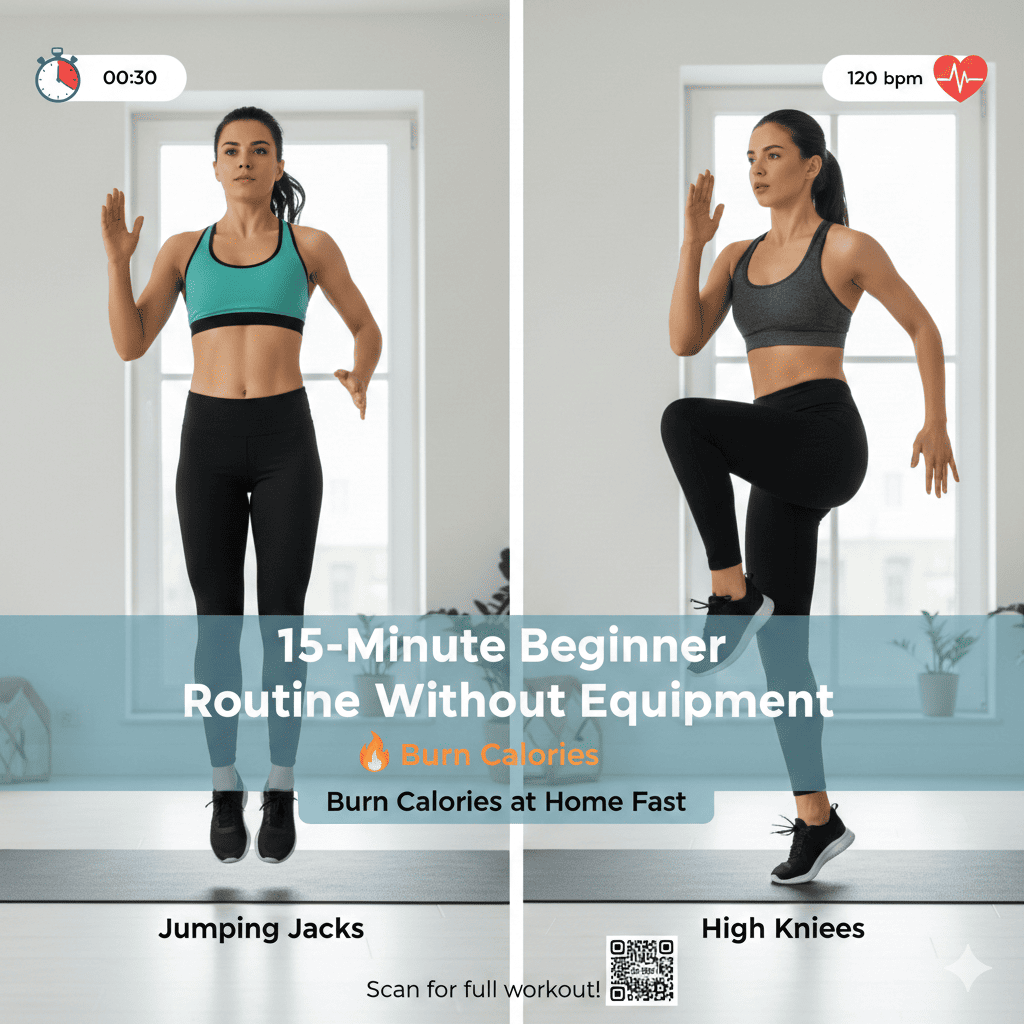
Finding time to exercise can feel impossible in our busy lives, and the thought of expensive gym memberships or complicated equipment often stops people before they even start. But what if you could get an effective, calorie-burning workout in just 15 minutes, right in your living room, with absolutely no equipment required? That’s exactly what this beginner cardio routine without equipment delivers—a complete cardiovascular workout designed specifically for people who are new to exercise or returning after time away.
This routine eliminates every common excuse: no time, no equipment, no gym membership, no experience needed. In just a quarter hour, you’ll elevate your heart rate, burn significant calories, improve your cardiovascular fitness, and boost your energy levels for the entire day. Whether you’re looking to lose weight, improve your health, or simply feel more energetic, this accessible routine provides the perfect starting point for your fitness journey.
Understanding Cardio Exercise for Beginners
Before jumping into your beginner cardio routine without equipment, it’s important to understand what cardiovascular exercise is, why it matters, and what makes a workout appropriate for beginners.
What Cardiovascular Exercise Does
Cardiovascular exercise, often called cardio or aerobic exercise, is any activity that elevates your heart rate and keeps it elevated for an extended period. During cardio, your heart pumps faster, circulating oxygen-rich blood throughout your body. Your lungs work harder to bring in oxygen and expel carbon dioxide. Your muscles demand more fuel, causing your body to burn calories from stored fat and carbohydrates. This sustained elevated heart rate strengthens your cardiovascular system over time.
Benefits of Regular Cardio
Consistent cardio exercise burns significant calories, supporting weight loss or maintenance. It strengthens your heart muscle, making it more efficient at pumping blood. Regular cardio lowers blood pressure and improves cholesterol profiles. It enhances lung capacity and respiratory efficiency. Cardio releases endorphins, improving mood and reducing stress and anxiety. It improves sleep quality and increases overall energy levels. Perhaps most importantly, regular cardiovascular exercise significantly reduces your risk of heart disease, diabetes, and many other chronic conditions.
Why Equipment-Free Cardio Works
Bodyweight cardio exercises can be just as effective as equipment-based workouts when structured properly. They engage multiple muscle groups simultaneously, burning maximum calories. Equipment-free routines remove all barriers to consistency—no excuses about gym access or broken machines. You can perform this beginner cardio routine without equipment anywhere: home, hotel room, park, or backyard. The simplicity ensures you’ll actually do it, and consistency matters far more than workout complexity.
What Makes a Workout Beginner-Appropriate
True beginner workouts prioritize proper form over intensity. They include built-in rest periods to prevent exhaustion and discouragement. Beginner routines offer modifications for different fitness levels. They gradually build cardiovascular capacity rather than demanding immediate high performance. Most importantly, beginner workouts should feel challenging but achievable, leaving you tired but energized rather than completely depleted.
1. Dynamic Warm-Up: Preparing Your Body
Never skip the warm-up, especially as a beginner. These initial movements prepare your cardiovascular system, warm your muscles, and reduce injury risk. This two-minute warm-up sequence starts your beginner cardio routine without equipment safely and effectively.
March in Place
Stand with feet hip-width apart and begin marching in place, lifting your knees to comfortable height. Swing your arms naturally in opposition to your legs—right arm forward as left knee lifts. Start slowly and gradually increase your pace over 30 seconds. This simple movement raises your heart rate gradually while warming your hip flexors, glutes, and shoulders. Focus on standing tall with engaged core rather than leaning forward.
Arm Circles and Shoulder Rolls
Continue marching while adding arm movements. Extend both arms out to your sides at shoulder height. Make small circles forward for 15 seconds, then reverse direction for 15 seconds. Drop your arms and perform shoulder rolls: lift shoulders toward ears, roll them back and down in a circular motion. Complete 8-10 rolls. These movements warm your shoulder joints and upper back while your legs continue moving.
Standing Torso Twists
Slow your march to a gentle step-touch movement: step right, tap left foot beside it, step left, tap right foot beside it. As you step, rotate your torso gently from side to side, letting your arms swing naturally. Keep your hips facing forward—the rotation comes from your mid-back. Perform for 30 seconds. This mobilizes your spine and further increases body temperature.
High Knee Marches
For the final 30 seconds of warm-up, increase your marching intensity by lifting knees higher, aiming to bring them to hip height if possible. Pump your arms more vigorously. Breathe deeply and deliberately. You should feel your heart rate increase and body temperature rise. This bridges the gap between your warm-up and the main workout, preparing you for higher intensity movement.
2. Marching with Arm Raises: Building Foundation
The first exercise in your beginner cardio routine without equipment main workout is a modified march that adds arm movement, increasing calorie burn while remaining accessible to true beginners.
Exercise Setup and Execution
Stand tall with core engaged and shoulders back. March in place, lifting your knees to a comfortable height—you don’t need to bring them to hip level. As your right knee lifts, raise both arms straight overhead. Lower your arms as you lower your leg. As your left knee lifts, raise both arms overhead again. Continue this pattern, creating a smooth rhythm between leg and arm movements.
Maintaining Proper Form
Keep your chest lifted and avoid hunching forward. Land softly on each foot rather than pounding down. Breathe regularly—don’t hold your breath. Engage your core throughout by imagining pulling your navel toward your spine. If raising both arms overhead is too tiring, alternate single arms, or raise arms only to shoulder height. The goal is sustained movement, not maximum intensity.
Duration and Intensity
Perform this movement for 60 seconds. Find a pace you can maintain for the entire minute without stopping. If you need to slow down toward the end, that’s fine—just keep moving. This exercise should elevate your heart rate noticeably but shouldn’t leave you gasping for air. You should be able to carry on a conversation, though you might prefer not to.
Transitioning to Rest
After 60 seconds, transition immediately to a 30-second active rest: slow your march to a gentle walk in place. Shake out your arms. Take deep breaths. Don’t sit down or stop moving completely. This active rest keeps your heart rate somewhat elevated while allowing partial recovery before the next exercise.
3. Step-Touch with Reach: Lateral Movement
Adding lateral (side-to-side) movement patterns increases coordination and works different muscle groups. This exercise continues building your cardiovascular fitness in your beginner cardio routine without equipment.
Step-Touch Technique
Step your right foot to the right, about hip-width distance. Bring your left foot to meet it, tapping the ground beside your right foot. As you tap, reach both arms diagonally up and to the right above your head. Immediately step left with your left foot. Bring your right foot to meet it, tapping beside your left foot, while reaching arms diagonally up and to the left. Continue this pattern, creating a smooth side-to-side rhythm.
Form and Breathing Cues
Keep your steps controlled—don’t jump or hop. Land on your entire foot rather than just your toes. Reach fully with your arms, engaging your core to support the reaching motion. Maintain upright posture rather than leaning toward your reaching side. Breathe naturally with the rhythm: exhale on the reach, inhale as you bring your foot together. This breathing pattern helps sustain your energy.
Modifications for Different Levels
If reaching overhead is too tiring, simply extend arms to shoulder height. For less intensity, keep your hands on your hips and focus on the stepping pattern. For more challenge, add a slight knee lift instead of a tap when bringing your feet together. Or increase your pace slightly while maintaining control and form.
Work and Rest Intervals
Perform step-touch with reach for 60 seconds. Focus on steady rhythm rather than speed. After 60 seconds, take 30 seconds of active rest: march gently in place, letting your arms hang or swing naturally. Use this rest to assess how you’re feeling. Are you breathing hard but recovering? That’s perfect. If you’re completely winded, you’ll want to reduce intensity in the next exercise.
4. Standing Knee Lifts: Increasing Intensity
Knee lifts elevate the intensity while remaining low-impact, making them ideal for your beginner cardio routine without equipment. This exercise targets your core and hip flexors while raising your heart rate further.
Proper Knee Lift Form
Stand with feet hip-width apart and hands behind your head, elbows wide. This arm position increases the challenge and prevents you from using arm momentum. Engage your core by bracing your midsection as if someone might poke your stomach. Lift your right knee toward your chest, bringing it as high as comfortable—ideally to hip height or higher. Lower it with control and immediately lift your left knee.
Creating Efficient Movement
Don’t lean back as you lift your knee—maintain upright torso position. Pull your knee up using your hip flexors and core rather than swinging your leg. Keep your supporting leg slightly bent, not locked straight. Press firmly through your standing foot to maintain balance. Land each lowering foot softly and controlled. The movement should feel deliberate rather than frantic.
Breathing and Rhythm
Establish a steady rhythm: lift, lower, lift, lower. Breathe naturally—many people find exhaling as they lift the knee works well. Don’t hold your breath or you’ll fatigue much faster. If you need to slow down to maintain form, do so. Poor form at high speed provides less benefit than good form at moderate speed.
Intensity and Duration
Perform knee lifts for 60 seconds. This exercise is more demanding than the previous two, so expect to feel significantly more challenged. Your heart rate should be noticeably elevated. If you absolutely must stop, march in place briefly, then resume knee lifts. After 60 seconds, take your 30-second active rest: slow march with arms at sides, breathing deeply to recover.
5. Toe Taps: Fun and Effective Movement
Toe taps add variety while continuing to build cardiovascular endurance. This playful exercise keeps your beginner cardio routine without equipment engaging and effective.
Basic Toe Tap Setup
You’ll need a low, stable surface: bottom stair step, sturdy low stool, or stack of books about 4-6 inches high. If nothing is available, simply tap your toe on the ground in front of you. Stand facing your platform with feet together. Place your right foot on the platform, then quickly switch: bring your right foot down as your left foot taps the platform. Continue alternating in a steady rhythm.
Movement Mechanics
The tap should be quick and light—you’re not stepping up onto the platform, just touching it briefly with your toe. Keep your weight centered over your supporting leg. Swing your arms naturally in opposition to your legs, or keep hands on hips if arm movement feels awkward. Maintain upright posture with chest lifted. Land softly on each foot as it returns to the ground.
Finding Your Rhythm
Start at a pace you can maintain, then gradually increase speed as you become comfortable with the pattern. The faster you tap, the higher your heart rate climbs, but control and consistency matter more than speed. If you find yourself stumbling or losing balance, slow down. Think “quick and light” rather than “hard and fast.”
Work Period and Recovery
Perform toe taps for 60 seconds. This exercise often feels easier on your legs than knee lifts but still elevates your heart rate effectively. The rhythmic nature makes time pass quickly. After 60 seconds, transition to your 30-second active rest. By now you should be noticing the pattern: each work interval challenges you, each rest interval helps you recover.
6. Side Steps with Arms: Cardio and Coordination
Combining lateral movement with arm coordination creates an engaging exercise that keeps your beginner cardio routine without equipment interesting while delivering cardiovascular benefits.
Side Step Pattern
Stand with feet together and arms at your sides. Step your right foot wide to the right, about twice shoulder-width. As you step right, raise your arms out to your sides at shoulder height. Bring your left foot to meet your right as you lower your arms. Immediately step your left foot wide to the left while raising your arms. Bring your right foot to meet your left as you lower your arms. Continue this pattern: step wide, feet together, step wide, feet together.
Coordination and Control
The arm and leg movements should be synchronized: arms rise as you step wide, arms lower as feet come together. Keep your knees soft and bent throughout, never locking them straight. Maintain a slight squat position as you move—this increases leg engagement and calorie burn. Land with your entire foot rather than just toes or heels. Keep your core engaged to support the lateral movement.
Posture and Alignment
Avoid leaning your torso from side to side as you step. Your upper body should remain relatively vertical while your legs do the stepping. Keep your shoulders down and back, not hunched toward your ears. Look straight ahead rather than down at your feet. This upright posture ensures proper muscle engagement and prevents neck and shoulder tension.
Timing and Rest
Perform side steps with arms for 60 seconds. Find a rhythm that feels sustainable—you’re in the middle of your workout, so pace yourself. Some people enjoy adding a little bounce to this movement, which is fine if it feels natural. After 60 seconds, take your 30-second active rest. You’re now about halfway through your routine. Notice how you’re feeling: energized, challenged, but capable of continuing.
7. Modified Jumping Jacks: Classic Cardio Move
Jumping jacks are a cardio staple, but the beginner modification makes them accessible while still effective in your beginner cardio routine without equipment. This version eliminates the jump, reducing impact while maintaining cardiovascular challenge.
Low-Impact Jack Technique
Stand with feet together and arms at your sides. Step your right foot out to the right while simultaneously raising your arms overhead. Bring your right foot back to center while lowering your arms. Immediately step your left foot out to the left while raising your arms overhead again. Bring your left foot back to center while lowering your arms. This creates the same movement pattern as a traditional jumping jack but without the jump.
Maintaining Intensity Without Impact
Move with intention and purpose—don’t just lazily step side to side. The faster you perform the movement, the higher your heart rate climbs. Fully extend your arms overhead on each repetition. Add a slight bounce or hop if you’re feeling comfortable and your joints feel fine. Land softly if you add any hopping element. The goal is maintaining elevated heart rate without joint stress.
Arm Variations
If reaching overhead repeatedly becomes tiring, try these variations: bring arms only to shoulder height instead of overhead; clap hands in front of your chest instead of overhead; or alternate single arms overhead if both arms together is too much. These modifications allow you to keep moving even as fatigue sets in.
Duration and Recovery
Perform modified jumping jacks for 60 seconds. This familiar movement often feels encouraging because most people remember doing jumping jacks in childhood. Push yourself to maintain steady pace throughout. After 60 seconds, transition to your 30-second active rest. Walk in place, shake out your legs and arms, and prepare mentally for the final exercises.
8. Butt Kickers: Posterior Chain Activation
Butt kickers work the backs of your legs while maintaining cardiovascular intensity. This exercise adds variety to your beginner cardio routine without equipment while targeting often-neglected muscles.
Butt Kicker Form
Stand with feet hip-width apart. Begin jogging in place, but instead of lifting your knees forward, kick your heels back toward your glutes. Your knees should point toward the floor as your heels come up behind you. The goal is to lightly tap or come close to tapping your glutes with your heels. Pump your arms naturally as you would while running.
Proper Execution
Keep your thighs relatively vertical—don’t let your knees drift forward. The movement comes from bending your knees and engaging your hamstrings. Land on the balls of your feet with soft, quiet steps. Maintain upright posture with chest lifted and core engaged. Don’t lean forward excessively. If you can’t kick your heels all the way to your glutes, kick as high as comfortable—you’ll improve with practice.
Finding Your Pace
Start at a moderate pace and increase speed as you become comfortable with the movement. The faster you kick, the higher your heart rate climbs. However, control and form matter more than speed. If you start feeling sloppy or losing balance, slow down slightly. Quality repetitions provide more benefit than high-speed poor form.
Work Interval
Perform butt kickers for 60 seconds. This exercise often makes people’s heart rate spike significantly, so don’t be surprised if you’re breathing hard. That’s the point—you’re building cardiovascular capacity. If you need to slow to a march for a few seconds before resuming, that’s acceptable. After 60 seconds, take your 30-second active rest, walking slowly and breathing deeply.
9. High Knees: Peak Intensity Exercise
High knees represent the highest intensity exercise in your beginner cardio routine without equipment. This movement maximizes calorie burn and cardiovascular challenge while remaining accessible with proper modification.
High Knee Technique
Stand tall with core engaged. Drive your right knee up toward your chest, bringing it to hip height or higher if possible. As soon as your right foot touches down, immediately drive your left knee up. Continue alternating, creating a running-in-place motion but with exaggerated knee lift. Pump your arms vigorously in opposition to your legs—right arm forward as left knee lifts.
Intensity Management
High knees are demanding. Start at a pace you can maintain for the full interval. Don’t sprint from the first second or you’ll exhaust yourself. Gradually increase your pace if you feel good. If you need to reduce intensity, lower how high you lift your knees—knee lifts to mid-thigh height still provide excellent cardiovascular benefits. Focus on continuous movement rather than maximum height.
Breathing Strategy
By this point in your workout, breathing becomes critical. Take deep breaths to fuel your working muscles. Some people count breaths: breathe in for two knee lifts, breathe out for two knee lifts. Others breathe more naturally. Find what works for you, but never hold your breath. If you start feeling dizzy, slow down immediately and focus on breathing.
Final Push
Perform high knees for 60 seconds. This is your final main exercise—you can do anything for 60 seconds. Push yourself while maintaining form and control. You should feel significantly challenged, breathing hard, and ready for a break. After 60 seconds, transition to your 30-second active rest. Walk slowly, hands on hips or overhead to open your chest, breathing deeply.
10. Cool Down and Stretch: Essential Recovery
Never skip the cool-down. These final minutes allow your heart rate to gradually return to normal while beginning the recovery process. The cool-down completes your beginner cardio routine without equipment safely and effectively.
Gradual Heart Rate Reduction
For two minutes, perform very slow, easy marching in place or walking. Start at whatever pace you finished your workout, then gradually slow down until you’re moving at a very relaxed pace. Breathe deeply and deliberately. Let your arms hang loosely or swing gently. This gradual reduction prevents blood pooling in your legs and reduces post-workout dizziness risk.
Standing Quad Stretch
After your easy march, perform a standing quad stretch on each leg. Stand on your left leg, bend your right knee, and grasp your right ankle behind you. Gently pull your heel toward your glute, feeling a stretch down the front of your thigh. Keep your knees together and stand tall. Hold 20-30 seconds, then switch legs. This stretches muscles that worked hard during your knee lifts and high knees.
Standing Hamstring Stretch
Place your right heel on a low step or chair, keeping your leg relatively straight. Hinge forward from your hips, reaching toward your elevated foot until you feel a stretch down the back of your thigh. Keep your back straight rather than rounding your spine. Hold 20-30 seconds, then switch legs. This releases your hamstrings after all the leg work.
Shoulder and Chest Stretch
Clasp your hands behind your back, straighten your arms, and gently lift your hands away from your body, opening your chest and shoulders. Hold for 20-30 seconds. This counteracts the forward shoulder position many people hold during cardio exercise. Take several deep breaths, feeling your workout complete. You’ve just finished 15 minutes of effective cardiovascular exercise.
Structuring Your Cardio Workout Schedule
Knowing how to properly implement your beginner cardio routine without equipment into your weekly schedule ensures maximum benefits while preventing overtraining and burnout.
Ideal Weekly Frequency
Beginners should perform this routine 3-4 times per week initially. This frequency provides adequate stimulus for cardiovascular improvement while allowing sufficient recovery. Schedule workouts on non-consecutive days when possible: Monday, Wednesday, Friday, for example. As your fitness improves over several weeks, you can increase to 5-6 times weekly if desired.
Best Times of Day
Morning workouts energize you for the day ahead and ensure they don’t get pushed aside by daily responsibilities. Lunchtime routines break up sedentary workdays and prevent afternoon energy slumps. Evening workouts release accumulated stress, though some people find them interfering with sleep. The best time is whenever you’ll actually do the workout consistently.
Progressive Overload for Beginners
Start with the exact routine as written for at least two weeks. Once it feels manageable, progress by increasing your pace during work intervals while maintaining the same 60-second duration. After another two weeks, reduce rest intervals from 30 seconds to 20 seconds. Eventually, you might repeat the entire circuit twice for a 30-minute workout. Progress gradually—dramatic increases often lead to injury or burnout.
Combining with Other Exercise
This cardio routine pairs well with strength training on alternate days. You might perform this beginner cardio routine without equipment on Monday, Wednesday, and Friday, then do bodyweight strength training on Tuesday and Thursday. Include at least one full rest day weekly. Gentle activities like walking or stretching on rest days are fine, but allow your body proper recovery time.
Nutrition Timing for Cardio Workouts
What you eat and when significantly impacts your workout performance and results. Understanding basic nutrition timing helps you maximize your beginner cardio routine without equipment effectiveness.
Pre-Workout Nutrition
For a 15-minute routine, you don’t need elaborate pre-workout nutrition. If exercising first thing in the morning, many people perform fasted cardio without issue. If you prefer eating first, keep it light: a banana, small handful of nuts, or half a protein bar consumed 30-60 minutes before exercise. Avoid heavy meals within two hours of your workout, which can cause cramping or sluggishness.
Hydration Strategies
Drink 8-16 ounces of water 30 minutes before your workout. Keep water nearby during exercise, taking small sips during active rest periods if needed. Drink another 8-16 ounces within 30 minutes of completing your routine. Proper hydration significantly improves performance and recovery. Dehydration causes early fatigue and reduces workout quality.
Post-Workout Recovery Nutrition
After completing your routine, consume a balanced meal or snack within 1-2 hours. Include protein to support muscle recovery and carbohydrates to replenish energy stores. This might be scrambled eggs with toast, Greek yogurt with fruit, or a balanced meal if your workout coincides with regular meal time. Proper post-workout nutrition supports recovery and helps you feel energized rather than depleted.
Overall Dietary Considerations
No workout routine can overcome consistently poor nutrition. Focus on whole, minimally processed foods most of the time. Include adequate protein, complex carbohydrates, healthy fats, and plenty of vegetables. Stay hydrated throughout the day. If weight loss is your goal, create a modest calorie deficit through both diet and exercise. Extreme restriction undermines your workout performance and recovery.
Common Beginner Mistakes and Solutions
Understanding common pitfalls helps you implement your beginner cardio routine without equipment more effectively and avoid frustration or injury.
Starting Too Intensely
The most common mistake is attempting advanced intensity from day one. New exercisers often push themselves to exhaustion in their first workout, then feel so sore and discouraged they quit. Solution: Start conservatively. It should feel somewhat easy initially. Your goal is establishing the habit of regular exercise. Intensity can increase gradually over weeks and months.
Inconsistent Practice
Doing one great workout, then nothing for a week, then two workouts in one day creates no progress. Solution: Consistency matters far more than perfection. Three moderate workouts weekly produces better results than occasional intense sessions. Schedule workouts like important appointments. Even if you can only manage 10 minutes instead of 15, doing something beats doing nothing.
Poor Form and Technique
Rushing through movements with sloppy form reduces effectiveness and increases injury risk. Solution: Quality over quantity always. Perform each exercise with proper form even if it means moving slower. Watch yourself in a mirror initially to check your posture and alignment. Consider recording your workout to review your form.
Neglecting Recovery
Exercise breaks down your body; recovery builds it back stronger. Skipping rest days or ignoring sleep and nutrition undermines your progress. Solution: Include at least one complete rest day weekly. Prioritize 7-9 hours of sleep nightly. Stay hydrated and eat adequately. Listen to your body—persistent unusual soreness or extreme fatigue signals inadequate recovery.
Tracking Progress and Staying Motivated
Maintaining motivation requires more than willpower. Implementing concrete tracking methods and motivation strategies helps you stick with your beginner cardio routine without equipment long-term.
Measuring Fitness Improvements
Take your resting heart rate first thing in the morning before getting out of bed. As your fitness improves, your resting heart rate decreases, indicating better cardiovascular efficiency. Track how quickly your heart rate recovers after your workout—faster recovery indicates improving fitness. Notice how the routine feels—exercises that seemed impossible initially become manageable, then easy.
Non-Scale Victory Tracking
Weight alone doesn’t tell the full story. Track how your clothes fit—losing inches often happens before pounds drop. Notice energy levels throughout your day—regular cardio typically increases overall energy. Monitor sleep quality, which often improves with regular exercise. Pay attention to mood and stress levels—cardio significantly impacts mental health.
Creating Accountability Systems
Share your commitment with friends or family who can encourage you. Join online fitness communities for beginners. Use a habit tracking app to mark each completed workout. Consider finding a workout buddy, even if you exercise virtually together. Schedule workouts in your calendar and treat them as non-negotiable appointments. These systems dramatically increase adherence.
Celebrating Milestones
Acknowledge completing your first week, then your first month. Celebrate when exercises that felt hard become manageable. Reward yourself (with non-food treats) for consistency milestones. Take progress photos monthly—visual changes often appear before you notice them in the mirror. These celebrations reinforce positive behavior and maintain motivation during plateaus.
Modifying for Physical Limitations
Physical limitations shouldn’t prevent you from benefiting from a beginner cardio routine without equipment. Strategic modifications make cardio accessible for virtually everyone.
Joint Pain or Arthritis
Reduce range of motion in any movement causing discomfort. Slow down your pace—lower intensity with longer duration produces similar cardiovascular benefits. Skip jumping or hopping elements entirely, focusing on stepping movements. Consider performing exercises in water if access to a pool is available—water’s buoyancy dramatically reduces joint stress.
Balance Issues
Perform all exercises near a wall or sturdy furniture for support. Widen your stance during standing movements for increased stability. Reduce the speed of movements to maintain better control. Consider chair-based alternatives: marching while seated, seated arm raises, seated knee lifts. Balance improves with practice, so limitations often decrease over time.
Pregnancy Considerations
Pregnant women can safely perform cardiovascular exercise with proper modifications. Avoid exercises involving lying on your back after the first trimester. Reduce intensity—you should be able to carry on a conversation throughout. Stay well hydrated and avoid overheating. Stop immediately if you experience dizziness, unusual shortness of breath, or any concerning symptoms. Always consult your healthcare provider before starting or modifying exercise programs during pregnancy.
Returning After Injury or Illness
Start more conservatively than you think necessary. Perform the warm-up and first few exercises only, stopping before fatigue. Gradually add exercises and duration over several weeks. Listen to your body carefully—some discomfort is normal, but pain signals a problem. Work with your physical therapist or doctor to ensure your routine aligns with your recovery needs.
Building Long-Term Fitness Habits
The ultimate goal isn’t just completing this beginner cardio routine without equipment a few times—it’s building lasting habits that improve your health for years to come.
Creating Environmental Cues
Lay out workout clothes the night before morning sessions. Keep a yoga mat visible in your exercise space. Set phone alarms or calendar notifications for workout times. Create a dedicated workout playlist that signals it’s exercise time. These environmental cues trigger automatic habit responses, making consistency easier.
Habit Stacking Strategies
Attach your workout to an existing habit: exercise immediately after your morning coffee, during your lunch break, or before dinner. This association strengthens the new habit by linking it to an established routine. Over time, the preceding habit automatically triggers the thought of exercising.
Overcoming Mental Resistance
On days you don’t feel like exercising, commit to just the warm-up. Often, starting is the hardest part—once you’re moving, you’ll complete the workout. Remember that you’ve never regretted a workout after completing it. Focus on how you’ll feel after exercising, not how you feel before. Even imperfect workouts maintain your habit streak and momentum.
Evolving Your Routine
After several months, you might want more variety or challenge. Learn new exercises to substitute into your routine. Try different workout structures: Tabata intervals, AMRAP (as many rounds as possible), or EMOM (every minute on the minute) formats. Consider progressing to intermediate programs. The foundation you’re building now supports unlimited future fitness possibilities.
Conclusion: Your Cardio Journey Starts Now
This beginner cardio routine without equipment removes every barrier between you and improved cardiovascular health. No expensive equipment, no gym membership, no complicated movements, and just 15 minutes of your time. You now have a complete, structured routine that builds cardiovascular fitness progressively while remaining accessible for true beginners.
The routine’s structure is intentional: dynamic warm-up prepares your body, progressive exercises build intensity gradually, strategic rest periods prevent overwhelming fatigue, and proper cool-down ensures safe recovery. Each exercise was selected for its effectiveness, safety, and scalability. You can perform this exact routine for weeks or months while steadily building fitness.
Starting a new exercise habit feels daunting, but remember that every fit person you know started exactly where you are now. The difference between them and others isn’t genetics or natural ability—it’s simply that they started and persisted through the awkward beginning phase. Fifteen minutes represents less than 2% of your waking hours. You absolutely have time for this investment in your health.
Your first workout won’t be perfect. You might struggle with coordination, feel out of breath quickly, or need more rest than prescribed. That’s completely normal and expected. Each workout will feel slightly easier than the last. Within two weeks, you’ll notice significant improvements. Within a month, exercises that seemed impossible will feel manageable. Within three months, you’ll be amazed at your transformation.
The journey to better health doesn’t require dramatic life overhauls or extreme commitments. It starts with one simple decision to take action on what you’ve learned here. Your beginner cardio routine without equipment awaits—no more excuses, no more delays. Close this article, clear a small space in your home, and complete your first 15-minute workout right now. Your stronger, healthier, more energetic future self will thank you for starting today.
Also read this:
How to Build Core Strength With Simple Daily Moves — Beginner Guide to a Stronger Core
10 Best Low-Impact Workouts for Joint Pain Relief — Safe Exercises for All Ages
How to Stay Fit With a Busy Schedule: Daily 10-Minute Routine That Actually Works