
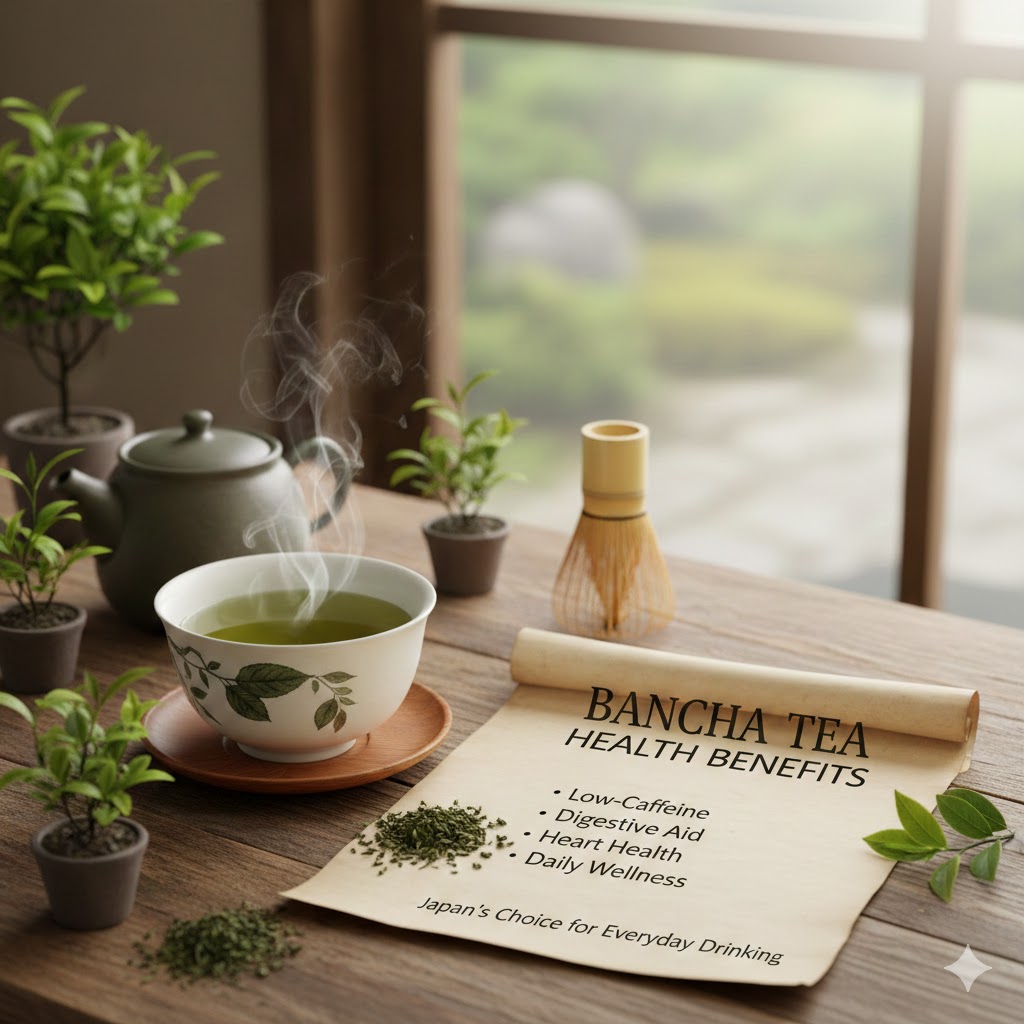
Not every tea is meant to energize. Some are meant to support balance, digestion, and everyday wellness—without overstimulation. That’s exactly where bancha tea fits in.
Long consumed in Japan as an everyday household tea, bancha is now gaining global attention as people search for gentler alternatives to green tea and coffee. The growing interest in Bancha Tea Health Benefits reflects a wider shift toward low-caffeine, gut-friendly, and routine-safe beverages.
This article explores what bancha tea is, why it’s different from other Japanese teas, and how it supports daily wellness without extremes.
1. What Is Bancha Tea?
Bancha is a traditional Japanese green tea made from mature tea leaves, harvested later in the season.
1.1 How Bancha Differs From Other Green Teas
- Made from older, larger leaves
- Harvested after sencha season
- Lower caffeine content
- Earthier, milder flavor
1.2 Why It’s Considered an “Everyday Tea”
In Japan, bancha is commonly consumed with meals and throughout the day, including evenings—something rarely done with high-caffeine teas.
This everyday use is central to discussions around Bancha Tea Health Benefits.
2. Why Bancha Is Naturally Low in Caffeine
Caffeine content depends on leaf age.
2.1 Leaf Maturity Matters
- Younger leaves = higher caffeine
- Older leaves = lower caffeine
- Bancha uses mature leaves by design
2.2 What This Means for the Body
- Less nervous system stimulation
- Reduced jitter or crash
- More suitable for daily, repeated consumption
This makes bancha appealing to people sensitive to caffeine or trying to reduce intake.
3. Mineral-Rich Profile From Mature Leaves
Older leaves absorb more from the soil.

3.1 Naturally Occurring Minerals
- Potassium
- Calcium
- Trace minerals common in leafy plants
3.2 Why Minerals Matter
Minerals support:
- Electrolyte balance
- Muscle and nerve function
- Overall metabolic stability
This mineral density is one reason Bancha Tea Health Benefits are often associated with grounding and balance rather than stimulation.
4. Digestive Comfort and Meal Pairing
Bancha is traditionally consumed with food, not between meals.
4.1 Why Bancha Is Easy on Digestion
- Lower tannin content than young green teas
- Mild flavor reduces stomach irritation
- Warm infusion supports digestive relaxation
4.2 Traditional Context
In Japanese households, bancha is often served after meals to support digestive comfort, not as a treatment, but as a gentle habit.
5. Gentle Antioxidant Support
Bancha still provides green tea benefits—just milder.
5.1 Antioxidants Without Intensity
- Contains polyphenols found in green tea
- Lower concentration than matcha or sencha
- Suitable for frequent consumption
5.2 Why “Mild” Can Be Better
High antioxidant doses aren’t always ideal for daily use. Bancha Tea Health Benefits align with consistency over intensity.
6. Blood Sugar & Energy Stability (Lifestyle Context)
Low-caffeine teas support steadier energy.
6.1 Why People Switch to Bancha
- Fewer energy spikes
- Less afternoon fatigue
- More stable focus
6.2 Lifestyle, Not Claims
Bancha isn’t a treatment—but replacing sugary or high-caffeine drinks with a mild tea often supports better daily energy balance.
7. Why Bancha Fits Evening & All-Day Drinking
Most teas don’t.
7.1 Evening-Friendly Qualities
- Low caffeine
- Warm and calming
- No strong stimulation
7.2 Habit-Based Wellness
Because it doesn’t interfere with sleep, bancha fits naturally into evening routines, making it ideal for people exploring Bancha Tea Health Benefits for daily use.
8. Bancha vs Sencha vs Matcha
Understanding the differences helps set expectations.
| Tea Type | Caffeine | Best Use |
|---|---|---|
| Matcha | High | Energy & focus |
| Sencha | Medium | Morning or midday |
| Bancha | Low | All-day & evening |
Bancha isn’t weaker—it’s designed for a different purpose.
9. Who Benefits Most From Bancha Tea
Bancha isn’t for everyone—but it fits many lifestyles.
9.1 Ideal For
- People reducing caffeine
- Those with sensitive digestion
- Daily tea drinkers
- Wellness minimalists
9.2 Less Ideal For
- People seeking strong stimulation
- Pre-workout energy needs
Understanding fit helps people appreciate Bancha Tea Health Benefits realistically.
10. Why Bancha Is Trending in Modern Wellness
The trend makes sense.
10.1 Wellness Is Shifting Toward
- Daily sustainability
- Nervous system balance
- Long-term habits
10.2 Why Bancha Fits Perfectly
- Traditional, not trendy
- Gentle, not extreme
- Affordable and accessible
Bancha matches where wellness culture is heading—not chasing peaks, but supporting balance.
FAQs: Bancha Tea Health Benefits
Is bancha tea caffeinated?
Yes, but significantly lower than most green teas.
Can bancha be consumed daily?
Traditionally, yes—often multiple times per day.
Is bancha the same as hojicha?
No. Hojicha is roasted; bancha is not.
Does bancha help with digestion?
Many people find it gentle and supportive as part of meal routines.
Is bancha good for people quitting coffee?
Yes, it’s often used as a step-down option.
Final Thoughts
Not every wellness habit needs to be powerful to be effective. Sometimes, the best support comes from quiet consistency. The growing interest in Bancha Tea Health Benefits reflects a return to everyday practices that prioritize balance over intensity.
Bancha doesn’t push the body.
It supports it—gently, repeatedly, and sustainably.
And in a world of overstimulation, that’s exactly why this humble Japanese tea is finding a global audience again.
More Related Topics:
Soursop Leaf Tea Benefits: Why This Tropical Tea Is Trending in Wellness
Pu-erh Tea Weight Loss Benefits Backed by Gut Health Science
Sitting Compression Health: How Chairs Damage Hips and Spine