
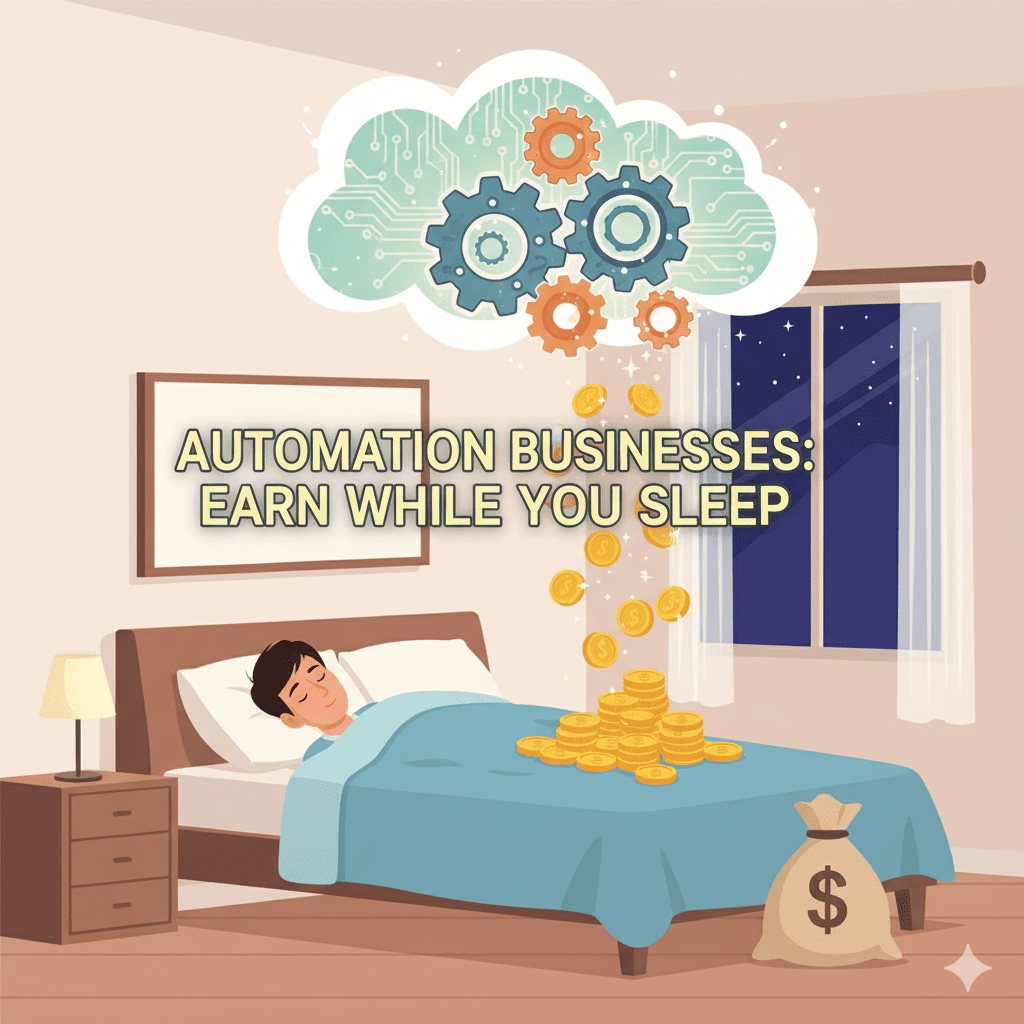
Have you ever dreamed of making money while you’re catching up on Netflix, spending time with family, or even sleeping? That’s exactly what automation businesses make possible. In today’s digital world, smart entrepreneurs are building income streams that work around the clock without their constant involvement.
Let me share how you can join them.
What Are Automation Businesses, Really?
Think of automation businesses as your digital employees. They’re business models that use technology, systems, and processes to generate revenue with minimal day-to-day involvement from you. Unlike traditional businesses where you trade hours for dollars, automation businesses work on your behalf 24/7.
The beauty? Once you set them up properly, they keep generating income whether you’re awake or asleep, working or on vacation.
Why Everyone’s Talking About Automation Businesses in 2025
I’ve watched the business landscape transform dramatically over the past few years. Here’s why automation businesses have become so popular:
Technology is more accessible than ever. Tools that once cost thousands now have free or affordable versions. AI, automated marketing platforms, and no-code solutions have leveled the playing field.
People value freedom over traditional jobs. The 9-to-5 grind doesn’t appeal to many anymore. We want flexibility, time with loved ones, and the ability to work from anywhere.
Passive income isn’t just a buzzword anymore. It’s a legitimate strategy that thousands of regular people are using to build financial security.
10 Profitable Automation Business Ideas You Can Start Today
1. Dropshipping Stores
Imagine running an online store without ever touching inventory. That’s dropshipping. You create an e-commerce site, market products, and when customers order, your supplier ships directly to them.
Why it works: Platforms like Shopify automate order processing, inventory management, and customer notifications. You focus on marketing and customer service.
Getting started: Choose a niche you’re passionate about, find reliable suppliers on platforms like AliExpress or Spocket, and set up automated email sequences for abandoned carts and follow-ups.
2. Print-on-Demand Businesses
Love design but hate inventory management? Print-on-demand lets you sell custom t-shirts, mugs, phone cases, and more without holding stock.
Why it works: Services like Printful integrate with your store and automatically fulfill orders. You upload designs, set prices, and the rest happens automatically.
Pro tip: Focus on specific niches (dog lovers, nurses, gamers) for better marketing results.
3. Digital Product Stores
This is my personal favorite among automation businesses. Create once, sell forever. Think ebooks, online courses, templates, presets, or printables.
Why it works: No inventory, no shipping, no manufacturing. Platforms like Gumroad, Teachable, or Etsy automate delivery instantly after purchase.
Real example: A mom I know created budget planning spreadsheets and now earns $3,000 monthly while homeschooling her kids.
4. Affiliate Marketing Websites
Build content-rich websites that review products or solve problems in specific niches. When visitors click your affiliate links and buy, you earn commissions.
Why it works: Once your content ranks on Google, it drives traffic automatically. Affiliate networks track sales and send payments without your involvement.
Best niches: Technology, finance, health and wellness, outdoor gear, or software tools.
5. YouTube Channels
Yes, YouTube can be an automated income stream! Create evergreen content that stays relevant for years.
Why it works: Videos you uploaded months or years ago continue earning ad revenue, affiliate commissions, and sponsorship opportunities.
Automation angle: Batch-create content, schedule uploads, use templates for editing, and repurpose content across platforms automatically.
6. Stock Photography and Video
If you’re creative, upload photos, videos, or music to stock platforms like Shutterstock, Adobe Stock, or Pond5.
Why it works: You upload once, and your content can sell thousands of times. Payments are automated.
Getting started: Focus on in-demand topics like business, technology, diversity, or seasonal content.
7. Software as a Service (SaaS)
Building a SaaS might sound intimidating, but no-code tools have made it accessible. Create simple tools that solve specific problems.
Why it works: Subscription-based revenue means predictable monthly income. Automated billing, onboarding, and customer support (via chatbots) keep it hands-off.
Examples: Social media schedulers, invoicing tools, project management apps, or niche calculators.
8. Automated Email Marketing Funnels
Build email lists in profitable niches and create automated sequences that nurture and sell.
Why it works: Once your funnel is built, new subscribers go through your sequence automatically, receiving helpful content mixed with product recommendations.
Key success factor: Provide genuine value. People can smell a sales pitch from miles away.
9. Membership Sites and Communities
Create exclusive content or communities where members pay monthly or yearly fees for access.
Why it works: Platforms like Patreon, Circle, or Memberful automate billing, content delivery, and access management.
Content ideas: Premium tutorials, industry insights, templates, accountability groups, or specialized training.
10. License Your Expertise
Package your knowledge into licenses that others can use. Think done-for-you courses, PLR (Private Label Rights) content, or business templates.
Why it works: Create once, license repeatedly. Automated delivery systems handle everything after purchase.
How to Build Your Automation Business the Right Way
Let me be honest with you. Automation businesses aren’t truly “set it and forget it” at first. They require upfront work. But once established, they run with minimal intervention.
Step 1: Choose Your Model Wisely
Don’t pick a business just because it sounds easy. Ask yourself:
- What skills do I already have?
- What problems can I solve?
- What genuinely interests me?
Your answers matter because you’ll need motivation during the setup phase.
Step 2: Invest in the Right Tools
Quality automation tools are worth every penny. Essential tools include:
Email marketing: ConvertKit, Mailchimp, or ActiveCampaign E-commerce: Shopify, WooCommerce, or BigCommerce Course platforms: Teachable, Kajabi, or Thinkific Payment processing: Stripe, PayPal Analytics: Google Analytics, Hotjar Social media scheduling: Buffer, Later, or Hootsuite
Step 3: Create Systems, Not Just Products
The difference between a job and an automation business is systems. Document everything:
- How you create content
- How you handle customer questions
- How you process orders
- How you market your business
This documentation lets you eventually hire virtual assistants or further automate without losing quality.
Step 4: Focus on Traffic Generation
The best automated system in the world fails without traffic. Master one or two traffic sources:
SEO: Create valuable content that ranks on Google (this blog post is an example!) Paid ads: Facebook, Instagram, Google Ads when you’ve validated your offer Social media: Build an engaged audience organically Email marketing: Your most valuable asset
Step 5: Test and Optimize Continuously
Use analytics to understand what’s working. A/B test your:
- Email subject lines
- Landing page copy
- Product prices
- Ad creatives
Small improvements compound into significant results over time.
Common Mistakes That Kill Automation Businesses
I’ve seen countless people fail at automation businesses not because their idea was bad, but because they made these mistakes:
Trying to automate everything immediately. Start manual, understand your process, then automate. You can’t automate chaos.
Choosing the wrong niche. “Everyone” is not your target market. Specific, passionate niches spend money and engage more.
Neglecting customer experience. Automation shouldn’t mean impersonal. Use it to enhance service, not replace human connection entirely.
Giving up too early. Most automation businesses take 6-12 months to gain real momentum. Overnight success is a myth.
Forgetting to maintain and update. Even automated businesses need occasional check-ins, updates, and improvements.
Real Success Stories That’ll Inspire You
Sarah’s Printable Business: Sarah, a teacher, created educational printables during summer break. She automated delivery through Etsy and now earns $4,500 monthly during the school year without active involvement.
Mike’s Niche Software: Mike built a simple invoicing tool for freelance photographers. With automated billing and customer onboarding, he serves 300+ subscribers generating $9,000 monthly recurring revenue.
Jenny’s Course Platform: Jenny recorded a course on Pinterest marketing once. Three years later, it still generates $6,000+ monthly through automated webinars and email sequences.
These aren’t celebrities or tech geniuses. They’re regular people who understood how automation businesses work and committed to building them.
Your Action Plan: Starting This Week
Don’t just read this and do nothing. Here’s your week-by-week plan:
Week 1: Choose your automation business model based on your skills and interests. Research successful examples in your chosen area.
Week 2: Set up your basic infrastructure (website, email list, payment processor). Keep it simple initially.
Week 3: Create your first product or offer. Don’t aim for perfection—aim for “good enough to launch.”
Week 4: Build your first automated funnel. One welcome email sequence is enough to start.
Month 2: Focus entirely on driving traffic and getting your first customers.
Month 3-6: Optimize based on feedback, add more automation as you identify repetitive tasks.
The Truth About Earning While You Sleep
Let me level with you. Automation businesses are incredible, but they’re not magic. The “earn while you sleep” promise is real, but it comes after you’ve put in the work while you’re awake.
You’ll spend nights building your systems. You’ll face technical challenges. You’ll question if it’s worth it. But if you persist, you’ll reach that magical moment when you wake up to sales notifications, course enrollments, or commission payments that happened while you were sleeping.
That moment? It’s absolutely worth it.
Ready to Build Your Automation Business?
The best time to start an automation business was five years ago. The second best time? Right now. Every day you wait is another day of potential passive income lost.
Start small, stay consistent, and remember that every successful automation entrepreneur started exactly where you are now—with zero automated income and lots of questions.
The difference between them and people who never succeed? They started.
What’s stopping you?
Also read this :
Most Profitable Remote Jobs (That Don’t Need a Degree)
The Copy-Paste Side Hustle That’s Quietly Making People Rich (And Why Nobody’s Talking About It)
Zero-Face Business: How Anonymous Brands Are Making Millions Without Showing Their Face