
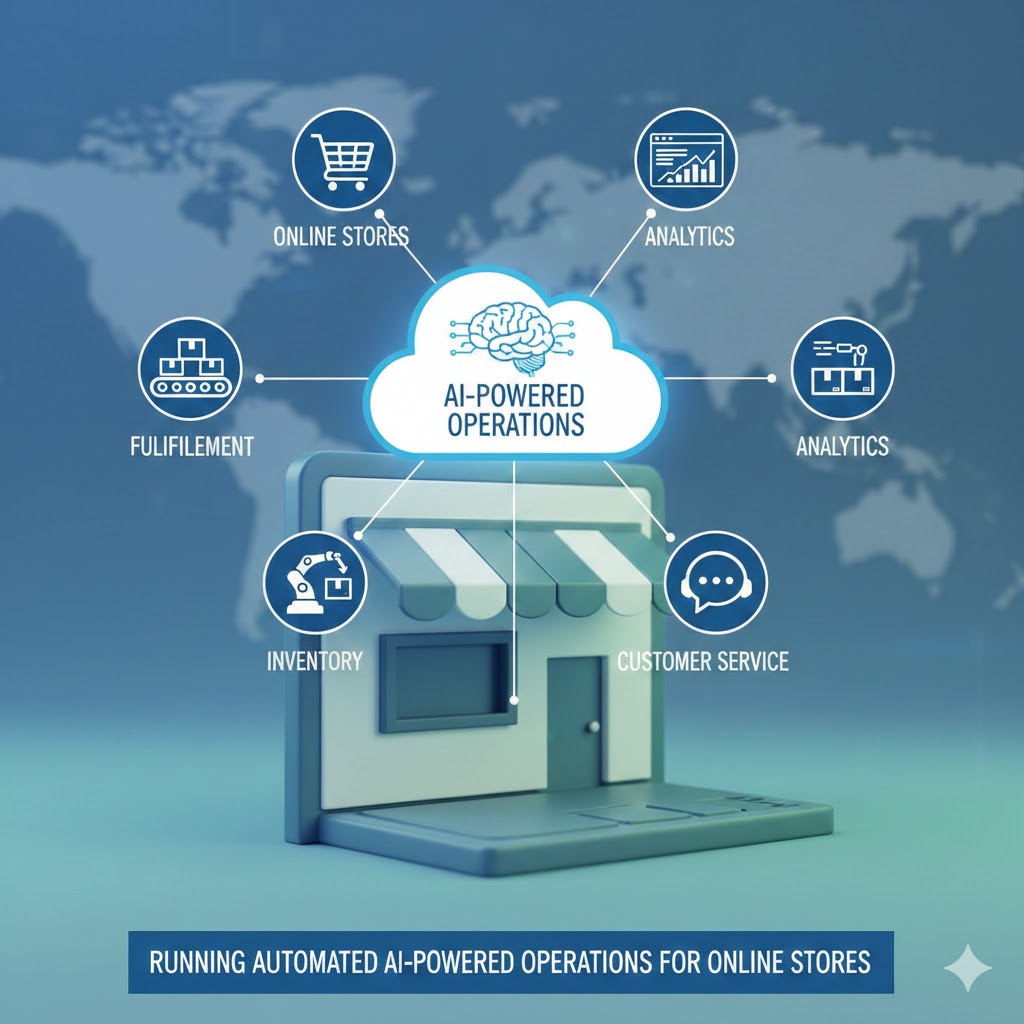
The e-commerce industry has exploded in recent years, with millions of online stores competing for customer attention and sales. Behind every successful online store lies a complex web of operational tasks that consume countless hours: managing inventory, processing customer inquiries, optimizing pricing, creating product descriptions, handling returns, and analyzing performance data. For store owners, these operational demands create an overwhelming burden that distracts from strategic growth.
This operational complexity creates an exceptional opportunity for service providers who can deliver automated AI-powered operations for online stores. E-commerce businesses are actively seeking solutions that handle routine operational tasks autonomously, allowing owners to focus on product sourcing, marketing strategy, and business expansion. They’re willing to pay substantial monthly fees for services that reduce operational overhead while improving efficiency and customer satisfaction.
Building a business around automated AI-powered operations for online stores offers predictable recurring revenue, high customer retention, and significant scalability potential. This comprehensive guide explores everything you need to know about creating, launching, and growing a profitable service delivering AI automation to e-commerce businesses.
Understanding the E-commerce Operations Challenge
Online store operations involve hundreds of repetitive tasks that occur daily, weekly, and monthly. Customer service inquiries arrive constantly requiring responses within hours. Inventory levels need monitoring across multiple suppliers and warehouses. Product listings require optimization for search engines and conversion. Prices should adjust based on competition and demand. Marketing campaigns need creation, execution, and analysis. Financial reconciliation demands attention to track profitability.
Most online store owners started their businesses to sell products they’re passionate about, not to become operations managers. They quickly discover that operational tasks consume 60-80% of their time, leaving minimal hours for strategic work that actually grows the business. Small mistakes in operations—overselling out-of-stock items, delayed customer responses, pricing errors, or missed reorder points—directly impact revenue and reputation.
Traditional solutions fall short of solving these challenges comprehensively. Hiring staff is expensive and introduces management overhead. Virtual assistants handle some tasks but lack consistency and require detailed instructions. Software tools automate individual functions but don’t integrate into cohesive operational systems. This gap creates the perfect market for automated AI-powered operations for online stores delivered as a fully managed service.
1. Core Automated Operations That Online Stores Need
Successful e-commerce automation requires understanding which operations deliver maximum value when automated with AI. Focus on high-impact areas that directly affect revenue, customer satisfaction, or operational costs.
Intelligent Inventory Management
Inventory represents one of the most critical and complex operational challenges for online stores. AI-powered inventory automation includes demand forecasting that predicts future sales based on historical patterns, seasonality, trends, and external factors. Automatic reorder point calculations ensure products stay in stock without tying up excess capital. Supplier performance monitoring tracks delivery times, quality issues, and pricing changes. Multi-channel inventory synchronization prevents overselling across marketplaces. Low stock alerts notify owners before stockouts occur. Effective inventory automation can reduce carrying costs by 20-30% while improving product availability.
Automated Customer Service Operations
Customer inquiries represent a massive time drain for online store owners. Automated AI-powered operations for online stores excel at handling common customer service tasks. Intelligent chatbots answer questions about order status, shipping times, product specifications, and return policies instantly. Email automation generates personalized responses to routine inquiries. Ticket routing directs complex issues to appropriate staff or departments. Sentiment analysis identifies frustrated customers requiring immediate attention. Review response automation acknowledges and addresses customer feedback. These capabilities can handle 60-80% of customer service volume autonomously.
Dynamic Pricing Optimization
Pricing strategy significantly impacts both sales volume and profitability, yet most online stores use static pricing or manual adjustments. AI-powered dynamic pricing monitors competitor prices across channels, analyzes demand elasticity for each product, adjusts prices based on inventory levels and age, implements time-based pricing for seasonal products, and tests price points systematically to maximize revenue. Sophisticated pricing automation can increase margins by 5-15% while maintaining competitive positioning.
Product Content Creation and Optimization
Creating and maintaining quality product listings consumes enormous time, especially for stores with hundreds or thousands of SKUs. Automated content operations include product description generation from specifications and features, SEO-optimized title and metadata creation, image enhancement and background removal, size guide generation for apparel, comparison chart creation for similar products, and content localization for international markets. Content automation accelerates listing creation while maintaining consistency and quality.
2. Building Your Automated Operations Service Platform
Delivering professional automated AI-powered operations for online stores requires assembling the right technology stack and operational frameworks.
E-commerce Platform Integration
Your automation must integrate seamlessly with major e-commerce platforms. Shopify powers millions of stores and offers robust APIs for automation. WooCommerce dominates the WordPress ecosystem requiring different integration approaches. BigCommerce, Magento, and Wix each have unique technical requirements. Amazon Seller Central, eBay, and Etsy require marketplace-specific integrations. Build integration libraries supporting major platforms to maximize addressable market while maintaining implementation efficiency.
AI Technology Stack Selection
Choose AI technologies balancing capability with implementation speed. Large language models from OpenAI, Anthropic, or Google power customer service and content creation. Machine learning frameworks like TensorFlow or PyTorch handle predictive analytics for inventory and pricing. Computer vision APIs process product images. No-code automation platforms like Zapier or Make.com connect systems quickly for simpler workflows. Custom development provides maximum capability for complex requirements. Most successful services use hybrid approaches.
Data Collection and Analytics Infrastructure
Effective automation requires comprehensive data collection and analysis. Centralized data warehouses consolidate information from e-commerce platforms, advertising accounts, email marketing systems, and customer service tools. Real-time data pipelines enable immediate responses to changing conditions. Historical data stores support trend analysis and forecasting. Analytics dashboards provide clients visibility into automated operations and business performance. Robust data infrastructure differentiates professional services from amateur offerings.
Monitoring and Control Systems
Automated operations require supervision to prevent errors from compounding. Implement monitoring systems tracking automation performance and error rates, alerting on anomalies requiring human review, providing manual override capabilities for special situations, logging all automated actions for audit trails, and generating regular reports on automation effectiveness. Proper monitoring builds client trust while preventing costly mistakes.
3. Service Packages and Pricing Strategy
How you structure and price automated AI-powered operations for online stores directly impacts customer acquisition, satisfaction, and lifetime value.
Tiered Service Offerings
Create multiple tiers serving different business sizes and needs. A starter tier might include basic customer service automation, inventory alerts, and monthly reporting for $497 monthly, targeting stores doing under $50,000 monthly revenue. A growth tier could add dynamic pricing, content optimization, and advanced analytics for $1,497 monthly, serving stores with $50,000-$250,000 monthly revenue. An enterprise tier offering comprehensive automation across all operations with dedicated support might command $3,997 or more, targeting stores exceeding $250,000 monthly.
Revenue-Based Pricing Models
Consider pricing tied to client store revenue rather than fixed fees. Charge a percentage of monthly sales such as 2-4% depending on services included. This approach aligns your success with client growth, making pricing feel more fair during lean months while capturing value during strong periods. Revenue-based pricing particularly appeals to seasonal businesses with fluctuating needs.
Module-Based Pricing Structure
Offer a la carte pricing for specific automation modules alongside package deals. Inventory automation might cost $297 monthly standalone. Customer service automation could be $497 monthly. Pricing optimization might command $397 monthly. Content automation could be $297 monthly. This flexibility serves clients wanting specific capabilities while creating upsell paths to comprehensive packages.
Implementation Fees and Onboarding
Charge separate implementation fees covering initial setup, integration, and configuration. Implementation fees typically range from $1,500 to $5,000 depending on store complexity and required customization. These fees compensate you for heavy upfront work while establishing perceived value. Monthly subscription fees then cover ongoing monitoring, optimization, and support.
4. Client Onboarding and Implementation Process
Successful implementations determine whether clients see value and continue paying for your automated AI-powered operations for online stores.
Discovery and Assessment Phase
Begin every engagement with thorough assessment of client operations. Review current monthly revenue and transaction volume. Audit existing operational workflows and pain points. Analyze platform configuration and installed apps. Document integration requirements with existing tools. Identify quick wins demonstrating value rapidly. Establish baseline metrics for measuring improvement. Comprehensive discovery ensures implementations address actual needs rather than assumed problems.
Integration and Configuration
Connect your automation platform systematically to avoid disruption. Integrate with e-commerce platforms using secure API connections. Connect customer service channels including email, chat, and social media. Link inventory management systems and supplier databases. Configure payment processing and financial tracking. Set up analytics tracking across all automation touchpoints. Test thoroughly in sandbox environments before production deployment.
Automation Training and Tuning
AI automation requires initial training on client-specific data and preferences. Train customer service models on historical support tickets and product information. Configure pricing algorithms with competitive intelligence and margin requirements. Set up inventory forecasting using historical sales data and seasonality patterns. Tune content generation to match brand voice and style. Initial training determines automation quality and effectiveness.
Staff Training and Change Management
Ensure client staff understand automated systems and their roles in the new operational model. Provide training on dashboards and monitoring tools. Explain escalation procedures when automation requires human intervention. Address concerns about automation replacing jobs by emphasizing augmentation rather than replacement. Document processes clearly with video tutorials and written guides. Successful change management ensures smooth adoption and reduces post-launch issues.
5. Delivering Ongoing Operational Excellence
After implementation, continuous operational management justifies monthly fees and builds long-term client relationships.
Proactive Performance Monitoring
Monitor automated operations continuously to catch issues before clients notice them. Track automation success rates and error frequencies daily. Review customer service response quality through random sampling. Monitor inventory forecasting accuracy against actual sales. Verify pricing changes remain within acceptable parameters. Check content quality for newly automated product listings. Proactive monitoring demonstrates professionalism and prevents small problems from becoming major issues.
Continuous Optimization and Improvement
Automated AI-powered operations for online stores should improve over time, not remain static. Retrain models with new data as stores accumulate more history. Refine automation rules based on performance data and feedback. Implement new capabilities as they become available. Optimize integration efficiency and processing speeds. Document improvements and communicate value to clients. Continuous improvement justifies ongoing fees while increasing customer satisfaction.
Strategic Reporting and Insights
Provide clients regular insights about their business beyond just automation performance. Generate monthly reports showing revenue impacts from pricing optimization, cost savings from operational automation, customer satisfaction improvements, and operational efficiency gains. Identify growth opportunities revealed by data analysis. Compare performance against industry benchmarks. Strategic reporting positions you as a business partner rather than just a technology vendor.
Responsive Support and Issue Resolution
Despite excellent automation, issues will occasionally occur. Provide responsive support when clients have questions or concerns. Investigate and resolve automation errors quickly. Adjust configurations when business requirements change. Add new products, suppliers, or channels as needed. Document resolutions to prevent recurrence. Excellent support builds trust and reduces churn.
6. Advanced Automation Capabilities That Command Premium Pricing
Basic automation becomes commoditized over time. Advanced capabilities differentiate your service and justify higher fees.
Predictive Analytics and Forecasting
Move beyond reactive automation to predictive capabilities. Forecast demand by product category and SKU for planning purposes. Predict customer lifetime value to optimize acquisition spending. Identify products likely to trend based on social media signals and search patterns. Anticipate seasonal peaks and inventory requirements. Forecast cash flow needs based on inventory commitments and expected sales. Predictive capabilities enable proactive decision-making that delivers exceptional value.
Multi-Channel Orchestration
Many online stores sell across multiple channels requiring coordinated automation. Synchronize inventory in real-time across website, Amazon, eBay, and social commerce. Implement unified pricing strategies accounting for marketplace fees and policies. Consolidate customer service from all channels into single queues. Aggregate performance analytics across platforms. Multi-channel orchestration reduces complexity while expanding revenue opportunities.
Personalization and Customer Segmentation
Generic automation works acceptably, but personalized automation delivers superior results. Segment customers based on behavior, purchase history, and preferences. Personalize product recommendations using collaborative filtering and AI. Customize email marketing based on customer interests and engagement. Adjust pricing for VIP customers or bulk purchasers. Personalization increases conversion rates and customer lifetime value significantly.
Automated Marketing Campaign Management
Extend automation beyond operations into marketing execution. Generate and schedule social media content automatically. Create and optimize email marketing campaigns based on customer segments. Design and launch retargeting ads for abandoned carts. Produce seasonal promotional content and landing pages. Test ad creative variations systematically. Marketing automation dramatically reduces time spent on promotional activities while improving results.
7. Industry-Specific E-commerce Automation Strategies
Different online store categories have unique operational requirements creating specialization opportunities.
Fashion and Apparel Automation
Fashion stores face distinctive challenges well-suited to specialized automation. Size recommendation systems reduce returns by helping customers choose correct sizing. Style matching algorithms suggest complementary products. Seasonal inventory management handles fashion’s rapid trend cycles. Dynamic markdown optimization clears seasonal inventory profitably. Virtual fitting room integration improves online shopping experiences. Fashion specialization commands premium pricing due to industry complexity.
Electronics and Technology Stores
Electronics retailers need automation addressing their specific operational needs. Technical specification extraction structures product data from manufacturer materials. Compatibility checking ensures recommended products work together. Price tracking monitors competitors across multiple retailers. Warranty and support automation handles post-purchase service. Product lifecycle management tracks discontinuation and replacement models. Technology category expertise enables superior automation results.
Health and Beauty E-commerce
Health and beauty stores require automation respecting regulatory requirements and safety considerations. Ingredient analysis and listing ensures compliance with regulations. Expiration date tracking prevents selling expired products. Subscription management automates recurring deliveries. Personalized recommendations based on skin type, concerns, or preferences. Review monitoring for adverse reaction reports. Specialized health and beauty automation addresses critical compliance needs.
Home Goods and Furniture Retail
Home goods stores face unique challenges including complex shipping logistics. Dimensional weight calculation ensures accurate shipping quotes. Assembly instruction automation generates helpful guides. Room visualization helps customers see products in context. Bulk shipping optimization consolidates orders. Damage claim processing automates return handling. Category specialization delivers better results than generic automation.
8. Scaling Your Automated Operations Service Business
Growing from initial clients to a substantial business requires strategic scaling across multiple dimensions.
Operational Efficiency and Leverage
Build systems enabling you to serve more clients without proportional cost increases. Standardize implementation processes with checklists and templates. Automate client onboarding and reporting. Create self-service portals for common client requests. Develop monitoring dashboards aggregating multiple client stores. Build knowledge bases documenting common issues and solutions. Operational leverage improves profitability as you scale.
Team Building and Organizational Structure
As you grow, define specialized roles maximizing productivity. Implementation specialists handle client onboarding and integration. AI engineers develop and refine automation algorithms. Account managers maintain client relationships and identify expansion opportunities. Support specialists handle day-to-day client inquiries. Sales professionals acquire new clients. Build your team systematically as revenue supports investment.
Technology Platform Development
Invest in platform capabilities that improve service delivery. Build unified dashboards showing all client metrics. Develop white-label reporting for professional client communication. Create alert systems flagging issues across your entire client base. Implement automated quality assurance testing. Platform investments create competitive moats while improving service quality.
Strategic Marketing and Lead Generation
Develop systematic approaches to client acquisition. Content marketing demonstrating e-commerce expertise attracts qualified leads. Case studies showing revenue improvements provide compelling proof. Speaking at e-commerce events and conferences builds authority. Strategic partnerships with Shopify experts, agencies, and suppliers create referral channels. Consistent marketing generates predictable new business.
9. Navigating Common E-commerce Automation Challenges
Every service provider faces challenges. Anticipating them prevents small issues from becoming serious problems.
Managing Platform Updates and Changes
E-commerce platforms regularly update features and APIs potentially breaking integrations. Monitor platform roadmaps and announcements proactively. Test automation thoroughly after platform updates. Maintain backup integration methods when possible. Communicate proactively with clients about necessary changes. Platform change management prevents service disruptions.
Balancing Automation with Human Judgment
Complete automation isn’t always desirable or appropriate. Certain decisions benefit from human review including high-value pricing changes, customer service escalations involving anger or confusion, inventory purchases exceeding normal order sizes, and marketing content about sensitive topics. Design automation with appropriate human checkpoints maintaining quality and safety.
Handling Seasonal Demand Fluctuations
Many e-commerce businesses experience dramatic seasonal variation creating operational challenges. Scale automation capacity during peak seasons like holidays. Adjust forecasting models accounting for seasonal patterns. Communicate proactively about capability during high-volume periods. Consider seasonal pricing adjustments reflecting increased support requirements. Proper seasonal planning prevents overwhelm during critical periods.
Data Privacy and Security Concerns
Automated AI-powered operations for online stores require access to sensitive business and customer data. Implement strong encryption for data transmission and storage. Comply with regulations including GDPR, CCPA, and PCI DSS where applicable. Maintain cyber liability insurance protecting against breaches. Conduct regular security audits. Provide clients transparency about data handling. Security excellence builds trust and differentiates professional services.
10. Building Long-Term Client Relationships and Maximizing Retention
Recurring revenue businesses succeed based on customer retention and account expansion. Focus on long-term client success ensures sustainable growth.
Quarterly Business Reviews
Conduct regular reviews presenting automation performance, business insights derived from data analysis, recommendations for operational improvements, new automation capabilities available, and competitive intelligence about e-commerce trends. Structured reviews demonstrate ongoing value while identifying expansion opportunities.
Continuous Feature Development
Regularly enhance your automated operations service with new capabilities. Add integrations with emerging platforms and tools. Implement new AI capabilities as technology improves. Expand automation coverage to additional operational areas. Communicate updates proactively showing clients benefit from ongoing development. Continuous innovation justifies ongoing fees while reducing competitive threats.
Community Building and Education
Create community among your clients fostering loyalty and reducing churn. Host monthly webinars sharing e-commerce best practices. Create private forums where clients exchange experiences. Publish regular newsletters with industry insights. Organize virtual or in-person events connecting clients. Community creates switching costs beyond just technology dependencies.
Account Expansion Strategies
Look for natural growth opportunities within existing accounts. Stores succeeding with basic automation often want advanced capabilities. Single-channel stores expanding to marketplaces need multi-channel orchestration. Growing stores require higher-tier packages with more capacity. Proactively suggest upgrades when client businesses outgrow current service levels. Account expansion increases customer lifetime value substantially.
The Future of E-commerce Operations Automation
The opportunity for automated AI-powered operations for online stores will expand significantly in coming years driven by several trends. E-commerce continues growing with millions of new stores launching annually. Competition intensifies requiring operational excellence for survival. Labor costs increase making automation more economically attractive. AI technology improves enabling more sophisticated automation. Consumer expectations rise demanding faster service and personalization.
These trends ensure sustained demand for service providers delivering comprehensive e-commerce automation. Success requires combining technical AI expertise with deep e-commerce operational knowledge and excellent client service. The companies mastering this combination will build substantial businesses serving the massive and growing e-commerce market.
Conclusion
Running automated AI-powered operations for online stores represents an exceptional opportunity to build a thriving recurring revenue business. The e-commerce market is massive and growing rapidly with millions of store owners struggling under operational burdens. They need comprehensive automation solutions but lack the expertise to implement them effectively.
This creates perfect conditions for service providers who can deliver turnkey automation handling inventory management, customer service, pricing optimization, content creation, and comprehensive analytics. The recurring revenue model aligns perfectly with ongoing automation requirements including monitoring, optimization, and adaptation to changing conditions.
Success requires more than technical capability. You must understand e-commerce operations deeply, communicate value in business terms, implement reliably, and deliver consistent ongoing value. The service providers who excel at combining technical excellence with business acumen will capture significant market share in this expanding opportunity.
The question isn’t whether demand exists for automated AI-powered operations for online stores. The market has conclusively demonstrated the need. The real question is whether you’re prepared to build the technical capabilities, operational processes, and client relationships necessary to deliver exceptional service. For those who make these investments, e-commerce automation offers a clear path to building a valuable, sustainable business serving one of the fastest-growing sectors in the global economy.
Also read this:
AI Process Optimization Services Traditional Businesses Pay For: Building Recurring Revenue
AI Monitoring and Optimization: How Businesses Pay Monthly for Performance
Running AI-Powered Customer Support as a Recurring Service: The Complete Guide