
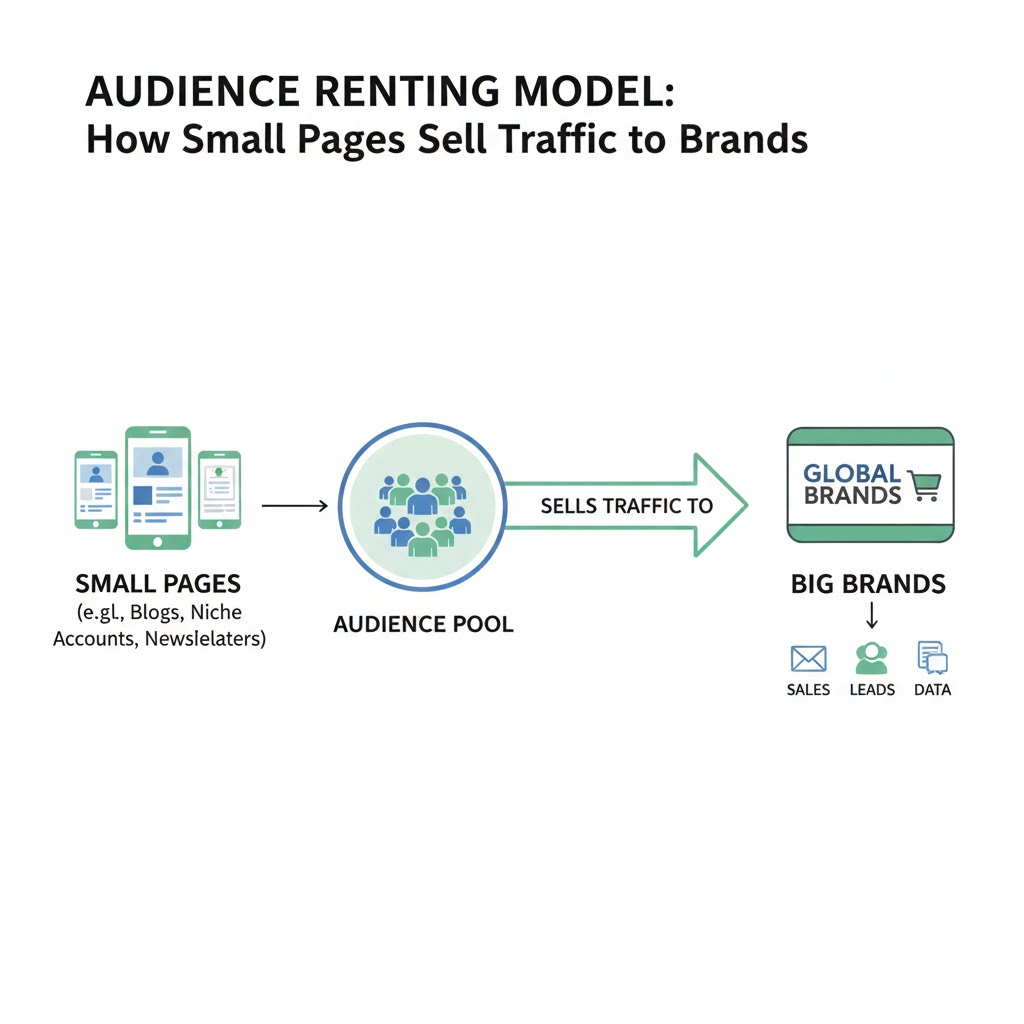
Audience Renting Model Most creators believe monetization starts after they become big. Millions of followers. Viral fame. Years of posting.
But a quieter model is proving the opposite: small, focused pages are renting their audiences to brands and getting paid—without selling products, running ads, or becoming influencers.
This strategy is called the Audience Renting Model.
Instead of building a brand around yourself, you build a targeted attention asset—and temporarily rent that attention to businesses that need traffic, leads, or exposure right now.
This article breaks down how the audience renting model works, why brands love it, and how even small pages are turning views into predictable income.
1. What Is the Audience Renting Model?
The audience renting model treats attention like real estate.
1.1 The Core Concept
- You own a page (Instagram, Facebook, TikTok, X, Reddit, Web Stories, or niche website)
- That page attracts a specific type of audience
- Brands pay you to access that audience temporarily
You’re not selling the audience permanently.
You’re renting access.
That’s the foundation of the Audience Renting Model.
2. Why Brands Prefer Renting Over Influencers
Big influencers are expensive and unpredictable.
2.1 Problems Brands Face With Influencers
- High fees
- Low conversion rates
- Personal-brand risk
- One-off posts with short lifespan
2.2 Why Renting Audiences Is Better
- Lower cost
- More targeted traffic
- Repeat placements
- Performance-focused
Brands don’t want fame.
They want attention that converts.
3. Why Small Pages Are Perfect for This Model
Size matters less than relevance.

3.1 The Power of Niche Pages
- 5k followers in one niche > 100k mixed audience
- Higher engagement
- Clear buyer intent
3.2 Examples of Rentable Audiences
- Fitness tips page → supplement brands
- Travel reels page → hotels & tour operators
- AI tools page → SaaS startups
- Home renovation page → contractors & tools
In the Audience Renting Model, clarity beats scale.
4. How the Audience Renting Model Works Step by Step
This is how creators actually do it.
4.1 Step-by-Step Flow
- Build or buy a niche page
- Post content that attracts a specific audience
- Collect engagement and basic analytics
- Reach out to brands (or get inbound offers)
- Rent traffic via posts, stories, links, or pinned content
4.2 What “Renting” Looks Like
- Sponsored post (24–72 hours)
- Link in bio for a week
- Pinned comment redirect
- Story highlights
- Traffic blasts to offers
You control duration, placement, and price.
5. How Small Pages Make Money With Audience Renting
Revenue doesn’t require millions of views.
5.1 Common Pricing Models
- Flat fee per post
- Weekly traffic rental
- Monthly audience access
- Performance-based deals
5.2 Realistic Earnings
- Small pages: $100–$500 per placement
- Medium pages: $500–$2,000 per deal
- Multiple deals per month
With consistency, the Audience Renting Model becomes recurring income.
6. Why This Model Converts Better Than Ads
Trust is already built.
6.1 Native Exposure
- Content blends naturally
- No ad blindness
- Feels like a recommendation
6.2 Audience Mindset
- They already follow the page
- They trust the theme
- They’re in consumption mode
This makes rented audiences warmer than paid ads.
7. Platforms That Work Best for Audience Renting
This model is flexible.
7.1 High-Performing Platforms
- Instagram niche pages
- Facebook groups & pages
- TikTok theme accounts
- Reddit threads & subreddits
- Niche websites with traffic
7.2 Why Multi-Platform Wins
- You can rent the same audience twice
- Cross-post traffic
- Offer bundles to brands
Smart creators don’t rely on one platform.
8. Common Mistakes That Kill the Model
These mistakes cost creators deals.
8.1 Selling Too Early
- No engagement
- No proof
- No niche clarity
8.2 Overpromoting
- Too many brand posts
- Audience fatigue
- Trust erosion
8.3 Undervaluing the Audience
- Charging too low
- No boundaries
- No contracts
The Audience Renting Model works best when treated like a business, not side cash.
9. Why This Model Scales Better Than Influencer Branding
You are replaceable—and that’s good.
9.1 No Personal Brand Dependency
- No face needed
- No personality pressure
- Pages can be sold later
9.2 Portfolio Strategy
- Run multiple pages
- Rent audiences across niches
- Diversify income
This turns attention into an asset, not an identity.
10. Why the Audience Renting Model Will Explode in 2026
Market conditions are perfect.
10.1 Brand Behavior Is Shifting
- Lower ad trust
- Rising ad costs
- Demand for targeted traffic
10.2 Creator Advantage
- Low startup cost
- Fast execution
- No product creation
As ads get more expensive, renting attention becomes cheaper and smarter.
FAQs: Audience Renting Model
Do I need a huge following to start?
No. Niche relevance matters more than size.
Is this different from influencer marketing?
Yes. You’re renting access, not selling personality.
Do brands really pay small pages?
Yes—especially when traffic is targeted.
Can this work with websites too?
Absolutely. Traffic rental works well with blogs and Web Stories.
Is this passive income?
Semi-passive. Once pages grow, deals become recurring.
Final Thoughts
Attention is the most valuable asset online—but you don’t have to own it forever to profit from it. The Audience Renting Model proves that temporary access to the right people is often more valuable than permanent ownership.
You don’t need to be famous.
You don’t need to sell products.
You don’t need to build a personal brand.
You just need the right audience—and the confidence to rent it.
Also read this:
Reddit SEO Arbitrage: Ranking Threads That Drive Affiliate Sales
Web Stories Affiliate Marketing: Low-Competition Traffic That Converts
AI Timelapse Video Niche: How Viral Transformation Videos Make Money