
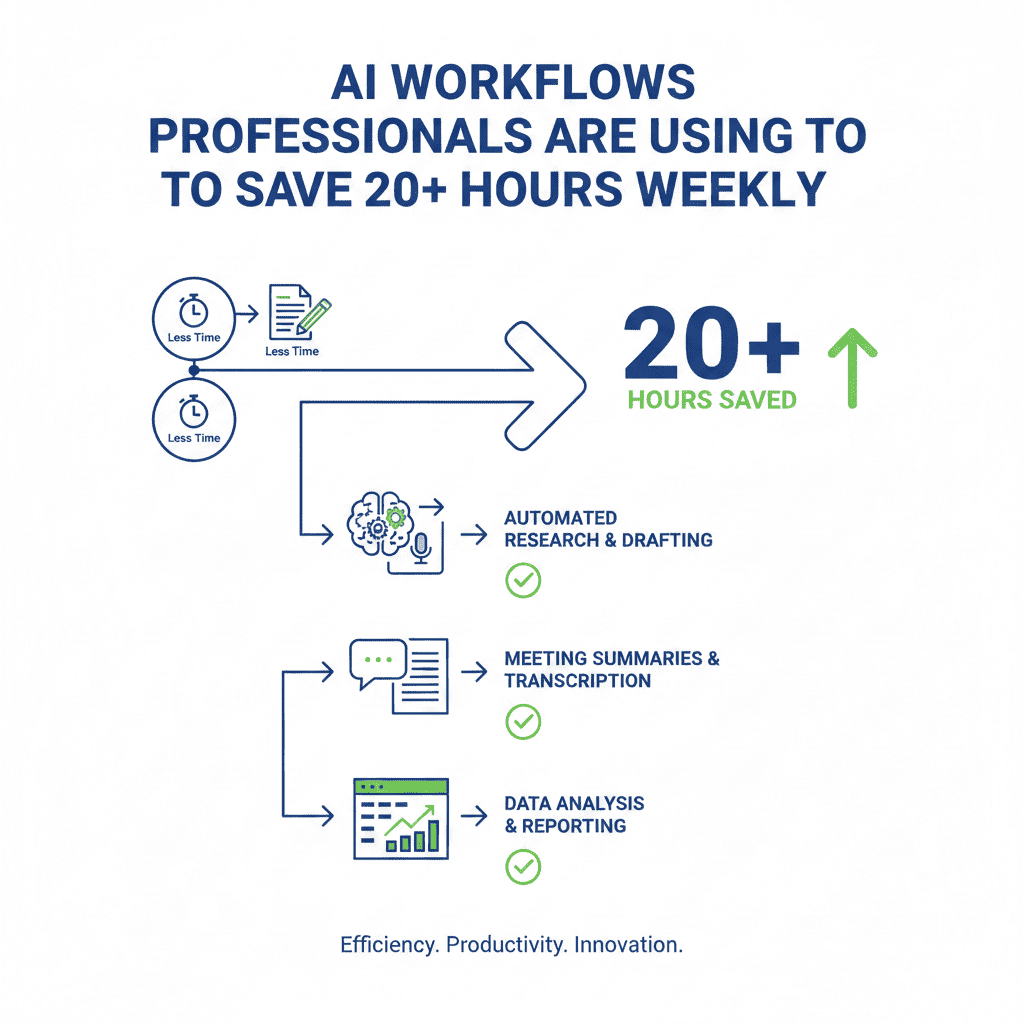
In today’s fast-paced digital landscape, professionals across industries are discovering the transformative power of artificial intelligence to reclaim their time and boost productivity. The rise of AI workflows professionals are using has revolutionized how we approach daily tasks, strategic planning, and creative work. This comprehensive guide explores the most effective automation strategies that are helping knowledge workers save over 20 hours each week.
1. Content Creation and Marketing Automation
Content remains king in the digital world, but creating high-quality material consistently can consume enormous amounts of time. AI workflows professionals are using for content creation have become indispensable tools in modern marketing arsenals.
Automated Blog Post Generation
Rather than starting from scratch every time, professionals now leverage AI to generate first drafts, outlines, and research summaries. The workflow typically involves inputting topic keywords, target audience parameters, and desired tone, then receiving a structured draft that requires only human refinement and fact-checking.
Social Media Content Scheduling
Smart professionals create entire month-long social media calendars in single sessions. AI tools analyze past performance data, suggest optimal posting times, generate engaging captions, and even create image variations. The workflow connects content creation tools directly to scheduling platforms, eliminating manual copying and pasting.
Email Campaign Personalization
Gone are the days of generic mass emails. Advanced AI workflows professionals are using now segment audiences automatically, craft personalized subject lines, optimize send times per recipient, and generate body copy that resonates with specific customer personas. This approach has increased open rates by up to 40% for many organizations.
Video Script Writing and Editing
Video content production, once a week-long endeavor, now takes hours. AI workflows transcribe rough footage, identify key moments, suggest edits, generate captions, and even create multiple versions optimized for different platforms. Professionals simply provide raw material and strategic direction.
2. Data Analysis and Reporting Workflows
Data-driven decision making is essential, but analyzing spreadsheets and creating reports traditionally consumed days of professional time. Modern AI workflows professionals are using have transformed this landscape entirely.
Automated Data Cleaning
Before analysis can begin, data must be cleaned and standardized. AI workflows now automatically identify duplicates, correct formatting inconsistencies, fill missing values using intelligent predictions, and flag anomalies for human review. What once took hours now happens in minutes.
Predictive Analytics Dashboards
Rather than manually creating charts and graphs, professionals set up AI-powered dashboards that update in real-time. These systems identify trends automatically, generate natural language insights, predict future patterns, and alert users to significant changes requiring attention.
Financial Report Generation
Accounting and finance teams use AI workflows to pull data from multiple sources, reconcile discrepancies, generate standard financial statements, and create executive summaries with key insights. Monthly closing processes that took weeks now complete in days.
Customer Behavior Analysis
Understanding customer patterns no longer requires dedicated data science teams. AI workflows professionals are using now segment customers automatically, identify purchase patterns, predict churn risk, and recommend retention strategies, all while generating presentation-ready visualizations.
3. Communication and Meeting Management
Meetings and communication overhead can easily consume half a professional’s workweek. Intelligent automation in this area delivers some of the most significant time savings.
Intelligent Email Triage and Response
Advanced AI workflows scan incoming emails, categorize by priority and topic, draft responses for routine inquiries, and surface only messages requiring human attention. Professionals report cutting email time by 60-70% using these systems.
Meeting Transcription and Action Item Extraction
Rather than taking notes during meetings, AI workflows professionals are using now record sessions, generate accurate transcripts, identify action items and decisions, assign tasks to participants, and send automated follow-up summaries. This ensures nothing falls through the cracks while keeping participants fully engaged during discussions.
Calendar Optimization
Smart scheduling assistants analyze work patterns, suggest optimal meeting times based on energy levels and existing commitments, automatically decline or propose alternatives for low-priority requests, and block focus time for deep work. This workflow transforms chaotic calendars into strategic time management tools.
Multi-language Communication
Global teams leverage AI workflows that translate messages in real-time, adjust tone and formality for cultural contexts, and ensure consistent messaging across languages. This eliminates bottlenecks in international collaboration.
4. Research and Information Synthesis
Knowledge work often requires extensive research, a time-intensive process that AI has dramatically accelerated through sophisticated AI workflows professionals are using daily.
Automated Literature Reviews
Researchers and analysts use AI workflows to scan hundreds of sources, extract key findings, identify contradictions and consensus, generate annotated bibliographies, and create comprehensive summary documents. Multi-week research projects now complete in days.
Competitive Intelligence Gathering
Marketing and strategy teams deploy AI workflows that monitor competitor websites, track pricing changes, analyze social media sentiment, identify new product launches, and compile weekly intelligence briefings automatically.
Trend Monitoring and Alerts
Rather than manually checking multiple sources, professionals set up AI workflows that scan industry publications, social media, patent filings, and regulatory updates, then generate customized daily briefings highlighting only relevant information. This keeps teams informed without information overload.
Knowledge Base Creation
Organizations use AI workflows professionals are using to convert scattered documentation into searchable knowledge bases, automatically suggest related articles, keep information current by flagging outdated content, and generate FAQ sections based on common queries.
5. Customer Service and Support Automation
Customer-facing teams have experienced some of the most dramatic efficiency gains through AI workflow implementation, handling higher volumes with better quality.
Intelligent Ticket Routing
Support workflows automatically categorize incoming requests, route to appropriate specialists based on content analysis, suggest relevant knowledge base articles, and escalate urgent issues immediately. First response times have dropped from hours to minutes.
Automated Response Generation
For common inquiries, AI workflows generate personalized responses that maintain brand voice, include relevant account information, and provide step-by-step solutions. Human agents review and send rather than writing from scratch, tripling their throughput.
Customer Sentiment Analysis
AI workflows professionals are using continuously monitor customer interactions across channels, identify satisfaction trends, flag at-risk accounts, and generate proactive outreach campaigns. This transforms reactive support into strategic relationship management.
Self-Service Portal Enhancement
AI-powered workflows analyze which topics generate most tickets, automatically expand help documentation for those areas, create video tutorials based on common issues, and optimize search functionality so customers find answers faster.
6. Project Management and Workflow Optimization
Managing complex projects with multiple stakeholders traditionally required extensive manual coordination. Modern AI workflows professionals are using have automated much of this overhead.
Automated Task Prioritization
Project management AI analyzes deadlines, dependencies, resource availability, and historical completion times to suggest optimal task sequences. Team members receive daily prioritized work lists rather than sorting through overwhelming backlogs.
Resource Allocation Optimization
Sophisticated workflows monitor team capacity, predict bottlenecks before they occur, suggest reassignments to balance workloads, and identify when external resources are needed. Project managers spend less time on logistics and more on strategic guidance.
Progress Tracking and Reporting
Rather than requesting status updates, AI workflows aggregate data from multiple tools, generate progress reports automatically, identify tasks running behind schedule, and create executive dashboards. Stakeholder communication becomes effortless.
Risk Identification and Mitigation
AI workflows professionals are using analyze project patterns to identify risk factors early, suggest mitigation strategies based on past successful interventions, and alert managers to potential issues before they impact timelines.
7. Design and Creative Work Acceleration
Creative professionals have embraced AI workflows that handle repetitive aspects of their work, freeing time for high-value creative thinking.
Automated Asset Resizing and Optimization
Designers use workflows that automatically resize graphics for multiple platforms, optimize images for web performance, generate responsive variations, and ensure brand consistency across outputs. Single master files become complete asset libraries.
Template and Style Guide Creation
AI workflows analyze existing brand materials to extract color palettes, typography rules, spacing guidelines, and design patterns, then generate comprehensive style guides and reusable templates automatically.
A/B Test Variant Generation
Marketing teams leverage AI workflows professionals are using to create multiple variations of headlines, layouts, calls-to-action, and imagery, then automatically test performance and implement winning versions. Campaign optimization happens continuously rather than quarterly.
Design Feedback Compilation
Rather than tracking comments across emails and meetings, AI workflows aggregate feedback from stakeholders, identify common themes, flag conflicting requests for resolution, and generate consolidated revision lists.
8. Human Resources and Recruitment Optimization
HR teams handle tremendous administrative workload that AI workflows have dramatically reduced while improving candidate and employee experiences.
Resume Screening and Candidate Matching
Recruitment workflows automatically scan applications, match qualifications to requirements, identify top candidates based on multiple criteria, and even schedule initial screening calls. Time-to-hire has decreased by weeks in many organizations using these systems.
Interview Coordination and Feedback Collection
AI workflows professionals are using find meeting times across multiple interviewer calendars, send preparation materials automatically, distribute scorecards, compile feedback into structured reports, and flag discrepancies requiring discussion.
Onboarding Automation
New employee onboarding involves dozens of tasks across departments. AI workflows coordinate equipment orders, schedule training sessions, track completion of required activities, and ensure nothing is overlooked. New hires experience smooth, consistent onboarding.
Performance Review Management
HR systems now generate review reminders, compile 360-degree feedback, identify patterns across teams, suggest development areas, and create documentation automatically. Managers focus on coaching rather than paperwork.
9. Financial Operations and Expense Management
Finance teams have reclaimed enormous time through AI workflows professionals are using for routine transactions and reconciliation processes.
Automated Expense Report Processing
Employees photograph receipts, and AI workflows extract relevant data, categorize expenses, flag policy violations, route for approval, and process reimbursements. What once took days now happens within hours.
Invoice Processing and Payment Automation
Accounts payable workflows match invoices to purchase orders, verify pricing and quantities, route for approval based on amount thresholds, schedule payments, and reconcile transactions automatically. Finance teams handle vastly higher volumes with the same headcount.
Budget Tracking and Variance Analysis
Rather than building monthly reports from scratch, finance professionals use AI workflows that track spending against budgets in real-time, identify variances automatically, generate explanation templates, and alert managers when intervention is needed.
Fraud Detection and Prevention
AI workflows professionals are using continuously monitor transactions for unusual patterns, flag potential fraud for investigation, enforce approval hierarchies, and maintain audit trails automatically. Security improves while administrative burden decreases.
10. Learning and Development Programs
Corporate training has transformed through AI workflows that personalize learning while reducing administrative overhead for learning and development teams.
Personalized Learning Path Creation
Rather than generic training programs, AI workflows analyze individual skill gaps, career goals, and learning styles to create customized development plans. Employees receive relevant recommendations automatically.
Training Content Creation and Curation
L&D teams use AI workflows professionals are using to convert existing materials into multiple formats, generate quiz questions automatically, curate external resources, and keep content libraries current with minimal manual effort.
Progress Tracking and Certification Management
Workflows monitor completion rates, identify struggling learners who need support, generate certificates automatically, track continuing education requirements, and compile training analytics for leadership review.
Knowledge Retention Assessment
Rather than one-time training events, AI workflows schedule spaced repetition reviews, quiz learners on previously covered material, identify areas needing reinforcement, and adapt future training based on retention patterns.
Implementation Strategies for Maximum Impact
Successfully implementing AI workflows professionals are using requires strategic planning rather than random tool adoption. Here’s how leading organizations approach this transformation.
Start with High-Volume, Repetitive Tasks
Identify activities consuming the most time with the least variation. These offer the quickest return on investment and build confidence in automation. Document current processes thoroughly before implementing AI solutions.
Integrate Rather Than Isolate
The most powerful AI workflows connect multiple tools and data sources. Focus on solutions that integrate with existing systems rather than creating isolated islands of automation requiring manual data transfer.
Maintain Human Oversight
AI workflows professionals are using effectively always include human review at critical points. Establish clear approval processes, quality checks, and exception handling procedures. Automation should augment human decision-making, not replace it entirely.
Measure and Iterate
Track time savings, error rates, and quality metrics before and after implementation. Use these insights to refine workflows continuously. The most successful organizations treat AI automation as an ongoing optimization process.
Invest in Change Management
Technology alone doesn’t save time if people resist using it. Provide training, communicate benefits clearly, address concerns proactively, and celebrate early wins to build organizational enthusiasm.
Common Pitfalls to Avoid
Even with powerful AI tools available, organizations make predictable mistakes that limit benefits or create new problems.
Over-Automation Without Understanding
Automating poorly designed processes simply makes bad workflows faster. Take time to optimize manual processes before automating them. The goal is efficiency, not just speed.
Neglecting Data Quality
AI workflows professionals are using depend on clean, consistent data. Garbage in means garbage out. Invest in data governance before deploying sophisticated automation.
Ignoring Security and Compliance
Automated workflows can create compliance risks if not properly designed. Ensure AI systems maintain audit trails, respect data privacy regulations, and enforce appropriate access controls.
Failing to Update Workflows
Business needs change, but automated workflows can continue running long after they’ve become obsolete or counterproductive. Schedule regular reviews to ensure automation still serves current objectives.
The Future of AI-Powered Work
The AI workflows professionals are using today represent just the beginning of workplace transformation. Emerging capabilities promise even greater time savings and productivity gains.
Generative AI continues advancing, enabling more sophisticated content creation, problem-solving, and decision support. Natural language interfaces are making powerful automation accessible to non-technical users. Multi-agent AI systems will soon coordinate complex projects with minimal human intervention.
Organizations that embrace these tools now are building competitive advantages that will compound over time. The question is no longer whether to implement AI workflows but how quickly you can deploy them effectively.
Conclusion
The AI workflows professionals are using to save 20+ hours weekly represent a fundamental shift in how knowledge work happens. From content creation and data analysis to customer service and financial operations, artificial intelligence is eliminating time-consuming manual tasks while improving quality and consistency.
Success requires strategic implementation focused on high-impact areas, thoughtful integration with existing systems, appropriate human oversight, and continuous optimization based on measured results. Organizations that approach AI workflow automation systematically are reclaiming thousands of collective hours while positioning themselves for the future of work.
The professionals already benefiting from these tools aren’t working harder—they’re working smarter by letting AI handle routine tasks while they focus on strategic thinking, relationship building, and creative problem-solving that truly differentiate their organizations. The time savings aren’t just about doing more—they’re about doing what matters most.
Start by identifying your most time-consuming repetitive tasks, research AI solutions designed for those specific challenges, and begin implementing workflows incrementally. The 20+ hours you reclaim each week can transform not just your productivity but your entire approach to professional work.
Also read this:
Micro-Businesses That Thrive in Any Market Condition: Recession-Proof Income Streams
Little Side Projects That Generate Serious Income: Small Efforts, Big Returns
Low-Effort Side Hustles That Still Pay Well: Maximum Income, Minimal Hassle