
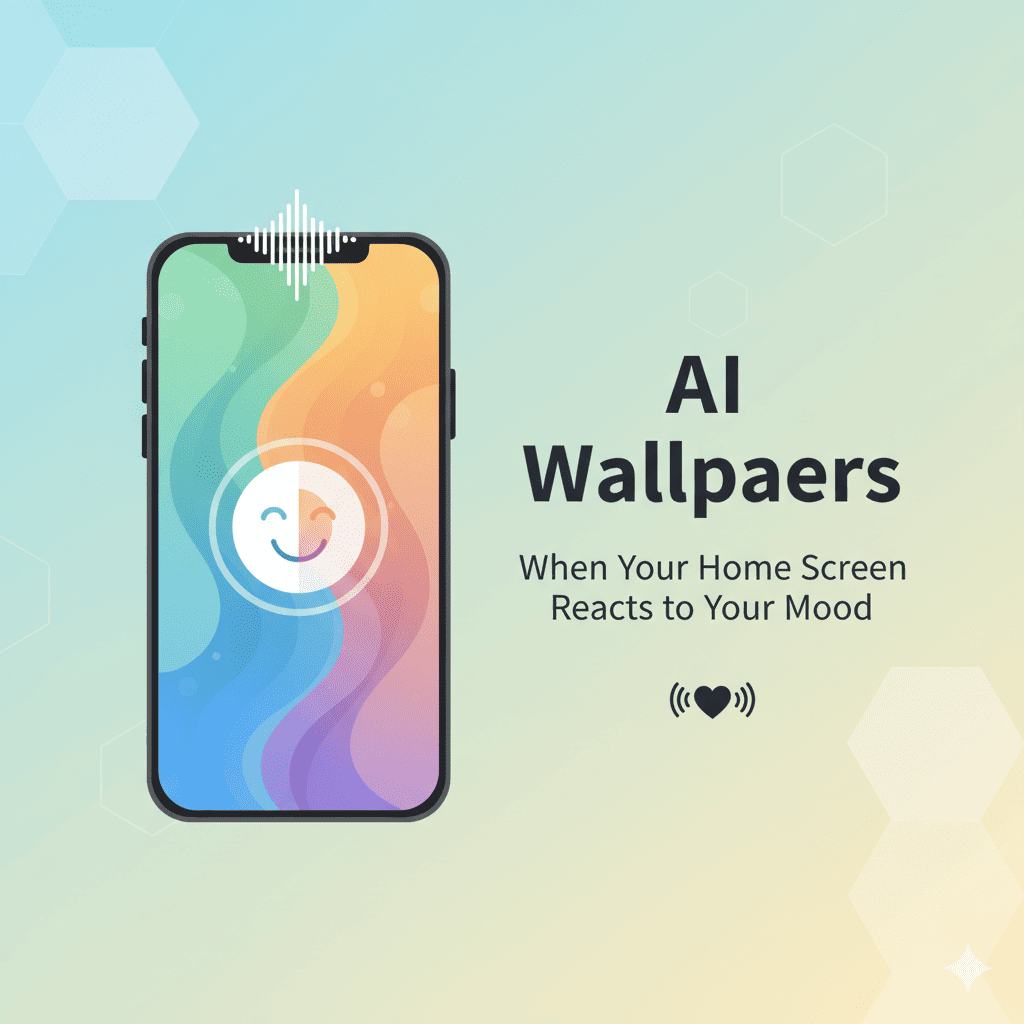
Imagine unlocking your phone and seeing a wallpaper that perfectly matches your current emotional state. On a gloomy Monday morning, your screen displays calming blues and gentle landscapes. During a productive afternoon, it shifts to energizing oranges and dynamic patterns. As you wind down for the evening, it transforms into warm, peaceful imagery that helps you relax.
This isn’t science fiction—it’s the reality of AI wallpapers, a revolutionary technology that’s transforming how we personalize our devices. These intelligent backgrounds don’t just sit pretty on your screen; they adapt, respond, and evolve based on your mood, activities, and preferences.
In this comprehensive guide, we’ll explore how AI wallpapers work, their benefits, how they detect and respond to your emotional state, and why millions of users are making the switch from static images to intelligent, mood-responsive backgrounds.
The Evolution of Phone Personalization
Before diving into the world of AI wallpapers, let’s understand how we got here. Phone personalization has come a long way since the early days of mobile devices.
From Static to Dynamic
Initially, phone wallpapers were simple static images—photos of loved ones, favorite landscapes, or downloaded graphics. Then came live wallpapers with subtle animations like falling leaves or moving waves. These were visually appealing but lacked true intelligence or personalization.
The next evolution brought time-based wallpapers that changed based on the hour or day, showing sunrise imagery in the morning and sunset scenes in the evening. While more dynamic than static images, these still followed rigid, predetermined schedules.
The AI Revolution
AI wallpapers represent the next quantum leap in personalization. Using artificial intelligence, machine learning, and sometimes biometric data, these wallpapers don’t just change on a schedule—they respond to you. They learn your patterns, understand contextual cues, and adapt their appearance to complement or enhance your current state of mind.
This technology transforms your home screen from a passive decoration into an active participant in your digital wellbeing, productivity, and emotional health.
1. How AI Wallpapers Detect Your Mood
The magic of mood-responsive AI wallpapers lies in their ability to understand your emotional state through various data points and signals. Here’s how this fascinating technology works.
Biometric Sensors and Data
Modern smartphones are packed with sensors that provide valuable information about your physical and emotional state. Heart rate monitors track your pulse through camera sensors or dedicated hardware, detecting when you’re stressed (elevated heart rate) or calm. Some advanced systems even use facial recognition to analyze micro-expressions, identifying emotions like happiness, stress, anxiety, or contentment through subtle facial cues.
Motion sensors and accelerometers reveal activity patterns—whether you’re exercising (high movement), working (moderate activity), or resting (minimal movement). These physical states often correlate with specific emotional states that AI wallpapers can respond to appropriately.
Usage Pattern Analysis
AI systems are remarkably good at recognizing patterns in how you use your device. They monitor which apps you open during different times, tracking productivity apps during work hours versus entertainment apps during leisure time. They analyze typing speed and patterns, noting that slower, more deliberate typing might indicate fatigue or stress, while rapid typing could signal energy or urgency.
Your music and media choices provide powerful mood indicators. Listening to upbeat music suggests a positive mood, while melancholic playlists might indicate a reflective or somber state. Social media engagement patterns also reveal emotional states—increased scrolling might suggest boredom or anxiety, while active posting indicates engagement and social connection.
Calendar and Context Integration
AI wallpapers can integrate with your calendar and notifications to understand contextual factors affecting your mood. They recognize scheduled events like work meetings (potentially stressful), workout sessions (energizing), or social gatherings (exciting). Location data helps too—being at the gym, office, home, or a new place each suggests different emotional contexts.
Weather conditions significantly impact mood for many people. AI systems can factor in whether it’s sunny, rainy, or gloomy outside, adjusting wallpapers to either complement or counterbalance external conditions.
Machine Learning and Pattern Recognition
The real intelligence in AI wallpapers comes from machine learning algorithms that improve over time. These systems establish baseline patterns for your normal behavior across different times and days, then detect anomalies or deviations that might indicate mood changes. They analyze correlations between various data points—perhaps you’re always stressed when you have back-to-back meetings, or you’re happiest on Saturday mornings.
Most importantly, AI systems learn from your interactions. If you manually change a wallpaper or adjust settings, the AI notes these preferences and incorporates them into future decisions, continuously refining its understanding of your preferences and emotional patterns.
2. Types of Mood-Responsive AI Wallpapers
Not all AI wallpapers work the same way. Different systems emphasize different approaches to mood responsiveness, each offering unique benefits.
Color-Based Adaptive Wallpapers
These wallpapers focus primarily on color psychology, shifting their color palette based on your detected mood or desired emotional state. When you’re stressed, they might transition to calming blues and greens. During high-energy activities, they shift to motivating reds and oranges. For relaxation periods, they display warm, soothing earth tones.
The beauty of color-based systems lies in their subtlety. The changes are often gradual and ambient, affecting your emotional state subconsciously without being distracting or obvious.
Scene-Based Dynamic Wallpapers
Instead of just changing colors, these AI wallpapers transform entire scenes. A peaceful morning might display a serene lake at dawn. As your energy increases, it shifts to a vibrant cityscape or active nature scene. Evening relaxation brings starry night skies or cozy fireplace scenes.
Some advanced systems even create narrative progressions, where scenes evolve throughout your day like chapters in a story, creating a sense of continuity and progression.
Abstract and Generative Art Wallpapers
For users who prefer modern aesthetics, generative art AI wallpapers create unique, ever-changing abstract patterns based on your mood data. These might feature flowing geometric patterns during calm states, sharp, angular designs during high-energy periods, or soft, organic shapes during relaxation.
The fascinating aspect of generative wallpapers is that no two moments are exactly alike—the AI continuously generates new artwork, ensuring your background is truly unique.
Personalized Photo Compilations
Some AI wallpapers use your personal photo library, intelligently selecting and displaying images based on your mood. Feeling nostalgic? The AI might show photos from past vacations. Need motivation? It displays images of your achievements or goals. Want comfort? It shows pictures of loved ones or favorite places.
This approach combines the emotional connection of personal memories with intelligent, contextual presentation.
Hybrid Intelligent Wallpapers
The most sophisticated systems combine multiple approaches, using color theory, scene selection, generative elements, and personal photos in various combinations. These hybrid AI wallpapers offer the most comprehensive mood-responsive experience, adapting not just one element but the entire visual aesthetic to your current state.
3. The Science Behind Mood-Responsive Design
Understanding why AI wallpapers affect our mood requires exploring the psychology and neuroscience behind visual stimuli and emotional regulation.
Color Psychology and Emotional Response
Colors have profound psychological and physiological effects on humans. Blue tones generally reduce heart rate and promote calmness, making them ideal for stress reduction. Red and orange stimulate energy and alertness, useful for motivation and activity. Green connects to nature and balance, promoting mental restoration. Purple is associated with creativity and introspection, while yellow stimulates happiness and optimism.
AI wallpapers leverage these scientifically-backed color associations to influence your emotional state subtly but effectively. The key is appropriateness—the right color at the right time for your specific context and goals.
Visual Complexity and Cognitive Load
The complexity of visual imagery affects mental state. During high-stress periods, simple, minimalist wallpapers reduce cognitive load and visual noise, helping you focus. During creative or leisure time, more complex, interesting imagery stimulates engagement and pleasure.
Intelligent AI wallpapers adjust their visual complexity based on your current cognitive demands, providing the appropriate level of stimulation or simplicity.
Nature Imagery and Restoration
Research consistently shows that viewing nature scenes—even digital representations—reduces stress, improves mood, and enhances cognitive function. This phenomenon, called “attention restoration theory,” explains why AI wallpapers featuring natural scenes during stressful periods can significantly improve wellbeing.
AI systems can automatically introduce nature imagery during detected stress periods, providing micro-doses of restoration throughout your day.
Pattern Recognition and Aesthetic Pleasure
Humans find pleasure in recognizing patterns and symmetry, but too much predictability becomes boring. Generative AI wallpapers create the perfect balance—familiar enough to be aesthetically pleasing but with enough variation to maintain interest and novelty.
This balance stimulates the brain’s reward centers without causing sensory overload, creating subtle positive emotional responses each time you view your screen.
4. Practical Benefits of AI Wallpapers
Beyond the cool technology factor, AI wallpapers offer tangible benefits that improve daily life in measurable ways.
Enhanced Emotional Regulation
One of the primary benefits is better emotional self-regulation. When feeling stressed or anxious, having your phone display calming imagery provides an immediate grounding tool. It’s like having a pocket therapist that reminds you to breathe and reset.
Users report that mood-responsive wallpapers help them become more aware of their emotional states. The visual feedback creates a mirror effect—seeing your wallpaper shift to stress-relief mode makes you conscious that you are indeed stressed, prompting you to take action.
Improved Productivity and Focus
AI wallpapers can boost productivity by adapting to work contexts. During focused work periods, they display minimalist, distraction-free backgrounds that reduce visual clutter. During breaks, they shift to more engaging imagery that helps mental refreshment.
Some systems integrate with productivity apps and techniques like the Pomodoro method, visually representing work and rest periods through wallpaper changes, reinforcing productive rhythms.
Better Sleep and Circadian Rhythm Support
Evening wallpaper transitions can support healthy sleep habits. As bedtime approaches, AI wallpapers gradually shift to warmer, dimmer color palettes that complement blue light filters. They display peaceful, sleep-inducing imagery that mentally prepares you for rest.
Morning wallpapers can do the opposite, using energizing colors and bright imagery to help you wake up and start your day with motivation.
Reduced Digital Overwhelm
In an age of constant notifications and information overload, a mood-appropriate wallpaper creates a sense of calm control. Knowing your phone environment adapts to support rather than stimulate you reduces anxiety about device usage.
This is particularly valuable for people who struggle with phone addiction or digital stress. A supportive, responsive wallpaper makes your device feel less like an enemy demanding attention and more like a tool that serves your wellbeing.
Personal Expression and Identity
AI wallpapers offer a unique form of self-expression that evolves with you. Rather than choosing a single static image that represents who you are, mood-responsive wallpapers reflect the full spectrum of your emotional life.
This dynamic self-representation feels more authentic and complete than static personalization options ever could.
5. Popular AI Wallpaper Apps and Platforms
The AI wallpapers market has exploded, with numerous apps and platforms offering various approaches to mood-responsive backgrounds.
Dedicated AI Wallpaper Apps
Several apps specialize specifically in intelligent, adaptive wallpapers. These typically offer the most sophisticated mood detection algorithms and the widest variety of responsive wallpaper styles. They often include features like manual mood input (you tell the app how you’re feeling), automatic detection based on phone usage patterns, integration with health and fitness trackers, and extensive customization options.
Popular options include apps that generate unique AI art based on your mood data, platforms that curate photographer-submitted images sorted by emotional tone, and services that create personalized wallpaper experiences based on your preferences and patterns.
Built-In Smartphone Features
Both Android and iOS have begun incorporating mood-responsive wallpaper capabilities into their native systems. While not as sophisticated as dedicated apps, these built-in features offer seamless integration and don’t require additional downloads.
Android’s Material You design includes adaptive wallpapers that change based on time and usage patterns. iOS offers Focus mode integration where wallpapers can change based on your current Focus setting (work, personal, sleep, etc.).
Smart Home Integration
Some AI wallpapers extend beyond your phone to create cohesive environments across devices. Your phone wallpaper coordinates with smart displays, tablets, and even smart home lighting to create mood-appropriate ambiance throughout your physical space.
This holistic approach recognizes that mood regulation works best when your entire environment—digital and physical—supports your emotional state.
Wearable Device Connectivity
Advanced AI wallpapers sync with smartwatches and fitness trackers to access more accurate biometric data. This connection provides better mood detection through continuous heart rate monitoring, stress tracking, sleep quality data, and activity levels.
The result is more responsive and accurate wallpaper adaptations that truly reflect your physiological and emotional state in real-time.
6. Creating Your Own AI Wallpaper Experience
You don’t necessarily need specialized apps to benefit from mood-responsive wallpapers. Here’s how to create your own AI wallpapers experience using available tools and features.
Manual Mood-Based Collections
Start simple by creating themed wallpaper collections for different moods or contexts. Organize separate folders for energizing morning wallpapers, focused work backgrounds, calming stress-relief images, and relaxing evening scenes. While not automatic, manually switching between collections based on your current mood creates intentional emotional support.
Using Automation Features
Most smartphones offer automation capabilities that can approximate AI wallpapers functionality. You can set wallpapers to change based on time of day, location (different wallpapers at home, work, or gym), app usage (specific wallpapers when using certain apps), or even weather conditions.
While less sophisticated than true AI, these automations create dynamic, context-appropriate wallpaper experiences without requiring additional apps.
Integrating with Digital Wellbeing Tools
Combine wallpaper changes with existing digital wellbeing features. Set your phone to display calming wallpapers during app time limits, motivating images during scheduled focus time, or peaceful scenes during wind-down periods before bed.
This integration makes AI wallpapers part of a comprehensive digital wellness strategy rather than an isolated feature.
Leveraging Widget and Lock Screen Customization
Modern smartphones allow extensive lock screen customization. Combine mood-appropriate wallpapers with widgets showing relevant information—calming weather widgets during stress, motivating quote widgets during work periods, or meditation timers during relaxation.
This creates a holistic, mood-supportive home screen experience that goes beyond just the background image.
7. Privacy and Ethical Considerations
As with any AI technology that monitors personal data, AI wallpapers raise important privacy and ethical questions that users should consider.
Data Collection and Usage
Mood-responsive wallpapers require collecting and analyzing personal data—usage patterns, biometric information, location data, and more. Users should understand what data is collected, how it’s analyzed and stored, whether it’s shared with third parties, and how long it’s retained.
Reputable AI wallpapers apps should provide transparent privacy policies and give users control over data collection settings.
Algorithmic Accuracy and Bias
AI mood detection isn’t perfect. Algorithms might misinterpret your emotional state or have biases based on the training data used to develop them. A wallpaper designed to reduce stress might actually increase it if it misreads your mood and displays inappropriate imagery.
Users should maintain awareness that AI is a tool, not infallible, and should retain manual override options to correct misinterpretations.
Emotional Manipulation Concerns
There’s potential for mood-responsive technology to be used manipulatively. For example, an app might display certain wallpapers or content designed to influence purchasing decisions, engagement patterns, or emotional states in ways that benefit the app developer rather than the user.
Choose AI wallpapers from trustworthy developers with clear, user-centric missions and avoid apps with unclear monetization strategies or excessive advertising.
Dependency and Autonomy
Relying on AI to regulate your mood raises questions about emotional autonomy. Does depending on AI wallpapers for emotional support undermine your ability to self-regulate naturally? While these tools can be helpful, they should supplement, not replace, organic emotional regulation skills and human support systems.
Maintaining balance between AI assistance and personal agency is crucial for healthy technology relationships.
8. The Future of AI Wallpapers
The AI wallpapers field is evolving rapidly, with exciting developments on the horizon that will make mood-responsive backgrounds even more sophisticated and beneficial.
Advanced Biometric Integration
Future wallpapers will likely integrate with more advanced biometric sensors, including emotion-detecting cameras that read facial expressions continuously, stress hormone detection through sweat analysis, brain activity monitoring through wearable EEG devices, and voice analysis that detects emotional states through speech patterns.
These inputs will enable AI wallpapers to respond to emotional states with unprecedented accuracy and nuance.
Predictive Mood Modeling
Rather than just reacting to your current mood, future AI will predict emotional states before they fully develop. By recognizing patterns that precede stress, fatigue, or other emotional states, wallpapers could proactively shift to help prevent negative moods before they intensify.
This predictive capability transforms AI wallpapers from responsive tools to preventive wellness interventions.
Social and Collaborative Wallpapers
Imagine wallpapers that respond not just to your mood but to the emotional states of people you’re with. During video calls, your wallpaper could adapt to match the group’s energy. Friends could share mood-responsive wallpaper themes that sync across their devices, creating shared emotional experiences.
This social dimension adds new possibilities for connection and shared digital experiences.
Augmented Reality Integration
As AR becomes more prevalent, AI wallpapers will extend into mixed reality environments. Your physical surroundings could be overlaid with mood-appropriate virtual elements visible through AR glasses or phone cameras, creating immersive, emotionally supportive environments that blend digital and physical spaces.
Therapeutic and Clinical Applications
Healthcare providers are beginning to explore AI wallpapers as clinical tools for mental health treatment. Wallpapers could be prescribed as part of therapy for anxiety, depression, or ADHD, providing continuous environmental support between therapy sessions. Clinical-grade mood tracking through wallpaper interactions could provide valuable data for treatment planning.
This medicalization of AI wallpapers could make them reimbursable health interventions covered by insurance, dramatically expanding access and legitimacy.
9. Designing Effective Mood-Responsive Wallpapers
For designers and developers creating AI wallpapers, certain principles ensure effectiveness and user satisfaction.
Subtlety Over Disruption
The most effective mood-responsive wallpapers change gradually and subtly. Jarring, sudden transitions can be startling or distracting, undermining the calming or supportive purpose. Transitions should use smooth gradients, fade effects that take several seconds, and animation that feels natural rather than mechanical.
Users should feel the emotional support without being constantly aware of the technological intervention.
User Control and Override
No matter how sophisticated the AI, users must retain control. Effective AI wallpapers offer manual mode selection, the ability to override AI suggestions, customization of which triggers activate changes, and options to disable mood detection entirely.
Autonomy is crucial for user trust and satisfaction.
Contextual Appropriateness
AI must consider social and professional contexts. A wallpaper appropriate for personal relaxation might be inappropriate during a professional meeting. Sophisticated systems recognize context through calendar events, location, time of day, and even app usage, ensuring AI wallpapers enhance rather than embarrass.
Accessibility Considerations
Mood-responsive wallpapers must work for all users, including those with visual impairments (offering high contrast and screen reader compatibility), color blindness (avoiding relying solely on color to convey meaning), motion sensitivity (providing options to reduce or eliminate animations), and cognitive differences (offering simplified modes for users who prefer less complexity).
Inclusive design makes AI wallpapers beneficial for everyone.
10. Getting Started with AI Wallpapers Today
Ready to transform your home screen into a mood-responsive companion? Here’s your action plan for getting started with AI wallpapers.
Assess Your Needs and Goals
Begin by identifying what you want from mood-responsive wallpapers. Are you seeking stress reduction support throughout your day? Do you want productivity enhancement during work hours? Are you looking for better sleep habits through evening visual cues? Or do you simply want more dynamic, interesting phone personalization?
Your goals will guide which AI wallpapers approach works best for you.
Start with Built-In Features
Before downloading apps, explore your phone’s native capabilities. Both iOS and Android offer increasingly sophisticated wallpaper customization and automation. Experiment with time-based changes, location-based wallpapers, and focus mode integrations to get a feel for dynamic backgrounds without additional software.
Research and Select Apps Carefully
If you want more sophisticated features, research AI wallpapers apps thoroughly. Read reviews focusing on privacy practices, battery usage (some AI features can drain batteries), feature sets that match your goals, and user interface quality.
Start with free versions or trial periods before committing to paid subscriptions.
Begin with Simple Automations
Don’t try to implement a fully automated mood-responsive system immediately. Start with simple rules—perhaps different wallpapers for morning, afternoon, and evening, or separate wallpapers for weekdays and weekends. Gradually add complexity as you understand what works for you.
This staged approach prevents overwhelm and allows you to refine your AI wallpapers experience based on real usage.
Monitor and Adjust
Pay attention to how different wallpapers affect your mood, productivity, and overall phone experience. Keep what works, modify what doesn’t, and don’t hesitate to abandon approaches that aren’t beneficial. The goal is enhancement, not complexity for its own sake.
Combine with Other Digital Wellness Tools
AI wallpapers work best as part of a comprehensive digital wellness strategy. Combine them with app timers, notification management, blue light filters, and mindfulness practices for holistic benefits that extend beyond just your home screen.
Conclusion: Your Phone as an Emotional Ally
AI wallpapers represent a fundamental shift in how we think about device personalization. Rather than static decoration, your home screen becomes an active participant in your emotional wellbeing, productivity, and daily life quality.
The technology that enables mood-responsive wallpapers—combining biometric sensing, usage pattern analysis, machine learning, and color psychology—transforms your phone from a demanding attention-grabber into a supportive companion that adapts to your needs rather than requiring you to adapt to it.
Whether you’re drawn to AI wallpapers for stress management, productivity enhancement, creative inspiration, or simply more interesting personalization, the technology offers tangible benefits backed by psychological research and powered by increasingly sophisticated AI.
As these systems continue evolving, incorporating more advanced biometric inputs, predictive capabilities, and therapeutic applications, AI wallpapers will become even more effective at supporting mental health, enhancing focus, and creating emotionally appropriate digital environments.
The future of phone personalization isn’t just about choosing images you like—it’s about creating dynamic, responsive digital environments that adapt to who you are moment by moment. AI wallpapers are leading this transformation, making our devices more human-centric, emotionally intelligent, and genuinely supportive of wellbeing.
Your home screen is one of the most frequently viewed surfaces in your life, seen dozens or hundreds of times daily. Making it mood-responsive doesn’t just change what you see—it changes how you feel, how you work, and how you relate to the digital tools that increasingly shape our lives.
Also read this:
How Creators Are Automating 80% of Their Work With AI
The Viral AI Avatar Trend: How People Are Redesigning Themselves