
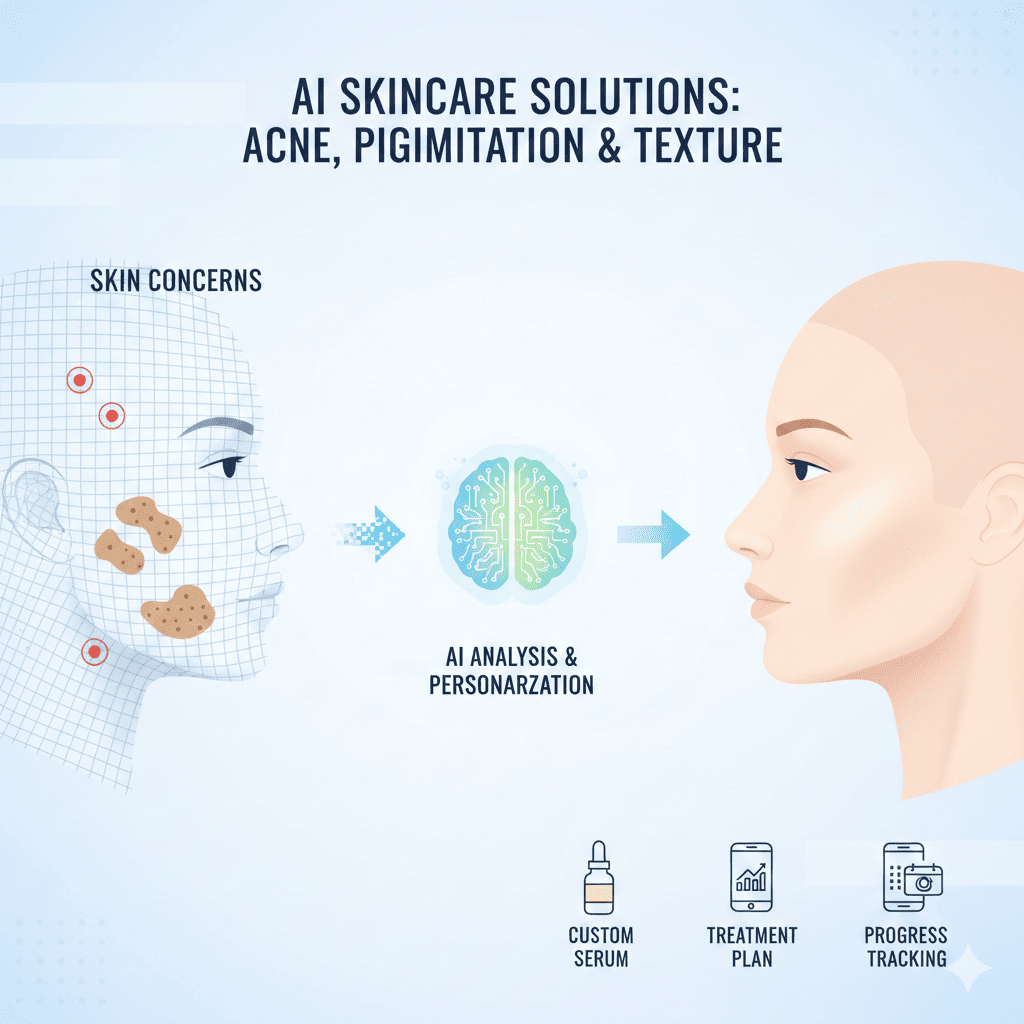
The quest for clear, even-toned, and smooth skin has driven the skincare industry for decades. Now, artificial intelligence is revolutionizing how we diagnose and treat the most common skin concerns that affect millions globally. AI Tools Helping People Fix Acne, Pigmentation & Texture are transforming dermatological care from guesswork into precise, personalized science. These sophisticated platforms analyze skin with clinical accuracy, identify the root causes of problems, and recommend targeted treatments that deliver measurable results.
Traditional approaches to treating acne, pigmentation, and texture issues relied on trial-and-error experimentation with products that may or may not address the underlying problems. Dermatologist visits, while valuable, weren’t accessible or affordable for everyone. Modern AI Tools Helping People Fix Acne, Pigmentation & Texture democratize access to expert-level skin analysis, making effective treatment strategies available to anyone with a smartphone.
This comprehensive guide explores the cutting-edge AI technologies addressing these specific skin concerns, how they work, and practical strategies for leveraging artificial intelligence to achieve the clear, radiant skin you’ve been pursuing.
1. Understanding Acne, Pigmentation, and Texture Issues
The Three Most Common Skin Concerns
Acne, pigmentation irregularities, and texture problems represent the triumvirate of skin concerns affecting people across all ages, ethnicities, and skin types. While distinct conditions, they often coexist and can exacerbate each other, creating complex challenges requiring comprehensive treatment approaches.
Acne Characteristics: Inflammatory condition involving clogged pores, bacterial overgrowth, excess oil production, and hormonal influences. Ranges from mild comedones to severe cystic formations. Leaves behind post-inflammatory hyperpigmentation and scarring affecting both tone and texture.
Pigmentation Disorders: Include hyperpigmentation from sun damage, melasma, post-inflammatory marks, age spots, and uneven tone. Result from irregular melanin production and distribution. Particularly challenging in darker skin tones where pigmentation changes more readily with inflammation or irritation.
Texture Irregularities: Encompass enlarged pores, rough surface, acne scarring, fine lines, dry patches, and uneven smoothness. Stem from various causes including aging, sun damage, acne aftermath, and inadequate exfoliation. Affect how light reflects off skin, impacting overall appearance even when tone is even.
Why These Conditions Prove Difficult to Treat
These skin concerns challenge both patients and professionals because multiple factors contribute simultaneously, individual responses to treatments vary dramatically, improvement requires weeks or months of consistent effort, one condition often triggers or worsens others, and visible improvement may lag behind actual healing progress, causing premature treatment abandonment.
Traditional treatment approaches struggled to account for this complexity, often addressing single factors while ignoring others that perpetuate problems.
How AI Changes the Treatment Paradigm
AI Tools Helping People Fix Acne, Pigmentation & Texture succeed where traditional methods fall short by analyzing multiple causative factors simultaneously, personalizing treatments to individual skin characteristics and response patterns, tracking subtle improvements invisible to casual observation, adjusting recommendations based on progress data, and predicting which treatments will work for specific individuals based on historical outcome data.
This comprehensive, adaptive approach addresses the root complexity of these conditions rather than applying generic solutions hoping they work.
2. AI-Powered Acne Analysis and Treatment
Comprehensive Acne Assessment Technology
Modern AI Tools Helping People Fix Acne, Pigmentation & Texture begin with detailed acne analysis that categorizes lesion types, counts active breakouts objectively, maps breakout locations revealing patterns, assesses severity on standardized scales, and identifies underlying causes from visible indicators.
Computer vision algorithms trained on millions of acne images recognize subtle differences between comedonal, inflammatory, cystic, and hormonal acne patterns. This precise classification informs treatment selection since different acne types respond to different interventions.
Identifying Root Causes Through Pattern Recognition
Acne location and type patterns reveal underlying causes. AI Tools Helping People Fix Acne, Pigmentation & Texture detect these patterns through sophisticated analysis. Breakouts along the jawline and chin suggest hormonal influences. T-zone concentration indicates oil production issues. Forehead acne may relate to hair products or stress. Cheek breakouts can signal bacterial issues or product comedogenicity.
AI correlates these patterns with patient information about diet, stress levels, menstrual cycles, product usage, and lifestyle factors to pinpoint likely triggers. This root cause identification enables targeted interventions addressing problems at their source rather than just treating symptoms.
Personalized Treatment Protocol Generation
Once acne characteristics and causes are identified, AI Tools Helping People Fix Acne, Pigmentation & Texture generate customized treatment protocols. Recommendations typically include topical treatments matched to acne type and severity, appropriate cleansing methods for individual skin type, complementary products addressing specific triggers, lifestyle modifications targeting identified causes, and realistic timelines for expected improvement.
Advanced systems suggest ingredient combinations proven effective for specific acne profiles. For hormonal acne, recommendations might emphasize ingredients regulating sebum production. For bacterial acne, antimicrobial actives take priority. For inflammatory acne, calming and barrier-supporting ingredients feature prominently.
Progress Tracking and Treatment Optimization
AI Tools Helping People Fix Acne, Pigmentation & Texture excel at objective progress measurement. Algorithms count lesions, measure inflammation levels, assess skin tone and texture improvements, compare current state to baseline and previous assessments, and identify which protocol elements correlate with progress.
This data-driven tracking prevents common pitfalls like abandoning effective treatments prematurely because dramatic visual improvement lags behind actual healing, or continuing ineffective approaches because subjective perception suggests progress that isn’t occurring objectively.
3. Pigmentation Analysis and Correction Strategies
Multi-Spectral Pigmentation Detection
Visible pigmentation represents only part of the problem. Sun damage and irregular melanin production often accumulate beneath the skin surface before becoming apparent. AI Tools Helping People Fix Acne, Pigmentation & Texture using advanced imaging detect subsurface pigmentation, existing visible discoloration, overall tone evenness, pigmentation density and darkness, and distribution patterns across facial zones.
Some professional-grade systems use multi-spectral imaging revealing UV damage invisible in standard photos. This predictive capability enables preventative intervention before significant visible pigmentation develops.
Differentiating Pigmentation Types
Effective treatment depends on accurate pigmentation classification. AI Tools Helping People Fix Acne, Pigmentation & Texture distinguish between post-inflammatory hyperpigmentation from acne or irritation, melasma triggered by hormones or sun exposure, solar lentigines from cumulative UV damage, age spots related to aging and photodamage, and general uneven tone from various causes.
Different pigmentation types respond to different treatments. Melasma requires gentle brightening agents since aggressive treatments may worsen it. Post-inflammatory hyperpigmentation responds well to exfoliating acids. Solar damage benefits from antioxidants and continued sun protection. AI ensures recommendations match specific pigmentation characteristics.
Customized Brightening Protocols
Based on pigmentation analysis, AI Tools Helping People Fix Acne, Pigmentation & Texture create personalized brightening routines featuring appropriate active ingredients, optimal concentrations for skin tolerance, application timing maximizing efficacy while minimizing irritation, combination strategies for synergistic effects, and sun protection protocols preventing new pigmentation.
Recommendations balance efficacy with safety, particularly for darker skin tones where aggressive treatments risk causing additional pigmentation through irritation. AI systems trained on diverse skin tones provide culturally sensitive recommendations avoiding approaches that work well for light skin but prove problematic for darker complexions.
Monitoring Fading Progress
Pigmentation fading occurs gradually over months. AI Tools Helping People Fix Acne, Pigmentation & Texture provide motivation and treatment validation through objective measurement showing percentage reduction in pigmentation darkness, improvement in tone evenness, reduction in pigmented area coverage, comparison to expected improvement timelines, and identification of resistant spots requiring alternative approaches.
This quantified progress helps patients maintain treatment consistency through the extended period required for significant pigmentation reduction.
4. Texture Analysis and Improvement Planning
Advanced Surface Texture Measurement
Skin texture encompasses multiple characteristics that AI analyzes with precision exceeding human observation. AI Tools Helping People Fix Acne, Pigmentation & Texture assess pore size and visibility across different facial zones, surface smoothness and roughness, fine line depth and distribution, acne scar presence and severity, hydration levels affecting plumpness, and overall light reflection quality determining radiance.
High-resolution imaging combined with AI analysis detects texture irregularities invisible in mirrors or casual observation. This comprehensive assessment identifies specific texture concerns requiring targeted intervention.
Identifying Texture Problem Causes
Different causes produce different texture issues requiring distinct treatment approaches. AI Tools Helping People Fix Acne, Pigmentation & Texture determine whether texture problems stem from dehydration creating rough, tight surface, inadequate exfoliation causing dead cell buildup, sun damage degrading collagen and elastin, acne scarring creating permanent surface irregularity, enlarged pores from oil production and age-related elasticity loss, or inflammatory conditions creating ongoing surface disruption.
Cause identification prevents wasting time on treatments addressing the wrong underlying problem.
Texture Improvement Treatment Planning
Based on cause analysis, AI Tools Helping People Fix Acne, Pigmentation & Texture recommend targeted interventions. For dehydration, protocols emphasize humectants and occlusives. For dead cell buildup, chemical or enzymatic exfoliation features prominently. For sun damage, retinoids and antioxidants take priority. For scarring, professional treatments like microneedling or laser therapy may be suggested alongside supportive at-home care.
Texture improvement typically requires multi-faceted approaches addressing several contributing factors simultaneously. AI ensures comprehensive protocols rather than single-factor solutions unlikely to produce satisfying results.
Tracking Surface Quality Enhancement
Texture improvements can be subtle and gradual. AI Tools Helping People Fix Acne, Pigmentation & Texture measure progress through quantified pore size reduction, smoothness improvement scoring, fine line depth reduction, scar appearance diminishment, and enhanced light reflection indicating improved surface quality.
Objective measurement validates that protocols are working even when daily observation doesn’t reveal dramatic changes, helping maintain treatment consistency.
5. Integrated Treatment for Multiple Concerns
Addressing Interconnected Skin Issues
Most people struggle with multiple concerns simultaneously. Acne causes pigmentation through post-inflammatory hyperpigmentation. Both acne and pigmentation treatments can temporarily worsen texture. AI Tools Helping People Fix Acne, Pigmentation & Texture excel at creating integrated protocols addressing multiple issues without causing conflicts or irritation.
Algorithms prioritize concerns by severity and treatability, suggesting sequential approaches when treating everything simultaneously would overwhelm skin. Systems ensure ingredient compatibility, preventing combinations that reduce efficacy or increase irritation risk.
Synergistic Treatment Strategies
Smart protocols leverage ingredients addressing multiple concerns simultaneously. AI Tools Helping People Fix Acne, Pigmentation & Texture identify opportunities for efficient treatment. Retinoids improve acne, fade pigmentation, and enhance texture through accelerated cell turnover. Niacinamide reduces oil production helping acne, brightens pigmentation, and improves texture through barrier support. Vitamin C provides antioxidant protection, brightens pigmentation, and supports collagen for texture improvement.
This synergistic approach maximizes results while minimizing product overload and routine complexity.
Preventing Treatment Conflicts
Some effective ingredients don’t work well together. AI Tools Helping People Fix Acne, Pigmentation & Texture prevent problematic combinations like benzoyl peroxide inactivating certain actives, certain acids destabilizing vitamin C, overloading skin with too many exfoliants, combining ingredients that cause excessive dryness or irritation, and using incompatible pH-dependent products simultaneously.
Conflict prevention ensures optimal efficacy from each product while maintaining skin barrier integrity essential for healing and improvement.
6. Product Recommendation and Routine Building
Intelligent Product Matching
Rather than recommending trendy or heavily marketed products, AI Tools Helping People Fix Acne, Pigmentation & Texture analyze formulations to identify products containing appropriate actives at effective concentrations, suitable for individual skin types and sensitivities, compatible with other routine products, aligned with budget constraints, and proven effective for similar skin profiles.
This objective, formulation-focused approach cuts through marketing noise to identify truly beneficial products regardless of brand popularity or price point.
Complete Routine Construction
Effective skincare requires proper routine architecture. AI Tools Helping People Fix Acne, Pigmentation & Texture build complete routines specifying morning and evening product sequences, optimal application order maximizing absorption and efficacy, frequency of use for different products, when to introduce new products to prevent overwhelming skin, and which products to alternate rather than use daily.
Proper routine structure significantly impacts treatment success. Even excellent products underperform when used incorrectly or combined inappropriately.
Budget-Conscious Recommendations
AI Tools Helping People Fix Acne, Pigmentation & Texture recognize that effective treatment doesn’t require expensive products. Algorithms identify affordable options with proven ingredients, prioritize spending on products where quality significantly impacts results, suggest where drugstore alternatives match luxury products, recommend multi-purpose products reducing total spending, and help users avoid unnecessary products providing marginal benefits.
This budget optimization makes effective treatment accessible regardless of financial constraints.
7. Lifestyle Factor Analysis and Recommendations
Diet and Skin Health Correlation
Emerging research reveals significant connections between diet and skin conditions. AI Tools Helping People Fix Acne, Pigmentation & Texture increasingly incorporate nutritional analysis into treatment planning. Systems ask about dietary patterns then identify potential triggers like high glycemic foods potentially worsening acne, dairy consumption linked to breakouts in some individuals, insufficient water intake affecting texture, inadequate antioxidants reducing UV damage protection, and nutrient deficiencies impacting skin healing.
While dietary impact varies individually, AI identifies likely connections based on skin response patterns and eating habits, suggesting targeted modifications.
Sleep, Stress, and Skin Condition
Non-product factors significantly affect skin health. AI Tools Helping People Fix Acne, Pigmentation & Texture consider lifestyle elements including sleep quality affecting cellular repair and inflammation, stress levels impacting hormonal acne and healing capacity, exercise frequency influencing circulation and stress management, sun exposure contributing to pigmentation and texture damage, and environmental factors like pollution or climate affecting skin condition.
Comprehensive lifestyle assessment identifies modifiable factors undermining topical treatment efficacy. Addressing these factors enhances results from skincare products.
Personalized Lifestyle Modification Guidance
Rather than generic health advice, AI Tools Helping People Fix Acne, Pigmentation & Texture provide targeted suggestions based on identified issues. For hormonal acne worsened by stress, specific stress management techniques receive emphasis. For UV-related pigmentation, sun protection behavior modification takes priority. For dehydration-related texture issues, hydration strategies feature prominently.
Focused recommendations prove more actionable than overwhelming lists of theoretical improvements, increasing adherence likelihood.
8. Professional Treatment Integration
When to Seek Professional Intervention
While AI Tools Helping People Fix Acne, Pigmentation & Texture handle many concerns effectively, certain situations require professional treatment. AI systems recognize these scenarios including severe or cystic acne requiring prescription medication, deep acne scarring benefiting from professional procedures, stubborn pigmentation not responding to topical treatments, underlying medical conditions causing skin issues, and conditions worsening despite consistent appropriate treatment.
Quality platforms acknowledge limitations and recommend professional consultation when appropriate rather than suggesting topical solutions for problems requiring medical intervention.
Optimizing Professional Treatment Outcomes
For those pursuing professional treatments, AI Tools Helping People Fix Acne, Pigmentation & Texture optimize results through pre-treatment skin preparation protocols, complementary at-home care supporting professional procedures, post-treatment routines maximizing healing, maintenance protocols extending professional treatment results, and tracking helping evaluate treatment efficacy objectively.
This integration of professional and at-home care produces superior outcomes compared to professional treatments alone without supporting skincare.
Sharing AI Analysis with Providers
Progressive dermatologists and aestheticians appreciate objective data from AI Tools Helping People Fix Acne, Pigmentation & Texture. Many platforms generate shareable reports containing detailed skin analysis, documented progress over time, products used and their effects, and specific concerns requiring professional assessment.
These reports enable more productive consultations by providing professionals with comprehensive information about skin history and previous treatment responses.
9. Progress Tracking and Treatment Adjustment
Objective Improvement Measurement
The value of AI Tools Helping People Fix Acne, Pigmentation & Texture extends beyond initial recommendations to ongoing progress monitoring. Algorithms measure acne lesion count reduction, pigmentation darkness and area decrease, texture smoothness improvement, overall skin health score progression, and comparison to expected improvement timelines.
Objective tracking removes perception bias that can either create discouragement when dramatic improvement hasn’t occurred or false confidence when skin hasn’t actually improved significantly.
Identifying Effective Protocol Elements
When following multi-product routines, determining which elements contribute most to improvement proves challenging. AI Tools Helping People Fix Acne, Pigmentation & Texture analyze progress data to identify products correlating with improvement, timing of introduction versus progress acceleration, ingredients common to successful regimens, and elements providing minimal benefit that could be eliminated.
This analysis enables routine optimization, eliminating unnecessary products while maintaining or enhancing those driving results.
Adaptive Treatment Modifications
As skin improves, treatment needs change. AI Tools Helping People Fix Acne, Pigmentation & Texture adapt recommendations based on progress. Initial protocols might emphasize aggressive treatment of active acne. As breakouts reduce, focus shifts to fading residual pigmentation and improving texture. Once primary concerns resolve, maintenance protocols prevent recurrence while optimizing overall skin health.
This dynamic adjustment ensures treatment remains appropriate for current skin condition rather than continuing intensive therapy when no longer necessary or beneficial.
10. Preventing Recurrence and Long-Term Maintenance
Understanding Recurrence Risk Factors
Successfully clearing acne, fading pigmentation, or improving texture represents only part of the journey. AI Tools Helping People Fix Acne, Pigmentation & Texture analyze factors predicting recurrence including tendency toward hormonal fluctuations, occupational or lifestyle sun exposure, genetic predisposition to certain conditions, seasonal variation in skin behavior, and stress patterns affecting skin health.
This risk assessment informs maintenance strategies preventing problems from returning after successful initial treatment.
Maintenance Protocol Development
Maintenance differs significantly from active treatment. AI Tools Helping People Fix Acne, Pigmentation & Texture create sustainable long-term routines featuring reduced frequency or concentration of active ingredients, focus on prevention rather than correction, simpler routines increasing adherence likelihood, adaptability for life changes affecting skin, and monitoring schedules catching early signs of recurrence.
Maintenance protocols balance effectiveness with sustainability, recognizing that overly complex or aggressive routines become abandoned over time, allowing problems to return.
Early Recurrence Detection
Regular monitoring with AI Tools Helping People Fix Acne, Pigmentation & Texture catches problem recurrence early when intervention is easiest and most effective. Algorithms detect subtle changes indicating emerging issues including increased breakout frequency, developing pigmentation before it becomes prominent, texture deterioration beginning, and inflammatory markers suggesting upcoming flares.
Early detection enables prompt treatment adjustment preventing full recurrence requiring extensive treatment to resolve.
11. Overcoming Common Treatment Barriers
Managing the Purging Phase
When starting certain acne treatments, particularly retinoids or acids, skin often worsens temporarily as congestion purges. This “purging phase” causes many to abandon effective treatments prematurely. AI Tools Helping People Fix Acne, Pigmentation & Texture prepare users for this phase, explaining expected duration, helping distinguish purging from genuine adverse reactions, providing coping strategies, tracking whether purging resolves appropriately, and confirming when improvement phase begins.
Education and monitoring support adherence through this challenging period when treatment abandonment otherwise occurs frequently.
Addressing Treatment Fatigue
Skin improvement requires months of consistent effort. Treatment fatigue causes inconsistent product use undermining efficacy. AI Tools Helping People Fix Acne, Pigmentation & Texture combat fatigue through regular progress updates showing improvement, routine simplification when appropriate, encouragement and education, realistic timeline setting, and celebrating milestones motivating continued effort.
Psychological support through the extended treatment period significantly impacts success rates.
Overcoming Cost Barriers
Financial constraints prevent many from maintaining effective routines. AI Tools Helping People Fix Acne, Pigmentation & Texture address this through identifying affordable effective alternatives, prioritizing essential products over nice-to-haves, suggesting cost-saving strategies like larger sizes or multi-purpose products, highlighting which expensive products justify investment versus where affordable options suffice, and creating effective protocols at various price points.
This financial accessibility ensures treatment remains sustainable long-term regardless of economic circumstances.
12. The Future of AI in Treating Skin Concerns
Emerging Diagnostic Capabilities
Future AI Tools Helping People Fix Acne, Pigmentation & Texture will offer even more sophisticated capabilities including microbiome analysis identifying bacterial imbalances, genetic testing predicting treatment responses, hormonal monitoring revealing cyclical skin patterns, molecular-level analysis detecting issues before visible manifestation, and environmental monitoring adjusting recommendations for pollution, UV, and climate.
These advances will enable increasingly precise, personalized treatment addressing factors currently beyond consumer diagnostic reach.
Predictive Treatment Modeling
Next-generation AI Tools Helping People Fix Acne, Pigmentation & Texture will simulate different treatment approaches, showing predicted outcomes before starting protocols. Users could visualize expected improvement timelines with various regimens, compare aggressive versus gentle approaches, understand tradeoffs between speed and irritation risk, and make informed decisions about treatment intensity and commitment.
This predictive capability will improve treatment adherence by setting accurate expectations and demonstrating that chosen protocols will deliver desired results.
Integration with Smart Devices
Future AI Tools Helping People Fix Acne, Pigmentation & Texture will integrate with wearable devices and smart home systems. Imagine sensors tracking sleep quality, stress levels, and hormonal fluctuations, automatically adjusting skincare recommendations. Smart mirrors with built-in analysis providing daily feedback. Connected application devices ensuring proper product amounts and techniques. Environmental monitors in your home detecting conditions affecting skin and triggering appropriate responses.
This seamless integration will make optimal skincare effortless rather than requiring conscious effort and decision-making.
Personalized Product Formulation
The ultimate evolution involves AI Tools Helping People Fix Acne, Pigmentation & Texture directing custom product creation. After comprehensive analysis, algorithms will specify optimal ingredient combinations, concentrations, and formulations for individual needs. Automated manufacturing will produce products designed exclusively for your skin, updated as your condition evolves.
This mass customization will deliver therapeutic benefits impossible with mass-market products designed for broad populations rather than individuals.
Conclusion
The emergence of sophisticated AI Tools Helping People Fix Acne, Pigmentation & Texture represents a paradigm shift in skincare. These platforms transform treatment from guesswork into precision science, democratizing access to expert-level analysis and personalized protocols that were once available only through expensive professional consultations. The combination of advanced image analysis, machine learning algorithms, and vast dermatological databases delivers recommendations rivaling or exceeding human expertise.
Modern AI Tools Helping People Fix Acne, Pigmentation & Texture solve persistent challenges that have frustrated skincare enthusiasts for generations. Understanding the specific type and cause of your skin concerns no longer requires costly professional analysis. Selecting appropriate treatments doesn’t demand extensive research or expensive trial-and-error experimentation. Tracking improvement becomes objective and measurable rather than relying on perception vulnerable to bias and discouragement.
As these technologies continue evolving, the accuracy and comprehensiveness of AI Tools Helping People Fix Acne, Pigmentation & Texture will only improve. Machine learning models will refine recommendations through continuous learning from millions of users. New sensing technologies will reveal increasingly detailed information about skin health at cellular and molecular levels. Integration with lifestyle monitoring will enable holistic approaches accounting for all factors affecting skin condition.
The most effective approach combines the analytical power of AI Tools Helping People Fix Acne, Pigmentation & Texture with consistency, patience, and realistic expectations. Technology identifies your specific concerns, root causes, and optimal treatment strategy, but achieving clear, even, smooth skin requires following recommendations diligently, allowing adequate time for visible improvement, and maintaining preventative practices protecting your results long-term.
Start exploring the AI Tools Helping People Fix Acne, Pigmentation & Texture available today and experience how artificial intelligence can transform your skin health. Whether you’re battling persistent acne, struggling with stubborn pigmentation, frustrated by rough texture, or dealing with all three simultaneously, these platforms provide invaluable guidance tailored precisely to your unique skin characteristics and needs.
The technology exists to help you achieve the clear, radiant, smooth skin you’ve been pursuing. The era of guesswork and frustration is ending, replaced by data-driven precision and personalized care. AI Tools Helping People Fix Acne, Pigmentation & Texture are here now, accessible, affordable, and effective. All that remains is taking advantage of these remarkable innovations and committing to the personalized treatment journey designed specifically for your skin’s path to optimal health and beauty.
Also read this:
How AI Is Reinventing Cosmetic Surgery Planning