
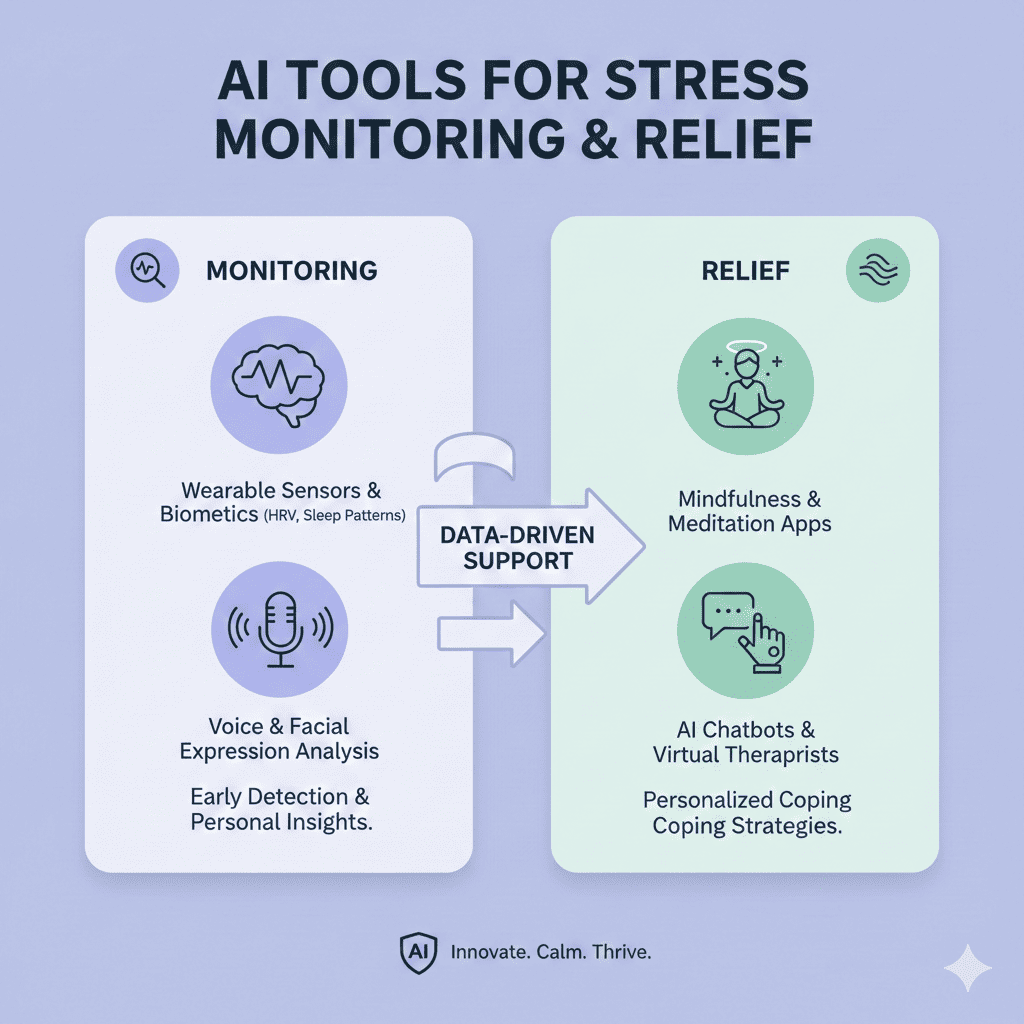
In today’s fast-paced digital world, stress has become an unavoidable companion for millions of people. Whether it’s work pressure, personal challenges, or the constant connectivity that modern life demands, managing stress effectively is more crucial than ever. Fortunately, technology has evolved to meet this challenge head-on. AI Tools for Stress Monitoring and Relief are revolutionizing how we understand, track, and manage our mental well-being, offering personalized solutions that adapt to our unique needs.
The integration of artificial intelligence into mental health care has opened up unprecedented possibilities for proactive stress management. These sophisticated tools can detect patterns in our behavior, predict stress triggers, and provide real-time interventions when we need them most. Let’s explore the most effective AI Tools for Stress Monitoring and Relief that are transforming the landscape of mental wellness.
1. Understanding How AI Revolutionizes Stress Management
Artificial intelligence has fundamentally changed our approach to mental health by making stress monitoring more accessible, accurate, and personalized than ever before. Traditional stress management methods often relied on self-reporting and periodic check-ins with healthcare providers, but AI-powered solutions offer continuous monitoring and instant feedback.
These intelligent systems analyze multiple data points simultaneously, including physiological markers like heart rate variability, sleep patterns, and even voice tonality, to create a comprehensive picture of your stress levels. Machine learning algorithms can identify subtle changes in your behavior or biometrics that might indicate rising stress levels before you consciously recognize them yourself.
The beauty of AI Tools for Stress Monitoring and Relief lies in their ability to learn from your unique patterns. Unlike one-size-fits-all approaches, these tools adapt to your individual stress responses, daily routines, and personal triggers, providing increasingly accurate insights over time.
2. Top AI-Powered Mental Health Apps
The market for digital mental health solutions has exploded in recent years, with numerous apps leveraging AI to provide comprehensive stress management support. These applications combine evidence-based therapeutic techniques with cutting-edge technology to deliver personalized mental health care directly to your smartphone.
Wysa stands out as an AI-powered emotional support chatbot that uses conversational AI to provide immediate support during stressful moments. The app employs cognitive behavioral therapy (CBT) techniques and offers guided self-help exercises. What makes Wysa particularly effective is its ability to recognize emotional patterns in your conversations and suggest appropriate interventions, whether that’s breathing exercises, meditation, or cognitive reframing techniques.
Woebot represents another breakthrough in AI-driven mental health support. This chatbot therapist engages users in daily conversations, helping them track their mood, identify negative thought patterns, and develop healthier coping mechanisms. Woebot’s conversational AI adapts to your communication style, making interactions feel natural and supportive rather than clinical.
Youper takes a slightly different approach by combining mood tracking with AI-powered conversations that help users understand the connection between their thoughts, emotions, and behaviors. The app uses techniques from CBT, mindfulness, and acceptance and commitment therapy (ACT) to provide personalized mental health support.
3. Wearable Technology for Real-Time Stress Detection
Wearable devices have become sophisticated stress monitoring tools, using biometric sensors to track physiological indicators of stress throughout the day. These devices represent some of the most advanced AI Tools for Stress Monitoring and Relief available to consumers today.
Fitbit and Apple Watch have evolved beyond simple fitness trackers to become comprehensive health monitoring platforms. Both devices now include stress management features that track heart rate variability (HRV), a key indicator of stress levels. The AI algorithms in these devices analyze your HRV patterns alongside other metrics like sleep quality, activity levels, and breathing patterns to provide personalized stress insights and guided breathing exercises when stress levels spike.
Muse headbands take stress monitoring to the next level by directly measuring brain activity through EEG sensors. The device uses AI to analyze your brain waves during meditation and provides real-time audio feedback to help you achieve deeper states of relaxation. This neurofeedback approach helps users develop better meditation skills and gain greater control over their stress responses.
Oura Ring focuses on recovery and readiness, using advanced sensors to track sleep stages, body temperature, and HRV throughout the night. The ring’s AI algorithms synthesize this data to provide daily readiness scores and personalized recommendations for managing stress and optimizing performance.
4. AI-Enhanced Meditation and Mindfulness Platforms
Meditation has long been recognized as one of the most effective stress relief techniques, and AI is making these practices more accessible and personalized than ever. Modern AI Tools for Stress Monitoring and Relief in this category go beyond simple guided meditations to create truly adaptive experiences.
Headspace has integrated AI features that personalize meditation recommendations based on your mood, stress levels, and meditation history. The app’s AI analyzes your usage patterns to suggest the most relevant content at the right time, whether you need help falling asleep, managing anxiety, or preparing for a stressful event.
Calm utilizes machine learning to understand which types of content resonate most with individual users. The platform’s AI curates personalized playlists of meditations, sleep stories, and music based on your preferences and stress patterns, continuously refining its recommendations to maximize effectiveness.
Breethe employs AI to create adaptive meditation programs that evolve with your practice. The app tracks your progress and adjusts session length, difficulty, and focus areas to match your developing skills and changing needs.
5. Intelligent Sleep Management Systems
Quality sleep is fundamental to stress management, and AI-powered sleep technology has made significant strides in helping people achieve better rest. These systems use sophisticated algorithms to analyze sleep patterns and provide actionable insights for improvement.
SleepScore uses sonar technology and AI to monitor your sleep without wearing any device. The app’s algorithms analyze your breathing patterns, movements, and environmental factors to provide detailed sleep quality reports and personalized recommendations for improving your rest. Since poor sleep significantly contributes to stress, these AI Tools for Stress Monitoring and Relief address a crucial aspect of overall well-being.
Sleep Cycle employs AI to determine the optimal time to wake you during your lightest sleep phase, reducing grogginess and morning stress. The app analyzes years of sleep data to identify patterns and correlations between your daily activities and sleep quality, helping you make lifestyle adjustments that promote better rest.
6. Voice Analysis Technology for Stress Detection
Emerging voice analysis technology represents one of the most innovative categories of AI Tools for Stress Monitoring and Relief. These systems can detect subtle changes in vocal patterns that indicate stress, anxiety, or other emotional states.
Sonde Health has developed AI algorithms that analyze vocal biomarkers to assess mental and physical health. The technology can detect changes in voice that correlate with stress, depression, and other conditions, potentially alerting users to seek additional support before problems escalate.
Ellipsis Health offers similar voice-based mental health screening that can be integrated into telehealth platforms. The AI analyzes speech patterns during conversations to identify signs of anxiety and depression, providing objective data that complements traditional mental health assessments.
7. AI-Powered Journaling and Mood Tracking
Digital journaling apps enhanced with AI capabilities provide powerful tools for understanding and managing stress. These platforms go beyond simple note-taking to offer intelligent insights into emotional patterns and triggers.
Replika functions as an AI companion that engages in conversational journaling. The more you interact with it, the better it understands your personality, concerns, and stressors. This personalized AI friend can provide emotional support, help you process difficult experiences, and offer coping strategies tailored to your specific situation.
Daylio uses AI to analyze mood patterns and identify correlations between your activities and emotional states. By tracking moods alongside daily activities without requiring written entries, the app makes it easy to discover what triggers stress and what promotes well-being in your life.
Moodnotes employs AI to help users develop healthier thinking habits. The app recognizes patterns in your thought processes and gently guides you toward more balanced perspectives using principles from cognitive behavioral therapy.
8. Workplace Stress Management Solutions
Corporate wellness programs increasingly incorporate AI Tools for Stress Monitoring and Relief to support employee mental health and productivity. These enterprise solutions offer features specifically designed for workplace stress management.
Unmind provides a comprehensive workplace mental health platform that uses AI to deliver personalized well-being programs. The system tracks employee engagement with various wellness resources and uses this data to refine recommendations and measure the effectiveness of mental health initiatives.
Ginger combines AI-powered chat support with access to human coaches and therapists, creating a tiered system of care that can scale to meet the needs of large organizations. The AI analyzes patterns across the workforce to identify common stressors and suggest systemic improvements.
9. Biofeedback and Neurofeedback Systems
Advanced biofeedback systems use AI to help individuals gain conscious control over physiological processes typically considered automatic. These AI Tools for Stress Monitoring and Relief train users to regulate their stress responses through real-time feedback.
HeartMath Inner Balance uses HRV biofeedback with AI algorithms to help users achieve coherence between their heart, mind, and emotions. The system provides real-time visualization of your heart rhythms and guides you toward patterns associated with reduced stress and improved emotional stability.
BrainTap combines light and sound therapy with guided visualization, using AI to customize sessions based on your goals and responses. The system’s algorithms adjust the frequency and intensity of audio-visual stimulation to optimize stress reduction and mental clarity.
10. Personalized Therapy and Counseling Platforms
AI is making professional mental health support more accessible through platforms that augment traditional therapy with intelligent features. While these tools don’t replace human therapists, they extend support between sessions and make professional help more affordable.
Talkspace and BetterHelp have integrated AI features that help match clients with appropriate therapists based on their specific needs, communication preferences, and presenting concerns. AI also helps therapists by analyzing session notes and suggesting evidence-based interventions.
Limbic serves as an AI clinical assistant that helps mental health professionals deliver more effective care. The system analyzes patient data to identify risk factors, track progress, and suggest treatment adjustments, allowing therapists to provide more personalized and proactive care.
11. Environmental Optimization Tools
Your physical environment significantly impacts stress levels, and AI-powered systems can help optimize your surroundings for mental well-being. These AI Tools for Stress Monitoring and Relief consider factors like lighting, temperature, and air quality.
Philips Hue smart lighting uses AI to adjust color temperature and brightness throughout the day, mimicking natural light patterns to support your circadian rhythm. Proper lighting can significantly impact mood and stress levels, making this a valuable tool for creating calming environments.
Nest Learning Thermostat uses AI to maintain optimal temperature and humidity levels in your home, learning your preferences and adjusting automatically. Since temperature discomfort can be a subtle but persistent stressor, these intelligent climate control systems contribute to overall well-being.
12. Social Connection and Support Networks
AI-powered platforms are facilitating meaningful social connections, which play a crucial role in stress management and emotional resilience. These tools help combat isolation and provide structured support networks.
7 Cups offers emotional support through a combination of AI-powered chat and connections with trained listeners. The platform uses AI to match users with appropriate support resources and identify when someone might need escalated care from a professional therapist.
Supportiv creates anonymous peer support groups using AI to match people facing similar challenges. The system’s algorithms ensure users connect with others who can provide relevant support and understanding, creating a safe space for sharing and healing.
Implementing AI Tools into Your Stress Management Routine
Successfully integrating AI Tools for Stress Monitoring and Relief into your daily life requires a thoughtful approach. Start by identifying your specific stress triggers and symptoms. Are you struggling with work-related anxiety, sleep problems, or general overwhelm? Different tools excel in different areas, so choose solutions that address your particular challenges.
Begin with one or two tools rather than overwhelming yourself with multiple apps and devices. Give each tool sufficient time to learn your patterns and provide meaningful insights. Most AI systems become more accurate and helpful over time as they gather more data about your unique stress responses.
Establish a consistent routine for using your chosen tools. Whether it’s morning meditation with an AI-guided app, tracking your mood throughout the day, or reviewing stress data from your wearable device each evening, consistency helps you recognize patterns and measure progress.
Pay attention to which features and interventions work best for you. AI tools often offer various stress relief techniques, from breathing exercises to cognitive restructuring to progressive muscle relaxation. Notice which methods resonate with you and prioritize those in your practice.
Remember that AI Tools for Stress Monitoring and Relief work best as part of a comprehensive approach to mental health. Combine technology with other evidence-based practices like regular exercise, healthy eating, adequate sleep, and meaningful social connections. AI tools should enhance rather than replace fundamental self-care practices.
Privacy and Data Security Considerations
When using AI Tools for Stress Monitoring and Relief, it’s essential to understand how your personal health data is collected, stored, and used. Choose platforms with strong privacy policies and transparent data practices. Look for apps that encrypt your data, allow you to control what information is shared, and provide clear explanations of how AI algorithms use your information.
Be particularly cautious about tools that share data with third parties or use your information for purposes beyond providing you with stress management support. Read privacy policies carefully and adjust app permissions to minimize unnecessary data collection.
Consider whether you’re comfortable with cloud-based storage of sensitive mental health information. Some tools offer local data storage options that keep your information on your device rather than uploading it to external servers.
The Future of AI in Stress Management
The field of AI-powered mental health support continues to evolve rapidly. Emerging technologies promise even more sophisticated AI Tools for Stress Monitoring and Relief in the coming years. We’re seeing development in areas like emotion recognition through facial analysis, more advanced predictive algorithms that can anticipate stress crises before they occur, and integration between multiple monitoring systems for holistic health insights.
Virtual reality combined with AI is creating immersive stress relief experiences that transport users to calming environments while monitoring their physiological responses and adjusting the experience in real-time. Augmented reality applications may soon overlay stress management guidance directly into our daily environments, providing just-in-time interventions exactly when and where we need them.
Advances in natural language processing are making AI conversation agents increasingly sophisticated and human-like, potentially providing more effective emotional support and therapeutic interventions. Meanwhile, improvements in sensor technology are enabling more accurate and less intrusive monitoring of stress-related biomarkers.
Conclusion: Embracing AI for Better Mental Health
The proliferation of AI Tools for Stress Monitoring and Relief represents a significant advancement in how we approach mental health and well-being. These technologies democratize access to stress management techniques, provide personalized support that adapts to individual needs, and empower people to take proactive control of their mental health.
Whether you choose a comprehensive mental health app, a wearable stress monitor, an AI meditation guide, or a combination of tools, the key is finding solutions that fit seamlessly into your life and genuinely help you manage stress more effectively. The best tool is the one you’ll actually use consistently.
As AI technology continues to advance, we can expect even more innovative solutions that make stress management more accessible, effective, and personalized. By embracing these AI Tools for Stress Monitoring and Relief thoughtfully and integrating them into a holistic approach to wellness, you can build greater resilience, improve your quality of life, and navigate life’s challenges with greater ease and confidence.
Remember that while technology offers powerful support, it’s not a substitute for professional medical advice when needed. If you’re experiencing severe or persistent stress, anxiety, or other mental health concerns, consult with a qualified healthcare provider who can offer comprehensive evaluation and treatment. AI Tools for Stress Monitoring and Relief are most effective as part of a broader wellness strategy that includes professional support when necessary, healthy lifestyle choices, and meaningful human connections.
Also read this:
Top AI Tools for Real-Time Translation & Subtitles: Breaking Language Barriers in 2025
Top AI Architecture Tools for 3D Floor Plans: Transform Your Design Workflow in 2025
Best AI Tools for Website Performance Optimization: Boost Speed and User Experience in 2025