
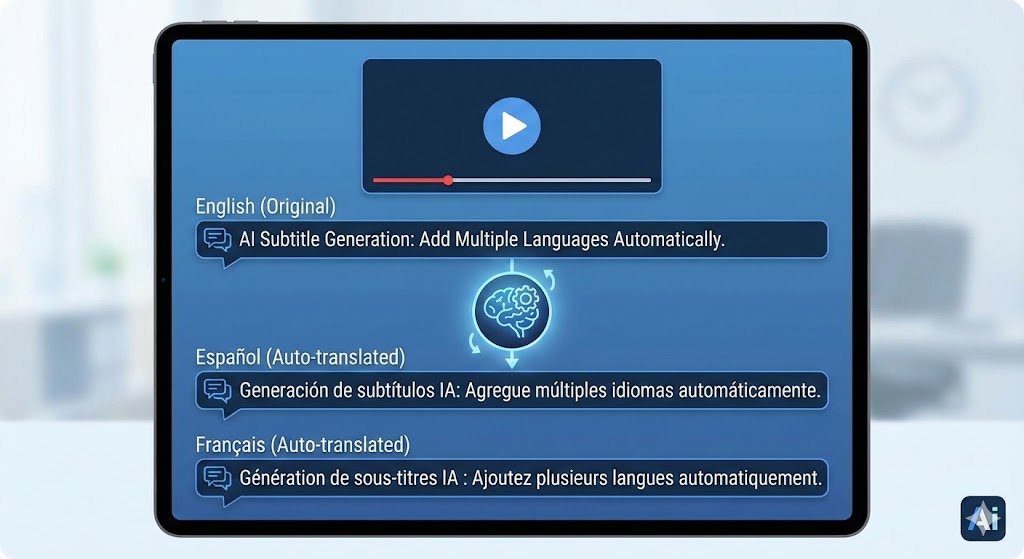
The digital video landscape has been transformed by the emergence of AI Subtitle Generation technology, revolutionizing how content creators make their videos accessible to global audiences. What once required hours of manual transcription and translation can now be accomplished in minutes with remarkable accuracy. This technological breakthrough is reshaping content strategy for businesses, educators, and creators worldwide, enabling them to reach millions of viewers who prefer or require subtitles in their native languages.
1. The Transformative Power of AI Subtitle Generation
AI Subtitle Generation represents a paradigm shift in content accessibility and global reach. Traditional subtitle creation was labor-intensive, requiring professional transcriptionists who charged between one and five dollars per minute of video. For a single hour-long video, costs could easily exceed three hundred dollars for just one language. Multiply that across ten or twenty languages, and the expense becomes prohibitive for most content creators.
Modern AI-powered solutions have democratized subtitle creation by offering:
- Automatic speech recognition that transcribes audio with over ninety-five percent accuracy
- Instant translation into dozens of languages simultaneously
- Intelligent timing and synchronization with video content
- Formatting that adheres to professional captioning standards
- Cost reduction of up to ninety percent compared to manual methods
- Processing speeds that handle hours of content in minutes
The impact extends beyond mere convenience. Studies consistently show that videos with subtitles achieve higher engagement rates, longer watch times, and better search engine rankings. Social media platforms increasingly prioritize captioned content in their algorithms, recognizing that a significant portion of users watch videos without sound. For businesses, this technology opens doors to international markets previously considered too expensive to enter.
The technology has matured rapidly, with neural networks now understanding context, detecting multiple speakers, and even recognizing industry-specific terminology. This sophistication allows creators to produce professional-grade subtitles without the traditional bottlenecks of human transcription services.
2. Understanding How AI Subtitle Generation Technology Works
The mechanics behind AI Subtitle Generation involve multiple sophisticated artificial intelligence systems working in concert. Understanding these processes helps users leverage the technology effectively and troubleshoot when challenges arise.
Advanced Speech Recognition Systems
Modern subtitle generation begins with automatic speech recognition engines that analyze audio through:
- Acoustic models that identify phonemes and sound patterns
- Language models that predict word sequences based on context
- Deep learning networks trained on millions of hours of speech data
- Real-time processing algorithms that handle various accents and dialects
- Speaker diarization that identifies and labels different voices
- Noise reduction filters that isolate speech from background audio
These systems have evolved dramatically from early speech recognition technology. Contemporary AI models can distinguish between homophones based on context, understand natural speech patterns including filler words and hesitations, and adapt to domain-specific vocabulary.
Neural Machine Translation
Once speech is transcribed, AI Subtitle Generation platforms employ neural translation systems that:
- Analyze entire sentences rather than translating word-by-word
- Maintain contextual meaning across language boundaries
- Adapt idioms and expressions to cultural equivalents
- Preserve technical terminology accuracy
- Consider grammatical structure differences between languages
- Apply style consistency across translated content
These translation engines leverage transformer architectures similar to those powering advanced language models, ensuring translations that sound natural rather than mechanically literal.
Timing and Synchronization Algorithms
Proper subtitle timing is crucial for viewer experience. AI systems automatically:
- Segment text into readable chunks based on reading speed research
- Align subtitle appearance with corresponding audio
- Calculate optimal display duration for each subtitle
- Add natural breaks at punctuation marks and speech pauses
- Adjust for reading speed differences across languages
- Ensure subtitles never overlap or flash too quickly
Formatting and Quality Control
Professional subtitle standards require specific formatting, which AI handles through:
- Character-per-line limitations for readability
- Line break optimization at natural language boundaries
- Speaker identification formatting
- Musical notation and sound effect descriptions
- Position adjustment to avoid obscuring important visual elements
- Color coding for multiple speakers when requested
3. Key Benefits of Implementing AI Subtitle Generation
The advantages of adopting AI Subtitle Generation extend across multiple dimensions, impacting audience reach, engagement metrics, accessibility compliance, and content performance.
Massive Audience Expansion
Subtitles fundamentally alter who can access your content:
- Deaf and hard-of-hearing communities gain full access to video content
- Non-native speakers can follow along in their preferred language
- Viewers in sound-sensitive environments like offices or public transit can engage
- Search engines can index video content through subtitle text
- Social media autoplay with muted audio becomes effective
- Global markets become accessible without expensive localization
Enhanced Viewer Engagement and Retention
Data consistently demonstrates that subtitled content performs better:
- Average view duration increases by twelve to forty percent
- Engagement rates rise significantly across all demographics
- Comprehension improves even for native language speakers
- Viewer completion rates increase for longer-form content
- Social shares multiply when content is accessible to more people
- Comments and community interaction expand with broader accessibility
Search Engine Optimization Advantages
AI Subtitle Generation provides substantial SEO benefits through:
- Searchable text content that search engines can crawl and index
- Keyword optimization opportunities within subtitle files
- Improved video ranking in both general and video search results
- Enhanced discoverability through transcript-based searches
- Rich snippets that display in search engine results
- Longer page dwell times signaling content quality to algorithms
Compliance and Accessibility Requirements
Many jurisdictions mandate video accessibility:
- Legal compliance with ADA requirements in the United States
- WCAG accessibility standard adherence for web content
- Educational institution requirements for course materials
- Corporate training module accessibility obligations
- Broadcasting regulations in numerous countries
- Government contract requirements for accessible content
Cost Efficiency and Scalability
The economic advantages of AI solutions are compelling:
- Reduction of ninety percent or more compared to manual transcription
- Elimination of per-language multiplier costs
- Instant scalability to handle large content libraries
- No scheduling delays or availability constraints
- Easy updates and corrections without re-hiring services
- Batch processing capabilities for efficiency
4. Leading Platforms and Tools for AI Subtitle Generation
The market for AI Subtitle Generation has matured significantly, with numerous platforms offering varying capabilities, pricing models, and feature sets to accommodate different user needs.
Enterprise-Grade Solutions
Professional platforms designed for high-volume content operations offer:
- Custom vocabulary training for industry-specific terminology
- API integration for automated content workflows
- Team collaboration features with role-based permissions
- Advanced editing interfaces with timeline synchronization
- Priority processing and dedicated technical support
- White-label options for agencies and resellers
- Compliance features for regulatory requirements
- Multi-format export for various platforms and standards
Mid-Market Platforms
Balanced solutions that serve growing businesses and serious creators include:
- Intuitive web-based interfaces requiring no technical expertise
- Extensive language libraries covering major global markets
- Reasonable processing speeds for standard content volumes
- Basic editing tools for corrections and refinements
- Integration with popular video hosting platforms
- Subscription models with predictable monthly costs
- Standard customer support through multiple channels
- Export formats compatible with major video platforms
Entry-Level and Freemium Tools
Accessible options for individual creators and small projects provide:
- Free tiers with basic functionality and reasonable limits
- Pay-as-you-go pricing for occasional users
- Simplified workflows optimized for speed
- Essential language options covering primary markets
- Community forums for peer support and tips
- Standard accuracy suitable for general content
- Mobile apps for on-the-go subtitle generation
- Direct upload to social media platforms
5. Best Practices for Creating Quality Subtitles with AI
Maximizing the effectiveness of AI Subtitle Generation requires following established best practices that ensure professional results and optimal viewer experience.
Optimizing Source Audio Quality
The foundation of accurate subtitles begins with quality audio:
- Record in quiet environments with minimal background noise
- Use quality microphones positioned appropriately for speakers
- Maintain consistent audio levels throughout recordings
- Avoid heavy background music that competes with speech
- Eliminate echo through proper acoustic treatment
- Test audio equipment before important recordings
- Use pop filters to reduce plosive sounds
- Record at appropriate bit rates for clarity
Reviewing and Editing AI Output
While AI Subtitle Generation is highly accurate, human review enhances quality:
- Check for homophones that may be incorrectly transcribed
- Verify proper names, brands, and technical terms
- Confirm punctuation reflects intended meaning
- Ensure speaker changes are properly identified
- Adjust timing for optimal readability
- Remove filler words that don’t add value
- Correct any contextual misunderstandings
- Standardize terminology across subtitle sets
Formatting for Maximum Readability
Professional subtitle presentation follows specific principles:
- Limit lines to thirty-two to forty-two characters maximum
- Display no more than two lines of text simultaneously
- Position subtitles to avoid obscuring important visual elements
- Use proper capitalization and punctuation
- Break lines at natural language boundaries
- Maintain consistent font sizing and styling
- Ensure sufficient contrast with background video
- Time displays to allow comfortable reading speeds
Adapting Subtitles for Different Platforms
Various platforms have specific requirements and best practices:
- YouTube prefers SRT or VTT formats with specific styling
- Facebook and Instagram favor burned-in subtitles for mobile viewing
- LinkedIn professional content benefits from more formal language
- TikTok style emphasizes large, bold text with minimal duration
- Educational platforms require detailed descriptions of sounds
- Accessibility compliance may mandate specific format standards
- Streaming services have unique technical specifications
- Corporate training platforms often require detailed timestamps
6. Industries Revolutionized by AI Subtitle Generation
AI Subtitle Generation technology is transforming content strategies across diverse sectors, with each industry discovering unique applications and benefits.
Education and E-Learning
Educational institutions and online course providers leverage AI subtitles to:
- Ensure course accessibility for students with hearing impairments
- Support language learners with dual-language subtitle options
- Enable flexible learning for students in various environments
- Improve comprehension through visual reinforcement of spoken content
- Comply with educational accessibility regulations
- Expand course offerings to international student populations
- Create searchable lecture archives
- Facilitate note-taking and study review
Marketing and Content Creation
Digital marketers and content creators use subtitle technology for:
- Increasing social media reach and engagement rates
- Capturing attention in autoplay situations without sound
- Localizing advertising campaigns for global markets
- Improving video SEO and discoverability
- Creating accessible brand content
- Testing messaging across different demographic groups
- Repurposing video content for multiple platforms
- Analyzing engagement patterns across subtitle languages
Corporate Communications
Businesses implement AI Subtitle Generation for:
- Internal communications accessible to global workforces
- Training videos that accommodate diverse learning styles
- Investor presentations with multilingual accessibility
- Product demonstrations for international markets
- Customer support and tutorial content
- Conference recordings and webinar archives
- Executive messages reaching all employees
- Compliance training with documented accessibility
Entertainment and Media
Content producers and broadcasters utilize AI subtitles to:
- Rapidly subtitle news and current events content
- Create multilingual versions of original programming
- Enhance documentary accessibility and reach
- Support podcast video versions with searchable text
- Provide accessibility for streaming platforms
- Meet broadcasting accessibility requirements
- Expand content libraries to international markets
- Reduce post-production timelines and costs
7. Overcoming Common Challenges in AI Subtitle Generation
While AI Subtitle Generation has advanced considerably, understanding common challenges and their solutions helps users achieve optimal results.
Handling Multiple Speakers and Crosstalk
AI systems can struggle when multiple people speak simultaneously:
- Use high-quality audio with distinct speaker channels when possible
- Edit audio to minimize overlapping speech before subtitle generation
- Manually review and correct speaker attribution
- Employ platforms with advanced speaker diarization
- Consider separate recordings for multi-speaker content
- Use visual cues in editing to clarify speaker changes
- Add speaker labels manually when automatic detection fails
Managing Technical Terminology and Jargon
Industry-specific language may not be recognized accurately:
- Build custom vocabulary lists in platforms that support them
- Provide reference documents or glossaries to AI systems
- Review and correct specialized terms systematically
- Create style guides for consistent terminology
- Use domain-specific AI models when available
- Maintain terminology databases for future projects
- Train team members on common correction needs
- Consider professional review for highly technical content
Addressing Accent and Dialect Variations
Different accents can affect transcription accuracy:
- Choose AI platforms specifically trained on diverse accents
- Speak clearly and at moderate pace during recordings
- Use multiple AI services and compare results
- Consider accent-specific models when available
- Apply manual corrections for consistently misheard words
- Provide context through reference materials
- Test different AI engines for your specific needs
- Use human reviewers familiar with relevant dialects
Balancing Automation with Quality Control
Finding the right balance between speed and accuracy:
- Establish quality standards appropriate to content type
- Create tiered review processes based on content importance
- Use AI for first drafts with human refinement for finals
- Implement spot-checking systems for high-volume content
- Track common errors and adjust processes accordingly
- Train team members on efficient editing workflows
- Build quality metrics into production schedules
- Accept appropriate accuracy levels for informal content
8. The Future of AI Subtitle Generation Technology
The trajectory of AI Subtitle Generation points toward increasingly sophisticated capabilities that will further transform how we create and consume video content.
Emerging Technological Capabilities
Near-future developments include:
- Real-time subtitle generation for live streaming with minimal delay
- Emotion and tone detection reflected in subtitle styling
- Automatic context-aware translation that understands cultural nuances
- Visual scene analysis to optimize subtitle positioning
- Multi-modal AI that understands both audio and visual context
- Personalized subtitle preferences adapting to viewer habits
- Integration with augmented reality and spatial computing
- Quantum computing acceleration for massive content libraries
Enhanced Accessibility Features
Advancing accessibility goes beyond basic subtitles:
- Detailed audio descriptions of visual elements
- Emotion indicators for deaf viewers
- Sound effect descriptions with spatial positioning
- Music notation and lyric synchronization
- Adjustable reading speeds personalized to viewers
- Cognitive accessibility features for learning differences
- Integration with assistive technologies
- Universal design principles in subtitle presentation
Market Evolution and Democratization
The industry continues moving toward greater accessibility:
- Further cost reductions making technology universally available
- Mobile-first subtitle creation and editing tools
- Voice-controlled subtitle editing for accessibility
- Blockchain-based rights management for subtitle creators
- Open-source alternatives to commercial platforms
- Community-driven subtitle improvement systems
- Integration with consumer video creation apps
- Simplified workflows requiring no technical knowledge
Regulatory and Standards Development
As technology advances, standards evolve:
- Global harmonization of accessibility requirements
- Industry-specific subtitle accuracy standards
- Quality certification programs for AI providers
- Privacy regulations affecting voice data processing
- Disclosure requirements for AI-generated subtitles
- International cooperation on accessibility mandates
- Professional standards for subtitle editing
- Educational programs for subtitle professionals
9. Measuring the Impact of Your Subtitle Strategy
Implementing AI Subtitle Generation requires evaluating its effectiveness through concrete metrics that demonstrate value and guide optimization efforts.
Quantitative Performance Metrics
Track measurable outcomes including:
- View duration comparison between subtitled and unsubtitled content
- Completion rates across different video lengths
- Engagement metrics including likes, shares, and comments
- Click-through rates from video to website or calls-to-action
- Conversion rates from video viewers to customers
- Search ranking improvements for subtitled content
- Geographic distribution of viewership across subtitle languages
- Cost per video analysis comparing AI to traditional methods
Audience Reach and Growth
Monitor expansion metrics such as:
- New viewer demographics accessing content
- International audience growth patterns
- Accessibility-driven traffic increases
- Social media follower growth attributed to subtitled content
- Email list growth from international subscribers
- Market penetration in new geographic regions
- Platform-specific reach metrics
- Referral traffic from subtitle-enhanced discoverability
Accessibility and Compliance Outcomes
Evaluate accessibility achievements through:
- Percentage of content library with complete subtitles
- Compliance audit results and accessibility scores
- User feedback from accessibility community members
- Reduction in accessibility-related complaints
- Legal compliance documentation completeness
- Employee or student satisfaction with accessible materials
- Third-party accessibility certification achievements
- Inclusion metrics across diverse user populations
Return on Investment Analysis
Calculate financial impact including:
- Direct cost savings from AI versus manual subtitling
- Revenue increases from expanded market access
- Customer acquisition cost reductions through better reach
- Time savings allowing greater content production volume
- Reduced legal risk from accessibility compliance
- Brand value enhancement from inclusive content
- Employee productivity improvements from accessible training
- Competitive advantage gains in global markets
10. Getting Started with AI Subtitle Generation
Launching your AI Subtitle Generation initiative requires a structured approach that ensures successful implementation and maximizes return on investment.
Assessing Your Subtitle Needs
Begin by evaluating your specific requirements:
- Catalog existing content requiring subtitles
- Identify priority languages based on audience data
- Determine quality standards for different content types
- Calculate current costs if using manual transcription
- Establish accessibility compliance requirements
- Assess technical capabilities within your team
- Define success metrics and target outcomes
- Set realistic timelines for implementation
Selecting the Right Platform
Choose an AI solution based on careful evaluation:
- Feature alignment with your specific workflow needs
- Language support matching your target markets
- Accuracy rates appropriate for your content type
- Integration capabilities with existing tools and platforms
- Pricing structure fitting your budget and volume
- Customer support quality and responsiveness
- User interface intuitiveness for your team
- Scalability to accommodate future growth
Implementing a Pilot Program
Test the technology before full commitment:
- Select representative sample content for initial testing
- Generate subtitles for priority languages first
- Establish quality control processes
- Train team members on platform features
- Document workflows and best practices
- Gather feedback from content viewers
- Calculate actual time and cost savings
- Identify areas for process refinement
Scaling and Optimization
After successful pilots, expand your program:
- Develop comprehensive subtitle creation guidelines
- Establish regular production schedules
- Build quality assurance checkpoints
- Create translation review processes for key languages
- Monitor performance metrics continuously
- Stay informed about platform updates and new features
- Optimize workflows based on experience
- Expand language offerings based on audience growth
Building Long-Term Subtitle Strategy
Develop sustainable practices for ongoing success:
- Integrate subtitle creation into standard content workflows
- Allocate appropriate resources for quality control
- Maintain terminology databases and style guides
- Regularly audit accessibility compliance
- Gather systematic viewer feedback
- Track industry developments in AI subtitle technology
- Participate in accessibility communities
- Continuously refine processes based on data and feedback
Conclusion: Embracing Universal Content Accessibility
AI Subtitle Generation represents far more than a convenient productivity tool. It embodies a fundamental democratization of content access, ensuring that language barriers, hearing disabilities, and environmental constraints no longer prevent people from engaging with valuable video content.
The technology has reached a maturity level where quality, speed, and affordability converge to make subtitling not just possible but practical for creators of all sizes. Organizations that embrace AI-powered subtitling position themselves advantageously in an increasingly connected world where accessible, multilingual content is essential for competitive success.
As algorithms continue improving with advances in natural language processing, speech recognition, and neural translation, the gap between AI-generated and professionally human-created subtitles continues narrowing. Early adopters who integrate AI Subtitle Generation into their content strategies today build valuable expertise and inclusive audiences that compound over time.
The question facing content creators is no longer whether to add subtitles, but how quickly they can implement comprehensive subtitle strategies that serve global, diverse audiences. The technology exists, the benefits are proven, and the audiences are waiting. The future of content is accessible, multilingual, and universally engaging, and AI subtitle generation is the key that unlocks that future.
Also read this:
AI Video Dubbing: Translate & Voice Videos Without Hiring Artists
Google Confirms AI Content Can Rank — If It Meets Quality Standards
Instagram Ad-Free Premium Subscription: Early Access & Benefits