
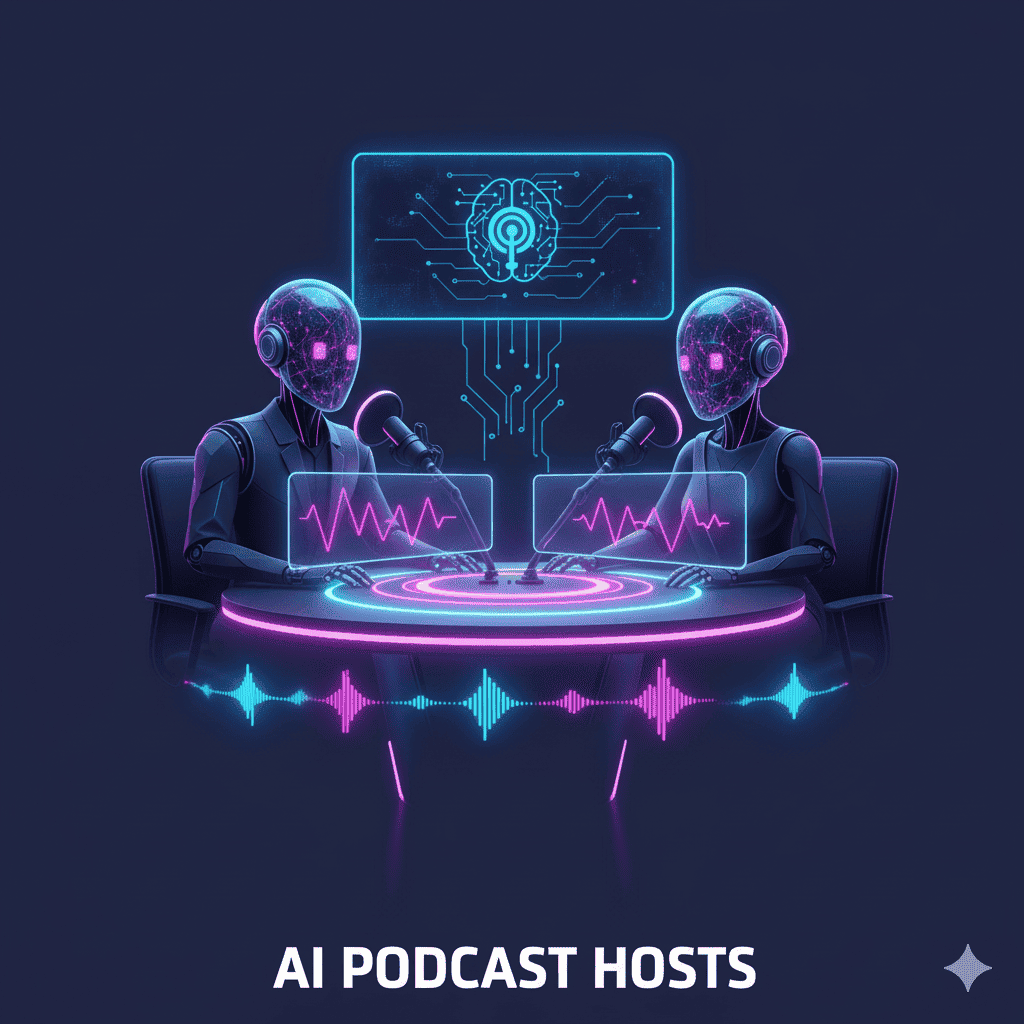
The podcasting landscape is experiencing a seismic shift that’s sending ripples through the entire audio industry. AI podcast hosts are no longer science fiction – they’re here, they’re sophisticated, and they’re challenging everything we thought we knew about authentic audio content. As artificial intelligence technology advances at breakneck speed, one burning question emerges: Are human podcasters about to become obsolete?
The rise of AI podcast hosts represents more than just technological innovation; it’s a fundamental transformation of how we create, consume, and connect through audio content. From Silicon Valley startups to major media corporations, everyone is racing to perfect synthetic voices that can engage audiences, conduct interviews, and deliver content with human-like warmth and personality.
The Current State of AI Podcast Hosts
Technology That’s Already Here
AI podcast hosts aren’t a distant future concept – they’re already making waves in the podcasting world. Companies like Spotify, Google, and specialized AI firms have developed sophisticated text-to-speech technologies that can generate remarkably human-like voices capable of hosting entire podcast episodes.
Current AI podcast hosts can read scripts with natural intonation, pause appropriately for emphasis, and even adjust their tone based on content context. Some advanced systems can generate conversations between multiple AI voices, creating the illusion of dynamic discussions and interviews.
Real-World Applications
Several prominent examples demonstrate how AI podcast hosts are being deployed today. News organizations use them for daily briefings, educational platforms employ them for course content, and even entertainment companies experiment with AI-generated talk shows.
The technology has reached a sophistication level where many listeners can’t immediately distinguish between AI podcast hosts and their human counterparts, especially in scripted, information-heavy content formats.
The Advantages of AI Podcast Hosts
Cost Efficiency Revolution
Traditional podcast production involves significant costs: host fees, studio time, editing, and ongoing talent management. AI podcast hosts eliminate most of these expenses, allowing creators to produce content at a fraction of traditional costs.
This economic advantage is particularly appealing to businesses, educational institutions, and content creators who need to produce large volumes of audio content regularly. AI podcast hosts can work around the clock without breaks, vacations, or salary negotiations.
Consistency and Reliability
Human hosts have bad days, get sick, and sometimes struggle with pronunciation or energy levels. AI podcast hosts deliver consistent performance every single time, maintaining the same energy, clarity, and professional quality regardless of external factors.
This reliability is invaluable for brands that need consistent messaging and tone across all content. AI podcast hosts never have personal opinions that conflict with brand values or accidentally say something controversial that could damage reputation.
Scalability and Personalization
AI podcast hosts can be customized for different audiences, languages, and content types. The same AI system can generate multiple distinct personalities, each tailored for specific demographics or subject matters.
This scalability allows content creators to produce personalized podcast experiences for different audience segments without hiring multiple human hosts. AI podcast hosts can even be programmed to incorporate listener names and preferences for highly personalized content delivery.
Speed and Efficiency
Content production with AI podcast hosts happens at unprecedented speed. What might take days of recording, editing, and post-production with human hosts can be accomplished in hours with AI systems.
This rapid turnaround is particularly valuable for time-sensitive content like news podcasts, market updates, or educational series that need frequent updates.
The Human Element: What AI Podcast Hosts Can’t Replace
Authentic Personal Connection
Despite technological advances, AI podcast hosts struggle to create genuine emotional connections with audiences. Human hosts bring personal experiences, vulnerabilities, and authentic reactions that resonate deeply with listeners.
The most successful podcasts often succeed because audiences feel like they’re having conversations with friends. This intimate connection relies on human imperfections, spontaneous insights, and genuine emotional responses that AI podcast hosts cannot authentically replicate.
Creative Spontaneity and Improvisation
Human hosts excel at improvisation, handling unexpected situations, and creating spontaneous moments of brilliance that make podcast episodes memorable. AI podcast hosts, despite their sophistication, operate within programmed parameters and cannot truly improvise or create unexpected creative moments.
The magic of live interviews, unscripted conversations, and spontaneous humor remains firmly in human territory, at least for now.
Complex Emotional Intelligence
Understanding nuance, reading between the lines, and responding appropriately to complex emotional situations requires sophisticated emotional intelligence that AI podcast hosts haven’t mastered.
Human hosts can sense when guests are uncomfortable, know when to push for more information, and understand cultural contexts that might affect conversation dynamics.
Industry Perspectives: How Professionals View AI Podcast Hosts
Embracing the Technology
Many industry professionals see AI podcast hosts as powerful tools rather than replacements. Forward-thinking podcasters are exploring ways to integrate AI technology into their workflows while maintaining human creative control.
Some successful podcasters use AI podcast hosts for certain segments like news summaries or sponsor messages while handling the main content personally. This hybrid approach maximizes efficiency while preserving authentic human connection.
Concerns About Authenticity
Critics argue that widespread adoption of AI podcast hosts could lead to a homogenized podcasting landscape where authentic voices are replaced by algorithmic content generation. They worry about losing the diversity and personality that makes podcasting special.
Professional podcasters express concerns about audience trust and the potential devaluation of human expertise and experience in content creation.
Economic Disruption
The podcasting industry employs thousands of hosts, producers, and support staff. Widespread adoption of AI podcast hosts could significantly impact employment in the audio content creation sector.
However, some industry experts argue that AI will create new opportunities and roles, similar to how previous technological advances transformed rather than eliminated entire industries.
The Listener Experience: What Audiences Really Want
Survey Data and Preferences
Recent studies suggest that listener preferences for AI podcast hosts versus human hosts vary significantly based on content type and personal preferences. While audiences accept AI podcast hosts for informational content like news briefings or educational material, they still prefer human hosts for entertainment and conversational content.
Younger demographics show greater acceptance of AI podcast hosts, while older listeners tend to prefer traditional human-hosted content.
Trust and Credibility Factors
Audience trust remains a critical factor in podcast success. Many listeners value knowing they’re hearing from a real person with genuine expertise and experience. AI podcast hosts face skepticism when discussing personal topics, sharing opinions, or providing advice.
Transparency about AI usage affects audience acceptance. Listeners tend to be more receptive to AI podcast hosts when creators are upfront about using artificial intelligence rather than attempting to deceive audiences.
Technical Challenges Facing AI Podcast Hosts
Voice Quality and Natural Speech Patterns
Despite significant advances, AI podcast hosts still occasionally exhibit subtle artificial qualities that alert careful listeners. Challenges include natural breathing patterns, emotional inflection, and the ability to convey genuine enthusiasm or concern.
Current technology struggles with complex pronunciations, regional accents, and the natural flow of conversational speech that comes effortlessly to humans.
Content Understanding and Context
AI podcast hosts excel at reading scripts but struggle with deep content comprehension. They can’t fact-check information in real-time, catch contradictions, or provide meaningful commentary on complex topics without extensive programming.
This limitation is particularly evident in interview formats where AI podcast hosts cannot adapt questions based on guest responses or pursue interesting tangents that emerge during conversations.
Ethical and Legal Considerations
The use of AI podcast hosts raises questions about disclosure requirements, voice rights, and potential misuse of the technology. Some jurisdictions are developing regulations requiring clear disclosure when AI-generated voices are used in media content.
There are also concerns about using AI podcast hosts to impersonate real people or create misleading content that could spread misinformation.
Future Predictions: The Evolution of AI Podcast Hosts
Short-Term Developments (1-2 Years)
In the immediate future, AI podcast hosts will likely become more sophisticated in their speech patterns and emotional range. We can expect improvements in natural conversation flow and better integration with live content management systems.
The technology will probably expand into more specialized niches, with AI podcast hosts designed specifically for different industries, topics, and audience demographics.
Medium-Term Possibilities (3-5 Years)
AI podcast hosts may develop limited improvisational abilities and better real-time content adaptation. Integration with live data feeds could allow them to incorporate current events and trending topics more seamlessly.
We might see the emergence of AI hosts with persistent “personalities” that evolve over time based on audience feedback and interaction patterns.
Long-Term Speculation (5+ Years)
Advanced AI podcast hosts could potentially conduct genuine interviews, engage in complex debates, and create original content beyond script reading. The line between artificial and human hosts may become increasingly blurred.
However, regulatory frameworks will likely develop to ensure transparency and protect both creators and consumers in the AI-powered audio landscape.
Strategies for Human Podcasters in an AI-Dominated Future
Emphasizing Unique Human Qualities
Human podcasters can differentiate themselves by doubling down on authentically human qualities that AI podcast hosts cannot replicate. This includes sharing personal stories, expressing genuine emotions, and creating intimate connections with audiences.
Focusing on live, unscripted content and interactive formats that showcase human spontaneity and creativity can help maintain relevance in an AI-influenced market.
Hybrid Approaches
Smart podcasters are exploring ways to incorporate AI podcast hosts as tools while maintaining human creative control. This might include using AI for research summaries, sponsor messages, or specific segments while handling main content personally.
Collaboration between human creativity and AI efficiency could create new podcast formats that offer the best of both worlds.
Building Personal Brands
Human podcasters should focus on building strong personal brands that emphasize their unique perspectives, expertise, and personalities. AI podcast hosts cannot replace authentic personal branding built on genuine expertise and experience.
Developing multiple content channels and diversifying skills beyond just hosting can help human podcasters remain valuable in an evolving landscape.
The Economic Impact of AI Podcast Hosts
Market Disruption Potential
The widespread adoption of AI podcast hosts could significantly disrupt traditional podcast economics. Lower production costs might lead to oversaturation of content, potentially devaluing podcast advertising and sponsorship markets.
However, reduced barriers to entry could also democratize podcast creation, allowing more diverse voices and niche content to flourish.
New Business Models
AI podcast hosts enable new business models, including highly personalized content delivery, automated content generation at scale, and cost-effective multilingual podcast production.
These innovations could create new revenue streams while potentially threatening traditional podcast monetization methods.
Investment and Development Trends
Venture capital investment in AI voice technology continues growing, with specific focus on applications like AI podcast hosts. Major tech companies are heavily investing in research and development to capture market share in the emerging AI audio content space.
Global Perspectives on AI Podcast Hosts
Regional Adoption Patterns
Different regions show varying acceptance levels for AI podcast hosts. Tech-forward markets like South Korea and Japan demonstrate higher adoption rates, while regions with strong storytelling traditions may show more resistance.
Cultural attitudes toward automation and artificial intelligence significantly influence how AI podcast hosts are received in different markets.
Regulatory Responses
Governments worldwide are beginning to address AI-generated content in media. Some countries are developing disclosure requirements, while others focus on preventing misuse of the technology for deception or misinformation.
These regulatory frameworks will significantly shape how AI podcast hosts can be legally deployed and marketed to audiences.
Conclusion: The Future of Audio Content Creation
The question of whether AI podcast hosts will make humans irrelevant doesn’t have a simple answer. While artificial intelligence is transforming podcast production and challenging traditional models, human creativity, emotional intelligence, and authentic connection remain irreplaceable assets.
The most likely scenario involves coexistence rather than replacement. AI podcast hosts will excel in specific applications like informational content, automated updates, and cost-effective production, while human hosts will continue dominating areas requiring genuine connection, creative thinking, and emotional intelligence.
Success in this evolving landscape requires adaptation rather than resistance. Content creators who embrace AI podcast hosts as tools while emphasizing uniquely human qualities will likely thrive. Those who ignore the technology entirely may find themselves at a competitive disadvantage.
The podcasting industry stands at a fascinating crossroads where technology and humanity intersect. AI podcast hosts represent both exciting opportunities and significant challenges. The ultimate winners will be creators and companies that thoughtfully balance technological efficiency with authentic human connection.
As we move forward, the conversation about AI podcast hosts will continue evolving alongside the technology itself. What remains certain is that audio content creation will never be quite the same again, and that evolution promises both exciting possibilities and important questions about the role of human creativity in an increasingly automated world.
The future of podcasting isn’t just about AI podcast hosts replacing humans – it’s about reimagining what audio content can become when human creativity combines with artificial intelligence capabilities. That future starts now, and every podcaster, listener, and industry professional has a role in shaping how it unfolds.
Also read this:
How to Build a Viral Newsletter from Scratch: The Complete Guide to Email Marketing Success
Deepfake Marketing: The Good, the Bad & the Scary Reality for Modern Brands