
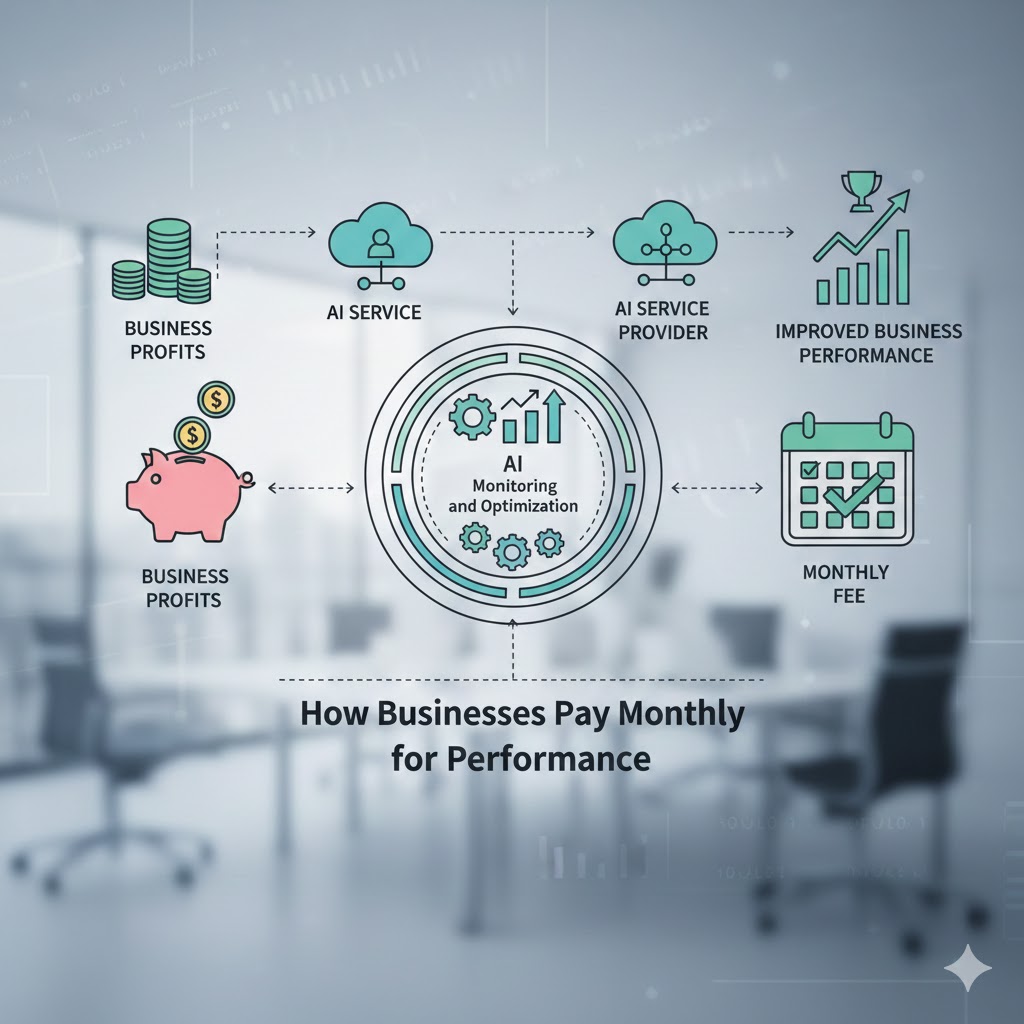
The artificial intelligence revolution has created a fascinating paradox for businesses. While AI promises automation and efficiency, it also introduces new complexities that require constant monitoring and optimization. Companies investing heavily in AI systems quickly discover that deployment is just the beginning. Maintaining peak performance, preventing degradation, and continuously improving AI systems requires specialized expertise and dedicated resources.
This reality has created an exceptional opportunity for service providers who understand AI monitoring and optimization. Businesses across industries are actively seeking partners who can ensure their AI investments deliver consistent, measurable returns. They’re willing to pay substantial monthly fees for services that keep their AI systems running optimally, making this one of the most lucrative recurring revenue opportunities in the technology sector.
Understanding how to build, market, and deliver AI monitoring and optimization services positions you to capture a share of this rapidly expanding market. This comprehensive guide explores everything you need to know about creating a profitable business around ensuring AI systems perform at their best.
Why AI Monitoring and Optimization is Essential for Modern Businesses
Artificial intelligence systems are fundamentally different from traditional software. They learn from data, adapt to patterns, and make autonomous decisions. While these capabilities create tremendous value, they also introduce variables that traditional monitoring cannot address effectively.
AI models can degrade over time as real-world data drifts from training data. Performance that seems excellent during testing may decline in production environments. Models trained on historical data may struggle when market conditions, customer behaviors, or business contexts change. Bias can creep into decisions as models process new information. Resource consumption can spike unexpectedly, driving up costs dramatically.
Without proper AI monitoring and optimization, businesses face serious risks including declining accuracy that damages customer experiences, increasing operational costs that erode ROI, compliance violations from biased or incorrect decisions, security vulnerabilities in model endpoints, and complete system failures during critical periods. These risks make ongoing monitoring and optimization not just valuable but essential.
Companies recognize they need expert help but rarely have the internal expertise to provide it. Data scientists focus on model development rather than operational monitoring. IT teams understand infrastructure but not AI-specific challenges. This gap creates the perfect opportunity for specialized service providers offering AI monitoring and optimization as a recurring service.
1. Understanding the AI Monitoring and Optimization Market Landscape
Before building your service offering, understanding the market dynamics helps you position effectively and identify the most lucrative opportunities.
Market Size and Growth Projections
The AI operations market, which includes monitoring and optimization services, is projected to reach $15 billion by 2028, growing at over 35% annually. This explosive growth is driven by the rapid proliferation of AI systems across industries and the growing recognition that AI requires specialized operational support.
Target Customer Segments
Several business segments represent particularly strong opportunities for AI monitoring and optimization services. Mid-market companies with AI implementations but limited internal expertise need comprehensive managed services. Enterprise organizations deploying multiple AI systems require centralized monitoring and optimization platforms. Fast-growing startups building AI-powered products need to ensure performance scales with user growth. Traditional businesses implementing AI for the first time want expert guidance through operational challenges.
Competitive Landscape Analysis
The market features several types of competitors. Large cloud providers offer basic monitoring tools but lack optimization expertise. Enterprise software vendors provide platforms requiring significant internal resources to operate effectively. Consulting firms offer strategic advice but limited ongoing operational support. This landscape creates opportunities for focused service providers who combine technical expertise with hands-on operational management.
Industry-Specific Requirements
Different industries have unique AI monitoring and optimization needs. Financial services require fraud detection systems that adapt to evolving criminal tactics. Healthcare providers need diagnostic AI that maintains accuracy across diverse patient populations. E-commerce businesses depend on recommendation engines that respond to seasonal trends and inventory changes. Understanding industry-specific requirements allows you to develop specialized offerings that command premium pricing.
2. Core Components of AI Monitoring and Optimization Services
Effective AI monitoring and optimization requires comprehensive capabilities across multiple dimensions. Building a complete service offering ensures clients receive everything needed for AI success.
Performance Monitoring and Metrics
The foundation of any AI monitoring and optimization service is tracking the right metrics. Model accuracy and prediction quality must be measured continuously against baseline performance. Inference latency and response times affect user experience and operational efficiency. Resource utilization including compute, memory, and storage drives cost management. Throughput and transaction volumes help capacity planning. Error rates and failure patterns indicate potential issues before they become critical.
Data Quality and Drift Detection
AI systems are only as good as the data they process. Monitoring data quality involves tracking input data distributions compared to training data, identifying anomalies and outliers in production data, detecting schema changes that could break models, monitoring missing values and data completeness, and measuring feature importance shifts over time. Data drift is one of the most common causes of AI performance degradation, making this monitoring component essential.
Model Health and Behavior Analysis
Beyond basic performance metrics, understanding model behavior provides deeper insights. Prediction confidence distributions show whether models are making decisions with appropriate certainty. Bias detection across demographic groups ensures fair outcomes. Feature attribution analysis reveals what factors drive predictions. A/B testing frameworks enable controlled experimentation with model improvements. Anomaly detection in model outputs identifies unusual patterns requiring investigation.
Infrastructure and Cost Optimization
AI systems can consume enormous computational resources, making cost optimization critical. Monitor resource allocation and utilization rates. Identify opportunities to use less expensive hardware configurations. Implement automatic scaling based on demand patterns. Optimize batch processing schedules to minimize costs. Track spending across different models and use cases. Infrastructure optimization often delivers immediate, measurable ROI that justifies service fees.
3. Building Your AI Monitoring and Optimization Technology Stack
Delivering professional AI monitoring and optimization services requires assembling the right combination of tools, platforms, and custom capabilities.
Monitoring Platform Selection
Choose between building custom monitoring solutions or leveraging existing platforms. Options include open-source frameworks like Prometheus and Grafana for infrastructure monitoring, specialized AI observability platforms such as Weights & Biases or Neptune.ai, cloud-native tools from AWS SageMaker, Google Vertex AI, or Azure Machine Learning, and custom dashboards built on time-series databases. Most successful service providers use hybrid approaches combining multiple tools.
Data Pipeline Monitoring
AI monitoring and optimization extends beyond models to the entire data pipeline. Track data ingestion rates and latency. Monitor transformation logic for errors. Validate data quality at each pipeline stage. Ensure feature stores remain synchronized. Alert on pipeline failures before they impact model performance. Comprehensive pipeline monitoring prevents upstream issues from degrading AI outputs.
Alert and Incident Management Systems
Effective monitoring requires intelligent alerting that notifies teams of issues without overwhelming them with false positives. Implement threshold-based alerts for critical metrics. Use anomaly detection for unusual patterns. Create escalation procedures for different severity levels. Integrate with incident management platforms. Provide clear runbooks for common issues. Well-designed alerting systems enable proactive problem resolution.
Optimization and Experimentation Frameworks
Monitoring identifies issues while optimization solves them. Build frameworks for systematic experimentation including A/B testing infrastructure for comparing model versions, feature flag systems for gradual rollouts, automated retraining pipelines when performance degrades, hyperparameter optimization tools for improving model configuration, and documentation systems tracking optimization history. These capabilities transform monitoring insights into performance improvements.
4. Designing Service Packages and Pricing Models
How you package and price AI monitoring and optimization services significantly impacts both customer acquisition and profitability.
Service Tier Structures
Create multiple service tiers addressing different client needs and budgets. A foundational tier might include basic performance monitoring, weekly reports, and email support for $2,500 monthly. A professional tier could add data drift detection, daily monitoring, optimization recommendations, and chat support for $5,000 monthly. An enterprise tier offering custom dashboards, real-time alerting, hands-on optimization, and dedicated support might command $10,000 or more.
Pricing Variables and Considerations
Several factors influence appropriate pricing for AI monitoring and optimization services. The number of models monitored affects workload and complexity. Data volume processed impacts infrastructure costs. Required response times and service level agreements determine staffing needs. Industry-specific compliance requirements increase delivery complexity. Integration with existing systems requires custom development. Consider these variables when pricing client engagements.
Value-Based Pricing Strategies
Rather than cost-plus pricing, focus on value delivered. If your optimization improves model accuracy by 5%, increasing revenue by $100,000 annually, charging $60,000 yearly provides tremendous value while generating excellent margins. Calculate and communicate client ROI clearly. Price to capture a reasonable portion of the value created through better AI performance.
Contract Structures and Commitments
Balance client flexibility with revenue predictability. Monthly contracts provide accessibility but higher churn risk. Quarterly agreements establish working relationships before longer commitments. Annual contracts with monthly billing create optimal cash flow and retention. Consider offering discounts for annual prepayment or signing incentives for longer commitments.
5. Implementing AI Monitoring and Optimization for Client Success
Successful implementations determine whether clients see value and continue paying for your services. Excellence in delivery creates the customer retention that makes recurring revenue businesses thrive.
Discovery and Assessment Phase
Begin every engagement with thorough discovery. Inventory all AI models and systems in production. Document data pipelines and infrastructure. Review existing monitoring capabilities and gaps. Understand business objectives and success metrics. Identify compliance and regulatory requirements. Map stakeholders and communication preferences. This foundation ensures implementations align with actual business needs.
Baseline Performance Establishment
Before optimizing, establish clear baselines documenting current performance. Measure model accuracy, latency, and resource consumption. Calculate costs associated with AI infrastructure. Assess data quality and pipeline reliability. Document known issues and pain points. These baselines become the benchmark for demonstrating improvement value.
Monitoring Implementation Process
Deploy monitoring systematically across the AI stack. Install instrumentation in model serving infrastructure. Configure data pipeline monitoring. Set up dashboards visualizing key metrics. Establish alerting thresholds based on baseline performance. Integrate with existing IT and development tools. Test thoroughly before declaring production ready. Phased rollouts minimize disruption while ensuring comprehensive coverage.
Stakeholder Communication and Reporting
Different stakeholders need different information. Technical teams want detailed metrics and alert notifications. Business leaders require high-level performance summaries and ROI calculations. Executives need strategic insights about AI reliability and risk. Design communication strategies serving each audience appropriately. Regular reporting demonstrates ongoing value and strengthens relationships.
6. Delivering Ongoing AI Monitoring and Optimization Value
After implementation, continuous value delivery justifies monthly fees and builds long-term client relationships.
Proactive Performance Monitoring
Monitor client AI systems continuously, not just when problems occur. Review daily metrics for concerning trends. Investigate anomalies before they impact business operations. Predict resource needs based on usage patterns. Identify optimization opportunities proactively. This proactive approach demonstrates value beyond reactive problem-solving.
Regular Optimization Initiatives
Schedule systematic optimization efforts beyond addressing immediate issues. Conduct monthly performance reviews identifying improvement opportunities. Test model updates in controlled environments. Optimize infrastructure configurations for cost and performance. Refine monitoring thresholds as systems evolve. Regular optimization ensures clients see continuous improvement, not static maintenance.
Incident Response and Resolution
Despite best efforts, issues will occur. Respond quickly when alerts trigger. Diagnose problems systematically using monitoring data. Implement fixes and verify resolution. Conduct post-incident reviews identifying root causes and prevention measures. Document learnings for future reference. Excellent incident response builds trust and demonstrates expertise.
Strategic Advisory and Consultation
Provide strategic guidance beyond operational monitoring. Advise on AI roadmap decisions based on performance insights. Recommend model architecture improvements. Suggest data collection strategies addressing quality issues. Share industry best practices and emerging trends. This consultative approach positions you as a strategic partner rather than just a service provider.
7. Advanced AI Monitoring and Optimization Capabilities
Basic monitoring becomes commoditized over time. Advanced capabilities differentiate your service and justify premium pricing.
Automated Model Retraining Pipelines
Rather than manual model updates, implement automated retraining triggered by performance degradation. Detect when model accuracy drops below thresholds. Automatically prepare training data from recent production data. Retrain models with updated information. Test new versions in staging environments. Deploy improvements with minimal human intervention. Automation reduces latency between problem detection and resolution.
Explainability and Interpretability Monitoring
As AI regulation increases, explaining model decisions becomes critical. Implement monitoring for feature importance changes, prediction reasoning and attribution, bias detection across protected classes, and compliance with explainability requirements. Provide stakeholders with understandable explanations of AI behavior. This capability particularly appeals to regulated industries.
Multi-Model Performance Optimization
Many organizations deploy multiple related models. Optimize performance across the entire model ecosystem rather than individually. Identify opportunities for shared infrastructure or feature computation. Balance resource allocation based on business priorities. Coordinate updates to maintain system-wide consistency. Holistic optimization delivers better outcomes than siloed approaches.
Predictive Maintenance and Forecasting
Use historical monitoring data to predict future issues. Forecast when models will need retraining based on drift rates. Predict infrastructure scaling needs before capacity constraints occur. Identify models at risk of failure based on behavioral patterns. Predictive capabilities enable prevention rather than reaction, delivering exceptional value.
8. Scaling Your AI Monitoring and Optimization Service Business
Growing from initial clients to a substantial business requires strategic scaling across operations, technology, and team.
Operational Scaling Strategies
Build systems enabling you to serve more clients without proportional cost increases. Standardize monitoring stack deployments using infrastructure as code. Create templated dashboards for common use cases. Develop automated onboarding processes. Build knowledge bases documenting common issues and solutions. Operational leverage improves margins as you grow.
Team Structure and Hiring
As you scale, define specialized roles. AI engineers focus on complex optimization problems. DevOps specialists manage monitoring infrastructure. Data analysts interpret metrics and identify trends. Customer success managers maintain client relationships. Sales professionals acquire new clients. Hire strategically as revenue supports investment.
Technology Infrastructure Investment
Scale requires infrastructure that grows efficiently. Implement centralized monitoring platforms serving multiple clients. Build multi-tenant architectures with appropriate isolation. Automate routine tasks like report generation and alert management. Invest in tools that increase team productivity. Technology investments pay dividends through improved efficiency and capacity.
Client Acquisition and Marketing
Develop marketing systems generating consistent leads. Technical content demonstrating expertise attracts qualified prospects. Case studies showing measurable improvements provide compelling social proof. Speaking at AI and data science conferences builds authority. Strategic partnerships with AI development firms create referral channels. Consistent marketing feeds sustainable growth.
9. Navigating Challenges in AI Monitoring and Optimization
Every service business faces challenges. Anticipating and preparing for them prevents small issues from becoming major problems.
Managing Client Expectations
Set realistic expectations from the beginning. AI optimization takes time and experimentation. Not every optimization attempt will succeed. Some performance issues stem from fundamental model or data limitations requiring larger investments to fix. Communicate clearly about what’s possible within budget and timeline constraints. Under-promise and over-deliver whenever possible.
Handling Complex Technical Debt
Many clients have AI systems built quickly without best practices. You may inherit models lacking documentation, data pipelines held together with duct tape, or infrastructure configured sub-optimally. Address technical debt incrementally while maintaining system stability. Prioritize improvements delivering quick wins before tackling larger architectural changes.
Balancing Automation and Human Expertise
While automation improves efficiency, human expertise drives value. Automate routine monitoring and alerting. Reserve human attention for complex optimization problems and strategic decisions. Train clients to interpret dashboards and handle simple issues. This balance scales your service while maintaining quality.
Staying Current with Rapidly Evolving Technology
AI technology evolves constantly. New frameworks, techniques, and best practices emerge regularly. Invest in continuous learning through conferences, research papers, and experimentation. Implement new capabilities that provide client value. Technology leadership differentiates your service and justifies premium pricing.
10. Building Long-Term Client Relationships and Maximizing Retention
Recurring revenue businesses live or die on customer retention. Excellence in AI monitoring and optimization requires focus on long-term client success.
Quarterly Business Reviews
Conduct regular reviews presenting performance data, optimization results achieved, cost savings or revenue improvements generated, upcoming initiatives and recommendations, and industry trends affecting AI operations. These structured touchpoints demonstrate ongoing value and identify expansion opportunities.
Continuous Value Demonstration
Quantify value delivered consistently. Track cumulative improvements in accuracy, latency, and resource efficiency. Calculate cost savings from infrastructure optimization. Measure revenue impact from improved model performance. Document prevented incidents and avoided downtime. Regular value reporting justifies continued investment.
Expansion and Upsell Opportunities
Look for natural expansion opportunities within client organizations. Organizations that start monitoring one model often have others needing attention. Success with basic monitoring creates opportunities for advanced optimization services. Strong results in one department lead to referrals in others. Account expansion increases customer lifetime value significantly.
Creating Deep Integration and Dependency
The more integrated your monitoring becomes with client operations, the harder switching becomes. Deep integrations with existing tools and workflows, custom dashboards tailored to specific needs, institutional knowledge about model quirks and optimal configurations, and historical data showing long-term trends all create switching costs that improve retention.
Industry-Specific AI Monitoring and Optimization Opportunities
Different industries face unique AI challenges creating specialized opportunities for monitoring and optimization services.
Financial Services
Banks and financial institutions deploy AI for fraud detection, credit scoring, and algorithmic trading. These high-stakes applications require exceptional reliability and regulatory compliance. Monitor for bias in lending decisions. Ensure fraud detection adapts to emerging criminal tactics. Validate trading algorithms under various market conditions. Financial services AI monitoring and optimization commands premium pricing due to regulatory requirements and business criticality.
Healthcare and Life Sciences
Medical AI including diagnostic systems, treatment recommendations, and patient monitoring demands rigorous validation. Monitor diagnostic accuracy across diverse patient populations. Ensure treatment recommendations align with current medical guidelines. Track patient monitoring systems for false positives and negatives. Healthcare AI monitoring involves additional compliance with regulations like HIPAA, creating barriers to entry but also justifying higher fees.
E-commerce and Retail
Retailers use AI for recommendation engines, inventory optimization, and dynamic pricing. These systems directly impact revenue, making performance critical. Monitor recommendation relevance and conversion rates. Optimize inventory predictions to balance availability and carrying costs. Ensure pricing algorithms respond appropriately to competitive and demand changes. Seasonal patterns require special attention in retail AI monitoring and optimization.
Manufacturing and Supply Chain
Industrial AI powers predictive maintenance, quality control, and supply chain optimization. Downtime in manufacturing can cost millions, making reliability paramount. Monitor predictive maintenance models to prevent unexpected equipment failures. Track quality control systems for false positives and negatives. Optimize supply chain predictions accounting for geopolitical and economic disruptions.
The Future of AI Monitoring and Optimization Services
The opportunity for AI monitoring and optimization services will expand dramatically in coming years. AI adoption continues accelerating across industries. Regulatory requirements for AI governance and explainability are increasing globally. The complexity of AI systems grows as multimodal models and agent-based systems proliferate. Edge AI deployment introduces new monitoring challenges.
These trends create expanding opportunities for service providers with deep expertise. Success requires staying current with technological advances while building systematic, scalable delivery capabilities. Companies that excel at combining technical excellence with business acumen will build substantial recurring revenue businesses.
Conclusion
AI monitoring and optimization represents one of the most compelling recurring revenue opportunities in the technology sector today. Businesses are investing billions in AI systems and desperately need expert help ensuring those investments deliver sustained value. The technical complexity creates barriers to entry protecting margins, while the business criticality creates strong client retention.
Success in this market requires more than technical AI knowledge. You must understand business objectives, communicate value clearly, deliver consistent results, and build long-term partnerships. The companies that master this combination will create valuable, sustainable businesses serving a market that will only grow larger and more sophisticated.
The question isn’t whether AI monitoring and optimization services represent a viable opportunity. Market evidence definitively confirms the demand. The real question is whether you’re prepared to build the expertise, assemble the technology stack, develop the delivery processes, and make the commitments necessary to capture this opportunity. For those who do, AI monitoring and optimization offers a path to building a thriving business in one of technology’s most dynamic and fastest-growing sectors.
Also read this:
Running AI-Powered Customer Support as a Recurring Service: The Complete Guide
AI Automation Niches That Businesses Pay For Every Month (Recurring Revenue)
AI Converts Legacy Code Into Modern Frameworks for Faster, Scalable Apps