
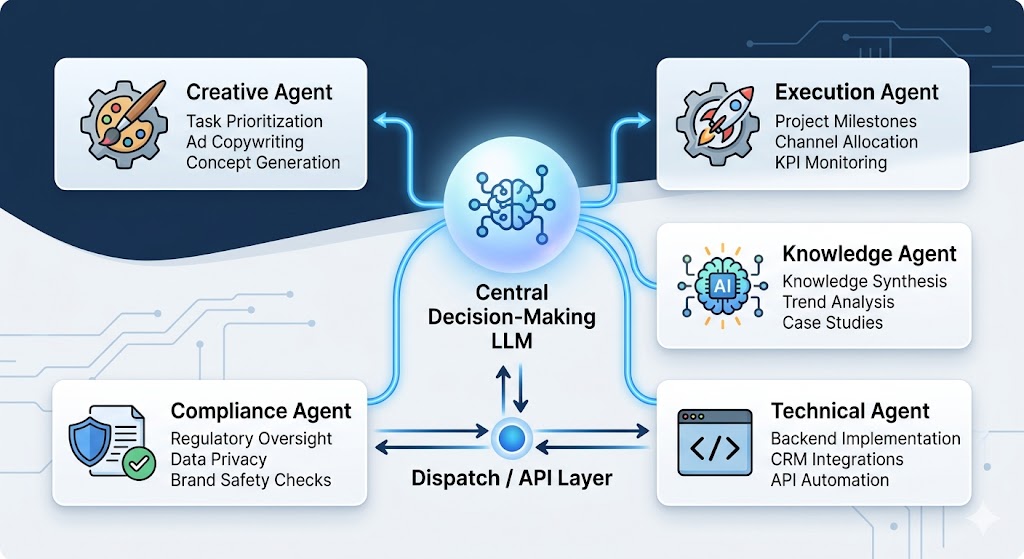
The way businesses and individuals manage tasks is rapidly evolving. Hiring virtual assistants was once the go-to solution for handling repetitive work—but now, a more powerful and scalable alternative is emerging: AI Delegation Systems.
These systems are designed to handle tasks, workflows, and decision-making with minimal human involvement. In this guide, you’ll learn how AI Delegation Systems can replace virtual assistants, reduce costs, and help you build smarter, more efficient operations.
1. What Are AI Delegation Systems
AI Delegation Systems are automated setups that use artificial intelligence tools to handle tasks traditionally performed by humans.
Unlike basic automation, these systems can:
- Understand instructions
- Execute tasks
- Adapt based on data
Sub Points:
- Email management
- Content creation
- Customer support
- Scheduling and organization
They function like a digital assistant—but faster and more scalable.
2. Why AI Delegation Systems Are Replacing Virtual Assistants
The shift is happening for clear reasons.
Key Advantages:
Sub Points:
- 24/7 availability
- Lower costs (no salaries)
- Faster execution
- Consistent performance
Businesses are adopting AI Delegation Systems to increase efficiency and reduce dependency on manual work.
3. Tasks You Can Automate with AI Delegation Systems
Almost every repetitive task can be automated.
Common Use Cases:
Sub Points:
- Responding to emails
- Generating content
- Managing social media
- Handling customer queries
- Data entry and analysis
This makes AI Delegation Systems highly versatile.
4. How AI Delegation Systems Work
Understanding the workflow helps you build effective systems.
Core Process:
Sub Points:
- Input instructions (prompts or workflows)
- AI processes and executes tasks
- Automation tools connect multiple actions
- Output is delivered automatically
These systems continuously improve with usage.
5. Step-by-Step: Build Your AI Delegation System
Here’s how to get started.
Step 1: Identify Repetitive Tasks
Focus on tasks that consume time.
Step 2: Choose AI Tools
Select tools based on your needs.
Step 3: Create Workflows
Design step-by-step automation.
Step 4: Integrate Tools
Use automation platforms to connect systems.
Step 5: Test and Optimize
Refine for better results.
6. Tools for AI Delegation Systems
You need the right stack.
Categories:
Sub Points:
- AI content tools
- Automation platforms (Zapier, Make)
- CRM and email tools
- Chatbot systems
These tools power your AI Delegation Systems.
7. Benefits of AI Delegation Systems
Why switch from virtual assistants?
Sub Points:
- Cost savings
- Increased productivity
- Scalability
- Reduced human error
AI Delegation Systems transform how work gets done.
8. Limitations to Consider
No system is perfect.
Sub Points:
- Requires initial setup
- Needs monitoring
- Limited creativity in some cases
- Dependence on tools
Balance automation with human oversight.
9. Common Mistakes to Avoid
Avoid these errors.
Sub Points:
- Over-automating everything
- Ignoring quality control
- Not updating workflows
- Choosing the wrong tools
Proper planning ensures success.
10. Future of AI Delegation Systems
The future is fully automated.
Trends:
Sub Points:
- Autonomous business operations
- AI decision-making systems
- Advanced integrations
- Personalized automation
AI Delegation Systems will soon become standard in digital businesses.
Conclusion
AI Delegation Systems are redefining productivity by replacing repetitive manual work with intelligent automation. They offer speed, scalability, and cost efficiency that traditional virtual assistants cannot match.
By identifying tasks, setting up workflows, and using the right tools, you can build systems that handle your work automatically—freeing you to focus on growth and strategy.
The future belongs to those who automate smartly. Start building your AI Delegation Systems today.
FAQs
1. What are AI Delegation Systems?
They are AI-driven systems that automate tasks traditionally done by humans.
2. Can they fully replace virtual assistants?
For many tasks, yes—but some human oversight is still needed.
3. Do I need technical skills?
No, many tools are beginner-friendly.
4. How much can I save?
Significant cost savings compared to hiring staff.
5. Are they reliable?
Yes, with proper setup and monitoring.
6. How long does it take to build?
A few days to weeks depending on complexity.
7. Can beginners use them?
Yes, they are accessible to anyone willing to learn.
Also read this:
Autonomous AI Workers: Build a 24/7 Income System (2026 Complete Guide)
Trending Micro SaaS Ideas With Huge Profit Potential (2026 Complete Guide)
How to Turn $100 Into $10,000 Using Smart Strategies (Proven 2026 Guide)