
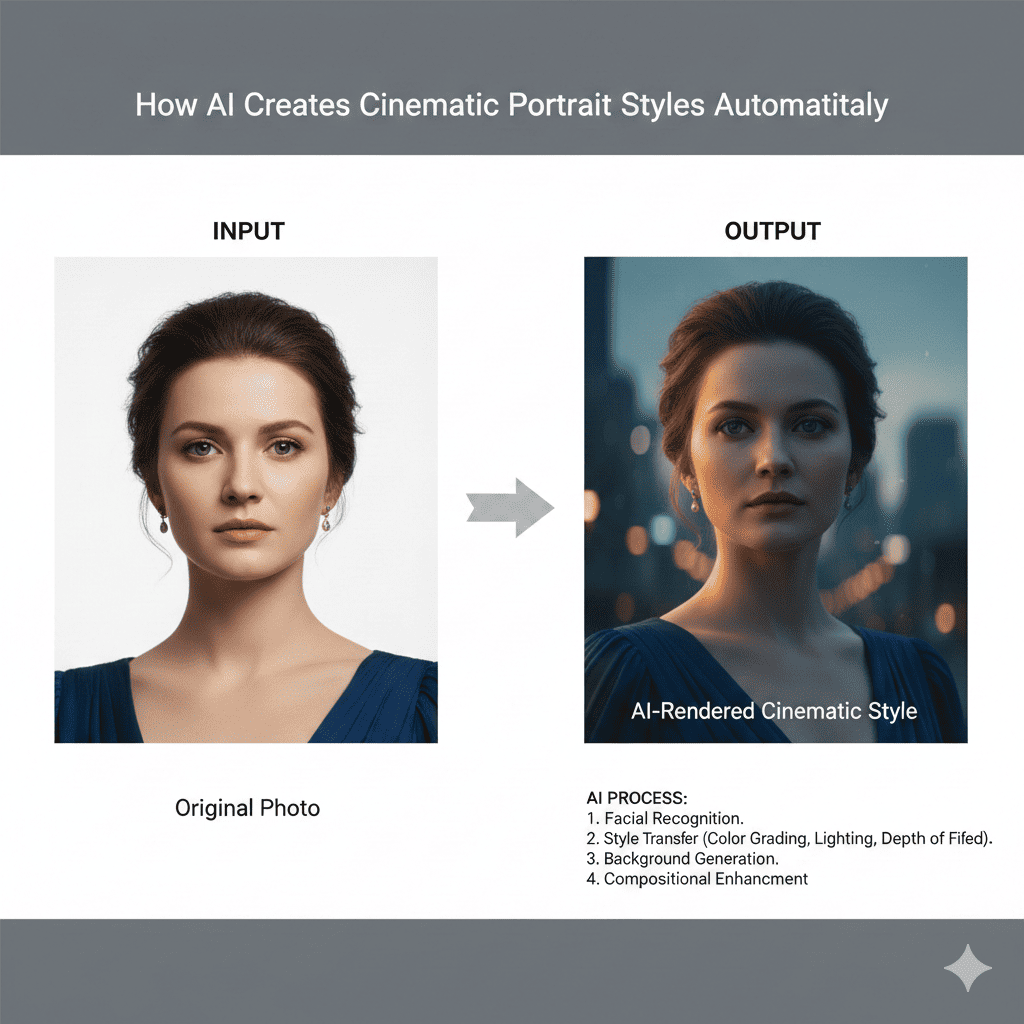
AI Creates Cinematic Portrait Styles Cinematic portrait photography has taken over social media, film-inspired editorials, and digital branding. The dramatic lighting, rich tones, controlled mood, and storytelling depth make cinematic portraits one of the most admired styles today. But achieving this look traditionally requires expert lighting setups, expensive lenses, detailed color grading, and artistic experience. That’s why the rise of artificial intelligence is reshaping the entire landscape. Today, AI Creates Cinematic Portrait Styles automatically, giving creators, photographers, influencers, and brands the power to produce movie-like portraits instantly.
This blog explores how AI systems analyze light, mood, skin tones, depth, and cinematic color science to generate portraits that look like they were shot on a film set. You’ll learn how AI photography tools work, why cinematic portrait styles are so popular, and how creators can use these tools to produce consistent, striking, and viral-ready visuals.
1. Why Cinematic Portrait Styles Have Become So Popular
Cinematic portraits capture emotion, storytelling, and depth in a way no other style can. This is why the ability of AI Creates Cinematic Portrait Styles is so revolutionary.
Cinematic portraits evoke emotion
Whether it’s intensity, mystery, nostalgia, or calmness, cinematic lighting and color grading deliver emotional depth that feels personal.
They create visual storytelling
Cinematic portraits suggest a narrative even without words, making them ideal for campaigns, posters, and personal branding.
They look high-budget
AI Creates Cinematic Portrait Styles Shallow depth of field, dramatic shadows, and rich tones mimic the visual language of films and high-end fashion editorials.
Social media loves cinematic aesthetics
Creators using cinematic portraits often see increased engagement because the style stands out in the digital crowd.
2. How AI Understands Cinematic Portrait Elements
To understand how AI Creates Cinematic Portrait Styles, we first need to examine the core elements of cinematic portrait photography.
Lighting analysis
AI studies:
- Light direction
- Shadow depth
- Highlight transitions
- Key-to-fill ratios
This helps it recreate classic cinematic lighting without manual setup.
Skin tone optimization
AI adjusts:
- Warmth
- Tonal curves
- Texture preservation
- Dynamic contrast
It avoids the plastic look common in basic filters.
Depth simulation
AI mimics shallow depth of field by:
- Detecting subjects
- Calculating distance maps
- Blurring backgrounds naturally
This creates a cinematic lens effect.
Color grading
Cinematic films often use:
- Teal and orange tones
- Muted highlights
- Matte blacks
- Subtle grain
AI applies these grading patterns intelligently.
Mood recognition
AI evaluates the original photo’s tone and enhances it to match a cinematic mood, making the transformation feel natural.
3. How AI Creates Cinematic Portrait Styles Automatically
The real power of AI systems is automation. Here’s how the process works from input to cinematic output.
It analyzes the photo
The AI scans the face, background, lighting, and color. This gives it a map of what should be enhanced or rebuilt.
It predicts cinematic potential
AI identifies which cinematic look best fits the subject:
- Dark, moody drama
- Bright, emotional cinematic glow
- Gritty street-style realism
- Golden hour nostalgia
It enhances lighting instantly
AI reshapes shadows and highlights to mimic professional lighting setups.
It adjusts tones and colors
AI uses film color science to produce:
- Rich tones
- Balanced warmth
- Muted highlights
- Film-like contrast
It adds cinematic depth
Automatic background blur, volumetric lighting, and dynamic shadows create a cinematic frame.
It finishes with subtle enhancements
Texture balancing, grain, bloom effects, and polish create a final portrait ready for posting.
The entire process takes seconds, proving how efficiently AI Creates Cinematic Portrait Styles without the need for any technical expertise.
4. Tools That Allow AI to Create Cinematic Portrait Styles
AI Creates Cinematic Portrait Styles Many modern tools combine machine learning, neural rendering, and image enhancement tech to generate cinematic portraits.
AI-powered camera apps
These apps automatically apply cinematic lighting and tones even before the photo is taken.
AI editing platforms
Advanced editors provide:
- Cinematic presets
- Adaptive color grading
- Drama-enhancing shadows
- Luminance control
Neural-rendering portrait tools
These allow users to upload a simple selfie and get a film-style portrait within seconds.
AI portrait visualization tools
Creators can now visualize how their portrait would look in:
- Noir style
- Warm film style
- Dystopian cinematic look
- Soft romantic cinema lighting
This shows exactly how AI Creates Cinematic Portrait Styles with precision.
5. Cinematic Lighting Styles AI Can Generate
AI systems emulate various lighting setups used in movies and studio photography.
Rembrandt lighting
A triangular highlight under the eye for classic cinematic drama.
Loop lighting
Soft shadows and flattering contrast for lifestyle portraits.
Split lighting
Strong separation of light for intense, dramatic looks.
Backlight glow
Creates a halo-like cinematic effect around the subject.
Soft diffused studio light
Perfect for emotional, romantic cinematic tones.
Harsh noir lighting
High contrast shadows inspired by black-and-white cinema.
AI understands these patterns and reproduces them based on the subject’s face structure and environment.
6. How AI Recreates Cinematic Depth and Atmosphere
AI Creates Cinematic Portrait Styles The cinematic feel isn’t just about lighting or grading. Depth and atmosphere are equally important.
Background separation
AI identifies the subject and enhances separation using blur strength and focus simulation.
Atmosphere simulation
AI adds elements like:
- Haze
- Glow
- Soft bloom
- Atmospherics
These give portraits a film-like realism.
Lens simulation
AI mimics lenses such as:
- 35mm vintage lenses
- 50mm cinema lenses
- Anamorphic glass
- Soft focus filters
This produces depth that feels natural, not artificial.
7. Why Cinematic Portraits Look Better When AI Creates Them
There are several reasons why AI-generated cinematic portraits often outperform manual editing.
AI reduces human error
It evaluates:
- Skin tone accuracy
- Exposure balance
- Highlight recovery
This delivers cleaner results.
AI builds consistency
Cinematic portraits need consistent lighting, tones, and depth. AI ensures each photo retains the same aesthetic language.
AI saves time
Manual cinematic grading takes hours. AI completes the process in seconds.
AI makes professional quality accessible
Even beginners can create portraits that look like they belong in film posters or fashion campaigns.
This is why the statement AI Creates Cinematic Portrait Styles has become a key trend across creative communities.
8. How Creators Use AI to Build Signature Cinematic Styles
AI doesn’t just replicate film looks. It helps creators craft their own signature cinematic styles.
Personalized color grading
AI learns what tones you consistently use and builds custom profiles.
Consistent portrait series aesthetics
Brands and creators can maintain:
- Uniform colors
- Uniform lighting
- Uniform skin tone finish
Custom film-inspired looks
Creators can train AI using sample frames from their favorite movies.
Unique mood settings
Some creators prefer:
- Melancholic cinema tones
- Warm dreamy film style
- High-contrast thriller aesthetic
AI helps maintain these choices automatically.
9. How AI Enhances Portraits Without Looking Overedited
One of the strongest features of cinematic AI systems is their subtlety.
Preserves natural skin texture
AI avoids over-smoothing and keeps pores visible.
Maintains realistic colors
It enhances tones instead of oversaturating them.
Keeps the subject’s personality intact
Cinematic mood is added without changing facial features unnaturally.
Blends effects intelligently
Shadows, grain, and glow are layered softly for authenticity.
10. The Future: What AI Will Do Next for Cinematic Portrait Photography
AI is still evolving. Here’s how future innovations will elevate the way AI Creates Cinematic Portrait Styles.
Real-time cinematic previews
Photography apps will show cinematic grading live as you shoot.
Automated lighting suggestions
AI will detect surroundings and suggest where the subject should stand for the best cinematic effect.
Virtual film sets
Creators will shoot in basic rooms, while AI generates:
- City lights
- Studio environments
- Retro film sets
- Dramatic weather
Emotion-matching AI
AI will read the subject’s expression and match cinematic tones accordingly.
Hyper-personalized cinematic AI models
Creators will train AI based on their own work, similar to how filmmakers craft signature styles.
11. Step-by-Step Guide to Using AI for Cinematic Portraits
Here is a practical workflow for creators wanting to use AI tools effectively.
Step: Capture a simple portrait
Even a basic smartphone image is enough.
Step: Upload it to an AI portrait tool
Choose the cinematic category.
Step: Select a cinematic mood
Options include:
- Dramatic
- Warm
- Moody
- High-contrast
- Soft-film
Step: Let the AI analyze the photo
It studies the face, lighting, and environment.
Step: Review the automatic output
Tones, colors, effects, and depth are adjusted.
Step: Export and fine-tune if needed
A few manual tweaks can make it even more personal.
12. Why Brands Are Adopting AI Cinematic Portraits
Brands across industries prefer cinematic visuals because they are:
- High-impact
- Emotionally engaging
- Memorable
- Timeless
AI gives brands the ability to produce consistent cinematic portraits for campaigns, ads, and social media without hiring full production teams.
Faster production cycles
Large photo teams are no longer needed.
Consistent brand storytelling
Cinematic portraits improve brand identity.
Cost-efficient visual creation
AI reduces production and editing expenses significantly.
Conclusion
AI is redefining what it means to create cinematic photography. What once required professional lighting setups, multiple lenses, expert editors, and film-quality knowledge can now be achieved in seconds. Today, AI Creates Cinematic Portrait Styles automatically, making the world of high-end visual storytelling accessible to everyone.
Also read this:
Create Viral Aesthetic Photo Styles: How AI Helps You Build Viral Aesthetic Images
AI Tools That Help You Visualize Shoots Before You Take Them
AI Retouching Tools That Make Skin Look Natural, Not Plastic