
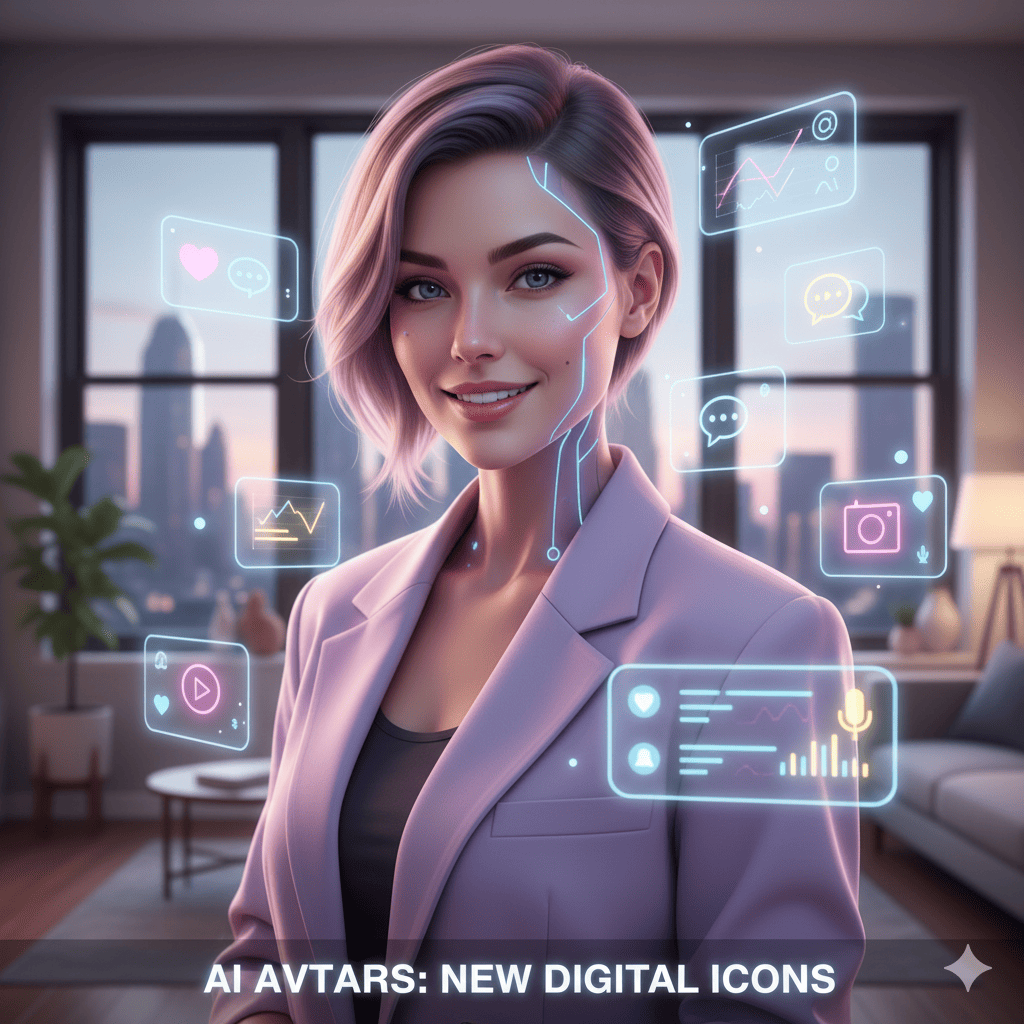
Move over, traditional influencers—there’s a new breed of celebrity taking over the internet, and they don’t need sleep, food, or even a physical body. AI avatars are revolutionizing the entertainment and social media landscape, racking up millions of followers and generating real revenue. Welcome to the future of digital stardom, where your favorite celebrity might not even be human.
If you think this sounds like science fiction, think again. AI avatars are already here, and they’re changing everything we know about fame, influence, and celebrity culture. Let’s dive deep into this fascinating phenomenon that’s reshaping the internet as we know it.
What Exactly Are AI Avatars?
AI avatars are computer-generated personalities powered by artificial intelligence. They can look hyper-realistic or completely fantastical, they can interact with audiences in real-time, create content, and build massive followings—all without being real people.
These digital beings combine cutting-edge technologies including:
- Computer Graphics and 3D Modeling: Creating realistic or stylized appearances
- Artificial Intelligence: Powering their personalities, responses, and content creation
- Motion Capture: Enabling realistic movements and expressions
- Natural Language Processing: Allowing them to communicate naturally with audiences
- Machine Learning: Helping them improve and evolve over time
Unlike simple chatbots or static animations, AI avatars are sophisticated digital entities that can engage, entertain, and influence just like human celebrities—sometimes even better.
The Rise of AI Avatars: From Concept to Phenomenon
The Early Days
The concept of virtual celebrities isn’t entirely new. Remember Hatsune Miku, the Japanese virtual pop star who’s been filling concert halls since 2007? She was the pioneer that showed the world that AI avatars could capture hearts and wallets.
But what we’re seeing now is different. Modern AI avatars are powered by advanced AI that makes them more interactive, more personalized, and more “human” than ever before.
The Social Media Explosion
Platforms like Instagram, TikTok, and YouTube have become the launching pads for a new generation of AI avatars. These digital celebrities are posting daily, engaging with comments, creating viral content, and building communities that rival traditional influencers.
The Technology Breakthrough
Recent advances in AI, particularly in generative AI and deepfake technology (used ethically), have made creating realistic AI avatars more accessible and affordable. What once required Hollywood-level budgets can now be done by independent creators with the right software.
Meet the Rising Stars: Famous AI Avatars Taking Over
Lil Miquela (@lilmiquela)
With over 3 million Instagram followers, Lil Miquela is perhaps the most famous AI avatar in the world. This 19-year-old Brazilian-American model and musician has collaborated with major brands like Prada, Calvin Klein, and Samsung. She posts photos, shares opinions, and even releases music—blurring the line between reality and simulation so effectively that many followers genuinely connect with her.
Imma (@imma.gram)
Imma is a pink-haired Japanese virtual model who’s become a fashion icon. This AI avatar has worked with major brands like IKEA, Amazon, and Nike. She represents the new wave of diversity in digital influencing, proving that AI avatars can represent different cultures and aesthetics.
CodeMiko
CodeMiko is an interactive Twitch streamer controlled by a real person using motion capture, but her AI avatar persona has taken on a life of its own. She interviews celebrities, plays games, and has built a massive following by offering something traditional streamers can’t—a fully customizable, technologically impressive digital presence.
Noonoouri
This vegan, gender-fluid AI avatar has become a fashion phenomenon, gracing the covers of magazines and partnering with luxury brands like Dior and Valentino. Noonoouri proves that AI avatars can champion social causes and represent values just as effectively as human influencers.
Kyra
India’s first virtual influencer, Kyra, is a fashionista AI avatar who’s working with major Indian and international brands. She represents the global expansion of this phenomenon beyond Western markets.
Why AI Avatars Are Winning the Celebrity Game
They’re Available 24/7
Unlike human celebrities who need sleep, vacation, and personal time, AI avatars can engage with audiences around the clock. They can post content at optimal times across multiple time zones, respond to comments continuously, and maintain a constant presence that human influencers simply can’t match.
No Scandals, No Drama (Unless Programmed)
AI avatars don’t have bad days, don’t get caught in controversies (unless intentionally created for storytelling), and don’t have personal issues that might damage brand partnerships. They’re scandal-proof, which makes them incredibly attractive to risk-averse brands.
Complete Creative Control
With AI avatars, creators have total control over appearance, personality, and content. Want to change your avatar’s hairstyle? Done in minutes. Want them to appear in Tokyo today and Paris tomorrow? No problem. This flexibility is impossible with human celebrities.
They Never Age
While human celebrities age, AI avatars can remain eternally young—or age gracefully according to a planned narrative. This longevity makes them excellent long-term brand investments.
Lower Production Costs (Eventually)
Once the initial setup is complete, maintaining an AI avatar can be more cost-effective than working with human celebrities. No travel expenses, no accommodation, no entourage—just the technology and the creative team.
They Can Be Anywhere Instantly
AI avatars can appear in multiple places simultaneously. They can be featured in a New York fashion show, a Tokyo gaming convention, and a Mumbai brand launch—all on the same day. Try doing that with a human celebrity.
Perfect Brand Alignment
AI avatars can be designed from the ground up to align perfectly with brand values, target demographics, and marketing strategies. They’re the ultimate brand ambassadors because they can be exactly what brands need them to be.
Data-Driven Optimization
Every interaction with an AI avatar generates data. Creators can analyze what content performs best, which personality traits resonate with audiences, and continuously optimize their avatars for maximum engagement.
The Business of AI Avatars: How They Make Money
Brand Partnerships and Sponsorships
Just like human influencers, AI avatars partner with brands for sponsored content. Top-tier AI avatars command fees ranging from $10,000 to $100,000+ per post, depending on their following and engagement rates.
Virtual Merchandise
AI avatars sell digital merchandise—NFTs, virtual clothing, digital art, and more. Their fans can purchase exclusive digital items, creating an entirely new revenue stream that doesn’t exist for traditional celebrities.
Music and Entertainment
Some AI avatars release music, perform in virtual concerts, and create entertainment content that generates revenue through streaming platforms, ticket sales (for virtual events), and licensing.
Gaming and Virtual Worlds
AI avatars are becoming playable characters in video games, hosting virtual events in metaverse platforms, and creating immersive experiences that users pay to access.
Licensing and Intellectual Property
The image and likeness of successful AI avatars can be licensed to other companies for use in advertising, products, and media—similar to how celebrity licensing works.
Content Platforms
Many AI avatars have YouTube channels, TikTok accounts, and Patreon subscriptions where they generate revenue through ad revenue, platform monetization, and fan support.
The Technology Behind AI Avatars: How They’re Made
3D Modeling and Design
Every AI avatar starts with design. Artists use software like Blender, Maya, or Character Creator to build the avatar’s appearance. This process can take weeks or months to perfect, ensuring the avatar looks exactly right.
AI-Powered Personalities
Advanced language models and AI systems give AI avatars their personalities. These systems can generate responses, create content, and interact in ways that feel authentic and engaging.
Motion Capture Technology
Many AI avatars use motion capture to translate human movements into digital actions. A real person might perform the movements, which are then applied to the avatar, creating realistic animations.
Voice Synthesis
Text-to-speech technology and voice cloning create unique voices for AI avatars. Some use human voice actors, while others use entirely synthetic voices that sound remarkably human.
Real-Time Rendering
Advanced graphics engines allow AI avatars to appear in real-time videos, live streams, and interactive experiences. This technology is becoming more accessible as computing power increases.
Machine Learning and Improvement
Many AI avatars use machine learning to improve over time. They analyze engagement data, audience preferences, and content performance to evolve and become more effective at capturing attention.
The Psychology: Why We Love AI Avatars
The Uncanny Valley (Overcome)
Early digital characters often fell into the “uncanny valley”—they looked almost human but not quite, creating an unsettling feeling. Modern AI avatars either nail photorealism or embrace stylization, avoiding this issue entirely.
Fantasy and Escapism
AI avatars offer pure escapism. They can be impossibly beautiful, can do impossible things, and live in worlds we can only dream of. They tap into our desire for fantasy and perfection.
Parasocial Relationships 2.0
Humans form parasocial relationships with celebrities—one-sided emotional connections. AI avatars excel at fostering these relationships because they can be designed to be maximally relatable and engaging.
The Novelty Factor
There’s something inherently fascinating about AI avatars. They represent cutting-edge technology and the future, which makes following them feel like being part of something groundbreaking.
Authenticity Paradox
Ironically, some people find AI avatars more “authentic” than human influencers. They’re honest about what they are, with no pretense of perfection or unrealistic lifestyle aspirations that human influencers often project.
Community and Fandom
AI avatars create tight-knit communities of fans who bond over their shared interest in this novel form of entertainment. Being part of an AI avatar’s fandom feels like being in an exclusive club.
Industries Transformed by AI Avatars
Fashion and Beauty
AI avatars are becoming fashion models, beauty influencers, and brand ambassadors. They showcase clothing, makeup, and accessories without the limitations of human models. Major fashion weeks now feature virtual models alongside human ones.
Gaming and Esports
AI avatars are becoming gaming personalities, hosting esports events, and even competing in games. They’re bridging the gap between gaming characters and real-world influencers.
Music Industry
Virtual pop stars powered by AI are releasing albums, performing concerts (in VR and holographically), and building fan bases that rival human musicians. The music industry is embracing AI avatars as legitimate artists.
Education and Training
AI avatars are becoming virtual teachers, tutors, and trainers. They can deliver personalized education at scale, making learning more engaging and accessible.
Customer Service and Brand Representatives
Companies are deploying AI avatars as customer service representatives and brand spokespersons, providing consistent, engaging customer interactions.
Film and Television
AI avatars are appearing in movies, TV shows, and web series—not as CGI characters, but as acknowledged digital personalities playing roles.
Social Causes and Activism
Some AI avatars are being used to promote social causes, environmental awareness, and humanitarian efforts—showing that digital celebrities can have real-world impact.
Challenges and Controversies Surrounding AI Avatars
Ethical Concerns
Should AI avatars disclose they’re not human? How transparent should their creators be? These questions are still being debated as the technology evolves.
Job Displacement
As AI avatars take modeling, influencing, and entertainment jobs, there are concerns about human workers being displaced. This is a real issue that industries must address thoughtfully.
Authenticity and Deception
When AI avatars become indistinguishable from real people, there’s potential for deception and manipulation. Clear labeling and ethical guidelines are crucial.
Representation and Diversity
Who gets to create AI avatars, and whose perspectives do they represent? There’s a risk of perpetuating biases if creators aren’t diverse and thoughtful.
Emotional Manipulation
AI avatars can be optimized to be maximally engaging, potentially leading to unhealthy parasocial relationships or exploitative practices.
Intellectual Property Issues
Questions about who owns AI avatars, their content, and their likeness are still being worked out legally. As they become more valuable, IP disputes will likely increase.
The Reality Gap
Some worry that the rise of AI avatars will make people more disconnected from reality, preferring perfect digital personalities over real human connection.
The Future of AI Avatars: What’s Coming Next
Increased Personalization
Future AI avatars might be personalized to individual users—imagine having your own AI friend who knows your preferences and adapts to your personality.
Integration with Virtual and Augmented Reality
As VR and AR become mainstream, AI avatars will exist in three-dimensional spaces where we can interact with them more naturally and immersively.
More Sophisticated AI
As AI technology advances, AI avatars will become even more realistic, intelligent, and capable of genuine-seeming conversation and creativity.
Democratization of Creation
Tools for creating AI avatars will become more accessible, allowing anyone to create their own virtual personality. This could lead to an explosion of diverse digital celebrities.
Hybrid Models
We’ll see more hybrid approaches where human creators work seamlessly with AI avatars, combining human creativity with AI efficiency and scalability.
Metaverse Integration
AI avatars will be native inhabitants of the metaverse, serving as guides, entertainers, friends, and brands in persistent virtual worlds.
AI-Generated Narratives
AI avatars will exist within complex, AI-generated storylines and universes, creating new forms of interactive entertainment.
Emotional AI
Future AI avatars will have more sophisticated emotional intelligence, reading and responding to human emotions in real-time for deeper engagement.
Regulatory Frameworks
Governments will likely develop regulations specifically for AI avatars, covering disclosure requirements, liability issues, and ethical standards.
How to Create Your Own AI Avatar
Interested in jumping on the AI avatars trend? Here’s how to get started:
Step 1: Define Your Avatar’s Purpose
What will your AI avatar do? Entertainment, education, brand promotion, or something else? Clear purpose drives all other decisions.
Step 2: Design the Look
Decide whether your AI avatar will be realistic, stylized, or something in between. Consider your target audience and what aesthetic will resonate with them.
Step 3: Choose Your Tools
Popular tools for creating AI avatars include:
- Character Creator 4 for 3D modeling
- Unreal Engine’s MetaHuman Creator for photorealistic avatars
- VTube Studio for 2D anime-style avatars
- Ready Player Me for customizable 3D avatars
- AI-powered platforms like Synthesia or D-ID
Step 4: Develop the Personality
Give your AI avatar a distinctive personality, backstory, values, and voice. This makes them memorable and relatable.
Step 5: Create a Content Strategy
Plan what content your AI avatar will create. Consistency and quality are crucial for building an audience.
Step 6: Choose Platforms
Decide where your AI avatar will appear. Instagram, TikTok, YouTube, Twitch, and Twitter are popular choices.
Step 7: Engage and Iterate
Post regularly, engage with your audience, and use analytics to improve. Successful AI avatars evolve based on audience feedback.
Step 8: Monetize Strategically
Once you build an audience, explore sponsorships, merchandise, NFTs, and other revenue streams.
Brands and AI Avatars: A Perfect Match
Why Brands Love AI Avatars
Brands are increasingly turning to AI avatars for marketing because they offer:
Consistency: AI avatars deliver consistent brand messaging without the variability of human influencers.
Control: Brands have complete control over what their AI avatar says and does.
Innovation: Partnering with AI avatars positions brands as forward-thinking and tech-savvy.
Cost-Effectiveness: Long-term partnerships with AI avatars can be more economical than celebrity endorsements.
Global Appeal: AI avatars can transcend cultural barriers and appeal to international audiences.
How to Partner with AI Avatars
Brands interested in working with AI avatars should:
- Research which avatars align with their target demographic
- Evaluate engagement rates and audience authenticity
- Start with trial campaigns before long-term commitments
- Ensure transparency about the avatar’s virtual nature
- Integrate avatars into broader marketing strategies rather than one-off campaigns
The Human Element: Real People Behind AI Avatars
It’s important to remember that behind every AI avatar are real human creators—artists, programmers, writers, and marketers who bring these digital personalities to life. AI avatars don’t eliminate human creativity; they amplify it.
These creators make countless decisions: how the avatar looks, what they say, how they interact, and what values they embody. The most successful AI avatars reflect the creativity, hard work, and vision of their human teams.
AI Avatars and Social Responsibility
As AI avatars gain influence, questions of social responsibility arise:
Positive Potential
AI avatars can:
- Promote positive messages without personal bias
- Represent diverse identities and perspectives
- Raise awareness for important causes
- Provide safe, judgment-free interaction for vulnerable individuals
- Model healthy behaviors and attitudes
Risks to Mitigate
Creators must be mindful of:
- Perpetuating unrealistic beauty or lifestyle standards
- Manipulating vulnerable audiences
- Spreading misinformation
- Promoting unhealthy parasocial relationships
- Lacking transparency about their artificial nature
The most responsible AI avatars creators prioritize ethical considerations alongside commercial success.
The Bottom Line: AI Avatars Are Here to Stay
Love them or find them strange, AI avatars are not a passing fad—they’re the next evolution of celebrity culture and digital influence. As technology advances and becomes more accessible, we’ll see an explosion of virtual personalities shaping entertainment, commerce, and social interaction.
AI avatars represent a fundamental shift in how we think about identity, fame, and connection in the digital age. They challenge our assumptions about authenticity, reality, and what it means to be a public figure.
For creators, brands, and audiences alike, AI avatars offer exciting opportunities. They’re creating new jobs, new forms of entertainment, and new ways to engage with digital content.
Are You Ready for the AI Avatars Revolution?
Whether you’re a creator looking to build your own AI avatar, a brand exploring virtual influencer partnerships, or simply someone fascinated by this technology, now is the time to pay attention.
AI avatars are becoming the next internet celebrities not because they’re replacing humans, but because they’re offering something different—something that resonates with digital-native audiences who’ve grown up with technology as a natural part of life.
The line between real and virtual is blurring, and AI avatars stand at that fascinating intersection. They’re proof that in the digital age, you don’t need a physical body to have influence, build a community, or make a real impact.
The future of internet celebrity is here, and it’s powered by artificial intelligence, human creativity, and unlimited imagination. AI avatars are rewriting the rules of fame—and they’re just getting started.
Welcome to the age of AI avatars, where the most influential celebrities might just be ones and zeros given form, personality, and purpose. The revolution is happening now, and it’s more exciting than anyone imagined.
Also read this:
AI Room Makeovers: Design Your Space in Seconds – Transform Any Room Without Breaking a Sweat
Create Stunning AI Videos for Instagram Stories with Meta AI – Your Complete Step-by-Step Guide