
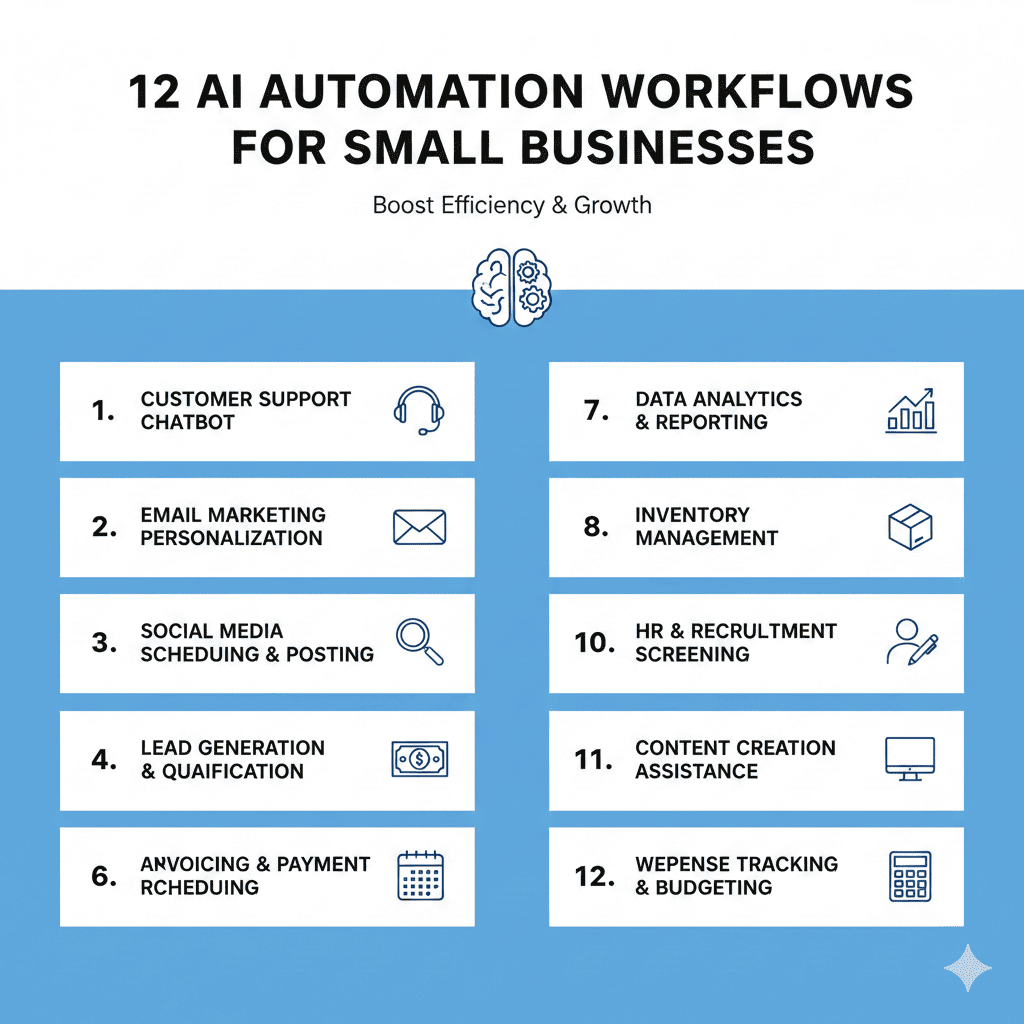
AI Automation Workflows Small business owners face an impossible challenge: competing against enterprises with vast resources while managing every operational detail themselves. The solution lies in implementing strategic AI Automation Workflows that multiply productivity without expanding payroll. These intelligent systems handle repetitive tasks, optimize decision-making, and scale operations that previously required entire teams. This comprehensive guide reveals twelve transformative workflows that level the playing field for small businesses in 2025.
1. Intelligent Email Management and Response System
Email drowns most small business owners in endless messages requiring attention. An intelligent AI Automation Workflows for email management reclaims hours daily while improving response quality and speed.
Automated Email Categorization
AI systems analyze incoming emails, automatically categorizing them by priority, topic, and required action. Urgent customer inquiries receive immediate attention while promotional messages route to appropriate folders. Sales inquiries trigger specific workflows while support requests activate different processes.
Machine learning algorithms learn from your handling patterns, continuously improving categorization accuracy. Within weeks, the system masters your preferences, routing messages with near-perfect precision.
Smart Response Generation
Natural language processing enables AI to draft responses to common inquiries automatically. Customer questions about hours, pricing, services, or policies receive instant, accurate responses without manual intervention. The system pulls information from your knowledge base, ensuring consistency across all communications.
For complex inquiries requiring personal attention, AI drafts preliminary responses you can review and customize before sending. This approach maintains personal touch while eliminating blank-page paralysis and reducing response time from hours to minutes.
Follow-Up Automation
AI tracks conversations requiring follow-up, automatically sending reminders at appropriate intervals. A prospect who requested information but didn’t respond receives a gentle nudge three days later. A customer who submitted a support ticket gets proactive status updates without requiring manual tracking.
These automated touches demonstrate attentiveness that builds trust while ensuring no opportunity slips through communication cracks.
Priority Intelligence
The system learns which senders and topics require immediate attention versus those that can wait. Emails from key clients trigger instant notifications while routine updates queue for batch processing during designated times. This intelligent prioritization ensures critical communications receive prompt attention without constant email monitoring disrupting focused work.
2. Customer Service Chatbot Integration
Modern consumers expect instant support regardless of time or day. AI Automation Workflows centered on chatbots deliver 24/7 service without overnight staff costs.
Instant Query Resolution
AI-powered chatbots handle common customer questions immediately: product information, order status, return policies, shipping details, and account management. Natural language understanding allows customers to ask questions naturally rather than navigating rigid menu systems.
The bots access your complete knowledge base and customer data, providing accurate, personalized responses. When someone asks about their order status, the system retrieves real-time tracking information specific to their purchase.
Seamless Human Handoff
Complex issues exceeding bot capabilities trigger smooth transfers to human agents. The AI provides complete conversation context, eliminating frustrating repetition where customers explain problems multiple times. This context transfer ensures efficient resolution while maintaining customer satisfaction.
The system also identifies emotional cues indicating frustration or urgency, prioritizing these handoffs to prevent minor issues from escalating into major dissatisfaction.
Continuous Learning Loop
Every customer interaction trains the AI, expanding its knowledge and improving response quality. Questions the bot cannot answer initially become learning opportunities. Human agents provide correct responses that the system incorporates into future handling of similar inquiries.
This continuous improvement means your customer service capability grows increasingly sophisticated without proportional cost increases.
Multilingual Support
AI chatbots communicate fluently in dozens of languages, enabling global service without multilingual staff requirements. Customers interact in their preferred language while the system translates seamlessly, expanding market reach without geographic limitations.
3. Social Media Content Creation and Scheduling
Consistent social presence drives brand awareness and engagement, but content creation consumes significant time. AI Automation Workflows for social media maintain active presence while freeing creative energy for strategic initiatives.
Content Generation from Guidelines
AI tools create social media posts based on your brand guidelines, content themes, and audience preferences. Provide topic areas, key messages, and tone parameters, then let the system generate weeks of content in minutes.
Natural language generation produces varied, engaging posts that avoid repetitive patterns. The AI incorporates current trends, relevant hashtags, and platform-specific best practices automatically.
Visual Content Creation
Computer vision systems generate or select images complementing written content. The AI analyzes your existing visual style, creating consistent aesthetics across all posts. Whether generating graphics, selecting stock photos, or editing images, the system maintains brand coherence.
Some advanced tools even create custom illustrations or adapt existing visual assets to different platforms and dimensions automatically.
Optimal Scheduling Intelligence
Rather than posting randomly, AI determines when your specific audience is most active and engaged. The system analyzes historical performance data, identifying peak engagement windows for different content types and platforms.
Posting schedules adapt dynamically based on performance feedback. If morning posts consistently outperform afternoon content, the AI adjusts timing automatically without manual intervention.
Engagement Automation
Beyond publishing content, AI monitors social channels for mentions, comments, and messages requiring responses. The system handles routine engagement like thanking users for positive mentions while flagging substantive comments needing personal attention.
This automation ensures active community presence without constant manual monitoring that distracts from other priorities.
4. Lead Qualification and Scoring System
Not all leads offer equal value. AI Automation Workflows for lead qualification identify high-potential prospects worth intensive pursuit while filtering time-wasters.
Behavioral Analysis Scoring
AI tracks prospect interactions across touchpoints: website visits, content downloads, email engagement, social media interactions, and inquiry patterns. Each behavior receives weighted scoring based on historical conversion correlations.
The system identifies signals invisible to manual observation. Perhaps prospects who visit pricing pages twice within a week convert at five times the baseline rate. The AI recognizes these patterns, assigning appropriate lead scores that inform prioritization.
Demographic and Firmographic Enrichment
When leads enter your system, AI automatically enriches records with additional data: company size, industry, revenue range, technology stack, growth trajectory, and key decision-makers. This enrichment happens instantly without manual research, providing sales context that improves conversation quality.
The technology cross-references multiple data sources, building comprehensive prospect profiles that inform personalized outreach strategies.
Automated Lead Routing
Qualified leads automatically route to appropriate team members based on territory, expertise, availability, or account value. High-value prospects reach senior sales personnel while smaller opportunities go to junior team members. This intelligent distribution optimizes resource allocation without manual assignment logistics.
Geographic routing ensures leads connect with representatives familiar with regional considerations affecting purchasing decisions.
Nurture Campaign Triggers
Leads not yet ready for direct sales engagement enter automated nurture sequences tailored to their interests and engagement level. Someone who downloaded a specific whitepaper receives related content progressively educating them toward purchase readiness.
The AI adjusts nurture intensity based on engagement signals, accelerating sequences when interest increases while reducing frequency when engagement drops.
5. Invoice Generation and Payment Collection
Cash flow management makes or breaks small businesses. AI Automation Workflows for invoicing and collections improve payment speed while reducing administrative overhead.
Automated Invoice Creation
AI generates invoices automatically upon project completion or recurring billing dates. The systems pull data from time tracking, project management, or subscription systems, creating accurate invoices without manual data entry.
Custom templates maintain brand consistency while automated calculations eliminate mathematical errors that delay payment and damage professional image.
Smart Payment Reminders
Rather than generic reminder sequences, AI personalizes communication based on customer payment history and preferences. Reliable customers who occasionally overlook invoices receive gentle reminders while chronic late payers get firmer, earlier notifications.
The system determines optimal reminder timing based on historical payment patterns. If specific customers typically pay within ten days, the first reminder arrives on day twelve rather than following rigid schedules disconnected from actual behavior.
Payment Plan Automation
For customers unable to pay full amounts immediately, AI proposes payment plans matching their financial capacity while meeting your cash flow requirements. The system automatically generates agreements, schedules installments, and processes recurring payments without ongoing manual management.
This flexibility improves collection rates by accommodating customer circumstances while maintaining revenue flow.
Predictive Cash Flow Forecasting
AI analyzes outstanding invoices, historical payment patterns, and upcoming receivables to forecast cash flow with remarkable accuracy. This visibility enables proactive financial planning, preventing cash shortages and identifying investment opportunities when surplus emerges.
The technology alerts you to potential problems weeks in advance, allowing time to address issues before they become crises.
6. Inventory Management and Demand Forecasting
Product-based businesses struggle with inventory balance: too much ties up capital, too little loses sales. AI Automation Workflows optimize inventory levels through predictive analytics.
Demand Prediction Algorithms
Machine learning models analyze historical sales, seasonal patterns, promotional impacts, market trends, and external factors like weather or economic conditions. These comprehensive analyses forecast demand with accuracy impossible through manual methods.
The AI adjusts predictions continuously as new data arrives. A viral social media mention might suddenly increase demand for specific products. The system detects these signals immediately, updating forecasts and triggering reorder recommendations before stockouts occur.
Automated Reordering
Based on demand forecasts and current inventory levels, AI generates purchase orders automatically when stock reaches predetermined thresholds. The systems account for lead times, ensuring orders arrive before inventory depletes.
Reorder quantities optimize for volume discounts, cash flow considerations, and storage capacity constraints. This multi-variable optimization balances competing priorities systematically.
Supplier Performance Tracking
AI monitors supplier reliability: on-time delivery rates, quality consistency, communication responsiveness, and pricing stability. Performance data informs supplier selection recommendations, helping you partner with vendors who consistently meet commitments.
When supplier performance degrades, the system alerts you proactively, suggesting alternative sources before problems disrupt operations.
Waste Reduction Intelligence
For perishable products, AI minimizes waste by optimizing order quantities, suggesting promotions for items approaching expiration, and identifying slow-moving inventory requiring clearance before losses occur.
These interventions protect profit margins by preventing inventory from becoming unsellable waste.
7. Appointment Scheduling and Calendar Management
Scheduling coordination wastes hours weekly on back-and-forth communication. AI Automation Workflows for appointments streamline this process dramatically.
Intelligent Availability Management
AI systems integrate with your calendar, identifying available time slots while respecting preferences like no early mornings, clustered meetings, or buffer time between appointments. When prospects request meetings, the system presents only genuinely available options.
The AI accounts for travel time between appointments, preparation requirements for different meeting types, and personal preferences about daily scheduling limits.
Automated Booking Confirmations
Once appointments are scheduled, AI sends confirmations with all necessary details: time, location, video conference links, preparation requirements, and contact information. Reminders arrive at optimal intervals reducing no-show rates without annoying over-communication.
The system detects time zone differences automatically, displaying appointments in each participant’s local time to prevent confusion.
Rescheduling Intelligence
When cancellations occur, AI instantly identifies alternative slots and communicates options to affected parties. For recurring appointments, the system proposes makeup sessions fitting both schedules without extensive negotiation.
This efficiency maintains relationship continuity despite inevitable scheduling disruptions.
Meeting Preparation Automation
Before appointments, AI compiles relevant information: previous conversation notes, account history, recent interactions, and outstanding items requiring discussion. This preparation appears in calendar entries, ensuring you enter meetings fully informed without manual research.
8. Content Marketing and SEO Optimization
Content marketing drives organic traffic but demands consistent effort. AI Automation Workflows for content creation and optimization maintain publishing velocity without overwhelming resources.
Topic Research and Ideation
AI analyzes search trends, competitor content, audience interests, and gap opportunities, generating topic ideas with proven demand. The systems evaluate keyword difficulty, search volume, and competition levels, recommending topics offering optimal ranking potential.
Content calendars populate automatically with strategically sequenced topics building topical authority systematically rather than randomly addressing disconnected subjects.
Content Outline Generation
For each topic, AI creates detailed outlines including suggested sections, key points to address, relevant statistics, and semantic keywords to incorporate naturally. These outlines provide clear roadmaps transforming blank-page paralysis into structured writing guidance.
The systems analyze top-ranking content for target keywords, identifying common elements and gaps your content can exploit for competitive advantage.
SEO Optimization Analysis
After content creation, AI evaluates SEO effectiveness: keyword usage, readability, meta descriptions, internal linking opportunities, and technical optimization factors. The technology provides specific improvement recommendations, turning subjective optimization into actionable checklists.
Real-time analysis during writing catches issues before publication, ensuring content launches fully optimized rather than requiring post-publication corrections.
Distribution Automation
Once published, AI distributes content across appropriate channels: social media, email newsletters, industry forums, and content syndication platforms. The system tailors messaging for each channel while tracking engagement to identify most effective distribution strategies.
9. Financial Reporting and Analytics Dashboard
Understanding business performance enables informed decision-making. AI Automation Workflows transform raw financial data into actionable insights.
Automated Report Generation
AI pulls data from accounting systems, sales platforms, marketing tools, and operational databases, compiling comprehensive reports on customizable schedules. Daily cash flow summaries, weekly sales analyses, and monthly profitability reports arrive automatically without manual compilation.
The systems generate visualizations highlighting trends, anomalies, and areas requiring attention. Instead of drowning in spreadsheets, you receive clear narratives explaining what matters most.
Anomaly Detection Alerts
Rather than waiting for monthly reviews to identify problems, AI monitors financial metrics continuously, alerting you immediately when unusual patterns emerge. Unexpected expense spikes, revenue drops, or cash flow deviations trigger notifications enabling swift corrective action.
The technology distinguishes between random fluctuations and meaningful changes requiring investigation, reducing false alarms while ensuring genuine issues receive prompt attention.
Predictive Performance Modeling
AI forecasts future performance based on current trends, seasonal patterns, and planned initiatives. These projections inform strategic decisions about hiring, investment, marketing spend, and growth initiatives.
Scenario modeling allows testing different strategies virtually before committing resources, reducing risk in strategic planning.
Competitive Benchmarking
AI compares your performance against industry benchmarks, identifying strengths to leverage and weaknesses requiring improvement. This external perspective prevents insular thinking, ensuring your success metrics align with market realities.
10. Human Resources and Recruiting Automation
Finding and managing talent challenges small businesses lacking dedicated HR departments. AI Automation Workflows professionalize these functions affordably.
Resume Screening Intelligence
AI analyzes applications against position requirements, ranking candidates by qualification match. The systems evaluate experience, skills, education, and cultural fit indicators, identifying top prospects from large applicant pools.
This screening eliminates bias from irrelevant factors while ensuring qualified candidates receive consideration regardless of resume formatting or unconventional backgrounds.
Interview Scheduling Coordination
Rather than endless email exchanges finding mutually available times, AI coordinates between candidate and interviewer calendars, proposing options that work for everyone. Automated confirmations and reminders reduce no-shows and miscommunication.
Onboarding Workflow Management
Once hired, new employees enter automated onboarding sequences: paperwork collection, system access provisioning, training module assignments, and check-in scheduling. The AI ensures nothing falls through cracks while providing consistent experiences for all hires.
Progress tracking identifies when new employees struggle with specific aspects, triggering additional support before frustration causes early turnover.
Performance Review Automation
AI compiles performance data throughout review periods: goal progress, project completions, peer feedback, and customer satisfaction metrics. Review meetings focus on discussion rather than data compilation, making processes more meaningful for everyone involved.
11. Expense Tracking and Approval Workflows
Expense management consumes administrative time while creating reimbursement delays frustrating employees. AI Automation Workflows streamline these processes significantly.
Receipt Capture and Categorization
Mobile apps allow employees to photograph receipts instantly. AI extracts relevant information including vendor, date, amount, and purchase details, categorizing expenses automatically and routing them for appropriate approvals.
This immediate capture prevents lost receipts and eliminates month-end scrambles compiling expense reports.
Policy Compliance Checking
AI evaluates expenses against company policies automatically, flagging violations before submissions reach approvers. Employees receive immediate feedback about non-compliant expenses, reducing approval delays and policy enforcement burden.
The system learns from approval decisions, continuously refining understanding of policy nuances and edge cases.
Approval Routing Intelligence
Expenses route automatically to appropriate approvers based on amount, category, and organizational hierarchy. Small routine expenses might require only manager approval while large capital expenditures escalate through multiple levels systematically.
Approval workflows adapt to availability, routing to alternates when primary approvers are unavailable, preventing delays from vacation or other absence.
Reimbursement Processing
Approved expenses automatically generate payment instructions to accounting systems, triggering reimbursements without manual data entry. Employees receive payments quickly while maintaining complete audit trails for tax and compliance purposes.
12. Cybersecurity Monitoring and Threat Detection
Small businesses increasingly face cyber threats but lack enterprise security resources. AI Automation Workflows provide sophisticated protection affordably.
Continuous Threat Monitoring
AI analyzes network activity, identifying suspicious patterns indicating potential security breaches. Unusual login attempts, abnormal data transfers, or irregular access patterns trigger immediate alerts enabling rapid response.
The systems establish baseline normal behavior for your specific environment, making anomaly detection highly accurate rather than generating excessive false alarms.
Automated Security Updates
AI manages software patching and security updates across your technology infrastructure, ensuring vulnerabilities get addressed promptly without manual tracking. The systems test updates in isolated environments before deployment, preventing update-induced disruptions.
Critical security patches receive immediate attention while routine updates deploy during maintenance windows minimizing operational impact.
Phishing Detection and Prevention
Email security AI identifies phishing attempts through content analysis, sender verification, and link examination. Suspicious messages get quarantined before reaching employee inboxes, preventing social engineering attacks that exploit human vulnerabilities.
The technology provides security awareness training by alerting users to borderline-suspicious emails, building cultural vigilance without formal training programs.
Incident Response Automation
When security incidents occur, AI orchestrates initial response: isolating affected systems, preserving evidence, notifying relevant personnel, and initiating recovery procedures. This rapid automated response contains damage while human experts develop comprehensive remediation strategies.
Conclusion: Implementing AI Automation Successfully
The twelve AI Automation Workflows detailed above represent transformative opportunities for small businesses competing against larger, better-resourced competitors. Each workflow addresses specific operational bottlenecks, freeing time and resources for strategic activities that drive growth.
Successful implementation requires thoughtful prioritization. Start by identifying your most pressing operational challenges: which manual processes consume the most time, create the most errors, or limit scaling potential. Implement workflows addressing these priorities first, building momentum through quick wins that demonstrate value.
Integration matters significantly. The most powerful AI Automation Workflows connect seamlessly with existing systems rather than creating isolated islands of automation. Prioritize tools offering robust integration capabilities with your current technology stack.
Maintain realistic expectations about implementation timelines. While individual workflows might deploy quickly, achieving optimal performance requires learning periods where AI systems accumulate data and refine algorithms. Commit to three to six-month evaluation periods before judging workflow effectiveness conclusively.
Balance automation with human judgment. AI excels at handling routine tasks, pattern recognition, and data analysis but requires human oversight for strategic decisions, creative work, and relationship management. The goal is augmenting human capability rather than replacing human judgment entirely.
Monitor performance quantitatively. Track specific metrics before and after workflow implementation: time saved on manual tasks, error rate reductions, customer satisfaction improvements, and cost savings. This data-driven approach identifies which workflows deliver substantial value versus those providing marginal benefits.
The competitive landscape increasingly favors businesses leveraging technology effectively. Small businesses implementing strategic AI Automation Workflows gain operational efficiency previously available only to enterprises with vast resources. This democratization of capability creates unprecedented opportunities for agile, technologically savvy small businesses to compete and win in their markets.
The workflows exist. The tools are available and affordable. The competitive advantages are real and substantial. Your success depends on action: selecting appropriate workflows for your specific challenges, implementing them thoughtfully, and continuously optimizing based on performance feedback. Start today with one workflow addressing your most significant bottleneck. Build from there systematically, transforming your business into an efficient, scalable operation ready for sustainable growth.
Also read this:
Start a Profitable AI-Automated Dropshipping Business in 2025
Best AI Tools for Dropshipping: Product Research, Ads & Automation