
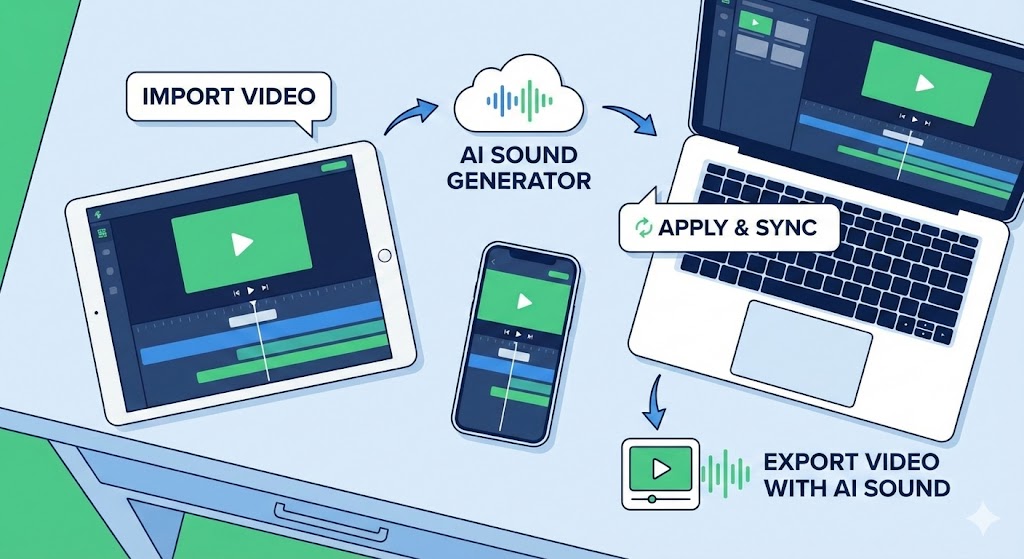
add AI sound effects to any video Creating engaging video content requires more than just stunning visuals—sound design can make or break your audience’s viewing experience. Whether you’re a YouTube creator, TikTok influencer, or professional video editor, learning add AI sound effects to any video has become an essential skill in modern content creation. This comprehensive guide will walk you through the entire process, from understanding AI sound technology to implementing professional-grade audio in your videos within seconds.
1. Understanding AI Sound Effects Technology
Before diving into the practical workflow, it’s crucial to understand what makes AI-generated sound effects revolutionary for video creators.
What Are AI Sound Effects?
AI sound effects are audio elements generated or enhanced by artificial intelligence algorithms. Unlike traditional sound libraries where you search through pre-recorded sounds, AI can create custom sound effects based on text descriptions, analyze your video content, and automatically suggest appropriate audio elements.
Why Modern Creators Need AI Sound Effects
The traditional method of adding sound effects involves browsing through massive libraries, downloading multiple files, and manually syncing each sound to your video timeline. When you add AI sound effects to any video using modern tools, you eliminate hours of tedious work while achieving professional results.
Key advantages include:
- Instant generation of unique sound effects
- Automatic synchronization with video actions
- Customizable parameters for perfect audio matching
- Elimination of licensing concerns with AI-generated sounds
- Significant time savings in post-production workflow
The Technology Behind AI Audio Generation
AI sound effect generators use deep learning models trained on millions of audio samples. These models understand the relationship between visual actions and corresponding sounds, enabling them to suggest or create appropriate audio effects for your specific video content.
2. Essential Tools for Adding AI Sound Effects
Selecting the right tools determines how efficiently you can add AI sound effects to any video projects. Here’s a breakdown of the most powerful platforms available.
Professional AI Sound Effect Generators
ElevenLabs Sound Effects
add AI sound effects to any video This cutting-edge platform allows you to generate custom sound effects using text prompts. Simply describe the sound you need, and the AI creates it within seconds. The platform excels at creating ambient sounds, specific action effects, and atmospheric audio.
Adobe Podcast Enhance Speech and Sound
Adobe’s AI-powered tools integrate seamlessly with Premiere Pro, offering automatic sound effect suggestions based on video content analysis. The system identifies actions, movements, and scene changes to recommend appropriate audio elements.
Soundraw
Originally designed for music generation, Soundraw has expanded to include AI sound effects. The platform provides customizable parameters allowing you to adjust intensity, duration, and tonal qualities of generated sounds.
Video Editing Platforms with Built-in AI Audio
DaVinci Resolve
The free version includes Fairlight audio post-production with AI-assisted sound design features. The platform can analyze your video and suggest sound effect placements automatically.
CapCut
This mobile-first editor has become incredibly popular among content creators. Its AI features can automatically detect actions in your video and suggest sound effects from its extensive library.
Descript
Beyond transcription, Descript offers AI-powered sound effect integration that syncs with your video timeline based on content analysis.
Browser-Based AI Sound Solutions
For creators who prefer working without software installations, several browser-based tools allow you to add AI sound effects to any video directly online.
Kapwing
This online video editor includes AI-powered sound effect suggestions and a vast library of royalty-free audio elements with smart search capabilities.
VEED.io
Offers AI-driven audio enhancement and sound effect recommendations based on video content, all accessible through your web browser.
3. Preparing Your Video for AI Sound Effects
Proper preparation ensures the AI can accurately analyze your content and suggest appropriate sound effects.
Organizing Your Video Timeline
Before you begin to add AI sound effects to any video, organize your footage with clear cuts and transitions. AI tools perform better when they can identify distinct scenes and actions.
Best practices include:
- Separate your video into logical scenes
- Mark key action moments with markers or flags
- Remove unnecessary footage that doesn’t require sound enhancement
- Ensure your video has adequate frame rate for smooth AI analysis
Audio Cleanup and Preparation
Start with clean dialogue and ambient audio. Remove background noise and normalize your existing audio levels before adding AI sound effects.
Steps for audio preparation:
- Use noise reduction tools on existing audio tracks
- Balance dialogue levels across all scenes
- Create separate audio tracks for dialogue, music, and effects
- Export a reference version with timecodes for AI analysis
Identifying Sound Effect Opportunities
Watch your video carefully and note moments where sound effects would enhance the viewing experience.
Common opportunities include:
- Transitions between scenes
- On-screen text animations
- Subject movements and actions
- Environmental ambiance
- Dramatic moments requiring emphasis
- Background activity that supports realism
4. The Step-by-Step Workflow to Add AI Sound Effects
This comprehensive workflow demonstrates how to add AI sound effects to any video regardless of your editing platform.
Phase One: Video Analysis and Planning
Import your video into your chosen editing platform and conduct a thorough analysis of sound effect needs.
Analysis checklist:
- Identify all visible actions requiring sound
- Note the emotional tone of each scene
- Determine which sounds should be prominent versus subtle
- Consider the overall audio balance with dialogue and music
- Plan for layering multiple sound effects where appropriate
Phase Two: AI Sound Generation
add AI sound effects to any video Using your chosen AI sound effect generator, create the custom sounds your video needs.
Generation process:
- Write clear, descriptive prompts for each sound effect needed
- Include specific details about duration, intensity, and character
- Generate multiple variations of each sound for selection
- Preview each generated sound against your video timeline
- Download or save selected sounds in appropriate formats
- Organize generated sounds with clear naming conventions
Example prompts for AI generation:
- “Soft whoosh sound for text appearing on screen, 0.5 seconds duration”
- “Heavy door closing in empty hallway with slight echo, realistic”
- “Subtle typing sounds on mechanical keyboard, continuous for 3 seconds”
- “Bright notification chime, modern and clean, one second”
Phase Three: Importing and Organizing AI Sounds
Bring your AI-generated sound effects into your video editing timeline with proper organization.
Import best practices:
- Create dedicated audio tracks for different effect types
- Use color coding to distinguish effect categories
- Name tracks clearly for easy navigation
- Set up audio routing for group processing if available
- Maintain consistent folder structure for project management
Phase Four: Synchronizing Sound Effects with Video
Precise synchronization is crucial when you add AI sound effects to any video for professional results.
Synchronization techniques:
- Use visual waveforms to align sound with action
- Enable snapping to ensure frame-accurate placement
- Adjust timing by individual frames for perfect sync
- Consider pre-roll for sounds that should slightly precede visual action
- Layer multiple sounds for complex actions
- Use automation to control volume throughout the effect
Phase Five: Adjusting and Fine-Tuning
Raw AI-generated sounds often need refinement to sit perfectly in your mix.
Adjustment parameters:
- Volume levels relative to dialogue and music
- EQ adjustments to prevent frequency conflicts
- Reverb or spatial effects for environmental matching
- Compression to control dynamic range
- Panning for stereo positioning
- Fade ins and outs for smooth integration
Phase Six: Automation and AI-Assisted Placement
Many modern tools can automatically place sound effects based on video content analysis.
Automatic placement workflow:
- Enable AI analysis in your editing software
- Allow the AI to scan your video for actions and events
- Review AI-suggested sound effect placements
- Accept, modify, or reject each suggestion
- Manually add sounds where AI missed opportunities
- Adjust automatic placements for creative intent
5. Advanced Techniques for Professional Results
Once you master the basics of how to add AI sound effects to any video, these advanced techniques will elevate your audio design.
Layering Multiple AI Sound Effects
Professional sound design rarely uses single sounds in isolation. Layering creates depth and realism.
Layering strategies:
- Combine multiple AI-generated variations of similar sounds
- Add atmospheric sounds beneath prominent effects
- Create rhythm through strategically timed effect sequences
- Build complex sounds from simple AI-generated elements
- Use different AI tools to generate complementary layers
Creating Custom AI Sound Effect Libraries
Build your personal library of AI-generated sounds for consistent branding across videos.
Library development process:
- Generate sounds specific to your content niche
- Organize by category and use case
- Tag sounds with descriptive metadata
- Create variations of frequently used effects
- Maintain version control for refined sounds
- Regularly update with new AI-generated options
Matching Sound Effects to Video Style
Different video styles require different approaches when you add AI sound effects to any video content.
Style-specific considerations:
For Vlogs and Personal Content:
- Use subtle, natural sounds that enhance without overwhelming
- Focus on environmental ambiance and realistic foley
- Avoid overly dramatic or cartoonish effects
- Maintain consistency with your authentic personality
For Educational Content:
- Emphasize clarity and purpose in every sound
- Use effects to draw attention to key information
- Avoid distracting or repetitive sounds
- Match sound sophistication to subject matter
For Gaming Content:
- Embrace dynamic and energetic sound design
- Layer multiple effects for exciting moments
- Match game aesthetic with sound choices
- Use effects to emphasize reactions and commentary
For Corporate and Business Videos:
- Maintain professional and polished sound quality
- Use clean, modern effects for graphics and transitions
- Avoid overly creative or experimental sounds
- Ensure effects support rather than distract from message
Optimizing AI Sound Effects for Different Platforms
Each social media and video platform has specific audio characteristics and audience expectations.
Platform-specific optimization:
YouTube:
- Focus on clear, well-balanced audio throughout
- Use effects to maintain engagement during longer content
- Ensure effects work well with YouTube’s compression
- Consider how effects translate to various playback devices
TikTok and Instagram Reels:
- Prioritize punchy, immediate sound effects
- Sync effects tightly with trending audio patterns
- Ensure effects cut through mobile speaker limitations
- Match the energetic pacing of short-form content
Professional Platforms (LinkedIn, Vimeo):
- Emphasize quality over quantity of effects
- Use sophisticated and subtle sound design
- Ensure pristine audio quality throughout
- Match corporate viewing environment expectations
6. Troubleshooting Common AI Sound Effect Issues
Even experienced creators encounter challenges when they add AI sound effects to any video projects. Here’s how to solve common problems.
Timing and Synchronization Problems
Issue: Sound effects don’t align perfectly with visual actions
Solutions:
- Zoom into your timeline for frame-accurate adjustment
- Use offset timing to start sounds slightly before visual action
- Check project frame rate matches source footage
- Enable audio scrubbing for precise positioning
- Consider the natural attack time of different sound types
Volume and Mix Balance Issues
Issue: Sound effects overpower dialogue or clash with music
Solutions:
- Use reference monitoring at consistent volumes
- Apply compression to control dynamic range
- Create ducking automation for dialogue priority
- Check mix on multiple playback systems
- Use spectrum analysis to identify frequency conflicts
Quality and Realism Concerns
Issue: AI-generated sounds feel artificial or out of place
Solutions:
- Layer multiple AI sounds for added complexity
- Add room tone or reverb matching video environment
- Adjust playback speed slightly for natural variation
- Combine AI sounds with traditional library elements
- Apply subtle filtering to match acoustic environment
File Format and Compatibility Problems
Issue: AI-generated sounds won’t import or playback correctly
Solutions:
- Convert sounds to universally compatible formats (WAV, MP3)
- Check sample rates match your project settings
- Ensure bit depth is appropriate for your workflow
- Verify file names don’t contain special characters
- Re-export sounds if corruption is suspected
7. Workflow Optimization and Time-Saving Strategies
Maximizing efficiency when you add AI sound effects to any video allows you to produce more content without sacrificing quality.
Creating Template Projects
Develop starter templates with pre-configured audio tracks and common effect placements.
Template components:
- Standard audio track arrangement
- Pre-loaded common sound effects
- Saved EQ and compression presets
- Default routing configurations
- Marker templates for common video structures
Keyboard Shortcuts and Hotkeys
Master platform-specific shortcuts for rapid sound effect placement and adjustment.
Essential shortcuts to learn:
- Quick split and trim audio clips
- Copy and paste effects across clips
- Adjust volume with keyboard increments
- Toggle audio track visibility
- Navigate between markers
Batch Processing Techniques
When working with multiple videos, process sound effects in batches for maximum efficiency.
Batch processing workflow:
- Generate all needed AI sounds in one session
- Apply consistent effects across similar clips
- Use project templates for recurring content types
- Export multiple videos with identical audio settings
- Create action presets for repetitive tasks
AI Automation Features
Leverage available automation to reduce manual work when you add AI sound effects to any video content.
Automation opportunities:
- Auto-detect scene changes for transition sounds
- Recognize on-screen text for corresponding effects
- Identify common actions across multiple videos
- Apply preset sound combinations to detected patterns
- Auto-balance levels across entire projects
8. Best Practices and Professional Standards
Following industry best practices ensures your AI-enhanced audio meets professional standards.
Audio Level Standards
Maintain appropriate loudness levels for different platforms and contexts.
Target levels:
- Dialogue: -6dB to -12dB peak levels
- Sound effects: -12dB to -20dB peak levels depending on prominence
- Music: -18dB to -24dB to support other elements
- Overall mix: -14 LUFS for YouTube, -16 LUFS for broadcast
- Leave appropriate headroom for platform processing
Consistency Across Projects
Develop and maintain consistent standards when you add AI sound effects to any video within a series or channel.
Consistency elements:
- Similar effect types for recurring actions
- Matched processing on all generated sounds
- Consistent volume relationships between effect types
- Standard placement timing for similar visual events
- Unified aesthetic approach across content
Copyright and Licensing Considerations
Understanding the legal aspects of AI-generated sound effects protects your content.
Legal considerations:
- Verify AI platform terms regarding commercial usage
- Understand if attribution is required
- Confirm you retain rights to AI-generated content
- Check platform policies on synthetic audio
- Maintain records of sound effect sources
- Consider additional licensing for high-value commercial projects
Quality Control Checklist
add AI sound effects to any video Before finalizing any video, perform comprehensive audio quality checks.
Final review checklist:
- All sound effects properly synchronized
- No clipping or distortion present
- Balanced mix across all audio elements
- Consistent volume throughout video
- Appropriate stereo imaging
- No unwanted noise or artifacts
- Effects enhance rather than distract
- Audio plays correctly on test devices
- Proper format export for target platform
Conclusion
Mastering how to add AI sound effects to any video transforms your content creation workflow from time-consuming to efficient while maintaining professional quality standards. The combination of AI-powered generation tools, smart editing platforms, and proper technique allows creators at any level to achieve sound design that was previously only accessible to those with extensive audio engineering experience.
The key to success lies in understanding both the technology and the creative principles behind effective sound design. Start with clear preparation, leverage AI tools strategically, maintain organization throughout your workflow, and always refine your results with professional standards in mind. As AI technology continues to evolve, staying current with new capabilities while maintaining fundamental audio principles will keep your content competitive and engaging.
Also read this:
Scalable Subscription Income Ideas That Grow Automatically: Build Your Recurring Revenue Empire
Best SaaS Affiliate Niches for Beginners and Experienced Marketers: Profitable Software Partnerships
Best Low Competition Blogging Niches With High Monetization Potential